

The complete guide
How to Choose a Silk Sleep Mask That Actually Blocks the Light
The problem with most sleep masks
You buy one, you put it on, and for about ten minutes it feels great. Then you roll onto your side and the strap digs in above your ear. Or the sun comes up and a bright slice of light appears right along the bridge of your nose. Or the thing has migrated up onto your forehead and you wake at five with the window glaring at you.
None of that is bad luck. It is design. The cheap end of the market makes masks from a small oval of fabric and a length of thin elastic, because that is the fastest thing to sew. A small oval cannot cover an eye socket plus the brow plus the inner corner of the eye. A thin elastic concentrates all the holding force into a narrow strip of skin. Put the two together and you get a mask that is uncomfortable and only partly dark.
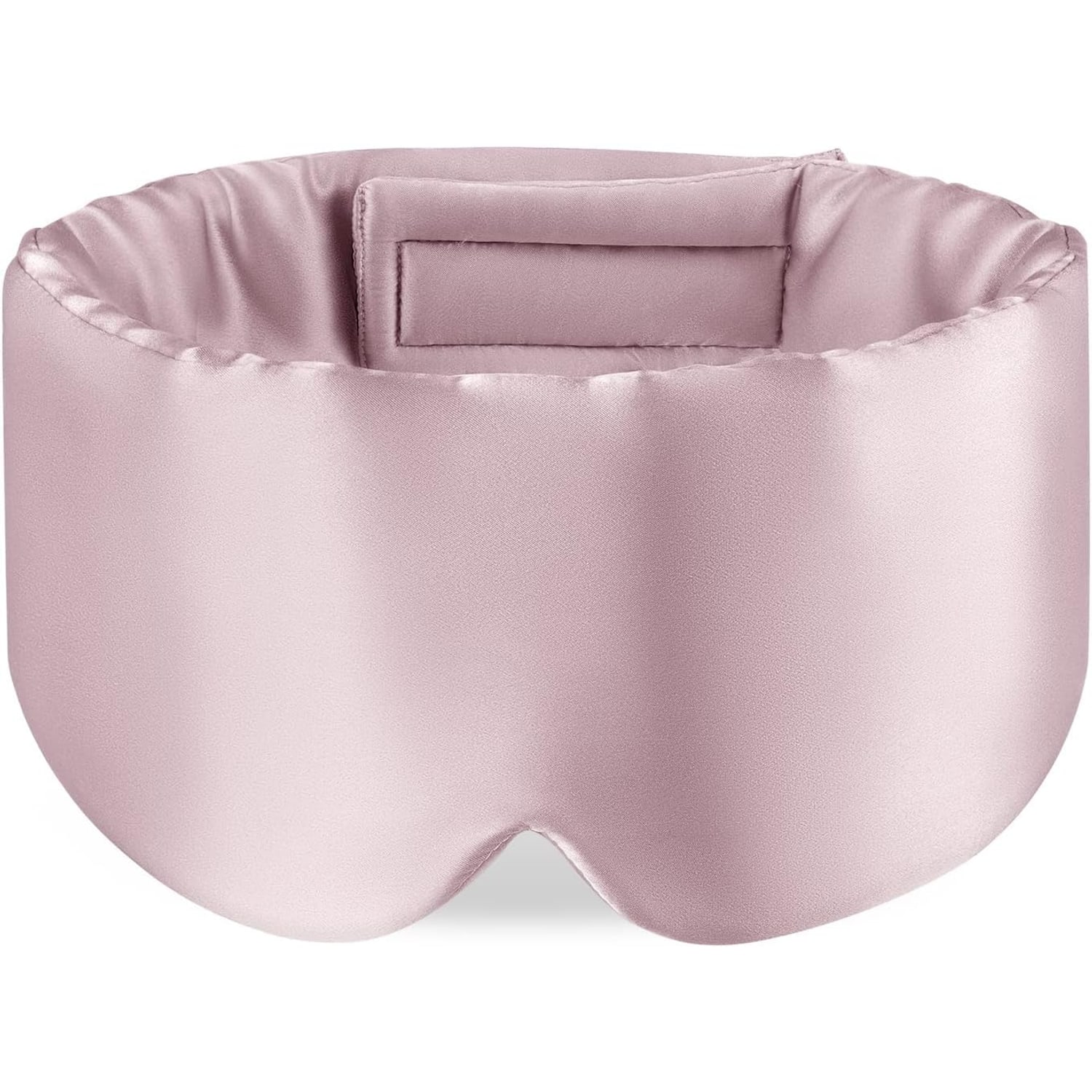
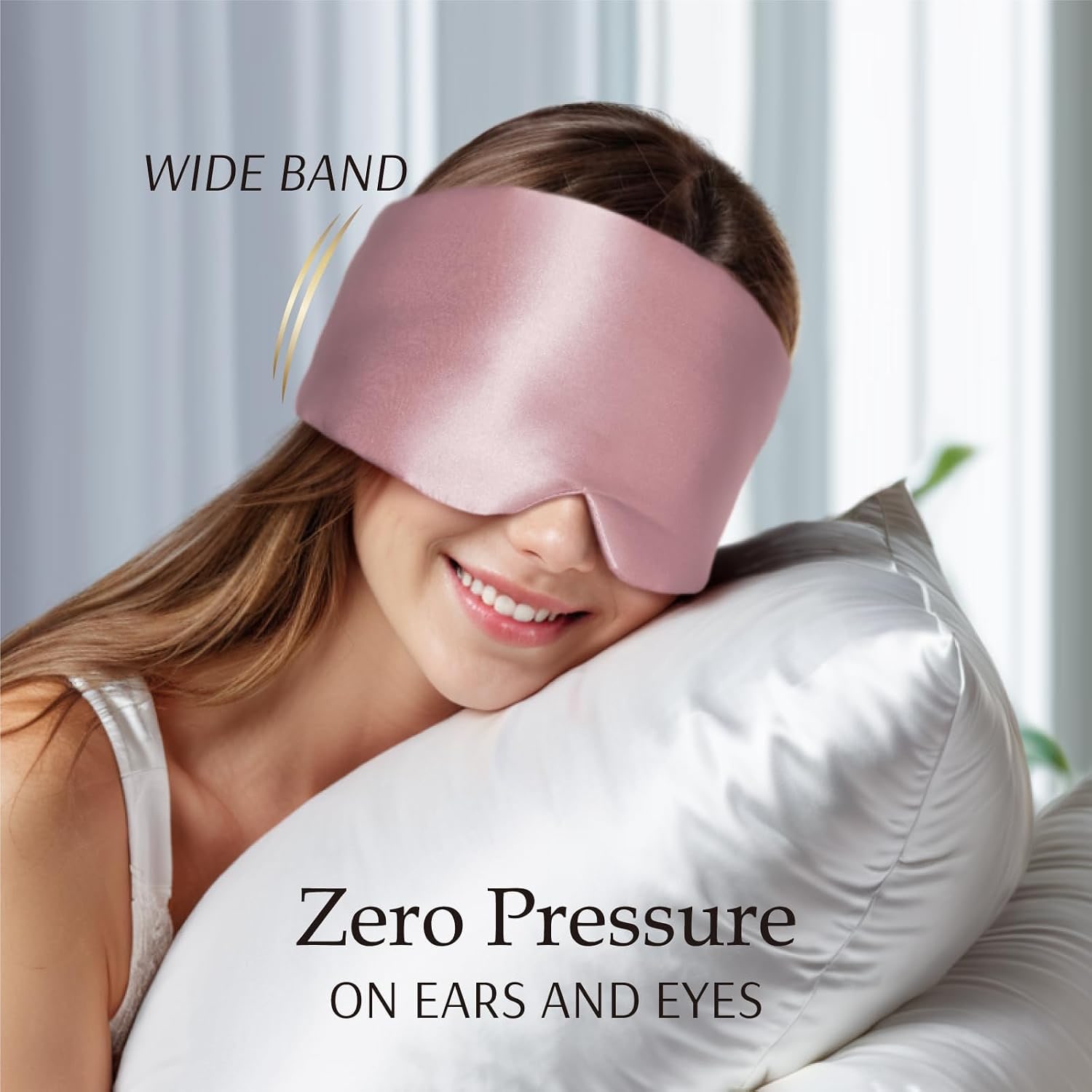
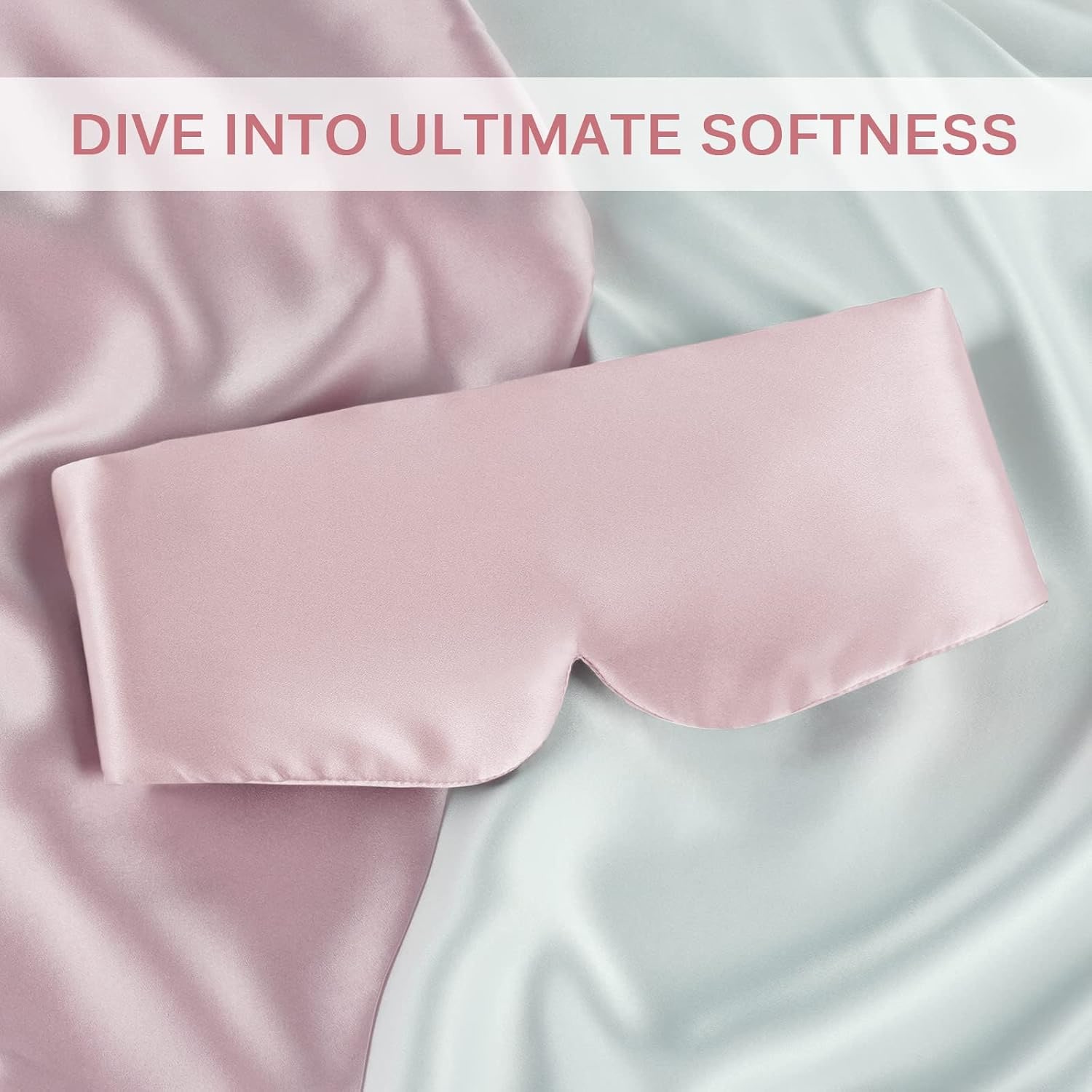
A wide band mulberry silk sleep mask is built to fix both of those faults at once. The eye shade is bigger, so it covers more. The band keeps its width as it travels back towards the ears, so the same holding force is spread across a much larger area. Neither change is clever or complicated. They just cost a little more fabric, which is why the budget end skips them.
How the light actually gets in
When people say a mask leaks, they almost always mean one of three places.
The first is the nose. If the bottom edge of the mask runs straight across, it bridges over the nose like a tent and leaves two triangular gaps either side. That is the single biggest source of leak in a flat mask. A shaped nose cut-out lets the fabric follow the slope of your nose instead of jumping over it, which closes those triangles.
The second is the outer corners. A short eye shade stops before it reaches the temple, so light curls in from the side. A taller, wider panel reaches past the eye socket and sits against the flatter part of the face where it can seal.
The third is the top edge. If the mask is pulled too low, the brow lifts the upper edge away from the skin. Setting the strap at the right height, roughly level with the top of the ear rather than too high on the crown, keeps that edge flat.
This mask addresses the first two directly, with the nose cut-out and the oversized shade. The third one is down to how you wear it, and it is worth a minute of fiddling the first night.
Why the band width matters more than people expect
Pressure is force divided by area. That is the whole story. If a strap applies a given amount of tension and it is three millimetres wide, all of that lands on a three millimetre line of skin. Widen the band to several centimetres and the same tension feels like gentle contact instead of a wire.
For back sleepers this is a mild nicety. For side sleepers it is the difference between wearing a mask and giving up on masks. When your head is on a pillow, the strap on the pillow side gets squashed between skull and mattress. A thin cord becomes a ridge you can feel for hours. A wide band flattens out and stops being noticeable.
There is a second benefit. Because the band covers the ear area rather than crossing above it, it sits over earplugs and helps keep them seated. If you sleep in a noisy house, share a room, or travel a lot, that is genuinely useful. The band muffles a little sound on its own too, though it is a fabric band and not hearing protection, so do not count on it for anything serious.
Who this suits
Shift workers are the clearest case. If you are sleeping between nine in the morning and four in the afternoon, you are fighting full daylight through curtains that were never meant to stop it. A bigger eye shade and a sealed nose edge do more for daytime sleep than almost any other cheap change you can make.
Frequent travellers are the next group. Planes, trains and hotel rooms all have light you do not control. A mask that folds flat into 68 grams of packing weight is an easy thing to carry, and a wide band version will not fall off when you slump sideways in a seat.
Light sleepers at home benefit too, especially in summer when dawn arrives before five. And anyone who simply finds thin elastic uncomfortable should try a wide band style before concluding that masks are not for them.
If you prefer a mask with no contact at all over the eyelids, a contoured cup design is a different category and worth looking at instead. This is a flat silk mask. It rests lightly, it does not hover.
Choosing between silk and the alternatives
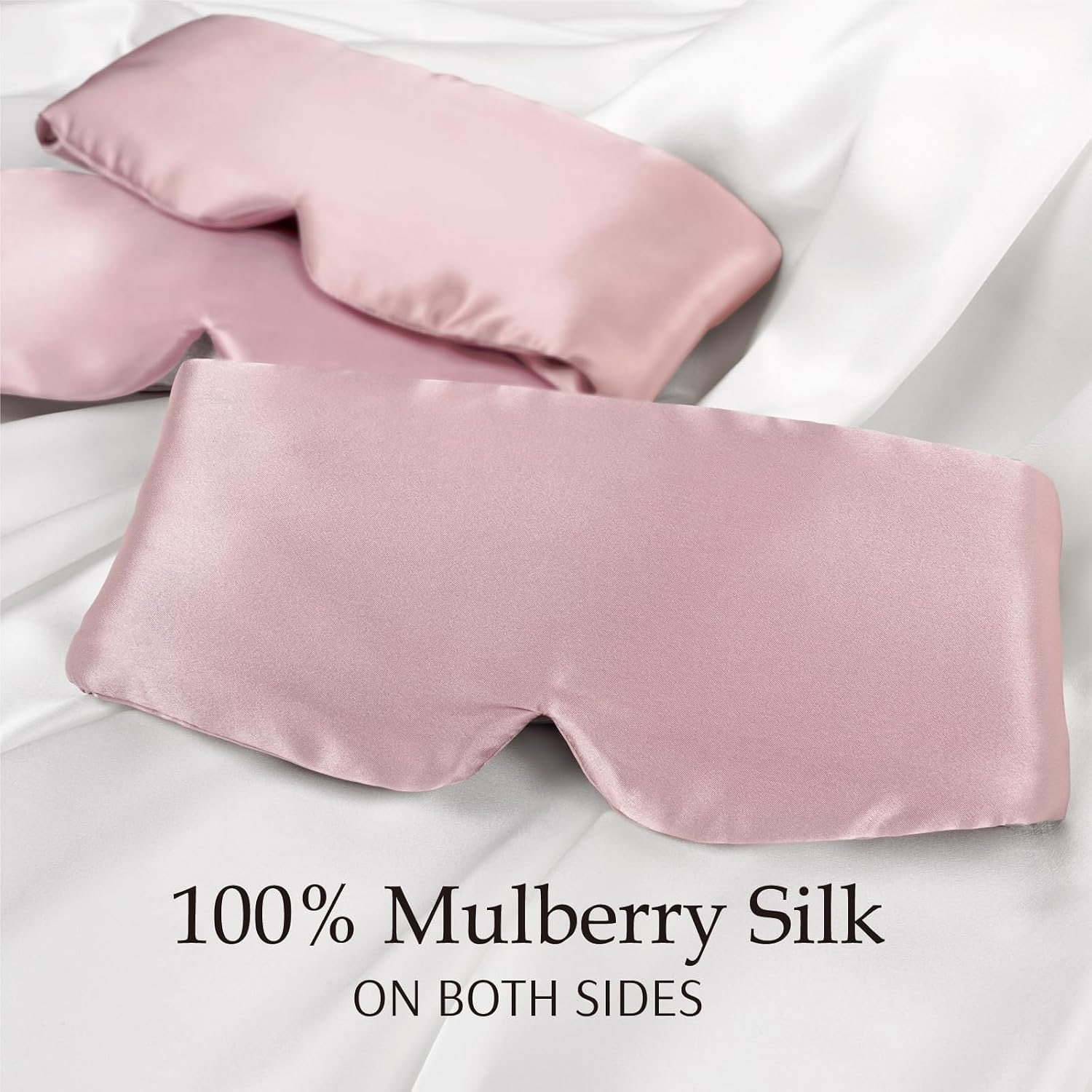
Silk is the smooth option. It has less surface drag than cotton or a cheap polyester satin, so it slides over skin and lashes rather than catching on them. It also feels cool to the touch, which many people like against the face. Those are the honest reasons to pick it, and they are enough on their own.
What silk asks in return is gentler care. This one is hand wash only. That is not a suggestion you can bend, because the combination of agitation, hot water and detergent in a machine will dull the fibre and can snag the weave.
Cotton masks wash easily and cost less. Polyester satin looks like silk from a distance but does not feel the same and tends to hold heat. Memory foam contoured masks give the most light control of all but are bulkier to pack and warmer on the face. There is no single best silk sleep mask for every person, only the one that matches how you sleep and how much washing you want to do.
Getting the fit right
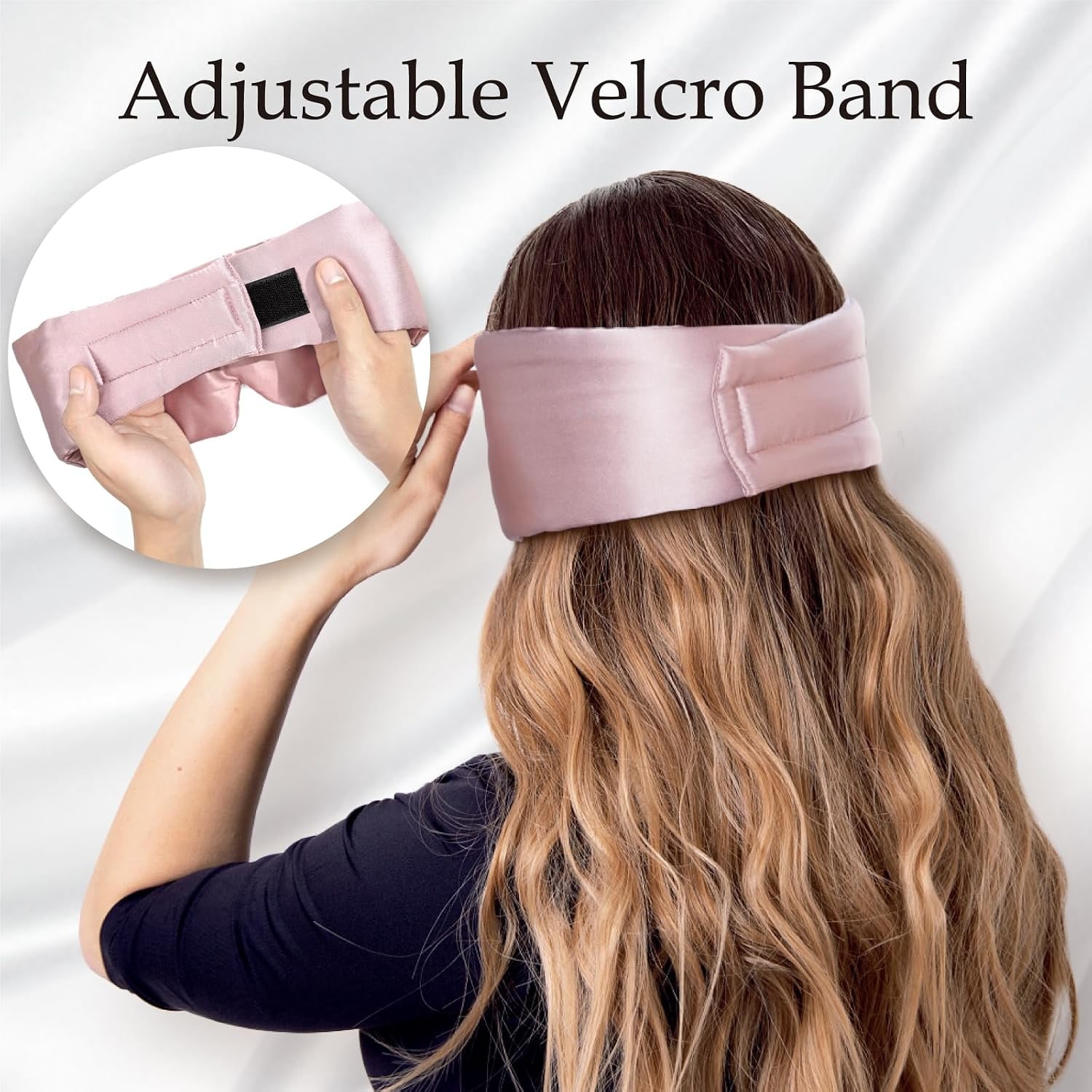
Put it on sitting up, with the eye shade centred and the lower edge settled onto the sides of your nose rather than on top of it. Then adjust the elastic. You want it firm enough that the mask does not shift when you turn your head, and loose enough that you can slide a finger under the band at the side.
Most people set it too tight on the first night. If you wake up with a line across your temples, back it off a notch. A wide band needs less tension than a thin cord to stay in place, which is the point of it.
If you wear a moisturiser or an oil at night, let it absorb for a few minutes before putting the mask on. That keeps the silk cleaner between washes.
Looking after it
Hand wash in cool water with a detergent made for delicates. Swish it, do not scrub. Rinse until the water runs clear. Do not wring it out, as twisting silk damages the fibre. Instead, roll it in a clean towel and press to get most of the water out, then lay it flat somewhere shaded with air moving.
No bleach, no dryer, no direct sun. If it needs pressing, use the coolest silk setting with a cloth between the iron and the mask, and keep the iron off the elastic.
Washed this way every week or two, a silk eye mask holds its hand and its colour for a long stretch. Washed badly once, it never quite recovers.
The short version
If your current mask leaks light at the nose or digs in above your ear, the fix is a bigger shade and a wider band. That is what this Light Plum silk mask is. Silk face fabric, a shaped nose cut-out, an adjustable elastic closure, and a band that stays wide across the ear area so side sleepers get a fair go.
It ships as a single mask, 68 grams packed, hand wash only. Delivery from Australian warehouses runs 3 to 7 working days, and returns are open for 14 days from delivery on unused, unwashed items. If it turns out not to suit your face shape or sleeping style, send it back and tell us why, and we will help you find something in the range that fits better.