
The complete guide
How To Choose A Mulberry Silk Pillowcase That Is Worth The Money
The problem with cotton that nobody mentions
Most of us never think about our pillowcase. It is the last thing on the bed and the first thing we forget about. Then one morning you notice creases on your cheek that take an hour to settle, or hair that looks like it argued with the pillow all night, and you start wondering whether the fabric has something to do with it.
It does, at least in one measurable way. Cotton has a textured surface. Under magnification it looks like a landscape of tiny loops and fibre ends. Skin and hair drag across it. Silk is a long, smooth filament with far fewer loose ends, so the same cheek and the same hair slide instead of catching. That is the whole mechanical story, and it is enough of a reason for a lot of people to switch.
The second reason is simpler. Silk feels good. Cool on contact, light, with a drape that cotton never quite manages. A queen bed with one silk pillowcase on it looks different, and a bed with two looks finished.
What the numbers on a silk pillowcase actually mean
Shopping for silk means running into a few numbers that get thrown around without much explanation. Here is what they are.
Momme. This is the weight measure specific to silk. It comes from a Japanese unit and it tells you how heavy a given area of the fabric is. Low momme silk, around 12 or 13, feels thin and wears out faster. Very high momme, above 25, gets heavy and can feel almost stiff on a pillow. The common bedding range sits between 19 and 22. This pillowcase is 19 momme, which puts it right at the start of that range. It has enough density to drape and to handle washing, without the weight that makes some high-momme silk feel more like a jacket lining than bedding.
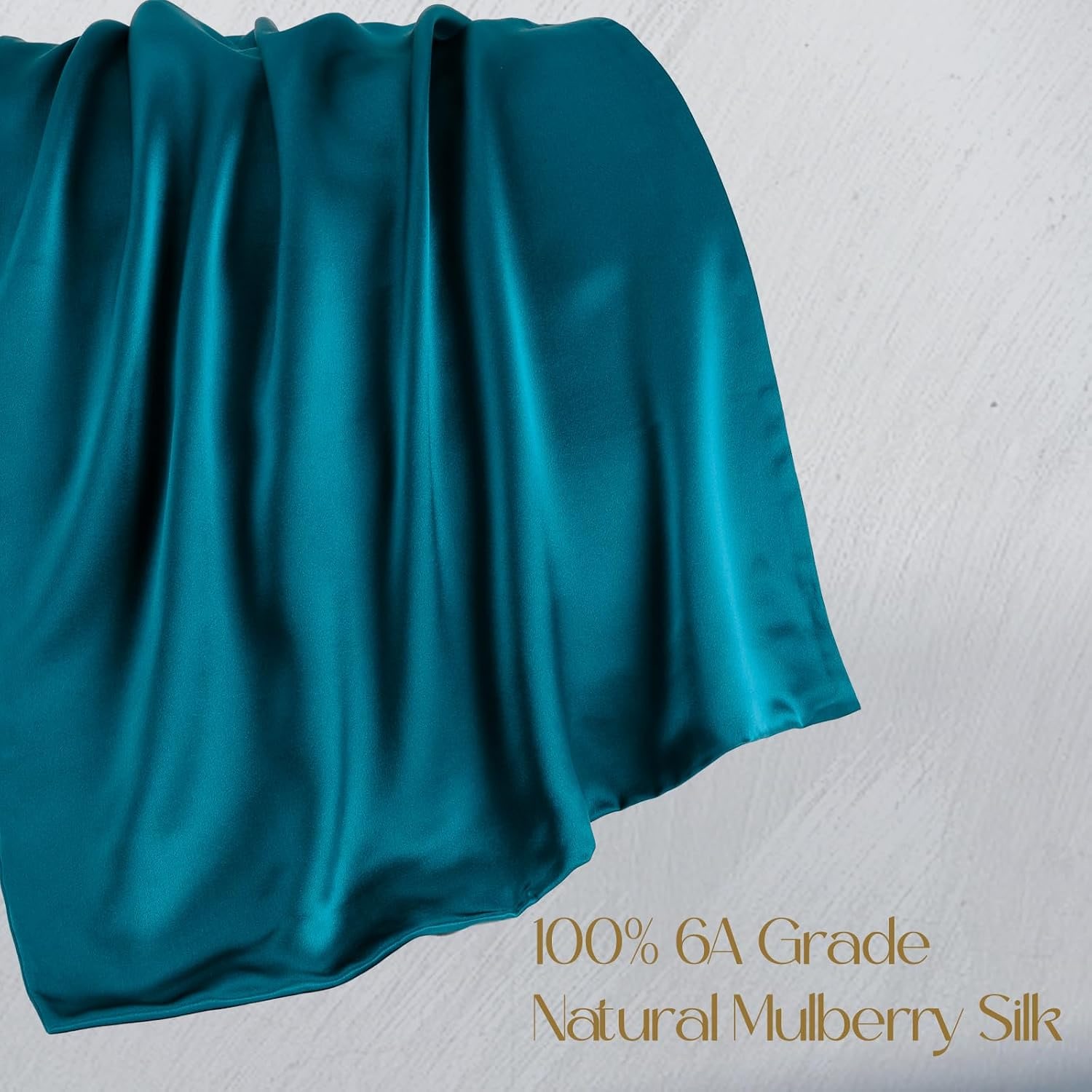
Grade. Silk is graded by filament length and consistency. Grade 6A is the longest and most even. Longer filaments mean fewer short fibre ends sticking up out of the weave, which is what produces that smooth hand. It is the grade quoted for this pillowcase.
Thread count. On cotton, thread count gets abused as a marketing number. On silk it is less often quoted but still describes the density of the weave. This one is listed at 600, which contributes to the close surface and the even sheen.
If you only remember one number, remember momme. It is the most honest shorthand for silk quality that exists.
Double-sided silk, and why it matters more than it sounds
Here is a detail worth checking on any silk pillowcase you consider. Some are silk on one face only, with a cheaper woven fabric on the back. Manufacturers do this to hit a lower price, and the logic is that you only sleep on one side anyway.
Except you do not. Pillows get flipped, turned, folded in half and shoved against the headboard. The side that was facing up when you made the bed is rarely the side under your head at three in the morning. A single-sided case also wears unevenly, because one face takes all the friction and all the washing stress while the other sits idle.
This pillowcase is double-sided mulberry silk. Both faces are the same fabric. It is one of the things that separates the best double sided silk pillowcase from a case that is technically silk but only half the time.
Zipper or envelope closure
The two common closures are an envelope flap, where the fabric overlaps at one end, and a zipper.
Envelope closures are cheaper to make and have no hardware to fail. They also let the pillow work its way out during the night, especially if the case is a touch large. You wake up with a bare pillow corner sticking out, which is both unattractive and slightly annoying.
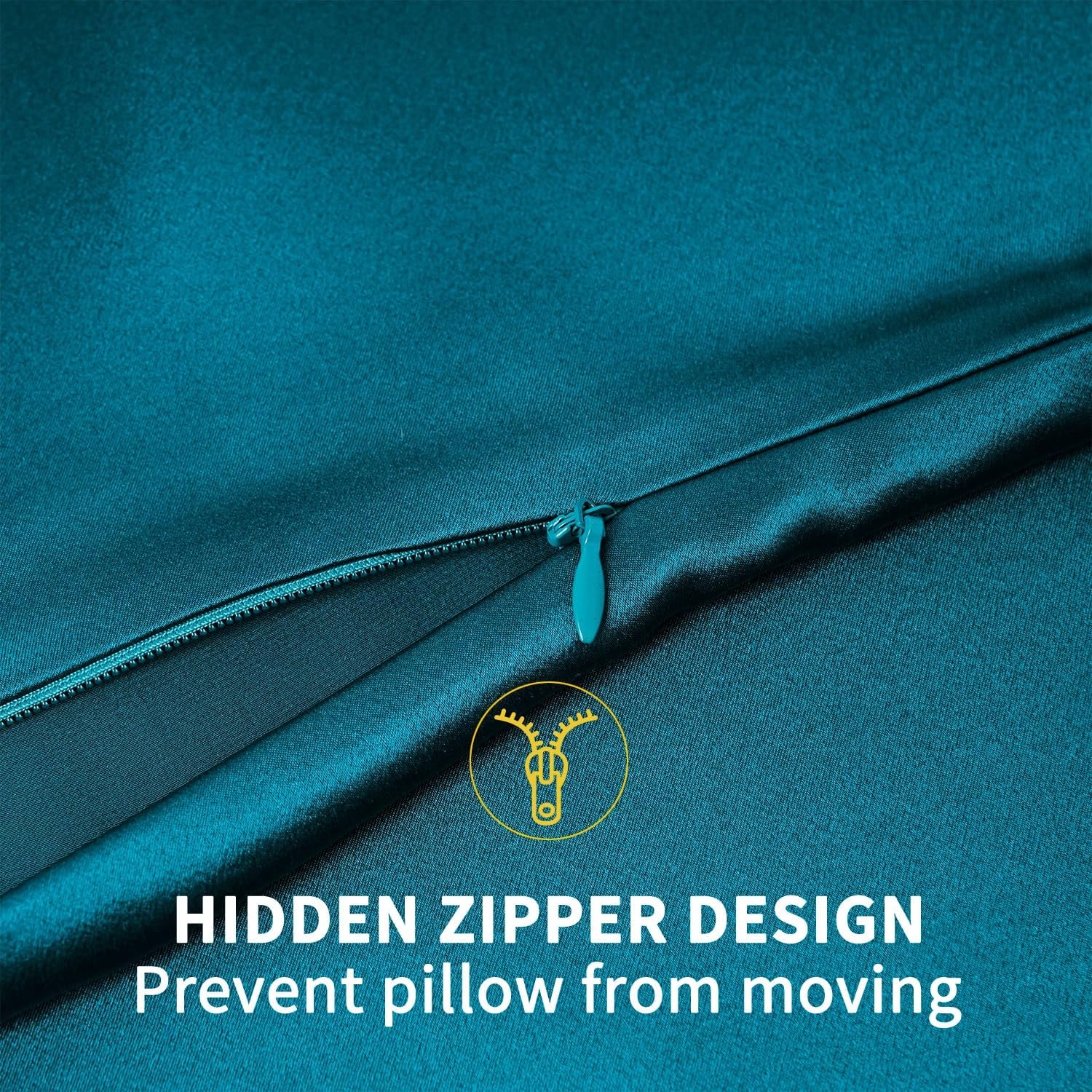
A zipper keeps the pillow fully enclosed. On this case it is a hidden zipper, so it is set into the seam and does not show when the bed is made. The trade-off is that you need to be a bit careful during washing, keeping the zipper closed and away from anything rough. For most people it is the better closure, and it is why plenty of buyers specifically look for the best silk pillowcase with zipper rather than taking whichever closure comes.
Getting the size right
This one is queen, listed as 20 inches by 30 inches, which converts to 75 cm long and 50 cm wide. That is the standard queen pillow size in Australia.
Before you order, take two minutes and measure your actual pillow. Pillow sizing is not as consistent as you would hope, and a pillow that has been compressed over years of use can measure smaller than it did new. If your pillow is around 75 by 50, you are set. If it is noticeably longer, you need a king case and this one will not work.
A slightly loose fit is not a problem. A tight fit is, because silk under constant tension will show wear along the seams much sooner. When in doubt, go for the size that leaves a little room.
Colour, and how to use peacock blue
Peacock blue is a deep blue with a green undertone. On silk, colour behaves differently than it does on cotton because the fibre reflects light. The same shade reads darker in a shaded corner and considerably brighter where a lamp or window hits it. That shift is part of the appeal.
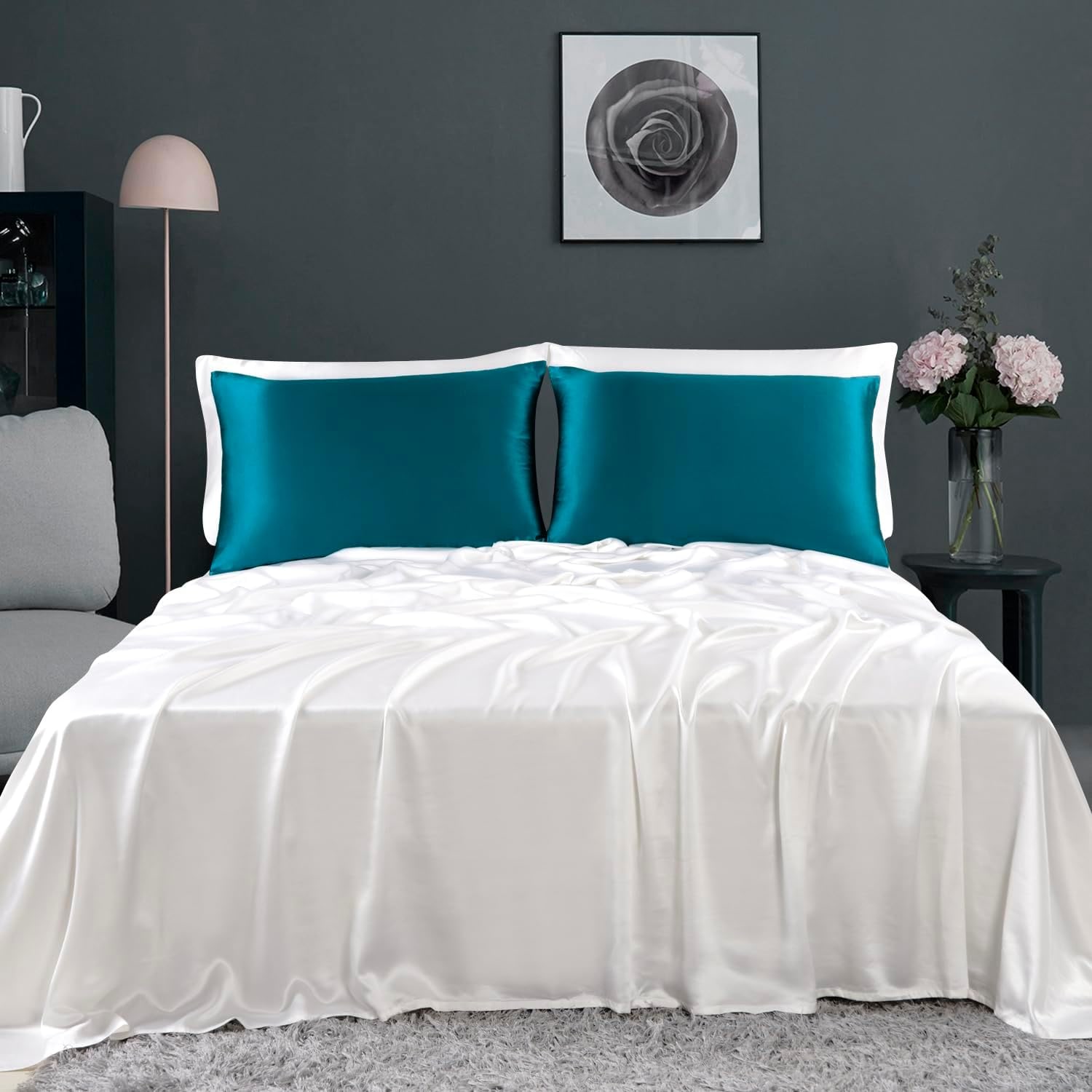
It works in two directions. Against pale bedding, white, cream, stone, oatmeal, it becomes the accent, the one bit of colour on an otherwise quiet bed. Against darker bedding, navy or charcoal, it blends in and contributes sheen rather than contrast.
What it does not do well is compete with other strong colours. If your quilt cover is already patterned and bright, a deep blue silk case will fight with it. One strong element per bed is usually the right amount.
Caring for it so it lasts
Silk is not fragile, but it is particular. The care instruction for this pillowcase is hand wash only, and that is worth following.
Use cool water and a detergent made for silk or delicates. Ordinary laundry powder often contains enzymes that break down protein fibres, and silk is a protein fibre. Move the case gently through the water rather than scrubbing it. Rinse in cool water until the water runs clear.
Never wring it. Twisting silk while it is wet stretches and damages the filaments. Instead, lay the case flat on a dry towel, roll the towel up with the case inside and press. Most of the water comes out in one go.
Dry it flat or hang it somewhere shaded and airy. Direct sun fades dye and weakens the fibre, and a tumble dryer does both faster. Silk dries quickly, often in a few hours.
If it needs pressing, use the lowest iron setting, work on the reverse side and press while the fabric is still a little damp. Most creases drop out on their own once the case is back on the pillow.
Wash it about once a week, more often if you use heavy hair products or rich night creams. Keep it away from rough fabrics and open zips in the wash basket so nothing snags the surface.
Who this suits
Warm sleepers tend to notice the difference first, because silk does not hold heat the way brushed cotton does. People with long hair notice it second, because less friction means less of the morning tangle. And anyone who likes a bed that looks considered will appreciate what a single deep blue silk case does to an otherwise plain set of bedding.
It is also one of the easier gifts to buy. There is no fit to guess beyond matching a queen pillow, it suits almost anyone, and silk reads as generous without being extravagant. The product details describe it as gift-ready, which saves a step.
The short version
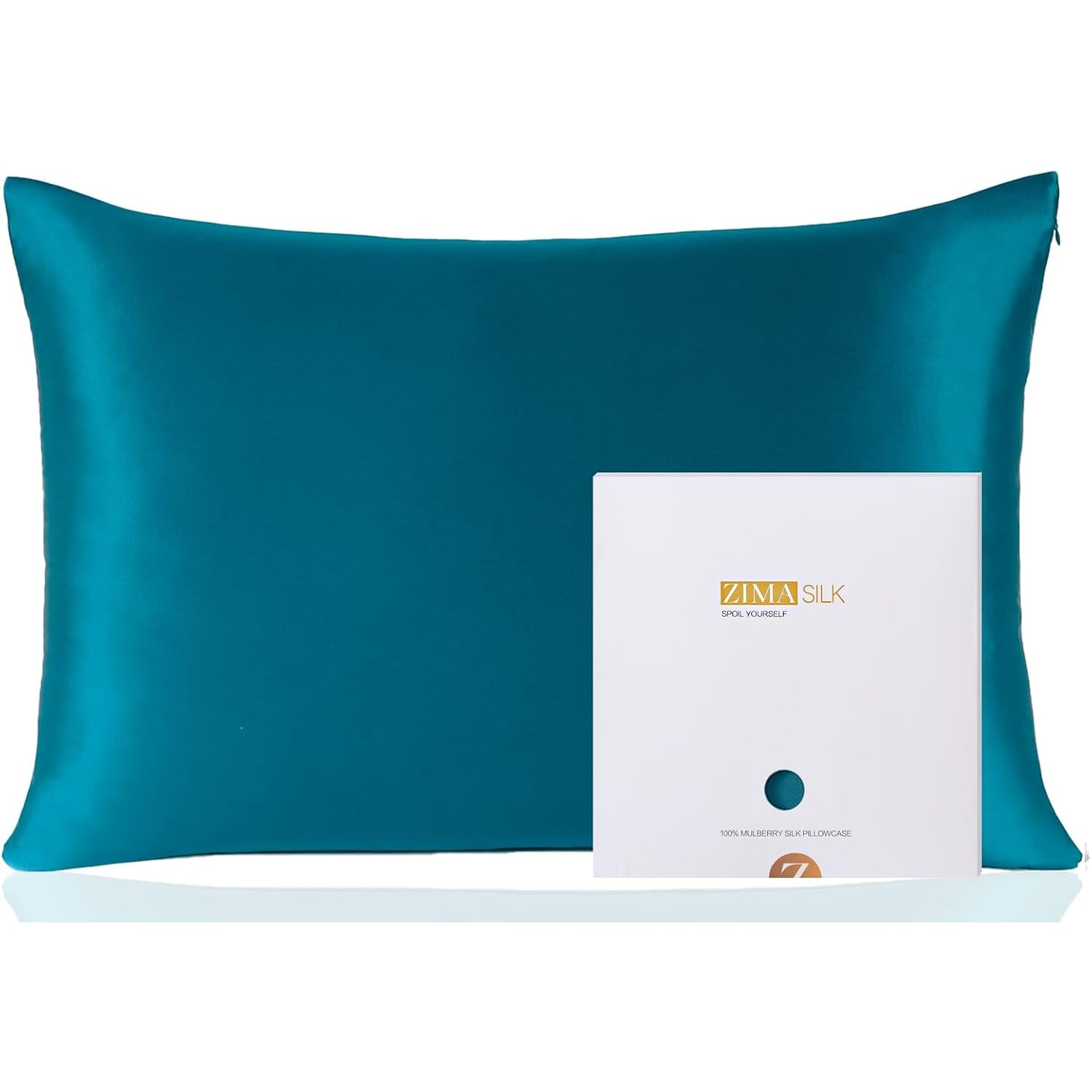
This is a queen size mulberry silk pillowcase in peacock blue. It is 19 momme, Grade 6A, woven at 600 thread count, with silk on both faces and a hidden zipper closure. It measures 75 cm by 50 cm and it is hand wash only.
Measure your pillow before you buy. Wash it in cool water by hand. Keep it out of the dryer and out of the sun. Do that and you will have a pillowcase that still feels like the best part of the bed years from now.