
The complete guide
How to Choose a Silk Sleep Mask That Actually Stays On
The problem is rarely the darkness, it is the fit
Almost everyone who buys a second sleep mask buys it for the same reason. The first one did not stay put. It rode up during the night, the strap dug in behind an ear, or a sliver of light got through at the nose and that was enough to keep the brain half-awake. The fabric was never really the issue.
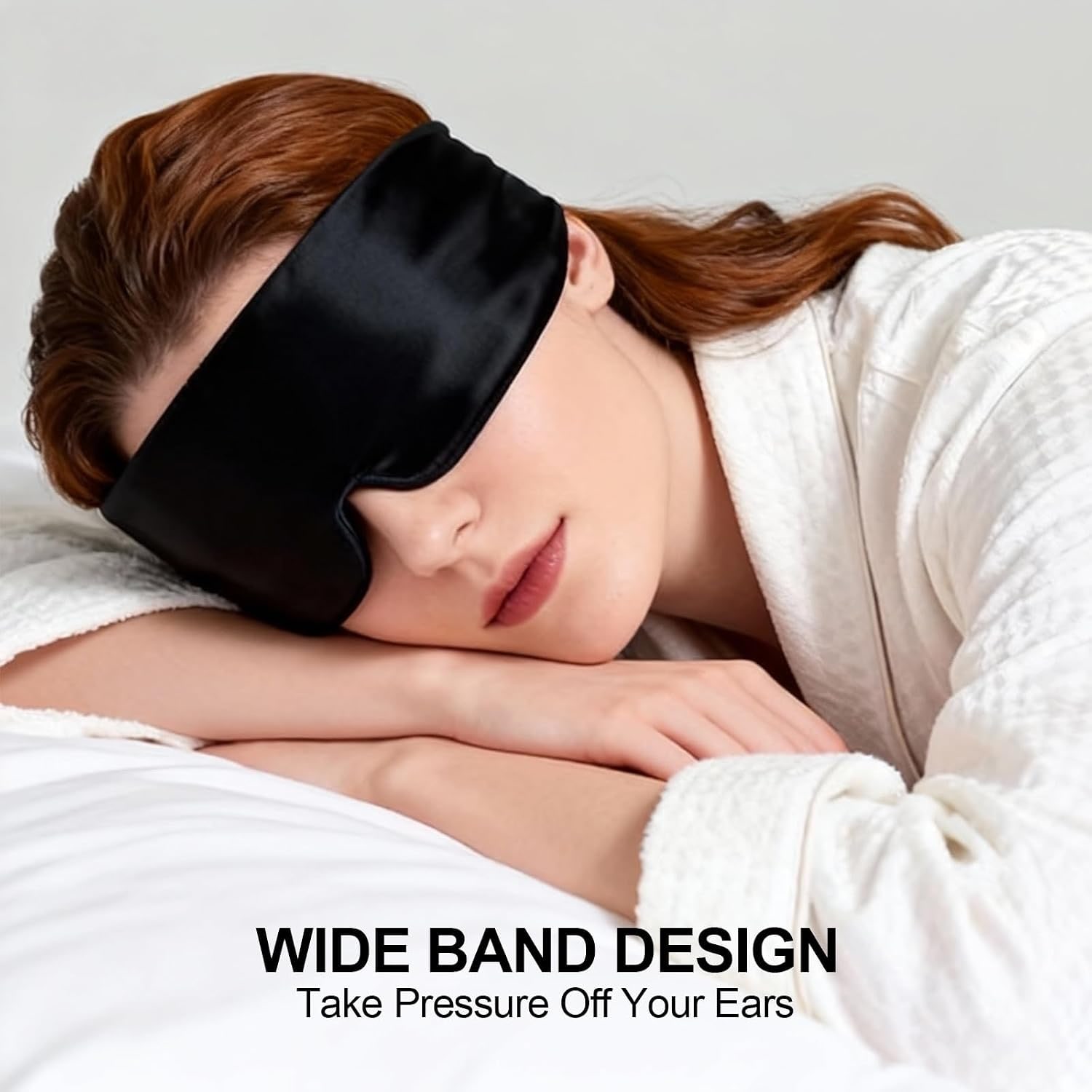
This matters most for side sleepers. When you lie on your side, half the mask is trapped between your face and the pillow. Anything bulky at the temple becomes a pressure point. Anything tight becomes a headache. Anything with a plastic buckle at the back becomes a lump you can feel through the pillowcase. A mask that is perfectly comfortable lying on your back can be unwearable twenty minutes after you roll over.
So when you are shopping, look at the strap and the shape before you look at anything else. Those two things decide whether the mask is still on your face at 4am.
What 19 momme actually tells you
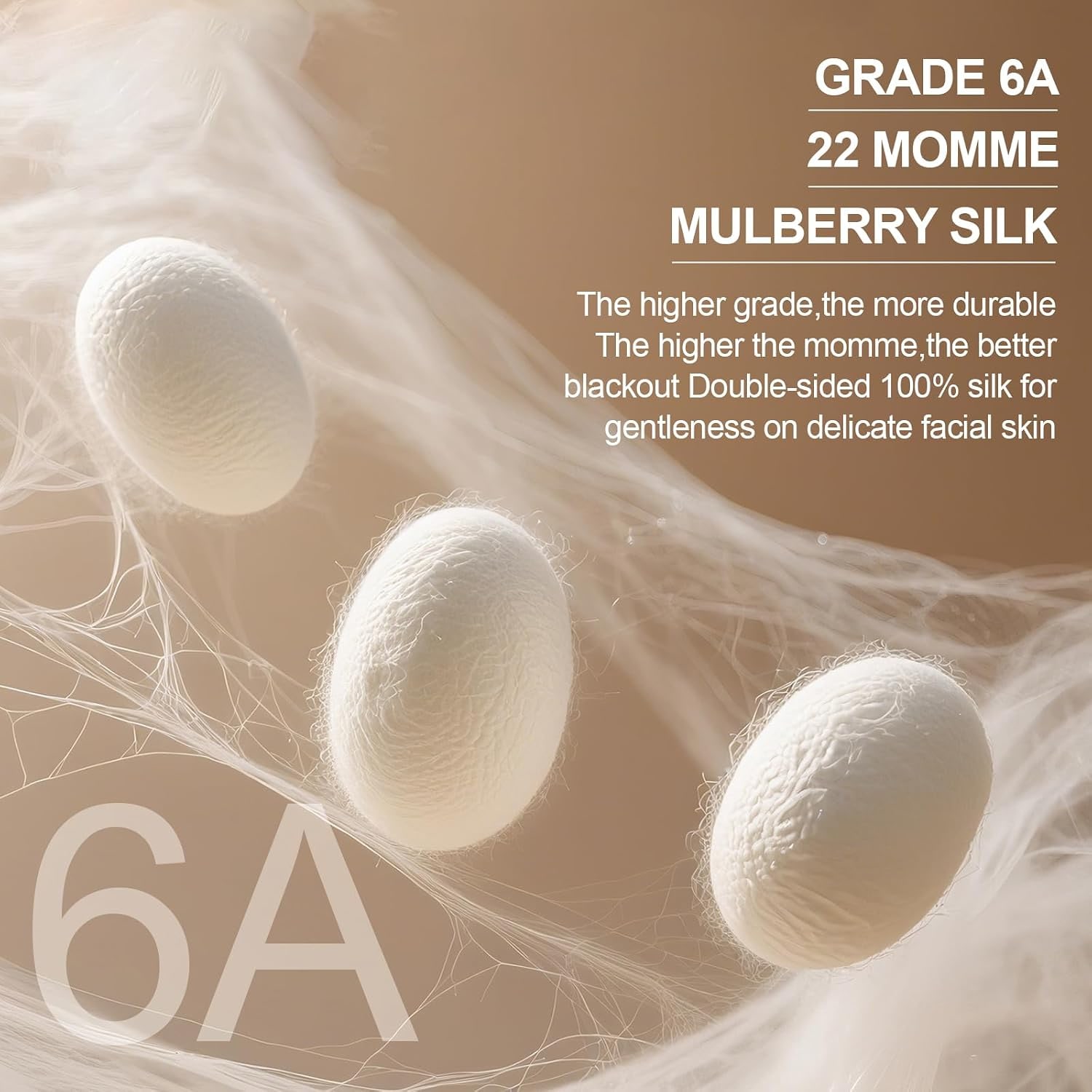
Silk is measured in momme, written as mm but pronounced "moe-mee". It is a weight measure, not a thread count. Higher momme means more silk in the same area of fabric, which usually means a denser drape and a slightly cooler, quieter feel against skin.
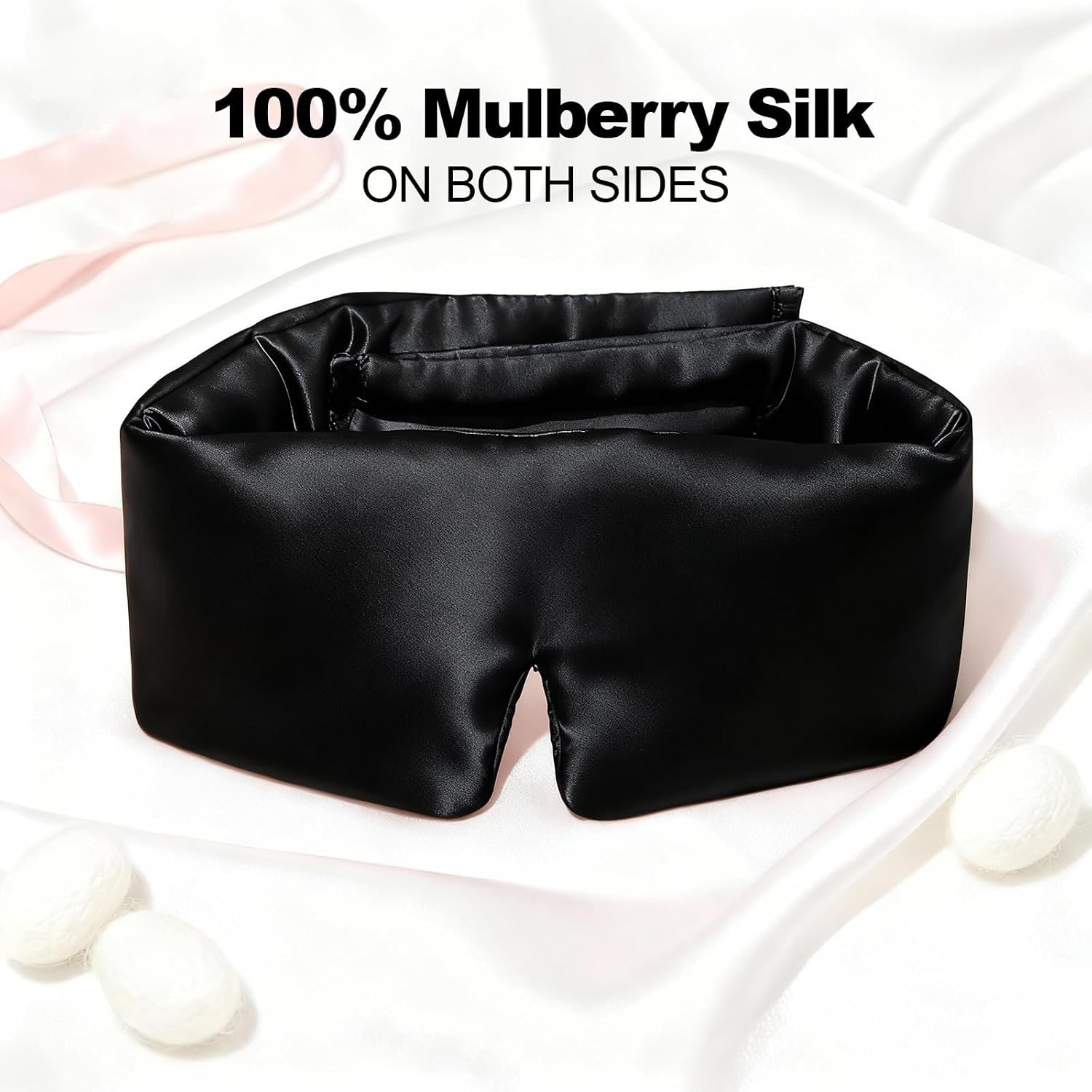
For sleep masks the useful range sits somewhere between about 16 and 25 momme. Below that the silk starts to feel papery and light passes through more easily. Above it the mask can feel heavier than people want on their face. At 19 momme this mask sits in the practical middle, substantial enough to feel like proper silk, light enough that you forget it is there.
Momme is not the whole story though. A high-momme face panel wrapped around a cheap lining will still feel wrong. What you want is silk where it touches you, a shape that holds its form, and a strap that does not fight you.
Why contoured beats flat for most people
A flat mask is a rectangle of fabric held against your face by elastic. It works, but it presses directly onto your eyelids. If you open your eyes under it, your lashes brush the fabric. If you wear lash extensions, that nightly brushing is exactly what you are trying to avoid.
A 3D contoured mask has moulded cups that arch over the eye socket. The fabric sits against the brow bone and the cheekbone instead, leaving a small air pocket in front of each eye. You can blink freely. Nothing touches your lashes. For a lot of people this is the single feature that turns a mask from tolerable into something they actually look forward to putting on.
The contoured shape also helps with light. Because the cup holds its form, it does not collapse into the gaps around your nose the way loose fabric does. Pair that with a contoured nose section and a panel cut larger than standard, and you close off the two places light usually sneaks in.
Getting the strap right
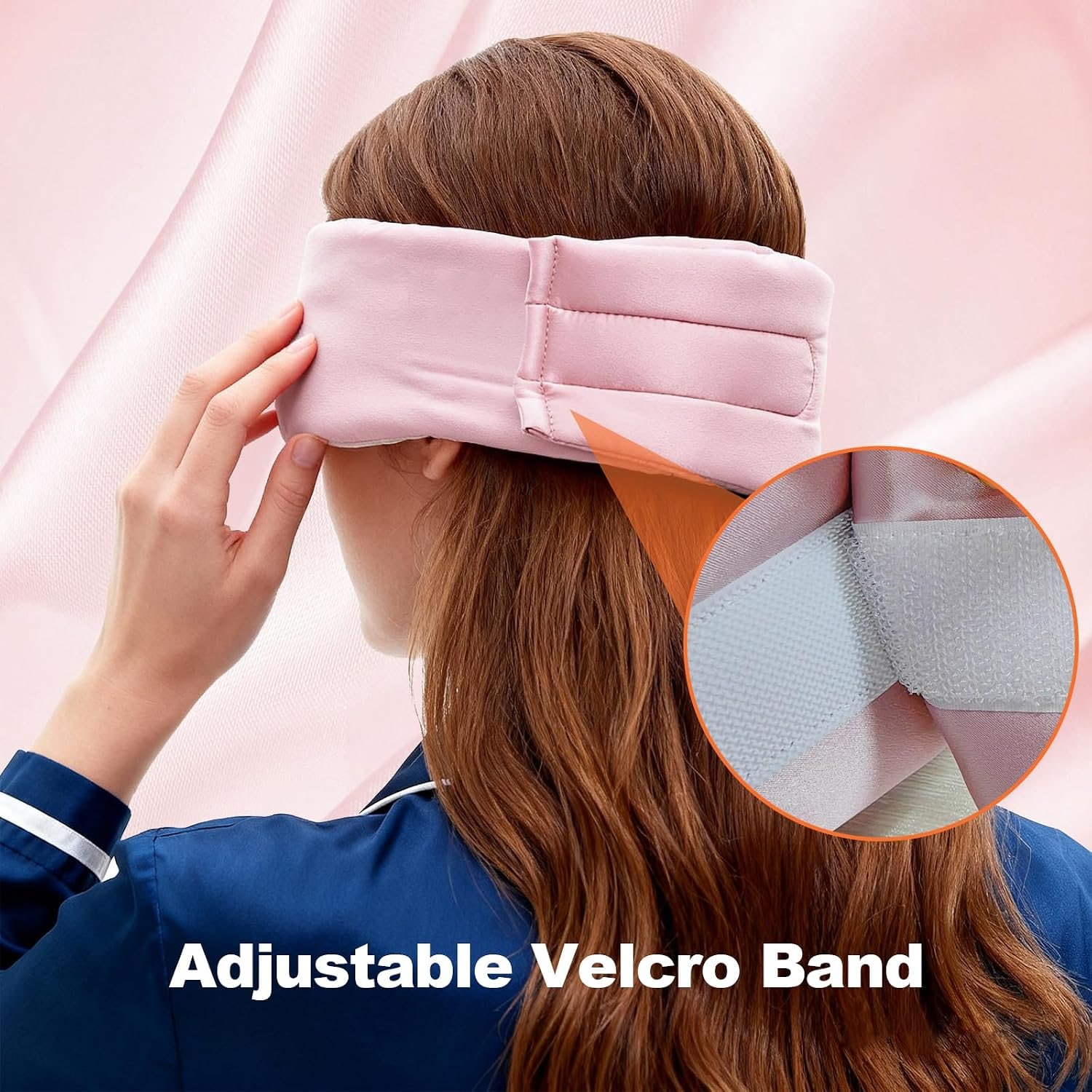
A long adjustable strap sounds like a small detail. It is not. Fixed-band masks assume an average head and a back-sleeping position, and if you are outside either assumption they never feel right.
Set the strap so the mask holds its position when you turn your head slowly from side to side, and no tighter. Most people over-tighten on the first night because they are worried it will slip, then wake up with a line across their forehead. Go looser than instinct tells you. If it shifts a little, tighten by a small increment the next night. Two or three nights of small adjustments will land you on the right setting.
Where you sit the strap matters too. Running it slightly lower on the back of the head, below the crown, generally holds better than sitting it high. It also keeps the adjustment hardware away from the part of your head that meets the pillow.
Who this style suits
Side sleepers are the obvious group, but a few others get a lot out of the best contoured sleep mask shape.
Shift workers sleeping in daylight need genuine blackout, not a token eye cover. A bedroom with blockout curtains still leaks light around the edges in the middle of the day, and a mask with a proper side seal closes the gap.
Frequent flyers benefit for a different reason. Cabin lighting is unpredictable and so is the person in the next seat with their reading light on. A mask that folds flat and weighs almost nothing earns its place in a carry-on quickly.
People who run warm at night also tend to prefer silk. Breathable, moisture-wicking fabric is noticeably more comfortable across a long sleep than a padded foam mask with a synthetic cover.
The group this suits least is people who want a weighted or heated mask for the pressure sensation. That is a different product with a different purpose.
How to look after it
Silk is not fragile, it just dislikes heat and harsh chemicals. Treat it the way you would a good shirt and it will last.
Hand wash in cool water with a detergent made for delicates. If you prefer the machine, put it in a mesh laundry bag and use a cool, gentle cycle. Skip the bleach and skip any stain remover with optical brighteners, which are hard on dark dyes. Press the water out between your palms rather than wringing, then lay the mask flat in the shade to dry. Sunlight and tumble dryers both shorten the life of the silk and the strap elastic.
Wash it every week or two with normal use. If you sleep in a night cream or sometimes forget to take makeup off, wash it more often. Having two masks in rotation makes this painless and means one is always ready.
Store it flat or loosely folded rather than squashed under something heavy. The contoured cups keep their shape better that way.
A few things worth checking before you buy
Think about what wakes you. If it is a partner's reading lamp or a hallway light, almost any decent mask helps. If it is full daylight through a window, you need the oversized blackout style rather than a slim one.
Think about pressure. If you dislike anything touching your eyes, go contoured. If you actively like a bit of weight on your eyelids, a flat mask may suit you better.
Think about where you will use it. A mask that lives in a suitcase gets more washing and rougher handling than one that stays on a bedside table, so pack it in a small pouch rather than loose.
And think about pairing. A silk mask and a silk pillowcase work on the same principle, less friction against skin and hair while you move around in your sleep. Plenty of people buy the mask first and the pillowcase second once they get used to the feel.
The short version
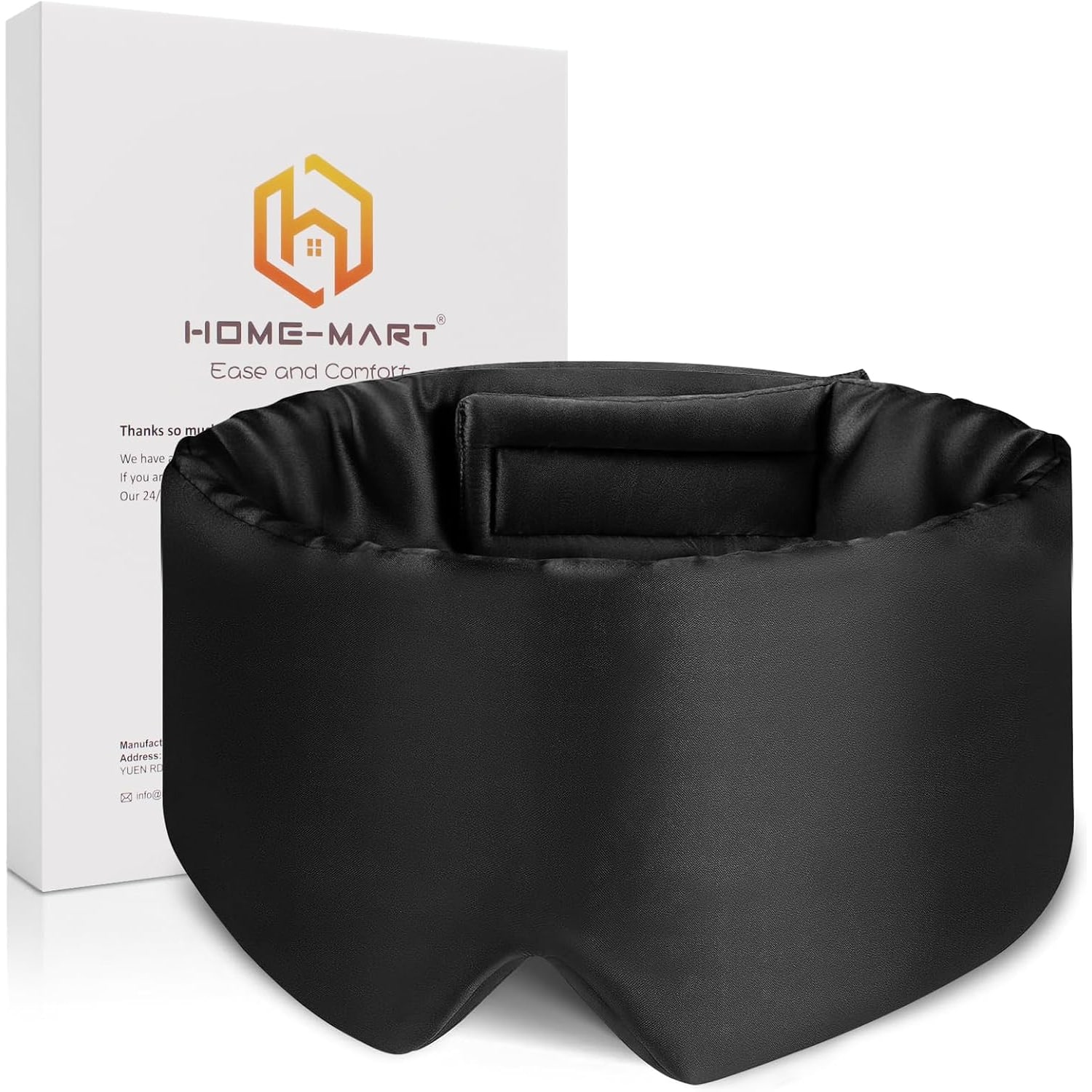
This is a black mask in 19 momme silk, shaped with 3D contoured cups and fitted with a long adjustable strap, cut larger than standard so light does not get in at the sides. It is built for people who sleep on their side and for anyone who needs real darkness during daylight hours.
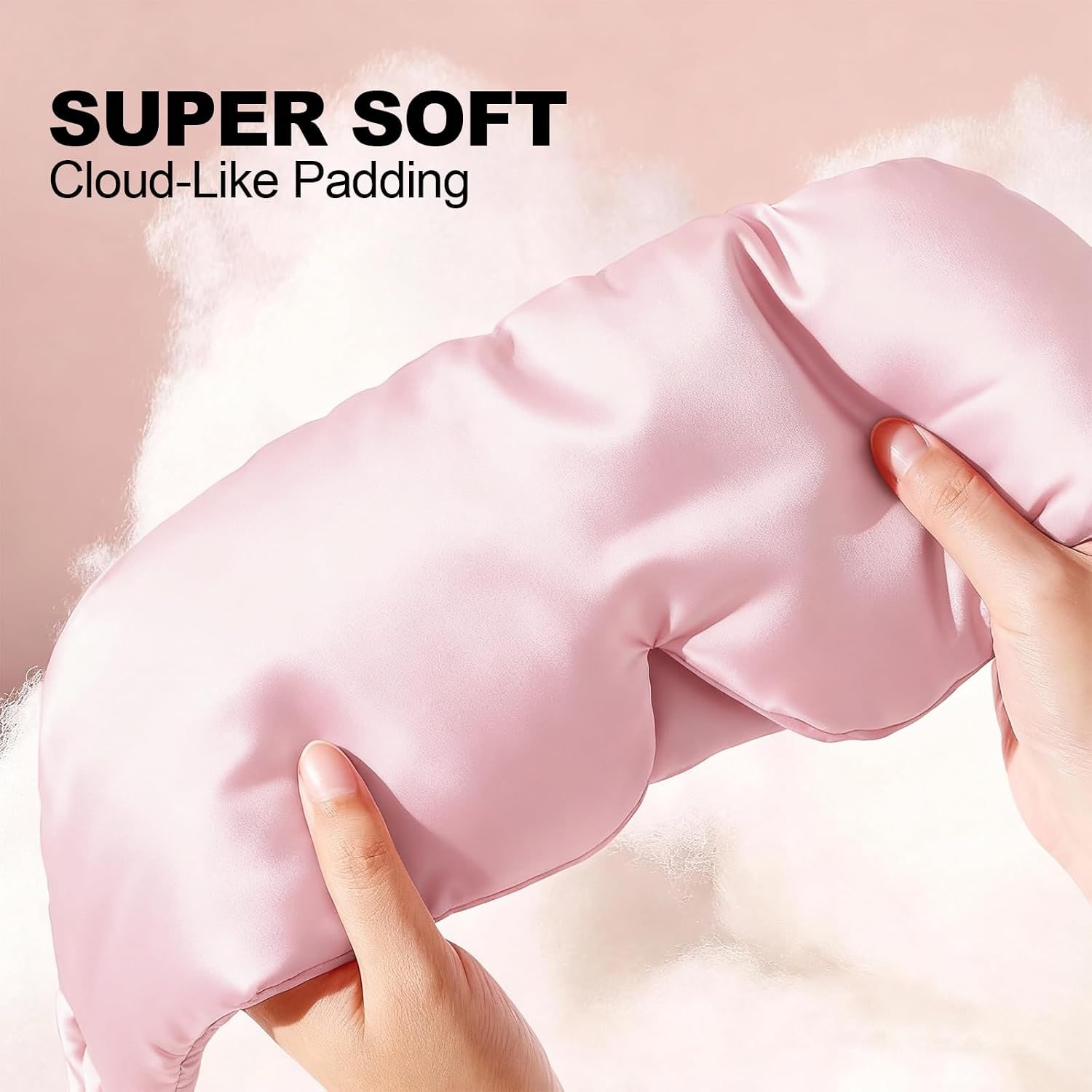
The silk is soft, breathable and moisture-wicking. The contoured cups keep fabric off your lashes. The strap lets you set your own tension instead of accepting someone else's idea of average. Wash it cool, dry it flat in the shade, and it will keep doing its job.
If you are after the best mulberry silk sleep mask for side sleeping and you have been let down by a flat mask that would not stay on, this shape is the one worth trying next.