
The complete guide
How to Choose a Silk Sleep Mask That Survives Side Sleeping
The problem with most sleep masks
You buy a sleep mask because the room is never quite dark enough. The streetlight outside, the standby glow from a charger, the early summer sunrise at half past five. For the first ten minutes it works beautifully. Then you roll onto your side and everything changes.
A flat sleep mask gets caught between your cheekbone and the pillow. The fabric bunches. The band rides up over your eyebrows or slides down onto the bridge of your nose. One eye ends up uncovered, and the strip of light you were trying to avoid is now sitting right on your eyelid. You wake up, you reset it, and the whole thing repeats.
This happens because most masks are designed for someone lying flat on their back, which is a sleeping position that roughly one person in five actually uses. Everyone else is on their side, with half their face in contact with a pillow, and the mask has to cope with that.
What a contoured mask actually does differently
The fix is shape. Instead of a flat strip of padded fabric, a 3D contoured sleep mask has two moulded cups that hold a small pocket of air in front of each eye. When you press your face into the pillow, that cup takes the pressure and keeps its form. The fabric never lands on your eyelid or your lashes.
There is a practical side benefit here. You can open your eyes underneath the mask and blink normally. If you have ever worn a flat mask and felt your lashes dragging against fabric every time you blinked, you will notice the difference immediately. It is also the reason anyone with lash extensions goes looking for a contoured design rather than a flat one.
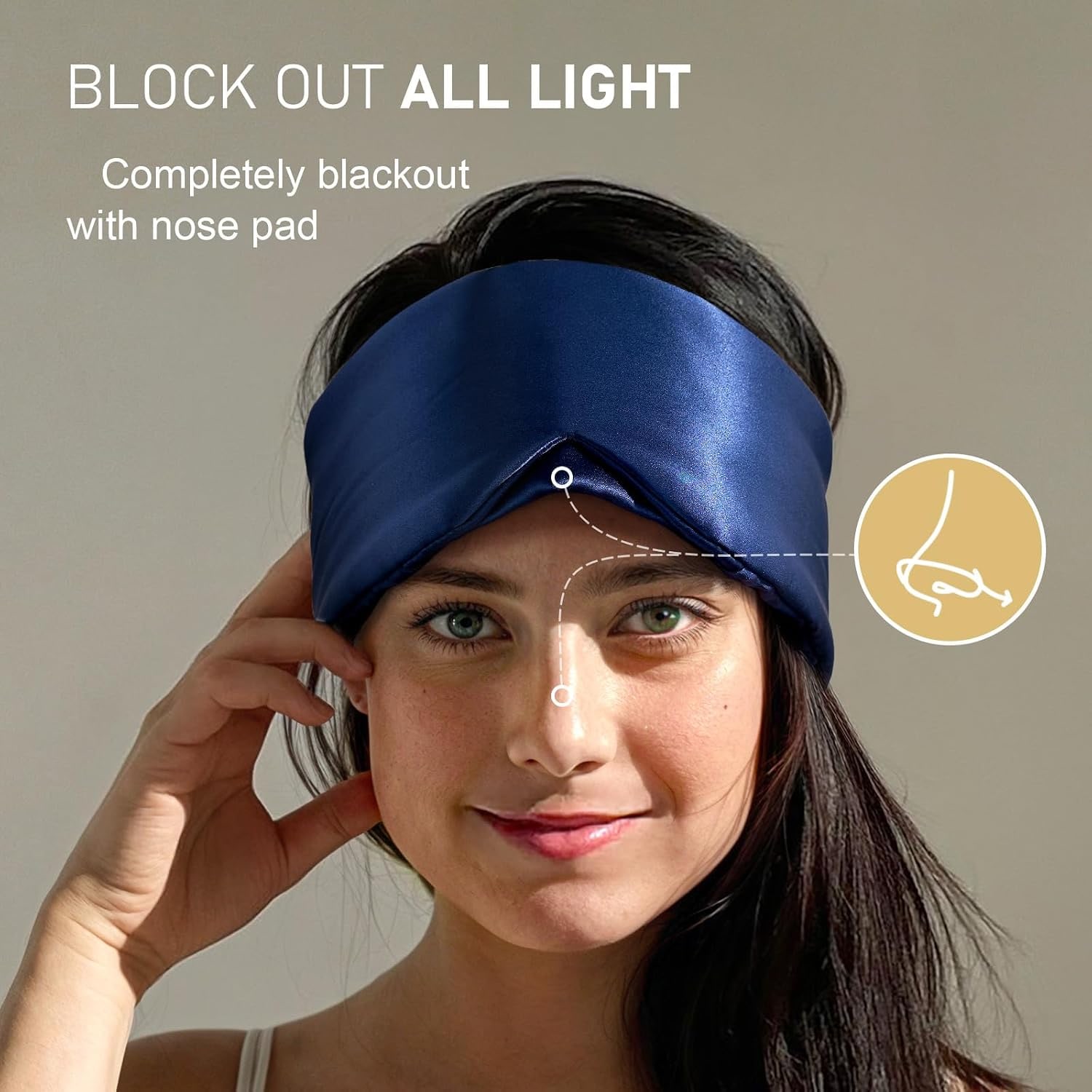
The second piece is the nose wing. Hold a flat mask against your face and look down. There is a small triangular gap on each side of your nose where the fabric cannot sit flush. That is where light gets in, and no amount of tightening the band will close it, because tightening just pulls the mask harder against your forehead. A moulded nose wing fills that gap by shape rather than by pressure.
Why the band matters more than you think
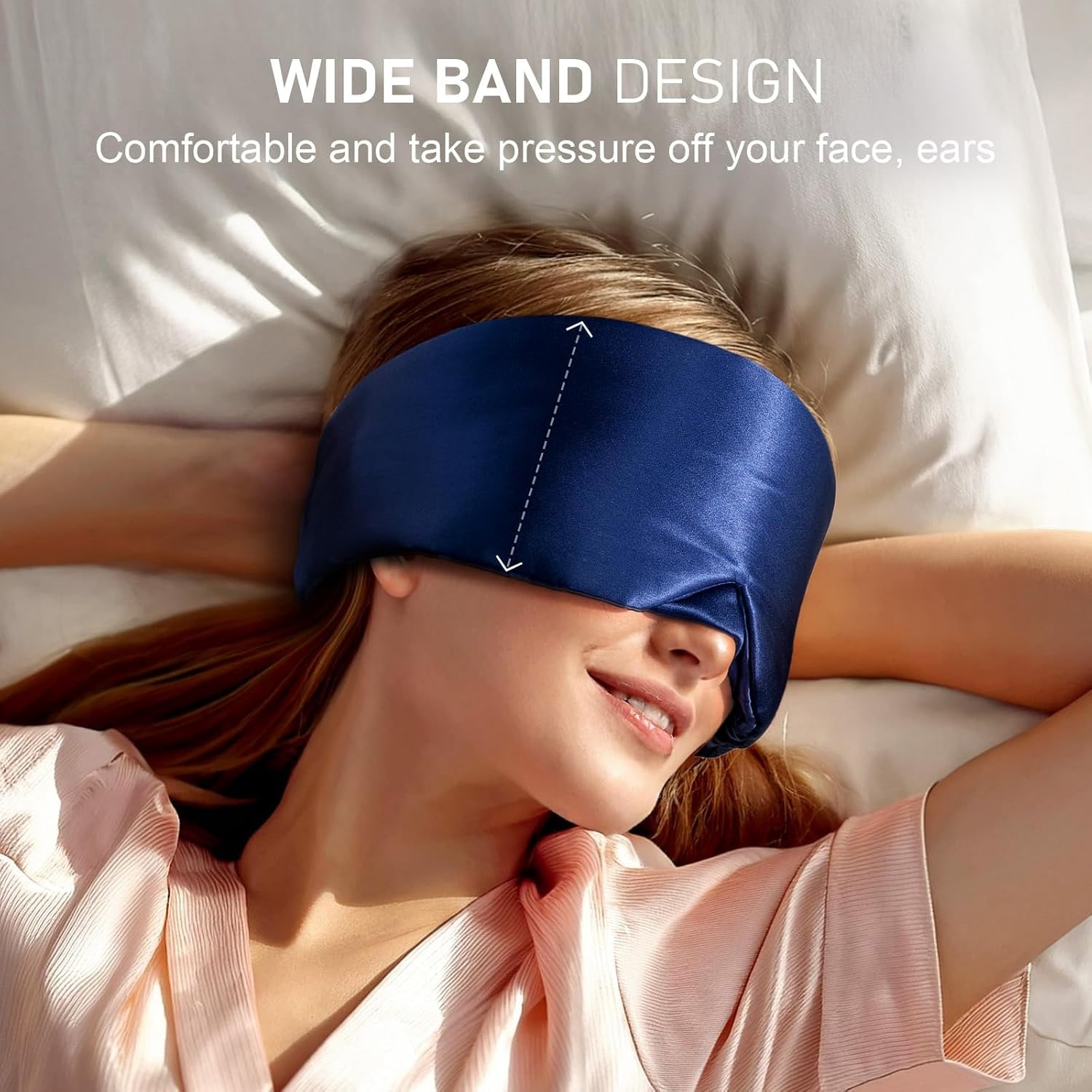
Band design is where cheap masks give themselves away. A thin elastic cord concentrates all its tension into a narrow line across the back of your head. You feel it. If you tighten it enough to actually hold the mask in place through a night of turning, it starts to ache.
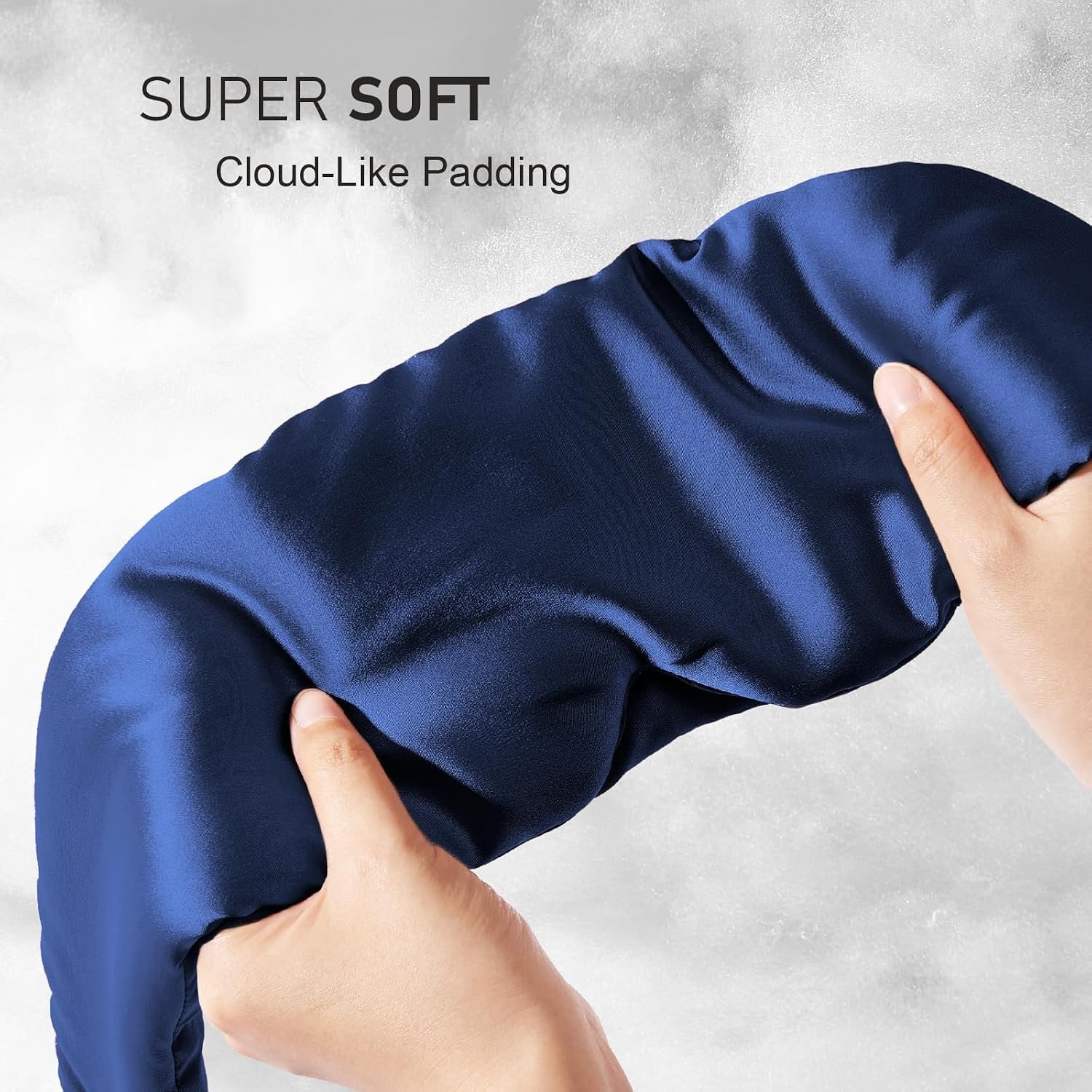
A wide cushioned band spreads the same holding force over a much bigger area. The pressure per square centimetre drops, and it stops feeling like a headband and starts feeling like nothing at all. It also sits flatter against the side of your head, so it does not create a ridge that digs in when you lie on it.
The closure matters too. Knotted elastic slowly stretches out, and you end up retying it every few weeks. A hook and loop closure lets you set the length once and leave it. Loosening it by a centimetre takes two seconds if your head is a different size from whoever wore it last. That adjustability is what makes an adjustable silk eye mask work across different people rather than fitting only one.
Reading the materials
Here is a thing worth checking on any silk mask. A lot of listings say "silk" and mean the outside panel only. The side touching your face, the side that actually matters, turns out to be polyester lining. You find this out after the first week when the inner surface starts to feel rough.
This mask is specified as silk on both sides. That means the surface against your skin is silk, not a backing fabric. Silk has a smooth surface, so skin and hair slide over it with less friction than they do over woven cotton. It also feels cool when you first put it on, which is genuinely pleasant in a warm bedroom.
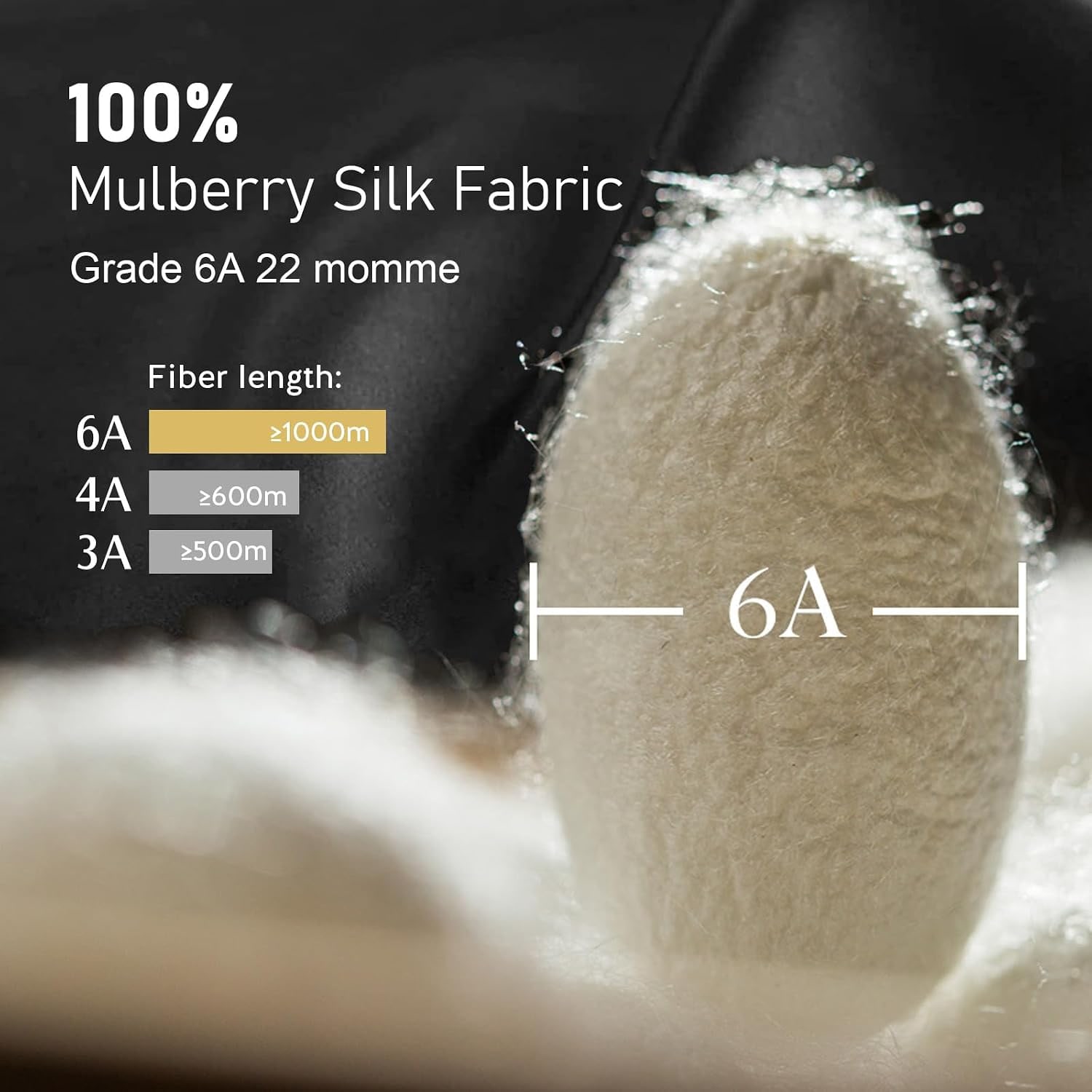
Momme is the measure you will see quoted alongside silk products. It is a traditional weight unit, and a higher momme number indicates a denser, heavier weave. A 22 momme silk sleep mask sits in the range most people consider substantial, with enough body to drape properly rather than feeling papery.
The material features listed here are soft, breathable and cool, with a cushioned inner layer designed to let air move. That airflow is what keeps a mask from feeling clammy by three in the morning.
Who this suits
Side sleepers, obviously, which is the group the whole design exists for. But there are a few other people who get more from a contoured mask than they expect.
Shift workers sleeping during daylight hours deal with far more ambient light than anyone sleeping at night. A thin line of sun around the edge of a mask is enough to keep you surfacing. The nose wing and the wide band matter much more in that situation.
Frequent travellers are the other obvious group. Cabin lighting on a long-haul flight rarely goes properly dark, and you are sleeping upright with your head against a window or a neck pillow. At 134 grams with a carry pouch, this packs into a side pocket and weighs less than a paperback.
And anyone who shares a bed with someone on a different schedule. If one of you reads late or gets up at five, a mask solves an argument that curtains cannot.
Getting the fit right
Set the band before your first night, not during it. Put the mask on sitting up, adjust the hook and loop closure until the mask sits flush around the nose and across the temples, then take it off and check the length has held. It should feel secure without any sense of squeezing.
A common mistake is overtightening. People assume a tighter band blocks more light, but past a certain point you are just pressing the mask harder against your forehead while the nose gap stays exactly the same. The seal comes from the shape. The band only needs to stop the mask from moving.
Lie down on your side and test it. You want to feel the cushioned band take the pillow pressure rather than the eye panels. If one eye feels like it is getting light, shift the mask a few millimetres rather than cranking the band tighter.
Looking after it
Hand wash only. This is not a case of being overly cautious with silk, it is about the contoured padding, which a machine cycle will distort. Cool water, a mild detergent made for delicates, and a gentle squeeze rather than a scrub.
Do not wring it out. Lay it in a clean towel, press down to absorb the water, then dry it flat and out of direct sunlight. Heat and sun are what dull silk over time.
Fasten the hook and loop closure before it goes anywhere near water, or the hook strip will catch the silk and leave little pulls. Same rule applies when you toss it in the carry pouch. Close it first.
Every week or two is a reasonable wash cycle for most people. More often if you use night creams, since oils transfer onto the inner surface and build up.
The short version
If you sleep on your side, a flat mask is fighting your pillow every night and the pillow usually wins. A contoured shape keeps the fabric off your eyes, a nose wing closes the gap that lets light in at the bottom, and a wide cushioned band holds everything in place without pressing a line into your head.
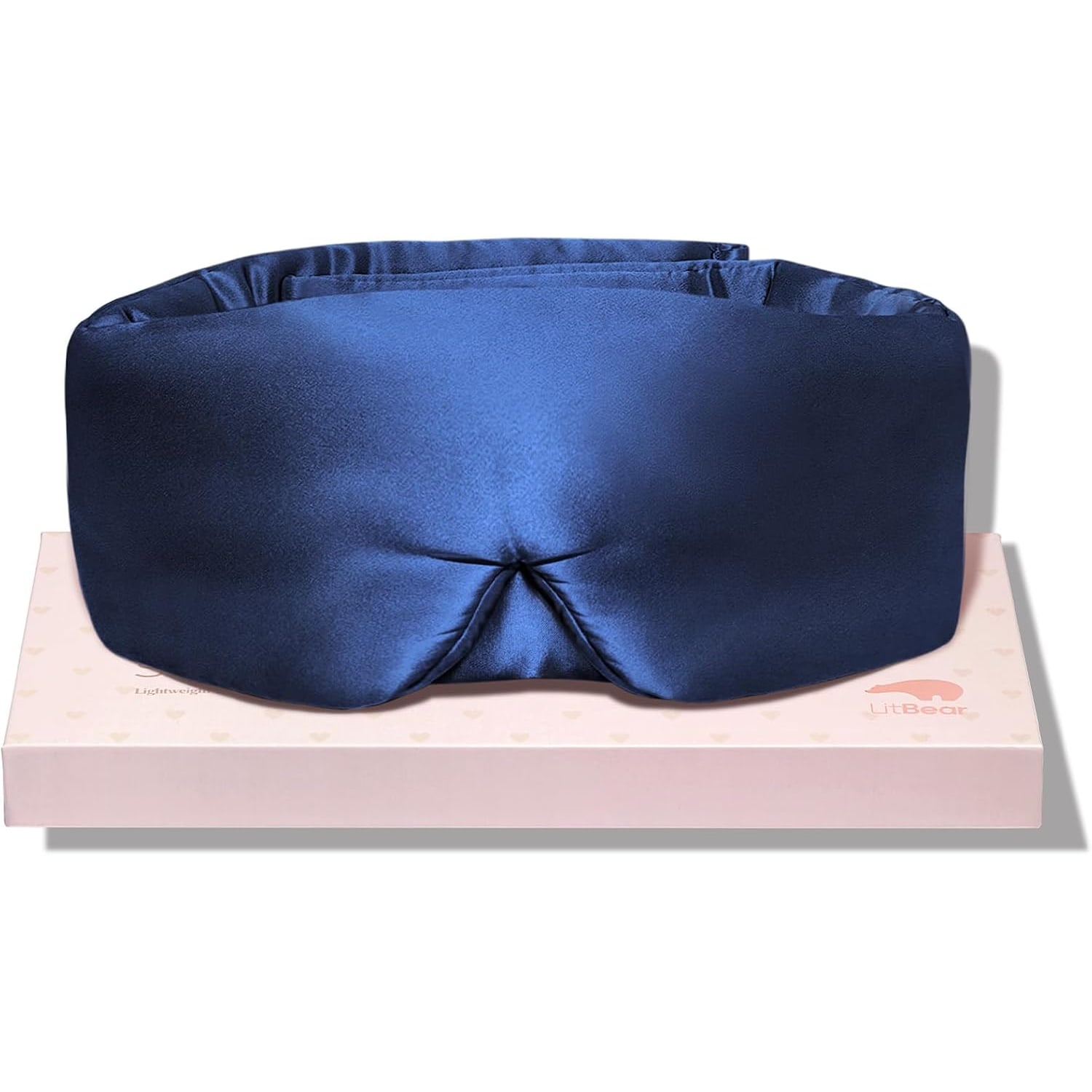
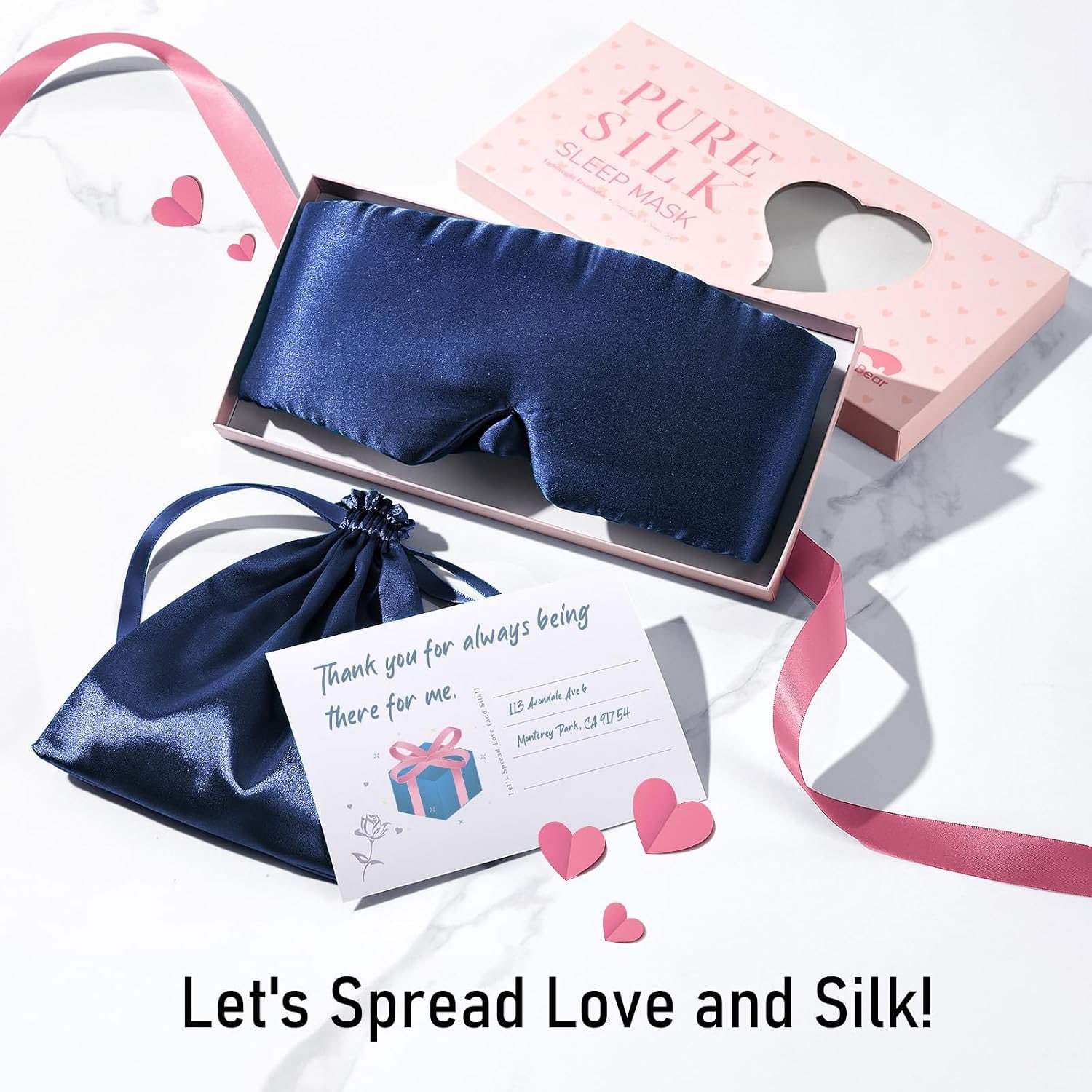
This one is silk on both sides, comes in Midnight Blue, weighs 134 grams, and adjusts with a hook and loop closure to fit most adult head sizes. It arrives with a carry pouch in a gift box, which makes it an easy present and an easy thing to travel with. Hand wash it, dry it flat, and it will keep doing its job for a long time.