

The complete guide
How to Choose a Silk Pillowcase That Is Actually Worth the Money
The problem with most pillowcases
Most of us never think about the pillowcase. It comes with the sheet set, it goes on the pillow, and it stays there until wash day. That is fine, right up until you notice that you wake up with hair flattened on one side, or that your cotton case feels warm and a bit grabby against your face at three in the morning.
Cotton is a good fabric for a lot of things. It is absorbent, it is cheap, it is tough. But absorbent and grabby are exactly the two qualities you do not want against your head for eight hours. A woven cotton surface has texture, and texture means friction. Silk is the opposite on both counts. It is smooth, it does not pull at hair the same way, and it breathes rather than holding warmth in.
That is the whole pitch. Not magic, not medicine, just a different fabric doing a different job.
What momme actually tells you
If you have spent any time shopping for silk bedding you will have seen numbers like 16, 19, 22 and 25 attached to the word momme. It is a weight measurement, the traditional one used in the silk trade. Higher momme means more silk packed into the same area of fabric.
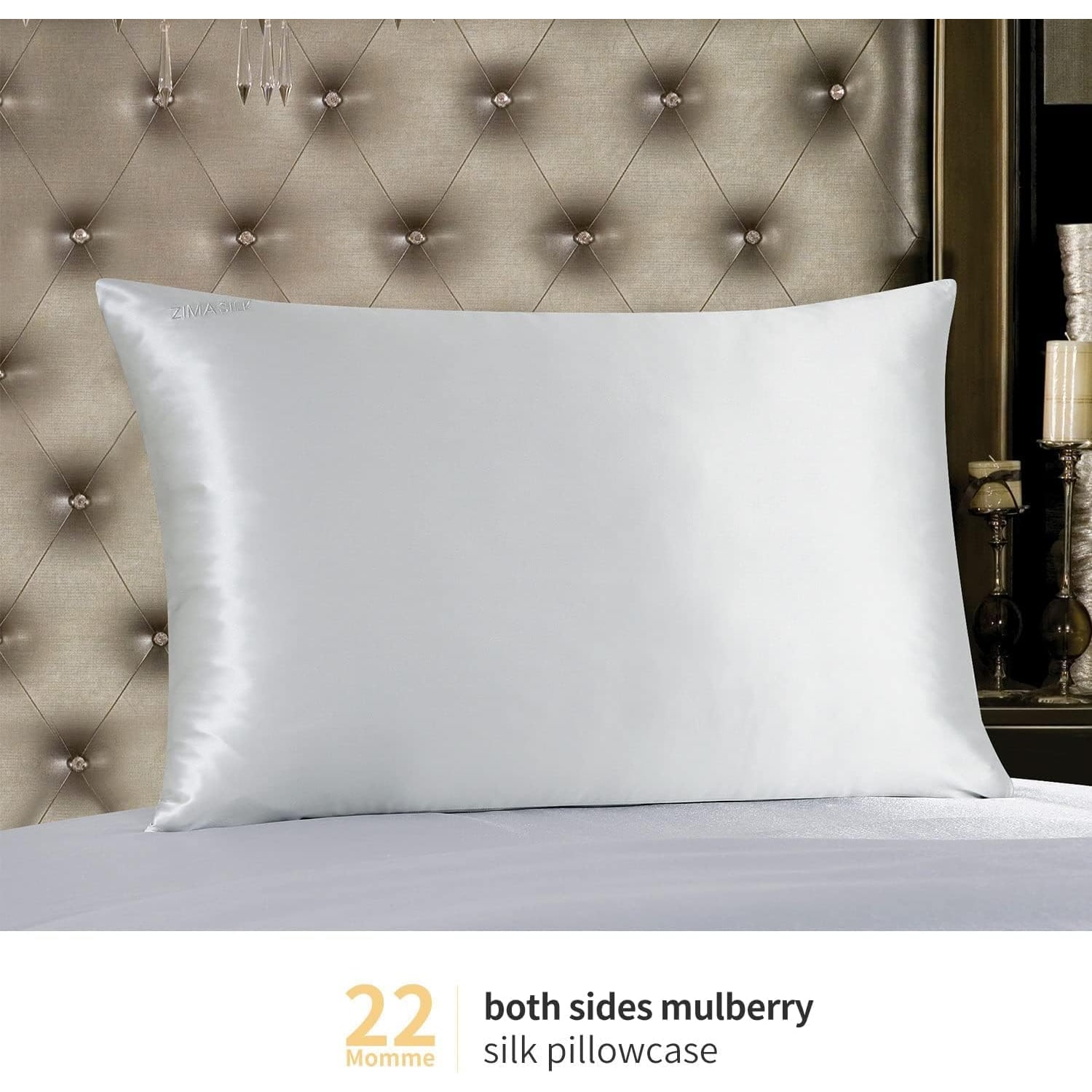
Here is the practical translation. Around 16 momme you get a light, floaty fabric that feels delicate and does not have much body. At 19 momme you reach the usual entry point for proper bedding. At 22 momme, which is where this pillowcase sits, the fabric has real weight to it. You can feel the difference the moment you pick it up. It falls over the pillow instead of clinging to it, and it does not look thin or shiny in the way very light silk sometimes does.
Go higher, to 25 momme and beyond, and you get a heavier fabric again, though you also pay more and the difference in how it feels under your cheek gets harder to pick. For most people, 22 is the sweet spot between substance and price. That is why so many shoppers hunting for the best mulberry silk pillowcase end up around this weight.
This case is 22 momme on both sides, which matters more than it sounds. Plenty of cheaper silk pillowcases use real silk on the face and something else on the back. You do not sleep on the back, so it saves money, but it changes how the case behaves in the wash and how it sits on the pillow. Both sides silk is the honest version.
The thread count question
The listing gives an 800 thread count. It is worth knowing what to do with that number, because thread count is a far less useful measure for silk than it is for cotton.
With cotton, thread count counts the threads in a square of fabric and gives you a rough sense of how fine the weave is. With silk, the filaments are so fine that the number gets large quickly and does not map neatly onto quality. Momme tells you more. Treat the 800 figure as supporting information, not as the headline. If a silk pillowcase quotes a sky-high thread count but no momme weight at all, that is a sign to ask more questions.
Who this suits
A few groups tend to get the most out of a silk pillowcase.
People with long hair often notice it first, because long hair has more surface area to drag across the pillow. A smoother case means less of that dragging. Anyone who runs warm at night tends to appreciate silk too, since it breathes and feels cool to the touch rather than holding heat the way a heavy cotton or flannel case does.
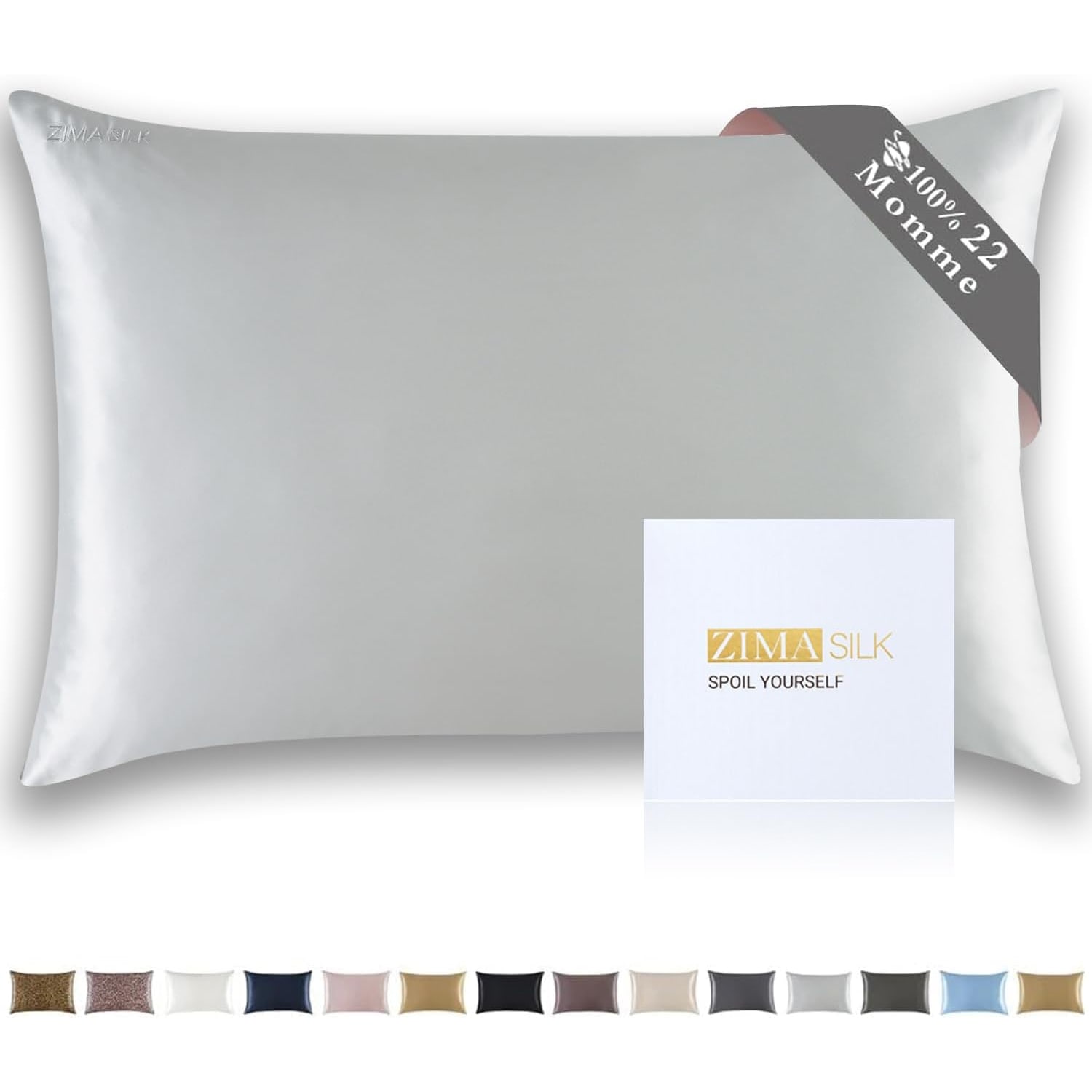
Then there is the gifting crowd. A silk pillowcase is one of those things most people will not buy for themselves but are quietly pleased to receive. It arrives in a gift box here, which removes a step. Light grey is also the safest colour to choose for someone else, since you are not gambling on whether their bedroom is warm-toned or cool-toned.
And finally, there is the simple comfort case. Some people just like the way it feels. That is reason enough.
Why the closure matters more than you think
Silk pillowcases come with one of three closures. Open-ended envelope styles are the cheapest and the most annoying, because the pillow works its way out while you sleep. Envelope flaps are better. Zippers are best for keeping the pillow where it belongs.
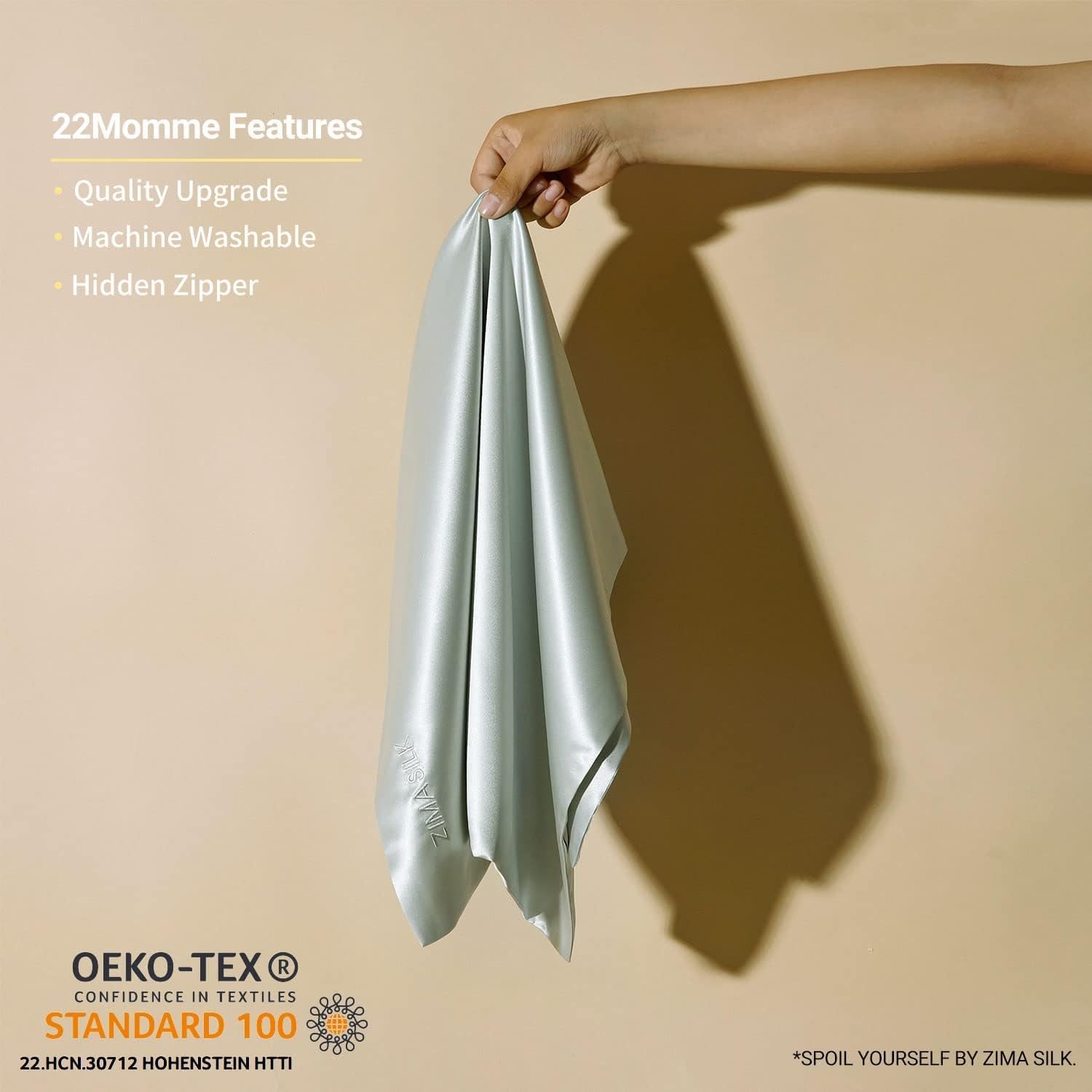
The catch with a zip is that an exposed one puts metal or plastic teeth near your face. This case uses a hidden zipper, tucked into the seam. The pillow stays enclosed, the outside looks tidy, and there is nothing sitting against your skin. The listing describes the zip as solid and built to survive repeated washing, which is the part that usually fails first on cheaper cases.
One habit worth building: close the zip before you wash. An open zip in a wash basin is how silk gets snagged.
How to care for it without stress
Silk has a reputation for being fussy. It is really not, as long as you stick to a few rules.
This pillowcase is hand wash only. Use cool water and a mild detergent made for delicates. Skip the bleach and skip the fabric softener, since softener coats the fibres and takes the slip right out of the fabric, which defeats the point. Swish it through, do not scrub it, and do not leave it soaking for ages.
When you take it out, press the water out between your hands or against the side of the basin. Do not wring it and do not twist it. Then dry it flat or hang it somewhere shaded with decent airflow. Direct sun fades colour and weakens the fibres, and a clothes dryer is the fastest way to ruin a silk case. Heat is the real enemy, more than water.
If it comes out creased, most of the wrinkles settle while it hangs. If you want it crisper, iron on the lowest setting, on the reverse side.
The single best upgrade to this routine is buying a second case so you always have one on the bed while the other dries. Two cases in rotation last noticeably longer than one case washed constantly.
A note on claims
You will find silk bedding sold with some very confident promises attached. We are going to stay away from that. What we can tell you is what the fabric is and how it behaves. It is 100% mulberry silk, 22 momme, smooth to the touch, breathable, and lower friction than a woven cotton case. Hair and skin slide across it more easily. That is the honest limit of what a fabric can be said to do, and anything beyond it is marketing.
Checking the size before you order
Pillow sizing is genuinely confusing because it differs country to country. This case is 75 cm long by 50 cm wide, listed as U.S. standard queen.
Pull your pillow out, lay it flat, and measure it. If the numbers are close to 75 x 50 cm, you are fine. If your pillow is noticeably smaller, the case will fit but will look slack at the ends. If it is a king pillow, it will not go in. Thirty seconds with a tape measure saves a return.
The short version
A 22 momme silk pillowcase in light grey, pure mulberry silk on both sides, with a hidden zip and a queen 75 x 50 cm cut. It is heavier and better finished than entry-level silk, neutral enough to suit almost any room, and it comes boxed if you are buying it for someone else.
Hand wash it in cool water, keep it out of the sun and the dryer, and it will hold up for a long time. Measure your pillow before you order, and if it turns out not to be right, send it back unused within 14 days and we will sort it.