

The complete guide
How to Choose and Wear a Brushed Mulberry Silk Scarf
The small gap in most wardrobes
Most people own a heavy scarf and nothing in between. You have the thick wool one for July mornings, and then for the other nine months of the year there is a gap. Mild days where a coat alone feels slightly short. Offices where the air conditioning sits two degrees lower than anyone wants. Flights. Evenings that turn once the sun drops. None of those call for wool, but a bare neck is not quite right either.
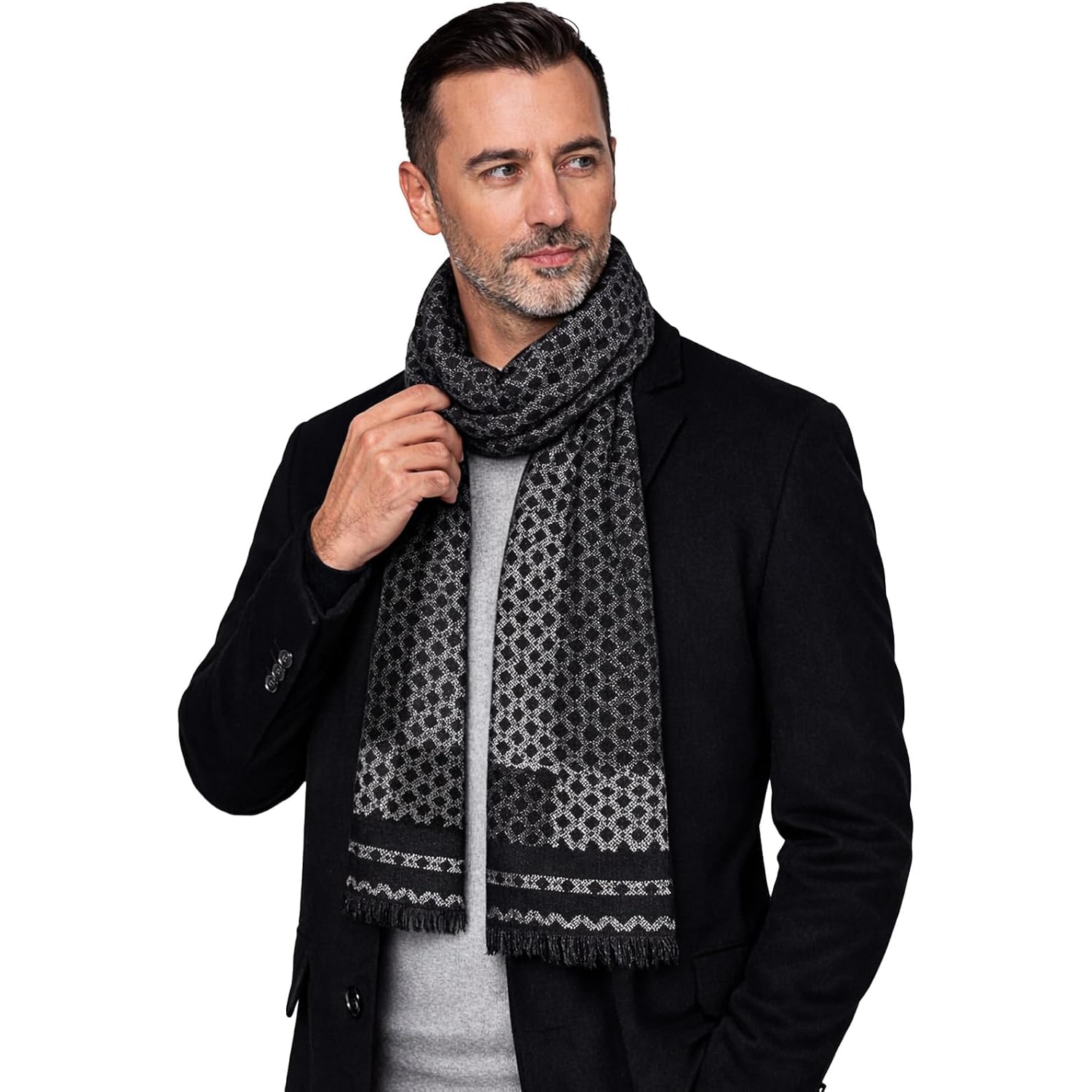
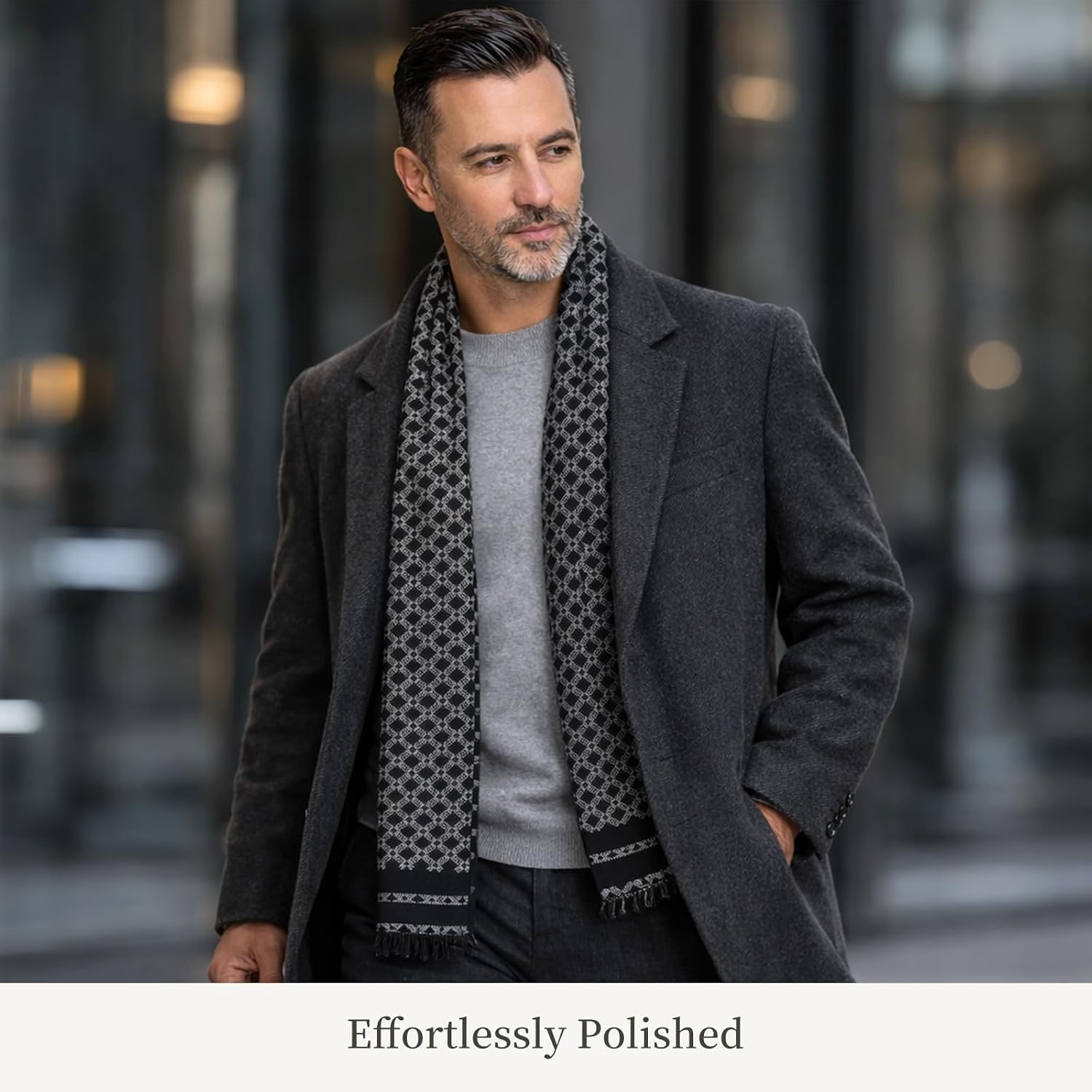
A brushed silk scarf lives exactly in that gap. It is thin enough to fold into a bag and forget about, and it still makes a real difference when you put it on. The grey and black geometric adds a small amount of interest to an outfit without becoming the thing people comment on.
What brushed mulberry silk actually is
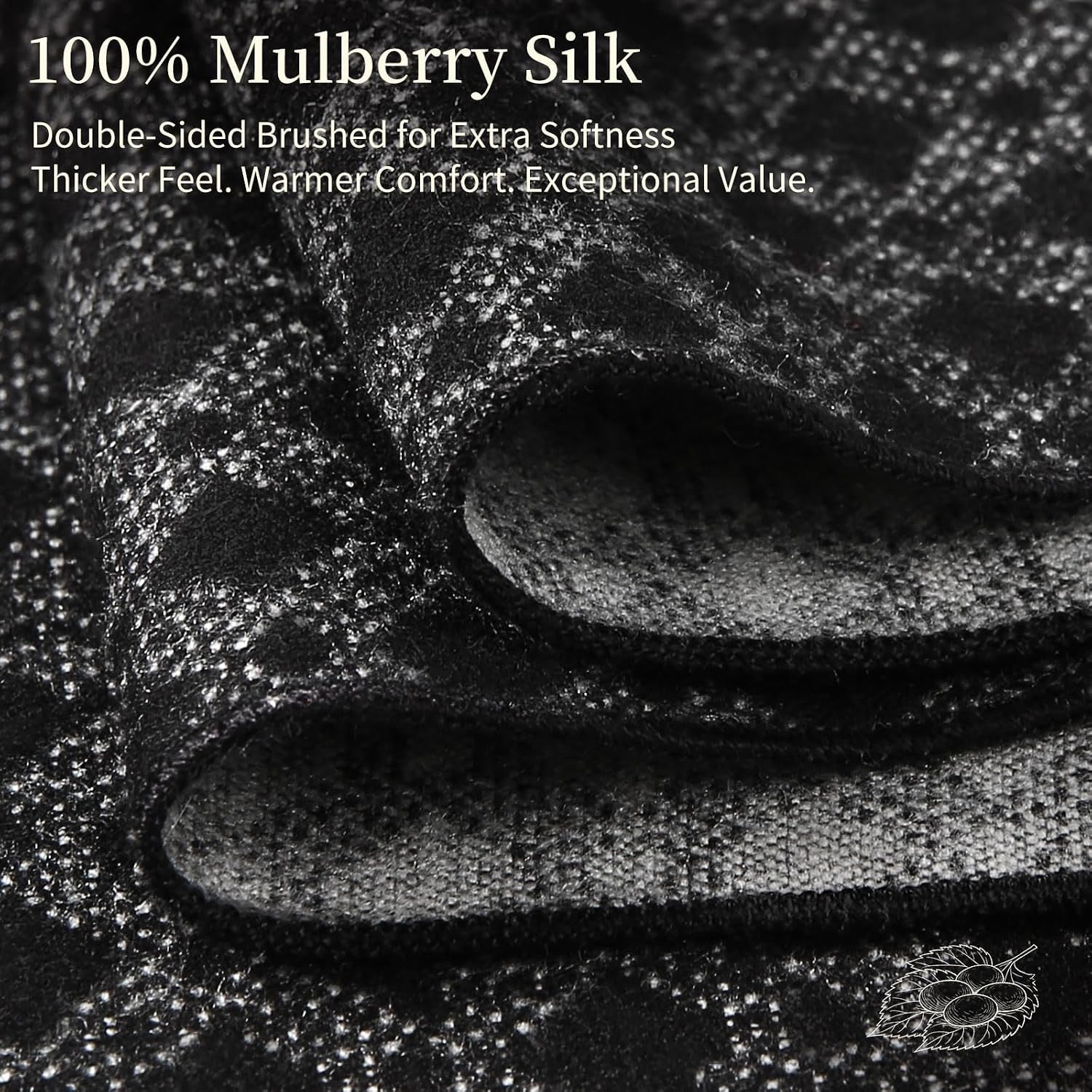
Mulberry silk comes from silkworms fed on mulberry leaves. The fibre they produce is long, even and regular, which is why mulberry silk has that consistent, smooth face. It is the grade most buyers mean when they talk about proper silk rather than a blend.
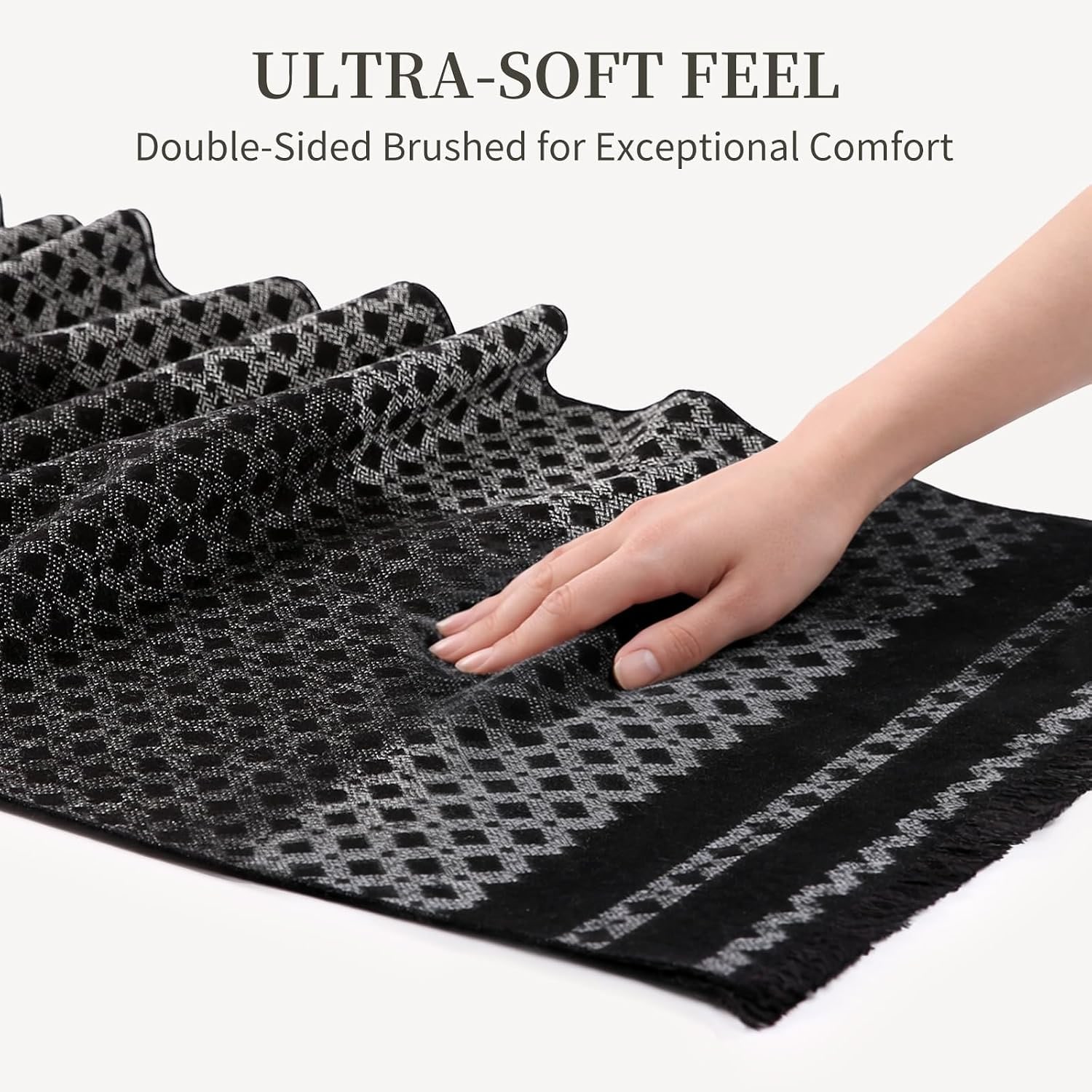
The brushing is the second part. After the silk is woven, the surface is worked gently so the fibre ends lift a little. You end up with a scarf that still handles like silk but looks quieter. A standard silk twill catches light and shines. A brushed silk reads as soft and matte, closer to the surface of a very fine wool, while keeping the slip and the drape that make silk worth owning.
That distinction matters more than it sounds. A shiny scarf under a wool coat can look slightly formal, almost like evening wear. A brushed one sits naturally against tweed, melton, denim and knitwear. It is the version you actually reach for on a Tuesday.
Why silk works at the neck
Two things make silk good against skin. First, the surface is smooth, so skin and hair glide over it rather than catching. Anyone who has worn a scratchy wool knit on a cold morning knows the difference immediately.
Second, silk holds a thin layer of still air. Still air is what insulation actually is, whether the fibre is down, wool or silk. That is why a scarf a couple of millimetres thick can noticeably take the edge off a chilly walk to the station. It is not going to replace a proper winter scarf in genuine cold, but it does more than its weight suggests.
Silk also breathes. If you have ever put on a synthetic scarf, walked into a warm shop and immediately felt clammy, you know what the alternative feels like. Silk handles the move from cold outside to heated inside better.
Reading the pattern
The grey and black geometric is a woven pattern rather than a loud print. From across a room it reads as texture. Up close you see the repeat. That is the behaviour you want from an everyday accessory, because it means the scarf complements whatever else you are wearing instead of competing with it.
Grey and black are also about as safe as patterned accessories get. They sit well against navy, charcoal, camel, cream, olive, burgundy and any shade of denim. If your coats are dark and your knitwear is plain, this is an easy addition. If your wardrobe runs to bright colour and big prints, the scarf still works, because a near-neutral is usually the thing that calms a busy outfit down.
For people building a small, considered wardrobe, this is the sort of piece that earns its place. You are not buying a statement. You are buying the thing that makes other items look more finished.
How to wear it
Start with the single loop. Drape the scarf around your neck, loop one end over, let both ends hang. Under an open coat this looks relaxed and takes five seconds.
For something neater, fold the scarf in half lengthwise, drape it so the folded loop sits on one side, then pull both loose ends through that loop and slide the knot up. This holds position better on windy days and looks tidier with a collared shirt.
A third option is the flat drape. Open the scarf out, lay it over a jumper or under a blazer, and leave it unknotted. This shows the pattern properly and is comfortable indoors.
The fourth is the narrow band. Fold the scarf several times lengthwise until it is a few centimetres wide, then tie it close to the throat under a shirt collar. This reads as deliberate and works well with tailoring.
Try all four over a week. Most people settle on one and use it almost exclusively.
Who it suits
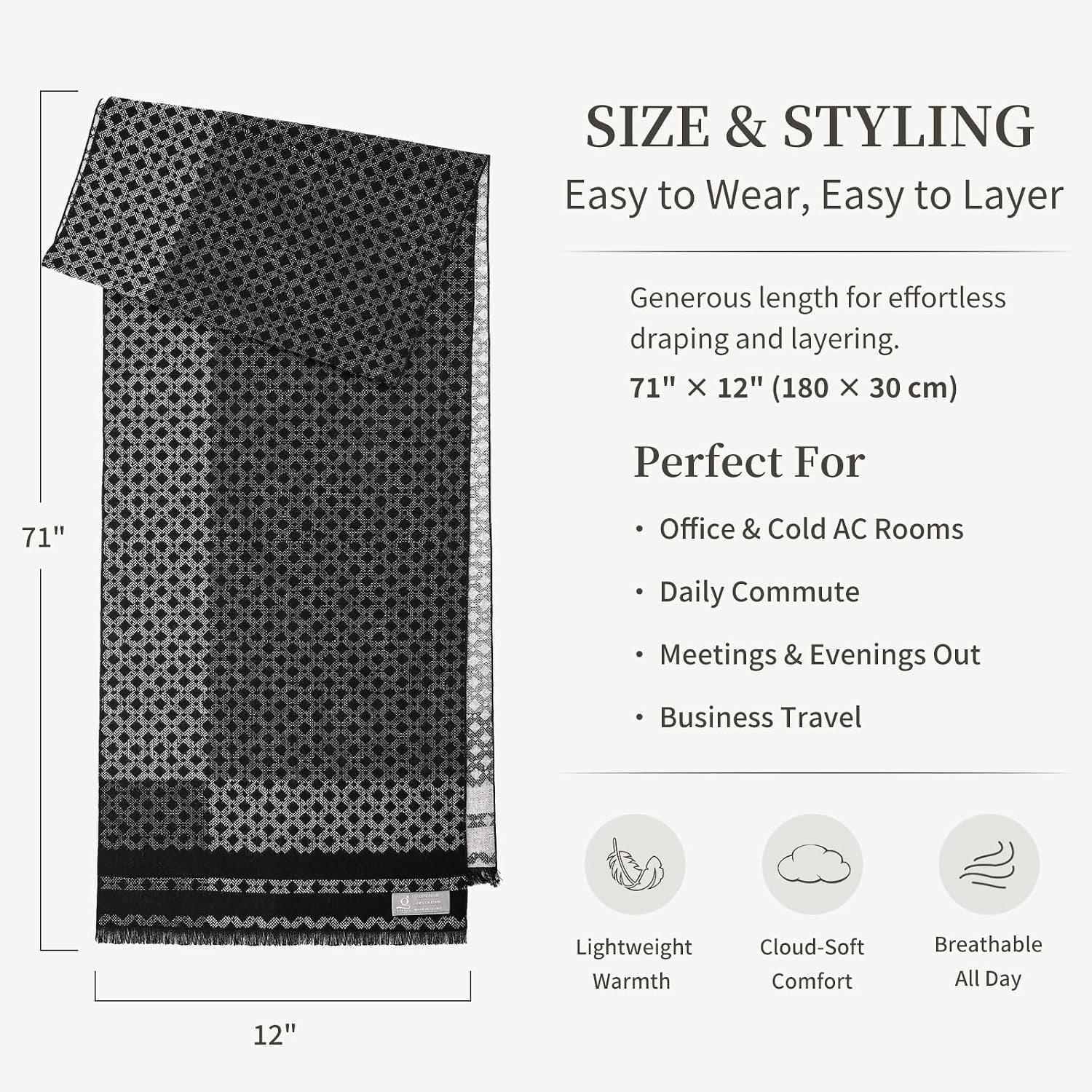
If you commute, keep one in your bag. The weather turns, the train is cold, you have a layer. If you work somewhere with aggressive air conditioning, this solves the problem without you having to wear a cardigan indoors in January. If you travel, silk packs down to nothing and shakes out quickly, which is why a long silk scarf ends up in so many carry-on bags.
It also suits anyone who finds wool itchy. Some people simply cannot wear wool at the throat, and silk is a straightforward answer.
As a gift it is low risk. There is no sizing. The colours are neutral. It works for a wide age range and for men as well as women.
Looking after it
Hand wash only. That is the care instruction for this scarf and it is worth following rather than taking a chance in the machine.
Use cool water and a detergent made for delicates. Move the scarf gently through the water for a minute or two, rinse until the water runs clear, then lift it out supporting its weight rather than letting it hang and stretch. Do not wring it. Lay it on a towel, roll the towel up, and press. Unroll and dry the scarf flat, in the shade, away from radiators and direct sun.
If it needs pressing, use a low iron with a cloth between the iron and the silk. Keep steam off the brushed face where you can. Very often you do not need an iron at all. Hang it in the bathroom while you shower and most creases drop out.
Store it flat in a drawer or loosely rolled. Tight folding over years can leave permanent lines along the crease. Avoid leaving it hanging on a thin hook for months at a time.
A few small habits matter. Put the scarf on after perfume or hairspray, not before. Keep it away from rough jewellery clasps and watch edges that can pull threads. Wash it less often than you think, since airing is usually enough.
The short version
This is a brushed mulberry silk scarf in a grey and black geometric, made for everyday wear rather than for a drawer. The brushed finish gives it a soft, matte look that sits well with coats and knitwear. Silk is smooth at the neck, breathes well, and adds warmth out of proportion to its weight.
Care is simple. Hand wash cool, dry flat, store loosely. Exact dimensions, fibre percentage, momme weight and country of origin are not listed in this record, so ask us if any of those decide the purchase for you.
Delivery runs three to seven working days from local warehouses. Returns are open for fourteen days from delivery if the scarf is unused and unwashed, so if it turns out not to be your thing, it is easy to send back.