
The complete guide
Choosing a Queen Silk Pillowcase, Without the Guesswork
The problem with the pillowcase you already own
Most of us never think about the pillowcase. It came with the sheet set, it is cotton, it does the job. Then you notice something. Your hair looks slept on in a way that takes twenty minutes to fix. There are creases pressed into one side of your face at breakfast. The case has crept halfway off the pillow by morning and you have been sleeping on a bare corner.
None of these are disasters. They are small daily annoyances that add up, and the surface under your head is the thing causing all of them. Woven cotton has texture. Under a microscope it is a landscape of ridges and loops, and hair catches on it every time you move. Over seven hours and dozens of position changes, that adds up to a lot of friction.
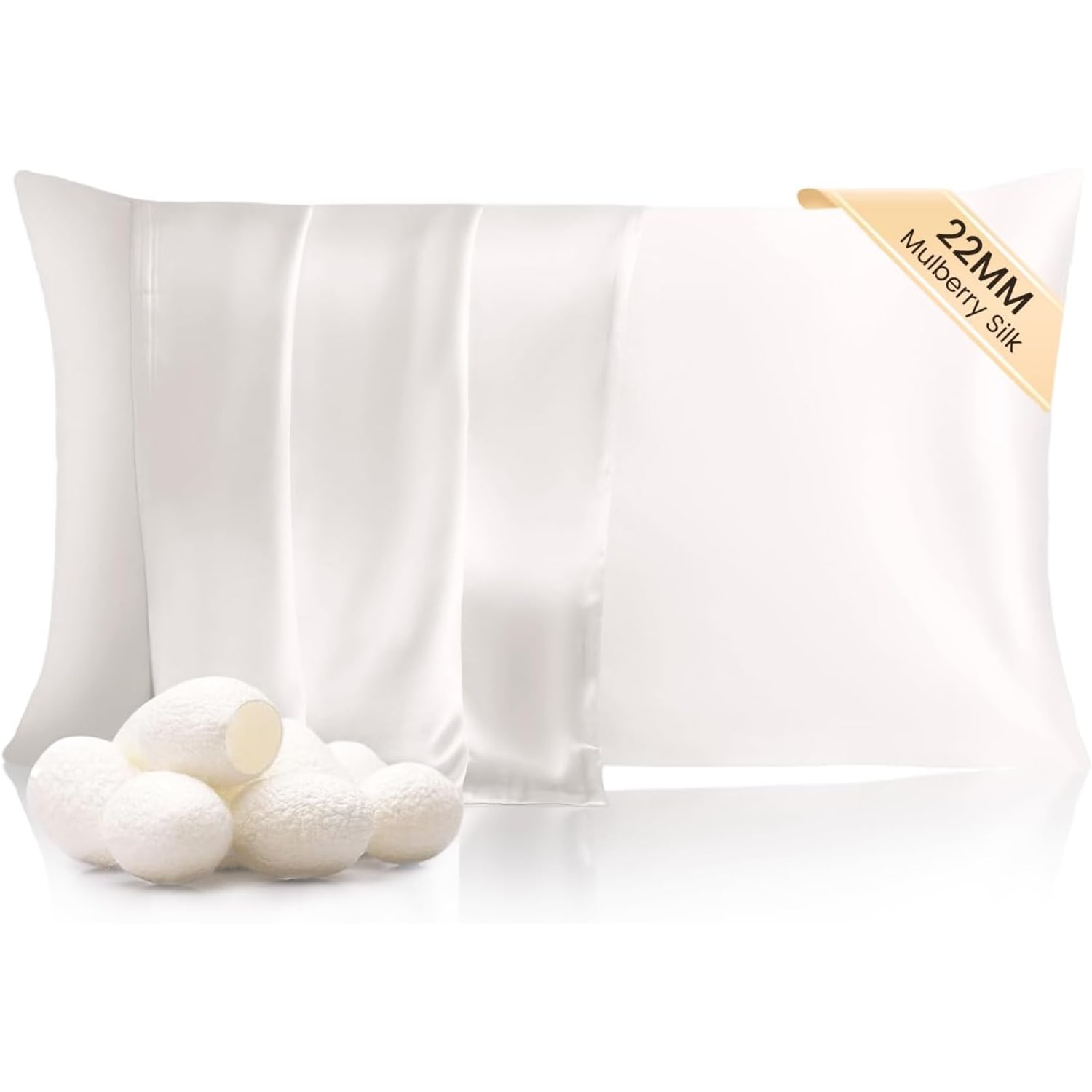
Silk is the usual answer, and a 22 momme mulberry silk pillowcase in queen size is about as straightforward a version of that answer as you can buy.
What momme actually tells you
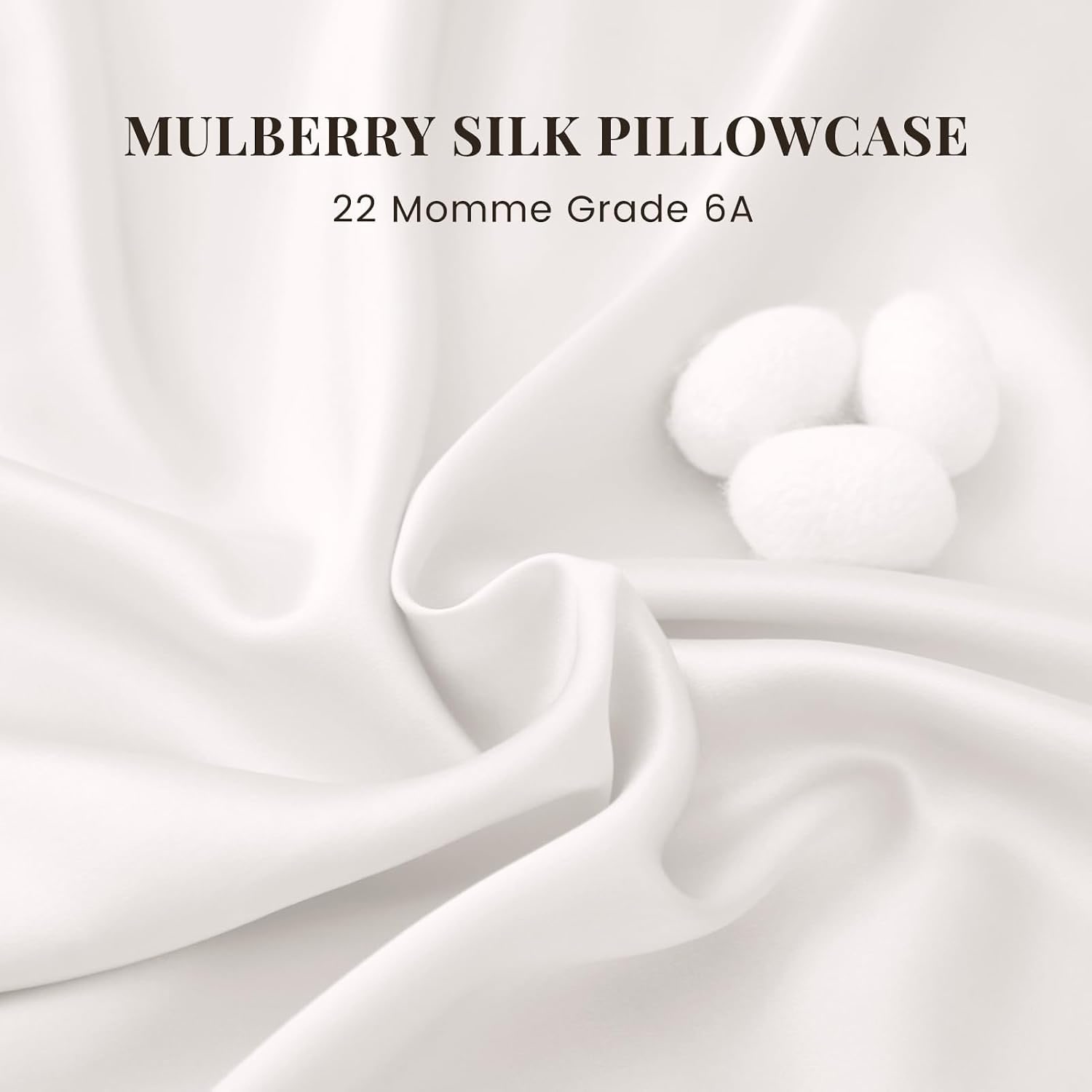
Cotton gets measured in thread count. Silk gets measured in momme, written as mm but pronounced "mommy". It is a weight measurement, not a count. One momme equals roughly 4.3 grams per square metre of fabric. So a 22 momme silk is heavier and denser than a 19 momme silk made from the same fibre.
Why does weight matter? Because thin silk feels slippery in a cheap way. It slides off the pillow, it wrinkles into tight creases, and it wears through at the seams sooner. Heavier silk has body. It drapes rather than floats, and it holds up better to weekly washing.
Bedding silk generally runs from about 16 momme to about 30 momme. Below 19 it starts to feel insubstantial for a pillowcase. Above 25 the price climbs quickly and the practical gain gets smaller. That is why so many people shopping for the best silk pillowcase end up at 22. It is dense enough to feel like a proper piece of fabric and still sensibly priced.
This one also carries a stated 600 thread count. For silk that figure is less meaningful than momme, but it appears in the supplier specifications so it is worth knowing it is there.
Mulberry silk and why the word matters
Not all silk is the same. Mulberry silk comes from silkworms raised on a controlled diet of mulberry leaves. Because the diet is uniform, the fibre they produce is uniform too. The strands are long, smooth and consistent in diameter.
Wild silks come from moths eating whatever they find. The fibre is shorter and more irregular, which gives those fabrics a slubby, textured look. Beautiful for a scarf or a cushion. Not what you want under your cheek.
Long, even fibres are what make a mulberry silk pillowcase feel glassy smooth. There are fewer fibre ends poking out of the weave, so there is less for hair to snag on. That is the whole mechanism. It is not a treatment or a coating, it is just the shape of the fibre.
It is also worth clearing up the satin confusion. Satin describes how threads are woven, not what they are made of. Plenty of satin pillowcases are polyester. They look shiny and cost a fraction of the price, but polyester does not breathe the way a natural fibre does, and the surface feel is different once you have compared them side by side. A 100 silk pillowcase is a different product.
Why the closure is worth caring about
This is the part shoppers skip, then regret. There are three common ways to close a pillowcase.
An open end is the cheapest. The pillow goes in and nothing holds it. It works fine until you move in your sleep, which you do.
An envelope flap tucks a panel of fabric over the pillow. Better, but silk is slippery by nature, and a slippery flap on a slippery pillow does not grip much. By morning the pillow has usually worked its way towards the opening.
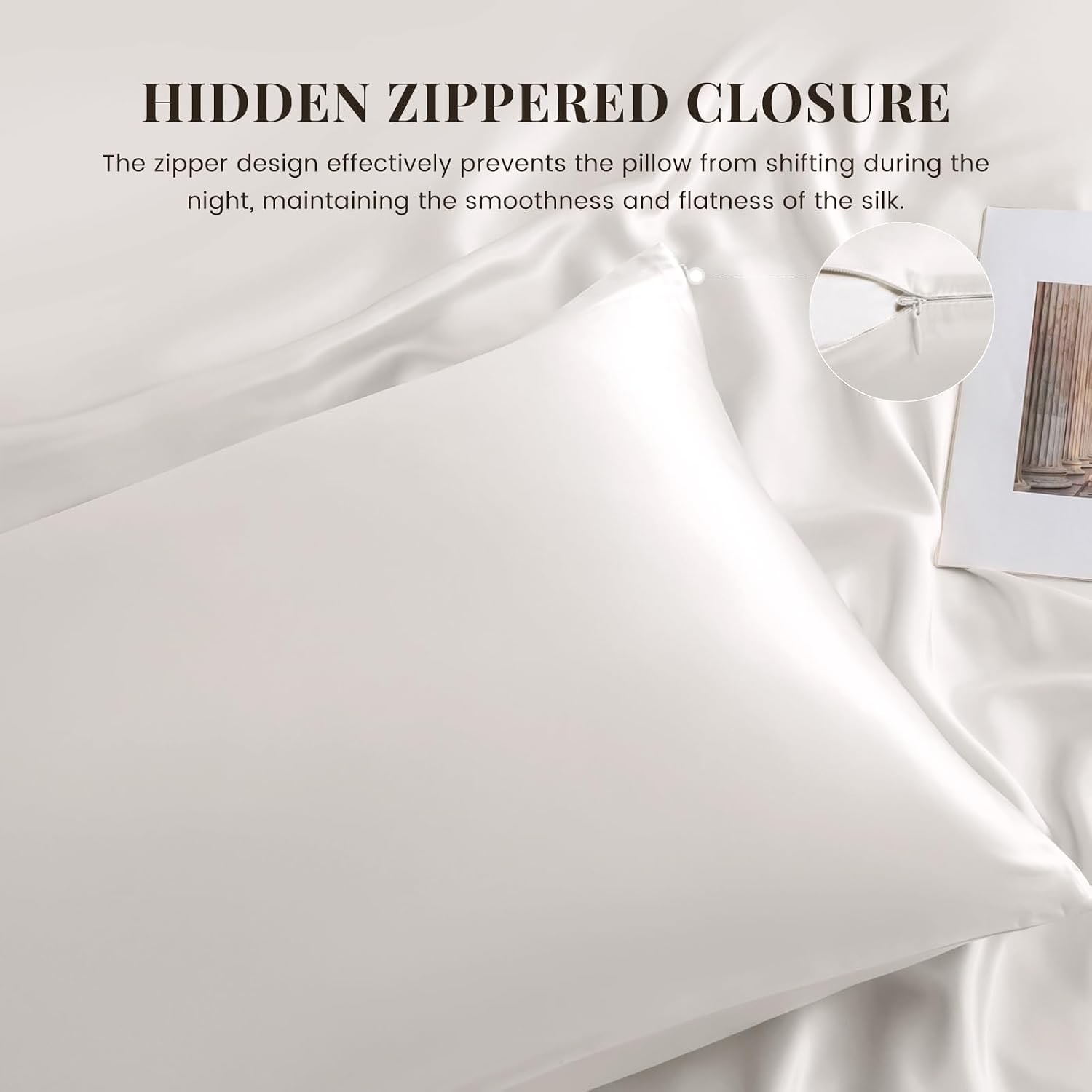
A hidden zip solves it properly. The zip is sewn into the seam and sits flush, so you do not see it when the case is on the bed and you do not feel it when you are lying on it. Close the zip and the pillow is not going anywhere. When the wash day comes around, you unzip and the pillow slides straight out. No shaking, no wrestling, no turning the whole thing inside out.
For a case you will strip and wash every week for years, that small piece of hardware makes a real difference to how annoying the product is to live with.
Getting the size right
Queen is the size most often mismatched, so take a minute here. This case measures 76.2 cm by 50.8 cm, which is 20 by 30 inches.
Standard pillows run about 20 by 26 inches. King pillows are roughly 20 by 36 inches. Those four and six inch gaps matter. A standard pillow inside a queen case will sit loose with a flat, empty flap at one end. A king pillow simply will not go in without straining the seams.
So before you order, measure the pillow on your bed. Lay it flat, run a tape along the long side, and compare. If it comes in around 76 cm, this is the right case. If your pillows and your sheet set disagree, trust the pillow, not the packaging.
One more practical note. Pillow loft affects fit too. A very thick pillow fills more of the case and will make it look tighter than the numbers suggest. A flat, well-used pillow will leave the case looser. Neither is a problem, but it is worth expecting.
Living with silk
The honest version: silk needs a bit more care than cotton, and it is still not much.
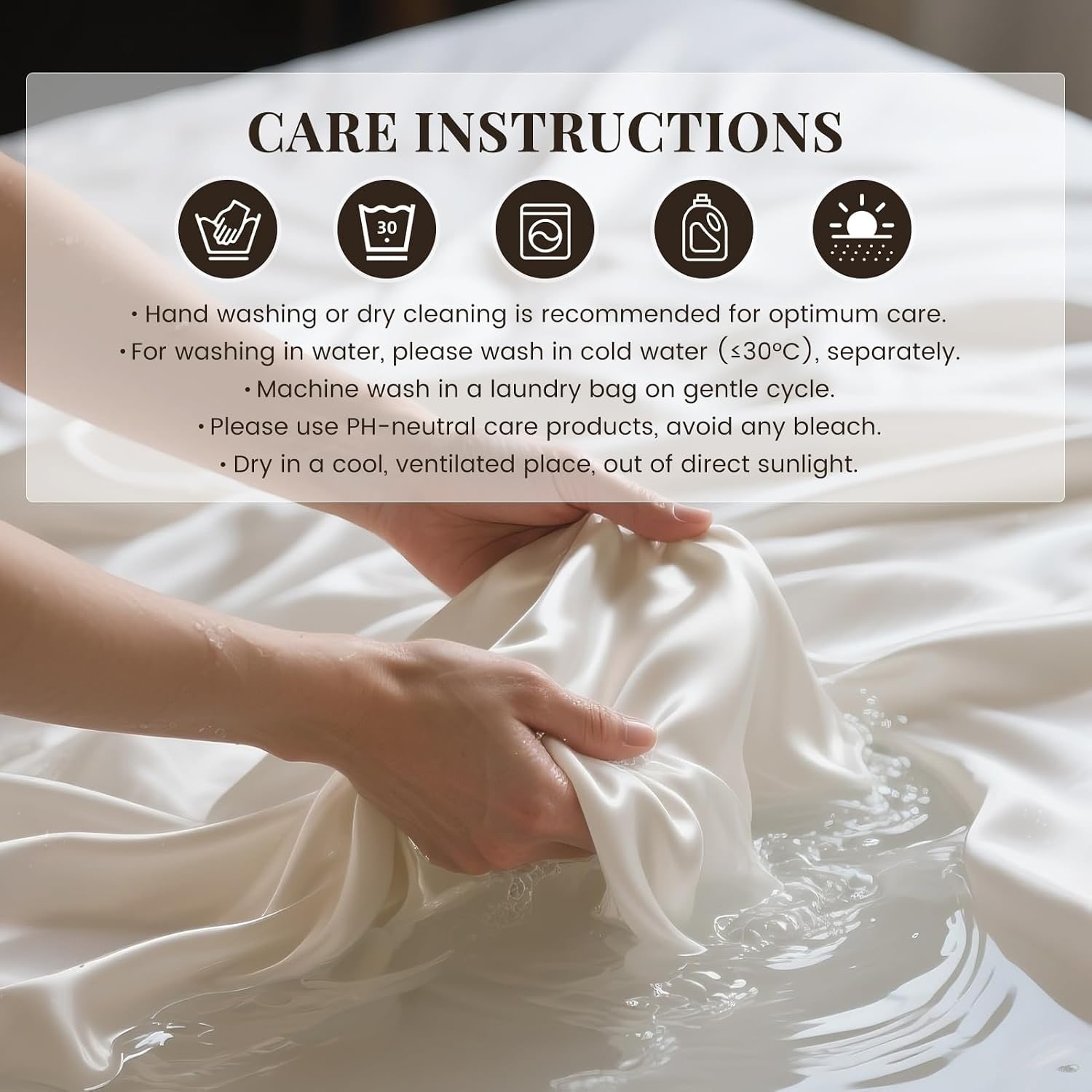
Wash in cool water. Hand washing in the basin with a mild detergent made for delicates takes about five minutes. If you prefer the machine, put the case inside a mesh laundry bag and run the gentle cycle, also in cool water. The bag stops the fabric catching on the drum or tangling with zips from other garments.
Skip bleach, skip brighteners, skip anything with strong enzymes. A small amount of a gentle detergent is all it takes. Silk does not need aggressive cleaning.
Then line dry or lay it flat, out of direct sun. Do not tumble dry. Heat is the enemy of silk and the dryer combines heat with mechanical tumbling, which is the worst thing you can do to the fibre. Air drying takes a couple of hours and costs nothing.
If you need to press it, use the lowest iron setting, work on the reverse side, and do it while the fabric is still slightly damp. Honestly, most of the time hanging it straight after washing is enough and the creases drop out on their own.
Buy two if you can. Rotating a pair means one is always clean and ready, and each case spends less time in the wash, which extends the life of both.
Who this suits
Anyone who wakes with tangled hair, anyone with a fringe or a blow-dry they want to survive the night, anyone who finds cotton too warm. It also suits people who just want their bed to feel a little better without changing anything else about it. A pillowcase is the cheapest upgrade in a bedroom.
It works as a gift too. White goes with everything, so there is no risk of clashing with someone's bedroom, and it arrives in a packing bag.
If you share a bed, note that this is one case. Order two for a matching pair.
The short version
A 22 momme mulberry silk pillowcase gives you a low-friction surface to sleep on, which means less drag on your hair and skin through the night. The 22 momme weight is dense enough to feel like real fabric rather than something flimsy. The hidden zip keeps the pillow where it belongs and makes washing simple. The queen cut at 76.2 cm by 50.8 cm fits standard queen pillows, so measure yours before ordering.
Wash it cool, dry it on the line, keep it out of the dryer, and it will stay smooth and white for a long time. That is the whole thing.