


The complete guide
The Honest Buyer's Guide to Silk Bonnets
The problem nobody tells you about
You spend time on your hair. Maybe it is a wash day that took three hours, maybe it is a blow-dry you paid for, maybe it is just a braid-out you finally got right. Then you go to sleep and wake up to something that looks like it lost a fight.
The culprit is friction. Every time your head turns on the pillow, hair drags across fabric. Cotton feels soft to your fingers, but at the fibre level it is a rough, absorbent weave. Strands catch on it, lift, tangle, and lose moisture to it. Multiply that by eight hours and roughly 365 nights a year and you can see why so much of what we call frizz is really just wear.
A bonnet solves this by changing what your hair touches. Instead of pillowcase, your hair rests against silk, which has a smoother surface and far less grip. Nothing dramatic happens overnight. What happens is that less goes wrong, repeatedly, and that adds up.
How a double-layer silk bonnet works
The basic idea is simple. Gather your hair, put the bonnet over it, go to sleep. What varies enormously between bonnets is the construction.
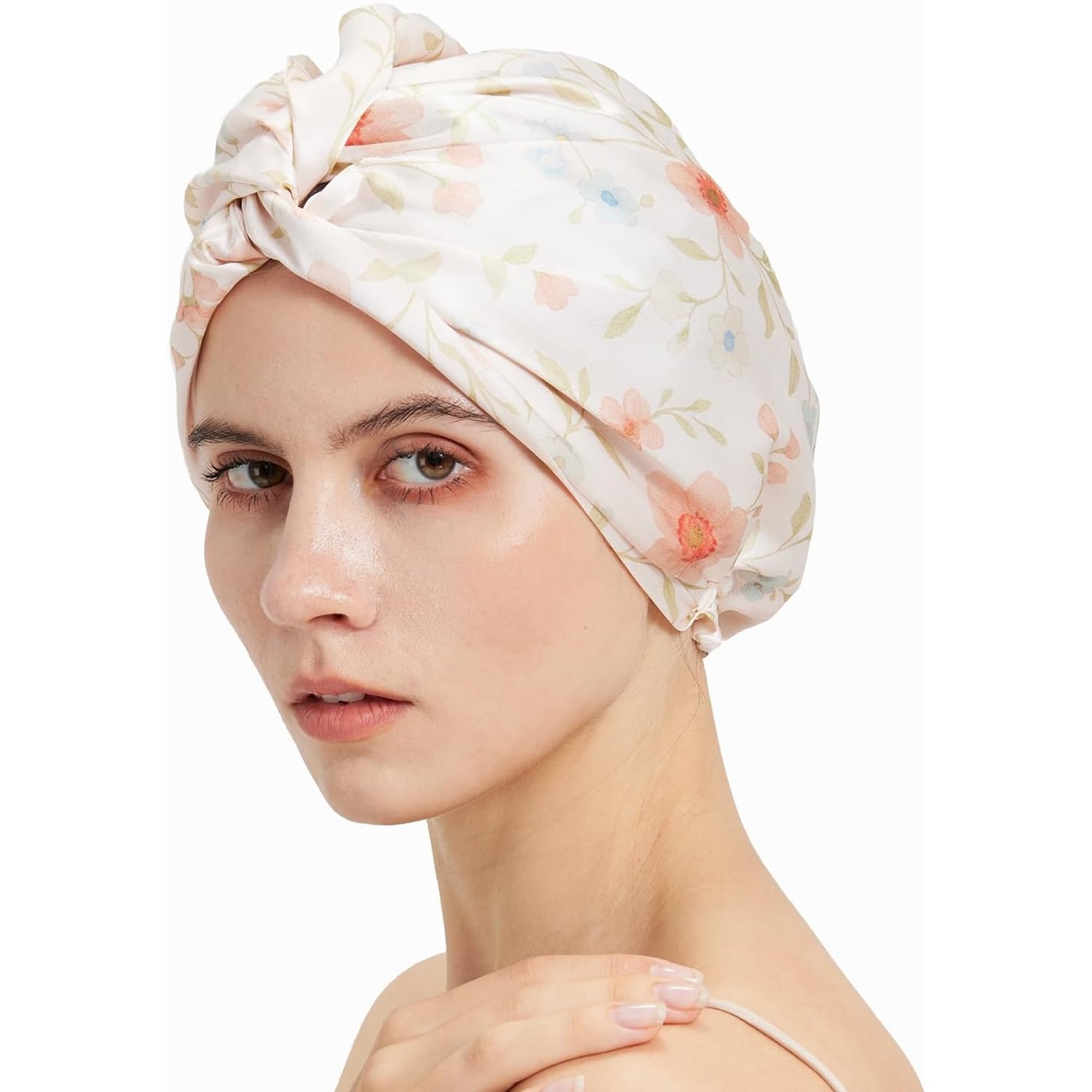
A lot of inexpensive bonnets are silk-faced on the outside and lined with polyester or satin on the inside. That is backwards. The side that matters is the one touching your hair. A double-layered mulberry silk bonnet puts silk on both faces, so there is no compromise hiding in the lining.
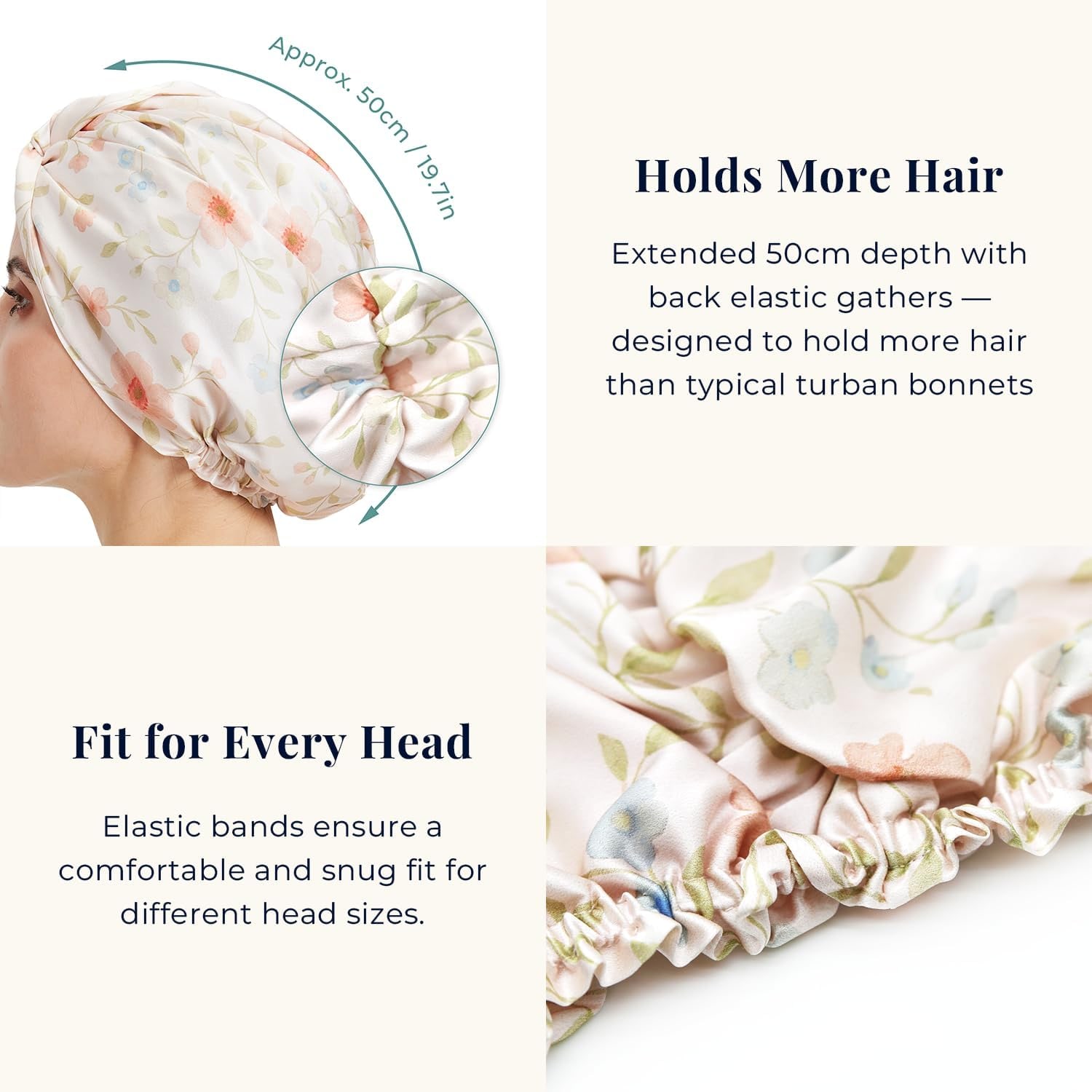
The second layer also does something structural. One thin layer of silk tends to collapse flat against your head. Two layers hold a little more shape, which means there is actual room inside for a bun, a set of twists, or a pineapple. Your hair sits in that space rather than being pressed against your scalp.
Then there is the fit. This is where most bonnets go wrong in the other direction. Manufacturers add strong elastic so the bonnet will not fall off, and the result is a band that presses into your forehead, leaves a line, and sometimes gives you a headache. This one uses a relaxed, non-tight silhouette instead. It holds without clamping. The trade-off is honest: a gentle hold is more comfortable but slightly less secure if you thrash around at night.
Who this suits
Think of it in terms of hair volume rather than hair type alone.
Medium volume is the sweet spot. Curls, waves and braids that need gentle room without compression sit well inside it. If you wear protective styles and want a soft silk hair wrap for sleeping rather than something that flattens the pattern, this shape is working in your favour.
Short hair fits easily but will feel loose. There is simply less hair to fill the crown, so the bonnet has slack. That is not a problem, just a different feel. Plenty of people with pixie cuts or bobs use a bonnet purely to keep a blow-dry smooth, and they get on fine with it.
Very long or very thick hair is where you need to be realistic. If your hair is past mid-back and dense, it may exceed what this bonnet can comfortably hold. You can work around it by coiling hair loosely on top of your head first, but if the bonnet is straining, you want a larger-capacity style instead.
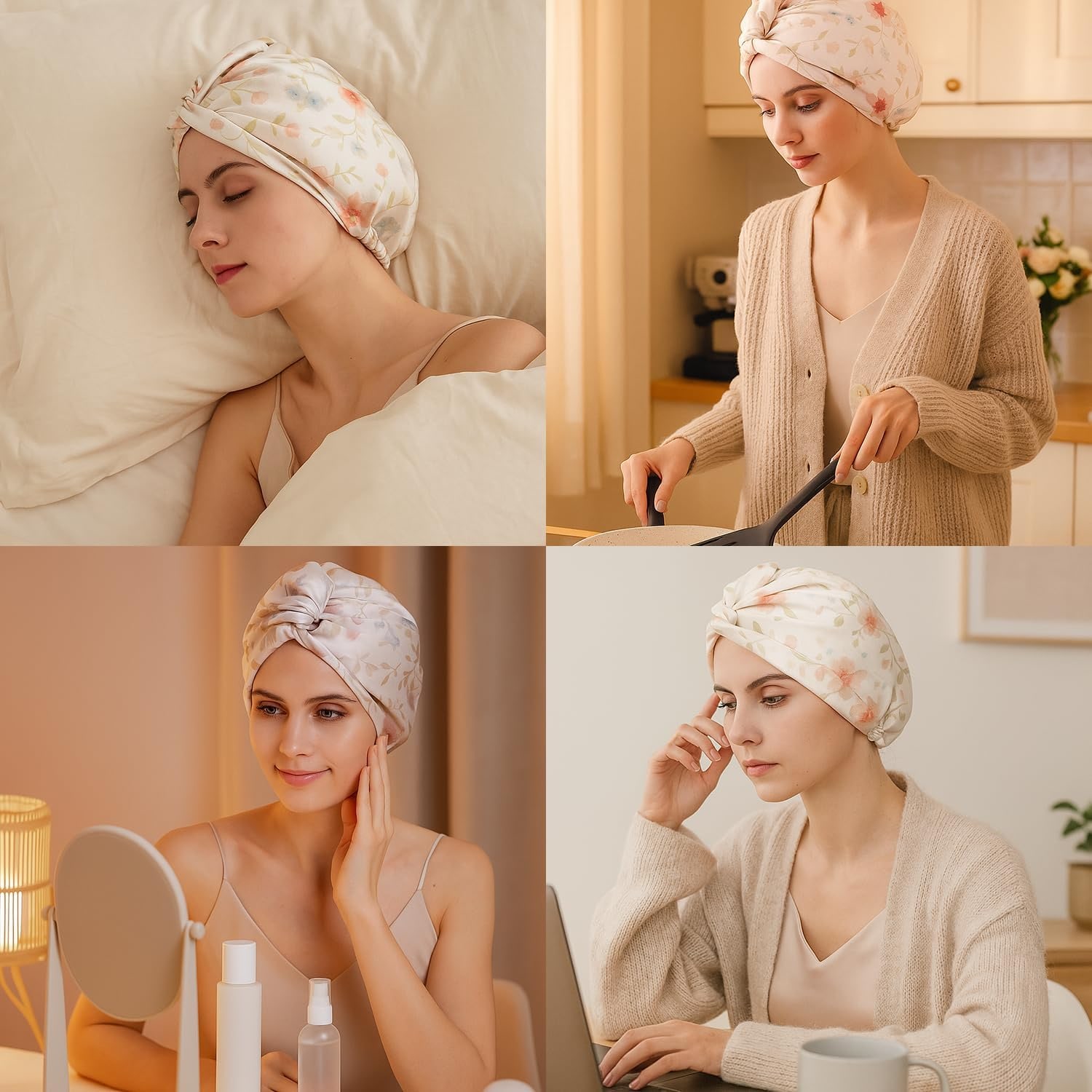
And it is not only for sleeping. A good proportion of people buy a bonnet for the bedroom and end up wearing it half the day. Skincare routines, kitchen work, video calls where you have not touched your hair, errands when you want it contained. A floral print makes that easier because it looks like something you chose, not something you forgot to take off.
How to choose a silk bonnet
Check the lining first. This is the single most useful question to ask. If a listing says silk and does not say what the inside is made from, assume it is not silk. Double-layered construction removes the guesswork.
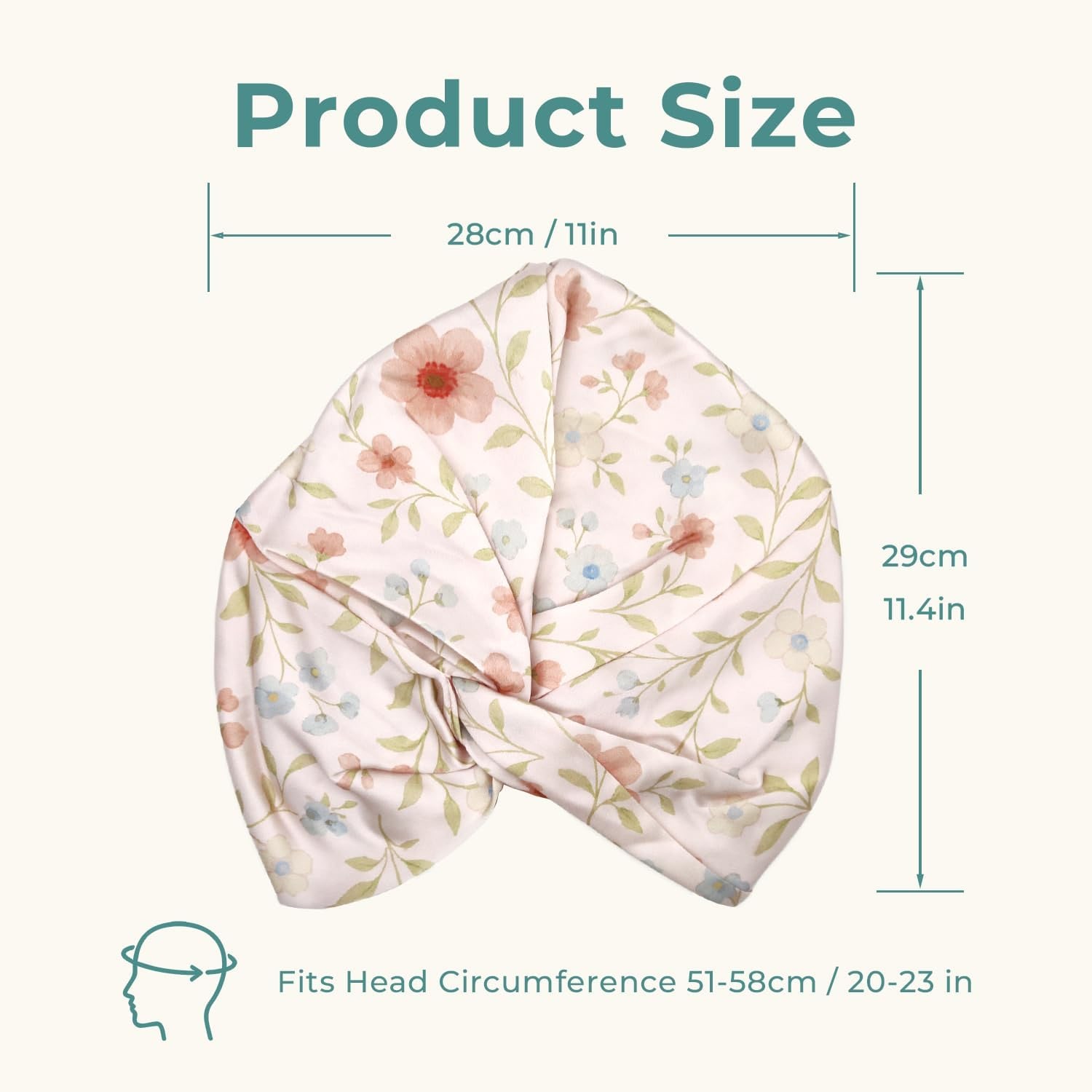
Measure your head. Take a tape measure around your head just above the ears, where the bonnet will sit. Compare that number to the stated range, which here is 51 to 58 cm, or roughly 20 to 23 inches. Most adults land inside it, but a quick measure takes thirty seconds and saves a return.
Think about your hair volume, not just length. Two people with shoulder-length hair can have wildly different volume. Capacity is about how much bulk needs to fit inside, so judge by the size of your hair when it is gathered, not by where the ends fall.
Decide how secure you need it. If you barely move at night, a relaxed fit is pure comfort. If you are a restless sleeper, you should know that a gentle band may shift and you might need to reseat it occasionally. Some people solve this by tucking the back edge under slightly.
Consider buying two. This sounds like upselling and is really just practical. Silk is hand wash only, and hand washing means air drying, and air drying means the bonnet is out of action for several hours. A second one means you never have a night without.
Looking after silk
Silk has a reputation for being fussy. It is not really. It just has a few rules, and if you follow them the fabric lasts far longer than you might expect.
Hand wash only, in cool water, with a detergent made for delicates or wool. Hot water and standard laundry powder are the two things that dull silk fastest. Swirl it gently for a minute or two rather than scrubbing.
When you rinse, do not wring it. Twisting stresses the fibres and can distort the seams. Instead, lay the bonnet flat on a clean towel, roll the towel up, and press. That pulls out most of the water without any force.
Dry it flat, out of direct sun. Sunlight fades prints and weakens silk over time. A shaded spot with some air movement works well and usually takes a few hours.
Wash every week or two for most people. If you use oils, leave-in creams or heavy styling products, go more often, because those transfer into the fabric and will eventually make it feel less slippery.
If you need to press it, use the lowest iron setting with a cloth between the iron and the silk. Most of the time a bonnet does not need pressing at all.
A few realistic expectations
A bonnet is a tool for reducing friction, not a miracle. It will not repair damage that has already happened and it will not change the texture you were born with. What it does is stop a slow, daily source of wear.
The effect is cumulative. You might notice after the first night that your style held better. The bigger difference shows up over weeks, as tangles get easier and ends look less ragged.
It also will not fix a pillowcase problem on its own if your bonnet comes off at 2am. If you find that happening regularly, a silk pillowcase alongside the bonnet covers both situations.
The short version
If you want a bonnet that is silk where it counts, on both faces, and that sits on your head without leaving a mark, this is a sensible choice. The relaxed fit is the main thing to understand before buying: comfortable, forgiving, and a gentle hold rather than a tight one.
Measure your head against the 51 to 58 cm range. Be honest about your hair volume, since very long or extra-thick hair may be too much for this size. Hand wash it, dry it flat, and it will keep doing its job for a long time.
And if it turns out not to suit you, returns are open for 14 days from delivery as long as it is unused and unwashed.