
The complete guide
Choosing a Silk Pillowcase, A Practical Buyer's Guide
The small thing that bugs you every morning
Most people do not go looking for a silk pillowcase. They get there sideways, after one too many mornings of waking up with hair pressed flat on one side and a crease line down their cheek that takes an hour to settle. Cotton grips. It is a woven fabric with a textured surface, and when you turn over at night your hair and skin have to drag across it. That drag is what leaves the marks.
A silk pillowcase changes the surface, nothing else. Your pillow stays the same, your mattress stays the same, your routine stays the same. The only difference is that the fabric your face spends a third of its life on is slicker. That is a modest change, which is probably why it works for so many people. It does not ask anything of you.
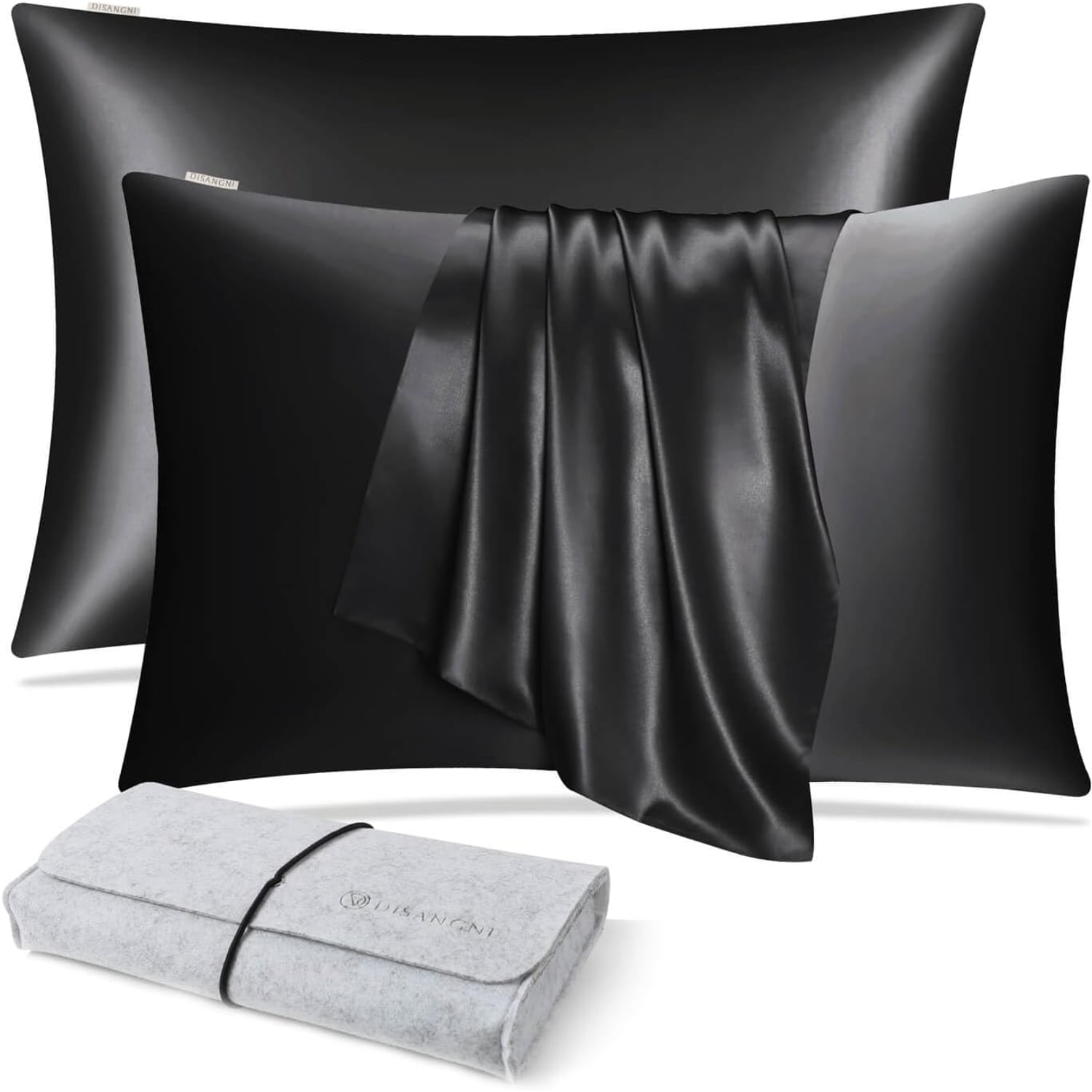
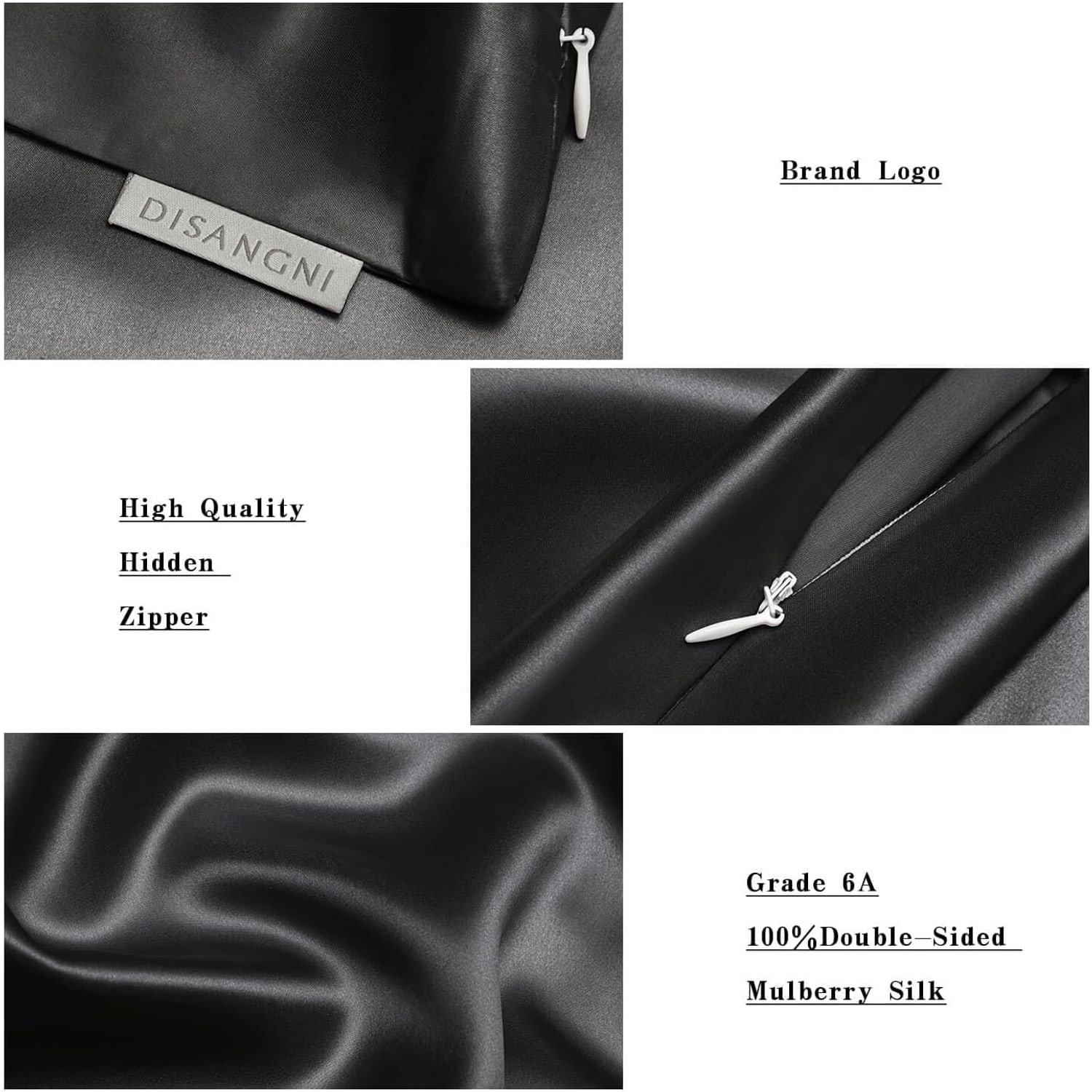
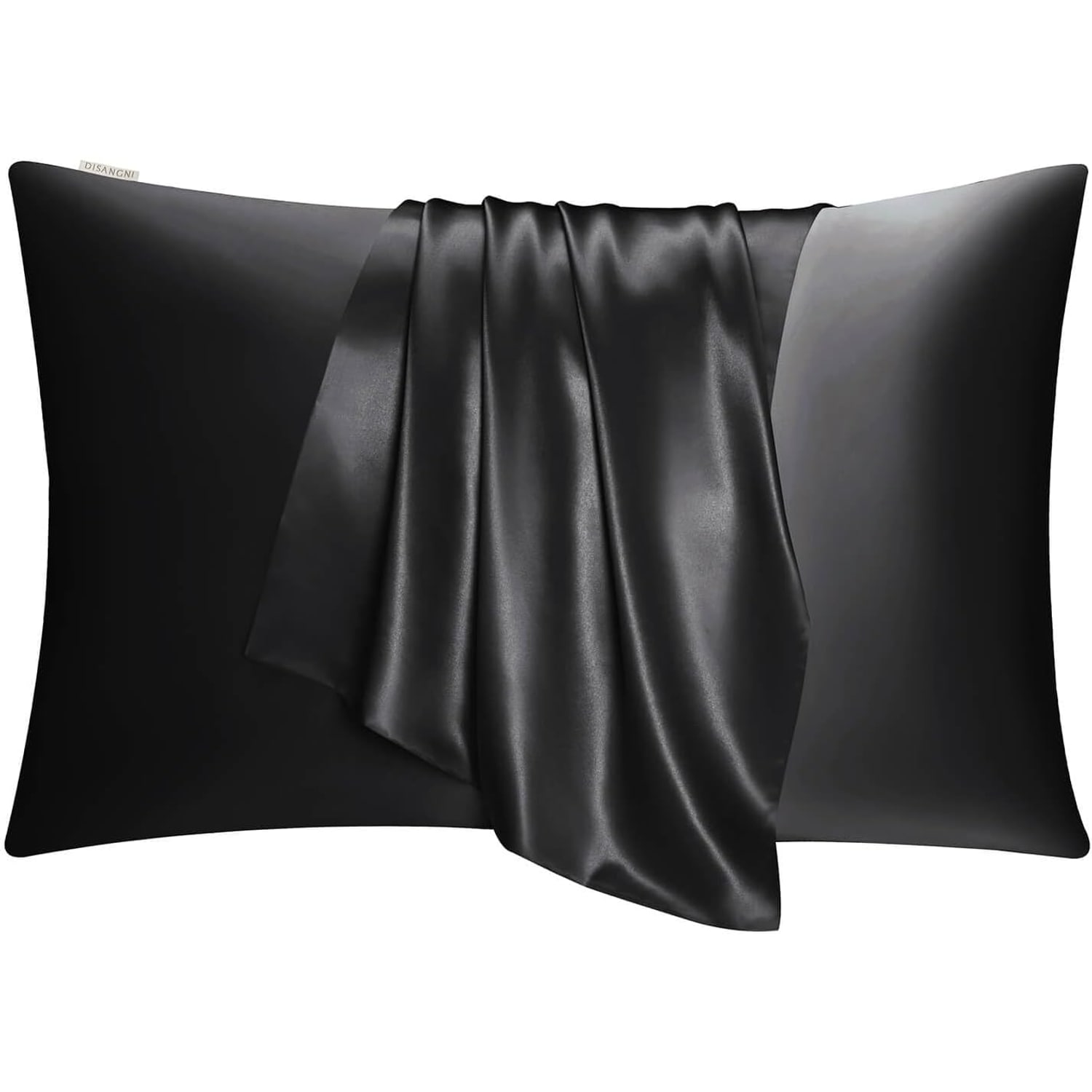
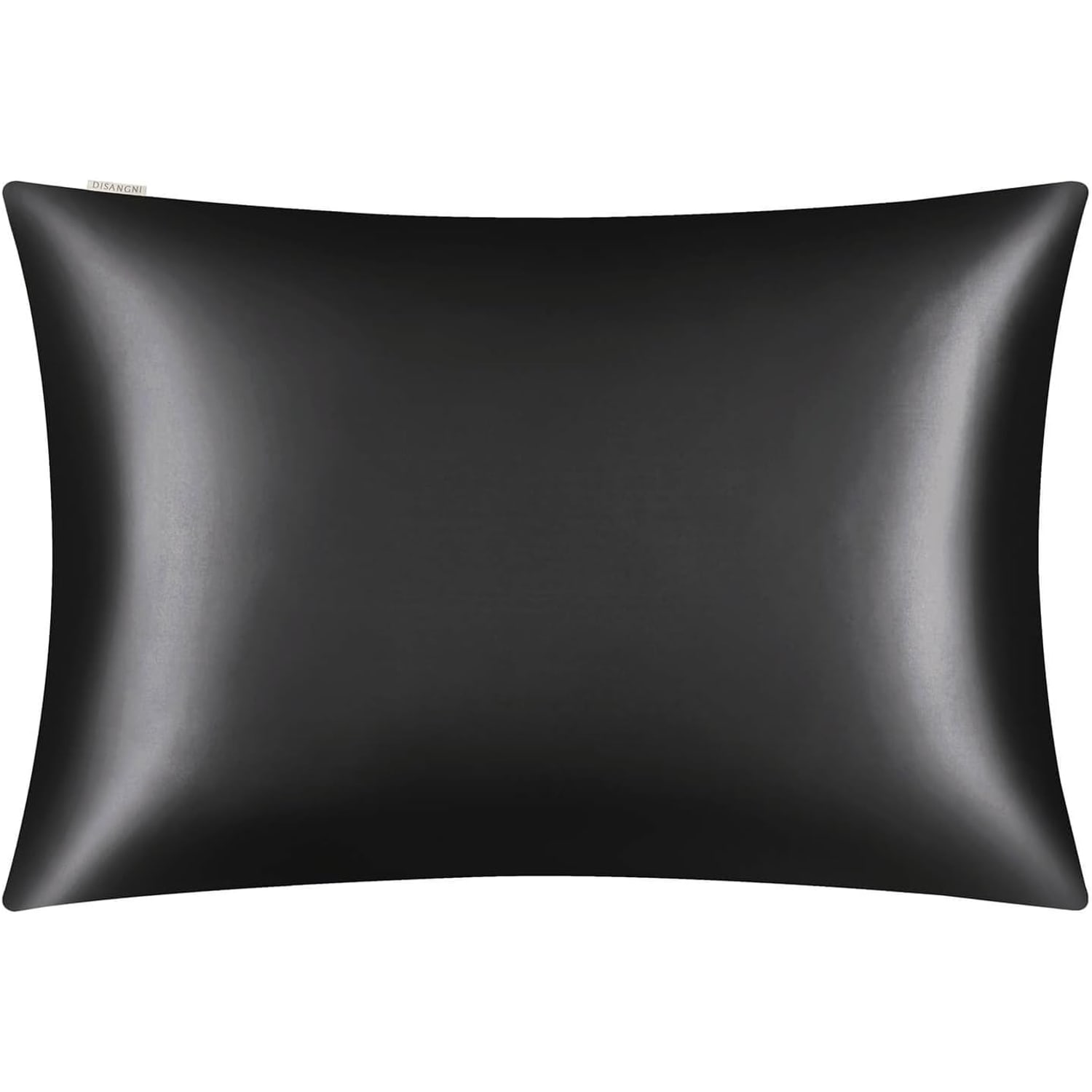
This set is two black pillowcases in standard size, 66 x 50.8 cm, made from double-sided mulberry silk at 22 momme with a 600 thread count and a hidden zip. Below is how to work out whether that spec suits you.
What momme actually tells you
Silk is sold by momme, written as mm but pronounced "mommy". It is a weight measure. One momme is roughly 4.3 grams per square metre, so a 22 momme silk weighs about 95 grams per square metre. The higher the number, the denser the fabric.
Here is why it matters more than any other number on the label. Light silks around 12 to 16 momme are lovely for scarves and linings, but on a bed they feel thin. They slide off the pillow, they show every wrinkle, and they wear through at the corners sooner than you would like. Heavier silks from 19 momme up have body. They drape instead of float, they sit still under your head, and they take weekly use without going limp.
At 22 momme, this sits comfortably in that bedding range. When you pick one up the fabric has a bit of heft to it, closer to a good shirt than a handkerchief. That weight is the single best predictor of whether a case will still feel good in a year.
Thread count is the other figure here, listed at 600. On cotton, thread count is a rough quality signal. On silk it matters far less, because silk filaments are already long and fine, and the weave structure does most of the work. Read the momme figure first and treat thread count as supporting information.
Why double-sided is worth checking
Plenty of silk pillowcases on the market are silk on one face only. The back is cotton or a polyester blend. It cuts the cost, and from the outside you often cannot tell.
The problem shows up in use. You have to put the case on the right way round every time, and if someone else makes the bed it is a coin toss. You also lose the option of flipping the case mid-week to get a fresh surface. Both faces of this set are silk, so neither of those things is an issue. Put it on, sleep on it, flip it whenever you like.
Zip or envelope
Pillowcases close in one of three ways. An open end is the cheapest. An envelope flap tucks the pillow in behind a fold of fabric. A zip encloses the pillow completely.
A zip is the tidiest of the three. The pillow does not creep out overnight, the edge of the case stays flat and square, and the bed looks made rather than approximately made. On this set the zip is a hidden one, sewn into the seam along an edge, so it is not sitting under your face. Some people worry about catching a zip while they sleep, and in practice it is a non-issue with a side-seam closure.
One habit worth picking up: zip it closed before any cleaning. An open zip can snag the fabric, and silk shows a pull more than cotton does.
Who this suits, and who it does not
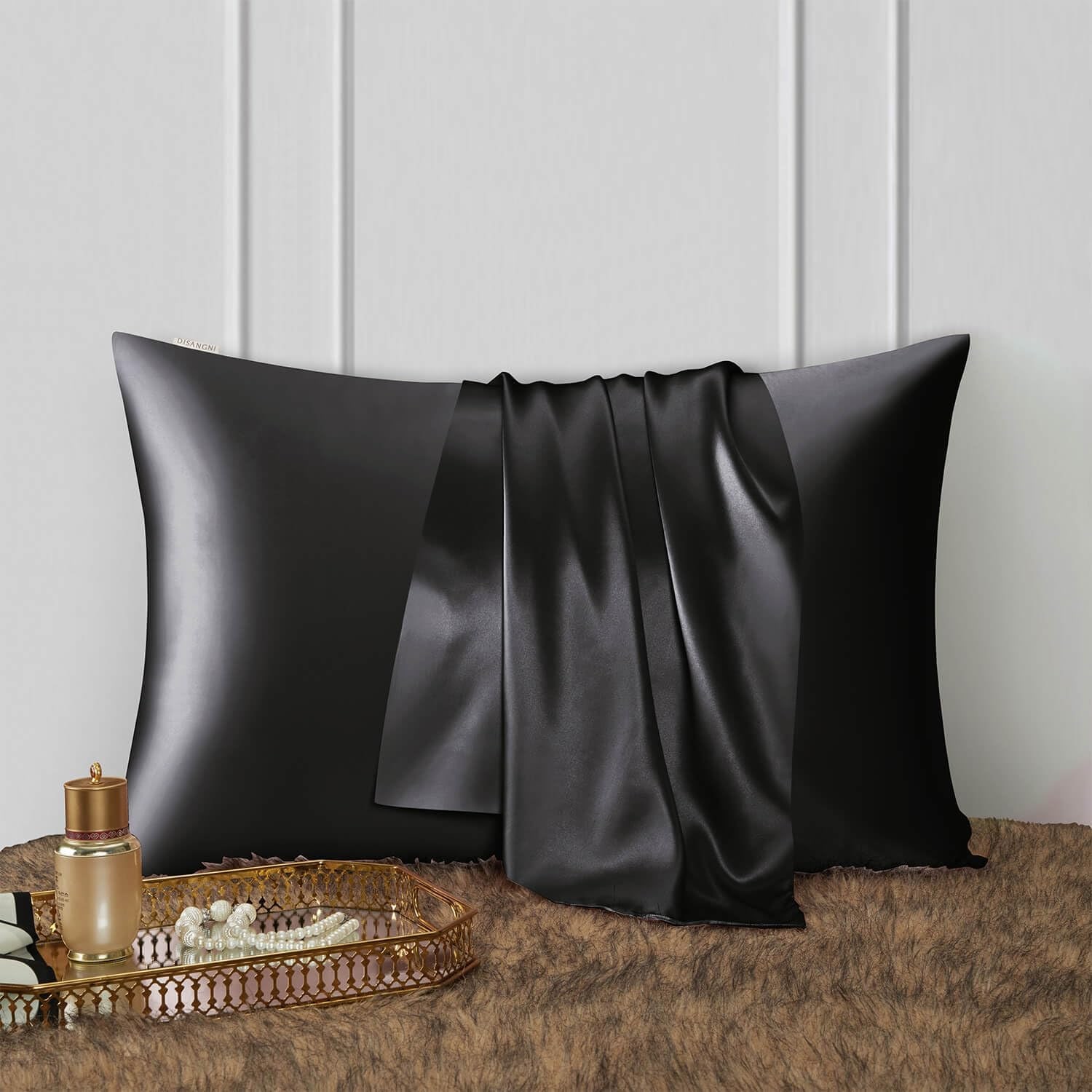
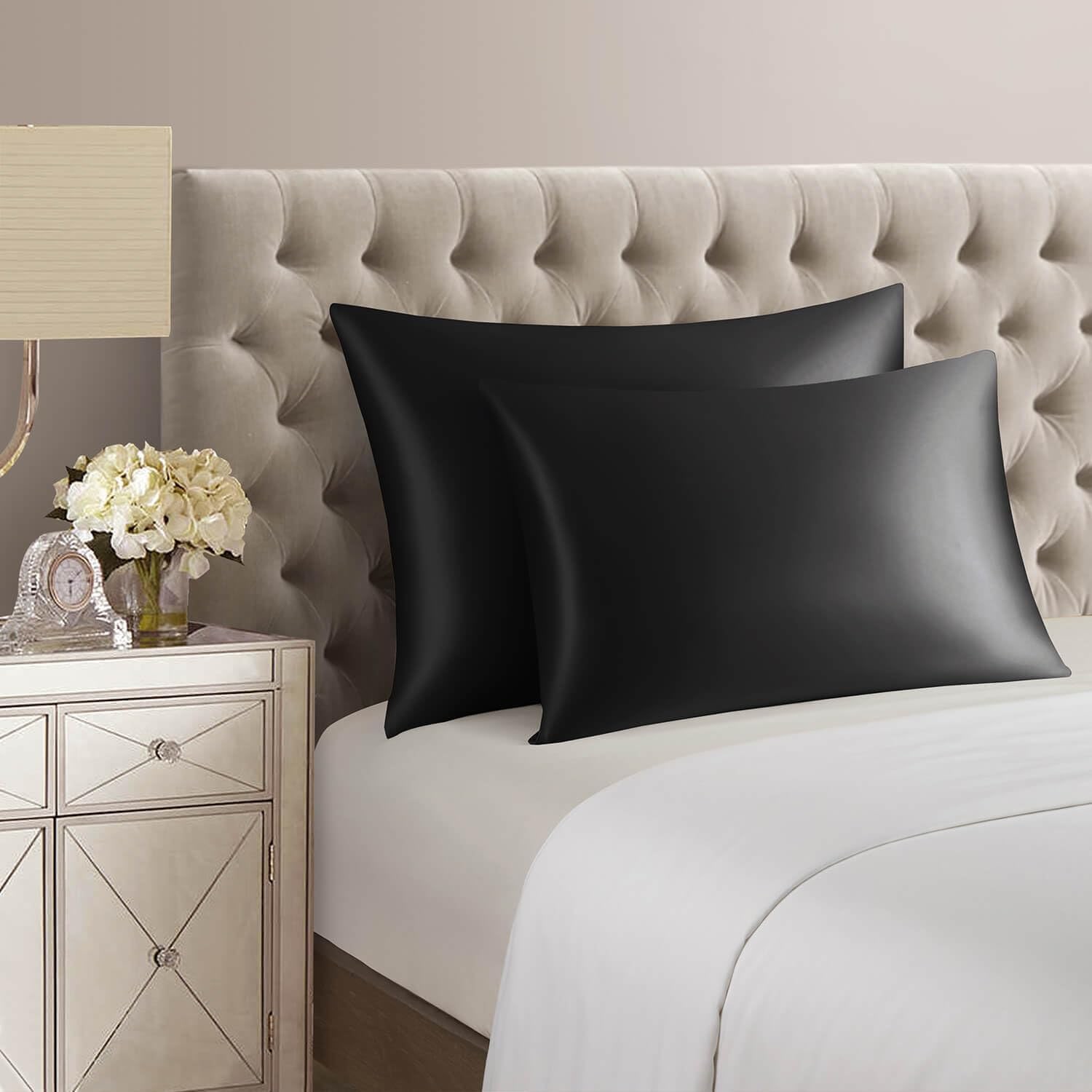
This is a good fit if you have standard pillows, want both sides of the bed to match, and like a dark bedroom palette. A black case is forgiving. It sits happily with white sheets, charcoal, navy, grey or a patterned quilt cover, and it does not catch the light the way a pale silk can under a bedside lamp.
It is also a sensible gift. You are not guessing a clothing size or a favourite print, which makes it one of the easier presents to get right.
It is not the right choice if your pillows are king size or European square. Standard size means standard size, and stretching a case over a larger pillow puts strain on the seams and the zip. Measure your pillow along its longest edge before ordering. If it comes in around 66 cm you are fine. If it is closer to 90 cm you need a king case instead.
It is also worth being honest about the care requirement. The label says dry clean only. If you are someone who throws everything in a 40 degree wash on a Sunday, that is a mismatch you should know about before you buy, not after.
Living with silk
The care instruction listed for this set is dry clean only. That is the manufacturer's advice and the safest route for keeping the fabric and the black dye in good shape.
If you decide to hand wash anyway, and plenty of people do, understand that you are stepping outside the stated care advice. Do it gently. Cold water, a mild pH neutral detergent, no bleach, no fabric softener. Softener in particular coats silk and kills the slip you paid for. Swirl the case through the water rather than rubbing it. Rinse in clean cold water, then press the water out by rolling the case in a dry towel. Never wring or twist it.
Dry flat, or hang in shade with air moving around it. Direct sun is the fastest way to fade a dark dye, and a clothes dryer is the fastest way to ruin the fabric outright. If it needs pressing, use the coolest iron setting, work on the reverse side, and put a pressing cloth between the iron and the silk.
Day to day, the enemies are snags and sharp edges. Watch out for rings, watch bands, hair clips and rough bed frame corners. Silk is strong along the fibre but it will show a pull if something catches it.
Swap the case weekly, same as any pillowcase, and more often in summer or if you use rich hair or skin products overnight. Having two in the pack makes that rotation easy, and a lot of people buy a second pack so there is always a clean set on the shelf.
Reading between the specs
A few numbers on this listing are worth a plain explanation.
The size is given as 20 x 26 inches and 66 x 50.8 cm. Those are the same measurement in two units, not two different dimensions. Standard size is the most common pillow format sold in Australia.
The pattern is listed as solid, the theme as none, and the style as modern. In practice that means a plain black case with no print, no piping and no trim. Simple, which is usually what you want from bedding you look at every day.
The model number is SJ-LLZT. Quote it if you ever need to ask us something about this exact item.
Some fields on this listing are blank, including brand, item weight, country of origin and packaged dimensions. We leave them blank rather than filling them in with a plausible guess. If one of those details matters to your decision, ask us and we will find out before you order.
The short version
Two black pillowcases, standard size, 66 x 50.8 cm. Double-sided mulberry silk at 22 momme with a 600 thread count. Hidden zip closure. Solid colour, no print. Dry clean only.
The momme weight is the number to care about, and 22 is a proper bedding weight rather than a light dress silk. Double-sided means you never have to think about which way up it goes. The zip keeps the pillow in and the edge flat. Black hides the lamp shine that pale silk can show, and it works with almost any quilt cover.
Check your pillow size, be comfortable with the dry clean instruction, and the rest is just a nicer surface to sleep on. Orders ship from Australian warehouses in 3 to 7 working days, and if it is not right you have 14 days from delivery to send it back unused and unwashed.