

The complete guide
How to Choose a Navy Silk Pillowcase That Actually Lasts
The problem with most pillowcases
Cotton is a workhorse. It washes well, it costs little, and almost every bed in the country has some on it. What cotton is not is smooth. Look at a cotton weave under magnification and you see short, fuzzy fibres standing up off the surface. Your hair catches on them. Your cheek drags across them. Multiply that by seven or eight hours a night and you understand why people wake up with hair that looks like it has been through a wind tunnel, and why a pillow crease can still be on your face at breakfast.
Silk is built differently. The filament is one long, round, continuous strand, and when it is woven tightly the surface has very little to grab onto. Hair slides. Skin slides. That is the whole appeal, and it is a physical property of the fibre rather than a finish that washes off.
The catch is that "silk pillowcase" has become a crowded category. Plenty of products carry the name while cutting corners that only show up after a few months. This guide is about knowing which corners matter.
Momme is the number that counts
If you only learn one piece of silk vocabulary, make it momme. It measures the weight of a fixed area of fabric. Higher momme means more silk packed into the same space, which means a heavier, more opaque, longer-lasting case.
Most silk pillowcases sit between 16 and 25 momme. Below 16 the fabric starts feeling thin and see-through, and it tends to wear through at the corners first. Above 22 you get a lovely heavy drape but the price climbs sharply and the fabric can feel almost stiff until it is broken in.
Nineteen momme is the sweet spot, and it is what you have here. Enough weight to feel like a real purchase, enough give to drape properly over a pillow, and a price that does not require much deliberation. If you see two cases at similar prices and one lists 19 momme while the other lists nothing at all, that silence is usually telling you something.
Thread count comes up a lot too. This case lists 600. With silk, thread count is a secondary number, because a thin 600 count fabric can still be lighter than a dense 400 count one. Momme tells you the truth. Thread count tells you how fine the weave is on top of that.
Double-sided or not
Here is a trick worth knowing. A fair number of pillowcases advertised as silk are silk on one face only, with a cotton or polyester back. The maker saves money on the half you supposedly do not touch.
Except you do touch it. Everyone turns their pillow over. If you flip onto the synthetic side at two in the morning, you have paid for silk and are sleeping on polyester.
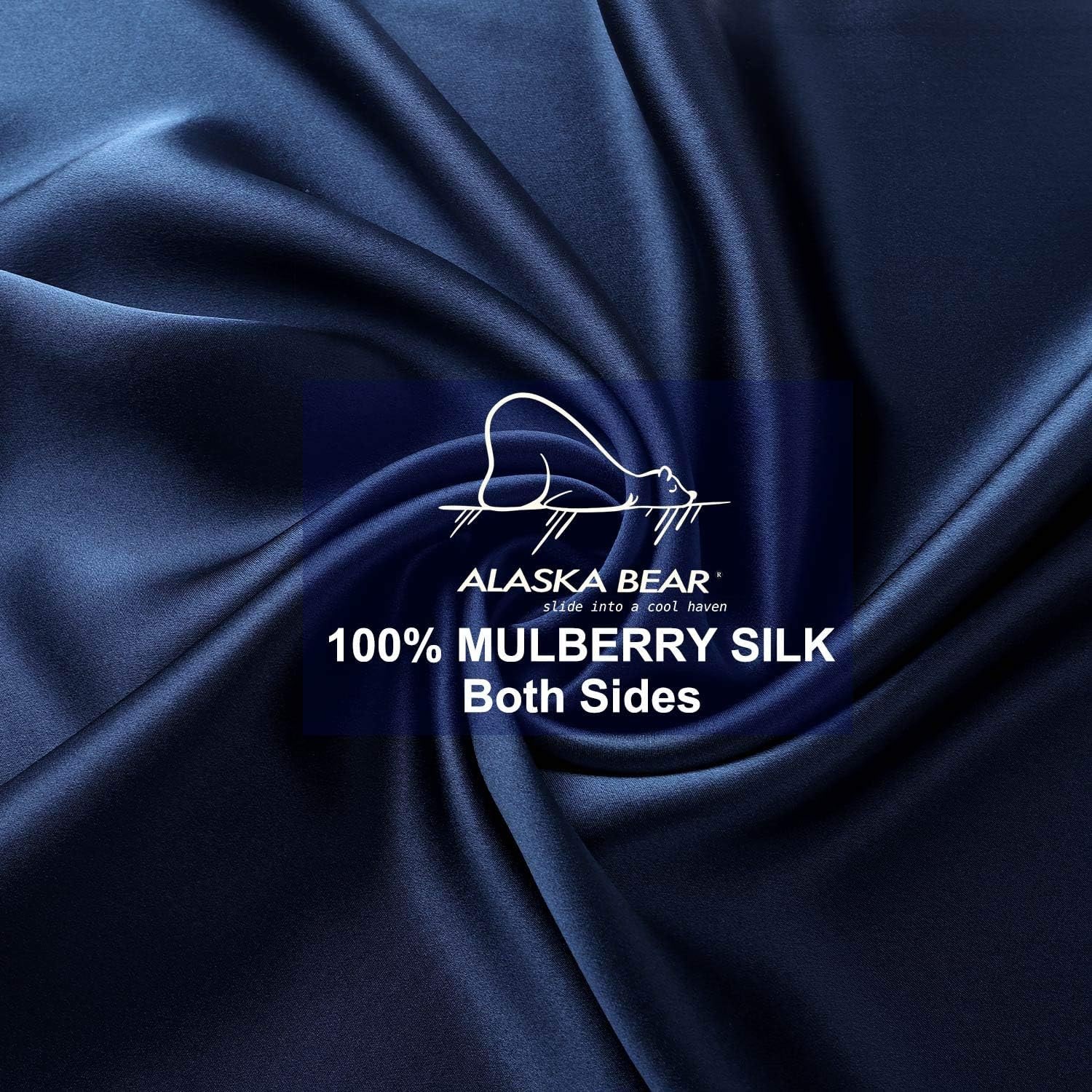
This case is double-sided mulberry silk. Both faces are the same 19 momme fabric. It is a simple spec to check and it separates serious products from cosmetic ones.
The closure matters more than you think
Three closures are common. An open end, where the pillow just slides in. An envelope flap, which tucks the pillow behind a folded panel. And a zip.
Open ends are the cheapest and the worst. The pillow creeps out as you move, and by morning you have a bare corner under your jaw.
Envelope flaps are better and they look clean, but they rely on the pillow being a snug fit. A slightly small or soft pillow will work its way loose anyway.
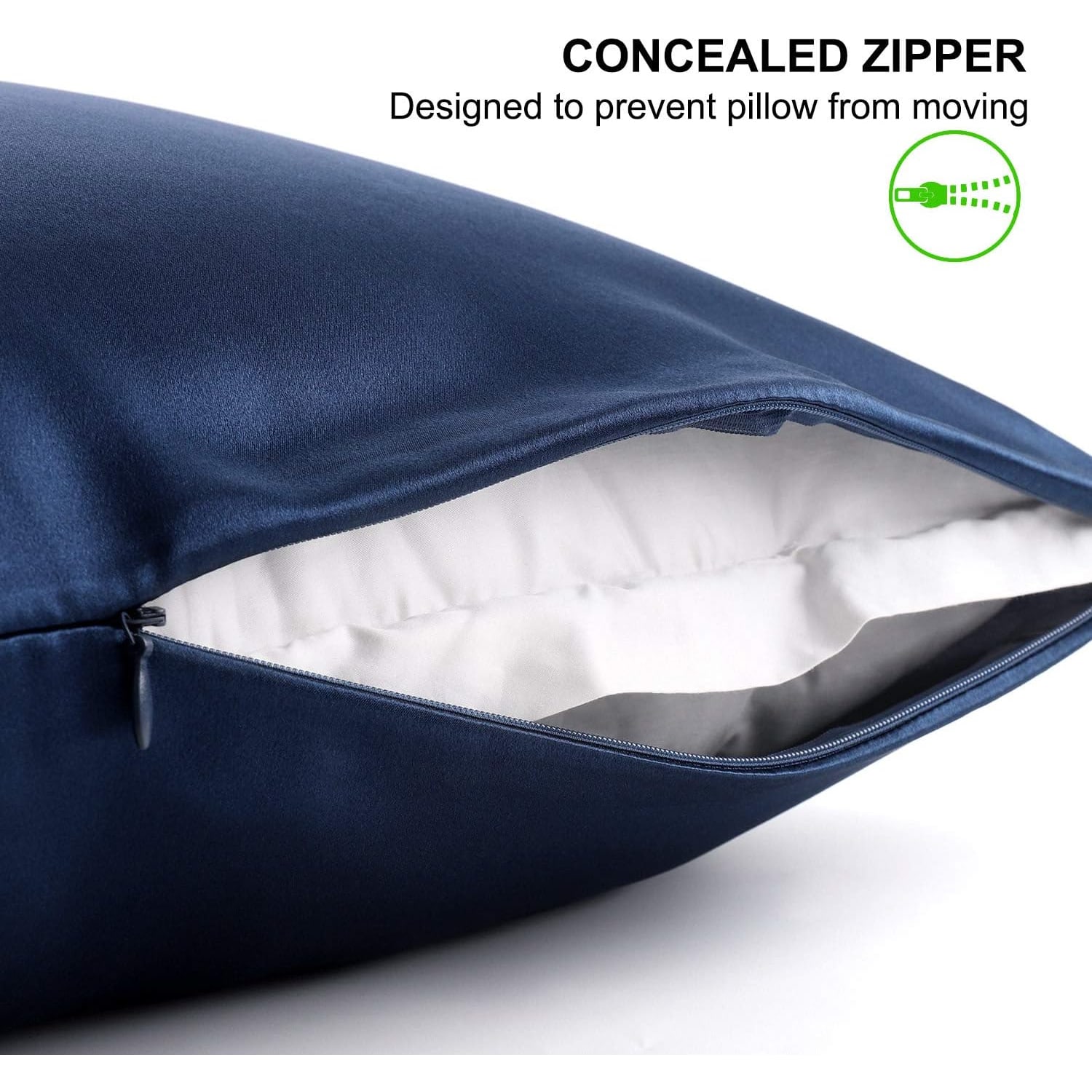
A zip just solves it. The pillow goes in, the zip closes, and nothing moves until you decide otherwise. The concern people raise is whether they will feel the hardware, and with a hidden zip set into the side seam, the answer is almost always no. It also keeps the outside edge looking uninterrupted, which is why the best hidden zip silk pillowcase designs tuck the slider right into the seam allowance rather than leaving it exposed.
One more detail on construction. The interior edges here are stitched over rather than left raw. Raw edges fray, and a frayed seam inside a silk case will unravel further every wash. Overlocked or folded seams cost the maker a little more and add years to the product.
Why navy
Colour choice in silk is more practical than it looks.
White and ivory silk photograph beautifully and are the default for a reason. They also show everything. Retinol, hair oil, a bit of mascara you missed, the faint yellow cast that builds on any light fabric over time. If you have an evening skincare routine, a pale case needs washing often to stay looking fresh.
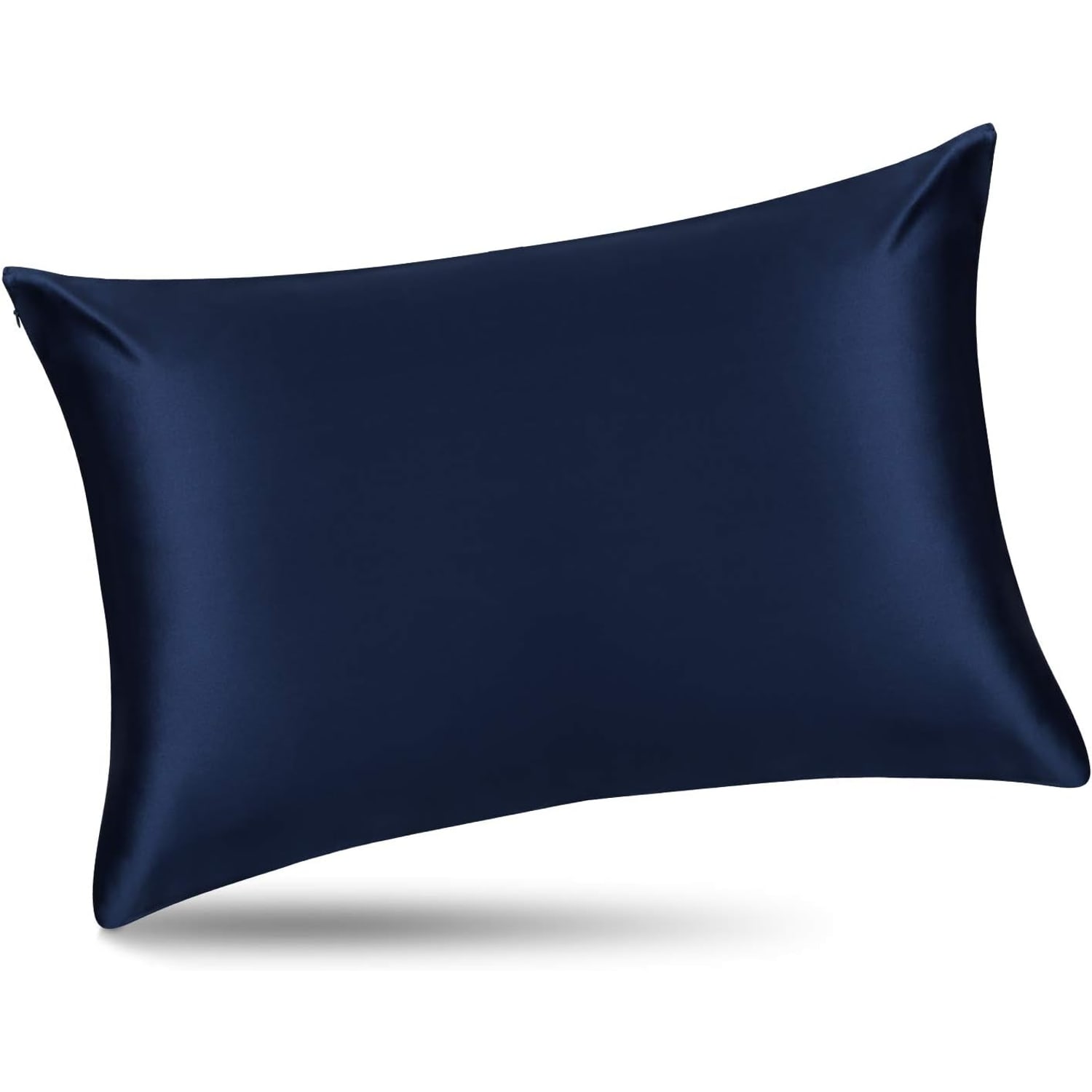
Navy handles all of that quietly. Marks that would stand out on white simply disappear into a deep blue until wash day. It also happens to be one of the easiest colours to style. Put it against crisp white sheets and you get sharp contrast. Put it against grey or charcoal and the room reads layered and calm. Put it against oatmeal linen and the whole bed softens.
Black does the same job but can look a bit severe in a bright bedroom. Navy carries the same practicality with a gentler edge, which is why the best dark silk pillowcase in most ranges is a navy rather than a true black.
Getting the size right
This case is 76.2 cm by 50.8 cm, sold as queen. In Australia that sizing covers both standard and queen pillows, which are the two most common inserts in the country.
Measure your pillow before ordering. Lay it flat, measure the longest edge, then the width. If your pillow is roughly 48 by 73 cm, this is the correct case. If it is a king at around 50 by 90 cm, it will be too short and you want a king case instead.
Depth matters too. A very plump or newly bought pillow fills a case more than a flatter older one. A tight fit is not a problem, it just makes the silk sit more taut. A loose fit means the case ripples, which some people dislike and others never notice.
Living with silk
Silk has a reputation for being fussy. It is less fussy than people expect, but it does have rules.
Wash it in cool water. Hot water is the main thing that dulls silk and weakens the fibre. Either hand wash it in the basin with a gentle detergent made for delicates, or run it through a cold delicates cycle in a mesh laundry bag. The bag matters. It stops the case tangling with zips and hooks that can pull threads.
Skip the fabric softener. Silk is already smooth and softener just leaves a residue that builds up and makes the fabric feel waxy. Skip bleach entirely, and go gently with stain removers.
Dry it flat or on a line, out of direct sun. Sunlight fades dark dyes faster than anything else, so a navy case left on a sunny line will lose depth over a season. Do not wring it out. Roll it in a towel and press instead.
Iron only if you want to, on the coolest setting, on the reverse, while slightly damp. Honestly, most of the wrinkles drop out once the case is on a pillow.
Buy two if you can. Rotation halves the wear on each case and means you always have a clean one ready. It is the single easiest thing you can do to make silk bedding last.
Who this suits
People with long hair, people who turn a lot during the night, and anyone who has been sleeping on cotton and wondered why their hair is a mess in the morning. People who want their bed to look considered without buying a whole new set of bedding. People buying a gift who want something nicer than another candle.
It also suits anyone who has tried a cheap silk case, found it thin or saw the backing was synthetic, and wants to know what the real thing feels like.
The short version
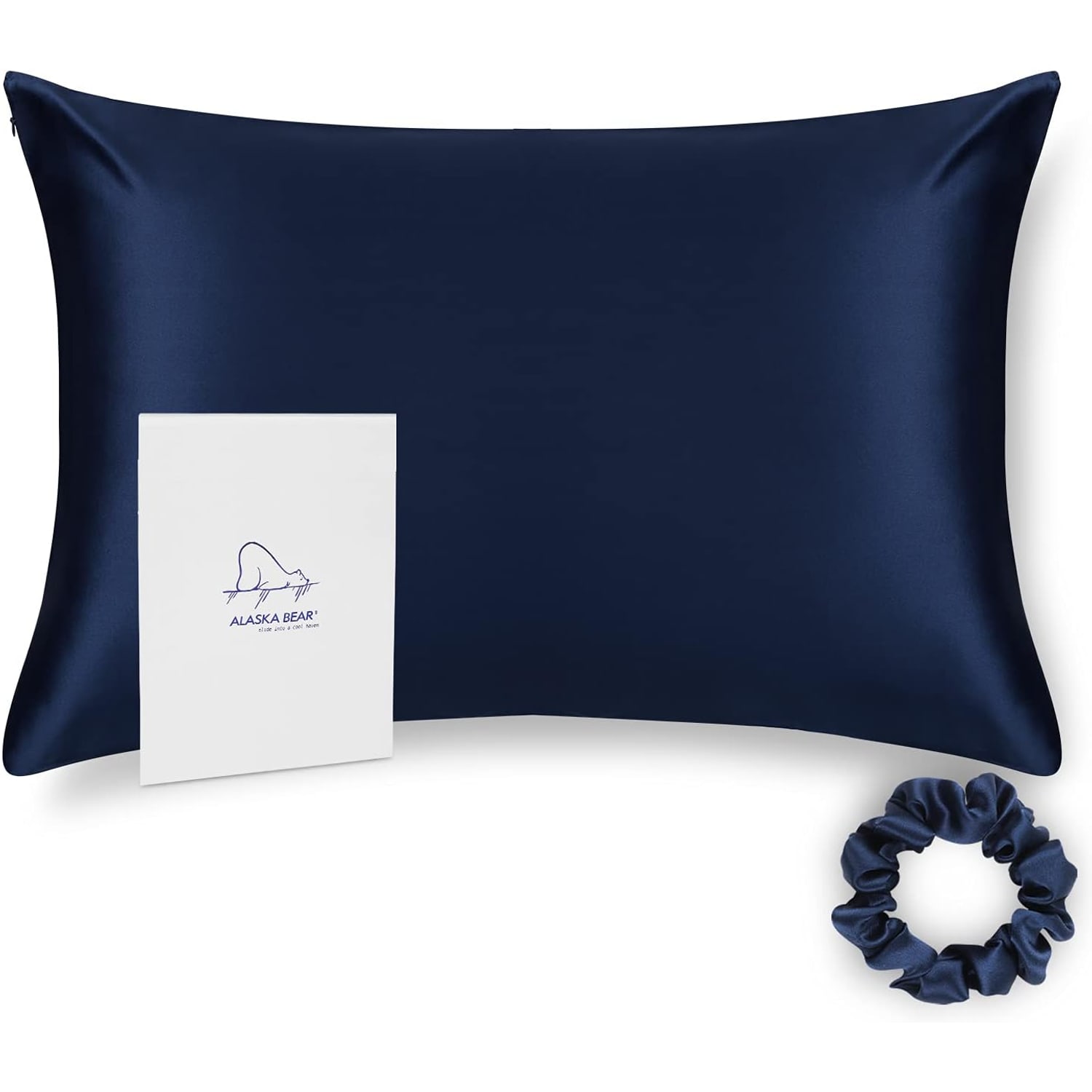
Nineteen momme, double-sided mulberry silk, grade 6A yarn, 600 thread count, queen size at 76.2 by 50.8 cm, hidden zip, stitched interior edges, deep navy. One case per pack, 109 grams.
Check your pillow measures around 48 by 73 cm. Wash it cool in a mesh bag with a gentle detergent and keep it out of the dryer and off a sunny line. Do that and it will stay in your rotation for a long time.