
The complete guide
How to Choose a Mulberry Silk Pillowcase (Momme, Grade and Fit Explained)
The small annoyance nobody talks about
Most people do not lie awake thinking about their pillowcase. They just notice the side effects. You wake up with a crease pressed into your cheek that takes an hour to fade. Your hair, which looked fine when you went to bed, has gone sideways. On a warm night the pillow heats up under your face and you end up flipping it every twenty minutes chasing the cool side.
A cotton pillowcase is doing its job, more or less. It just has a rougher surface than most people realise, and it holds warmth. Silk behaves differently. The weave is smoother, so skin and hair slide across it rather than dragging. It also feels cool when you first lie down. Those two things are why a silk pillowcase has quietly become one of the most common small bedroom upgrades people make.
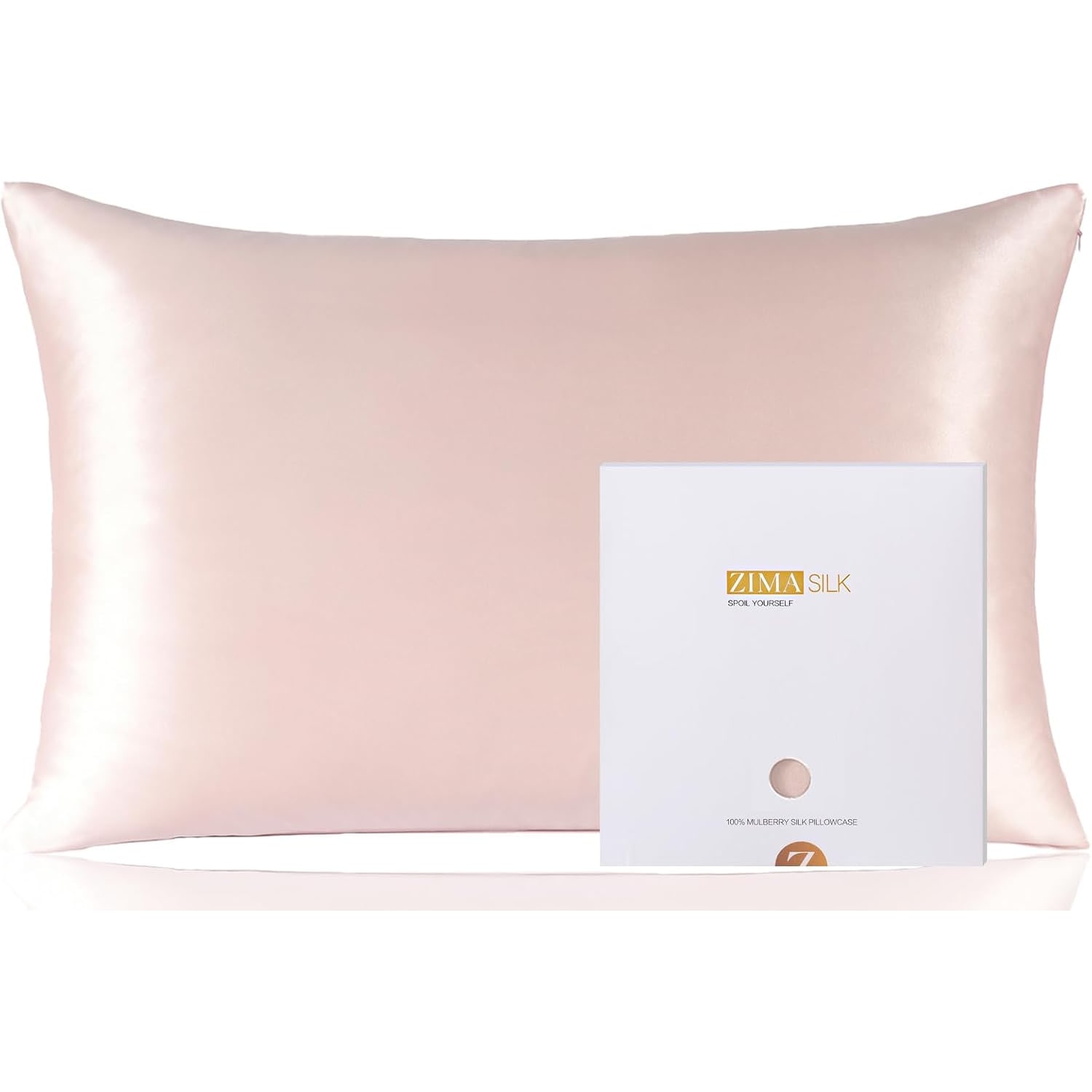
This guide covers what actually matters when you choose one, using this pink mulberry silk pillowcase queen size as the example.
What mulberry silk is and why it matters
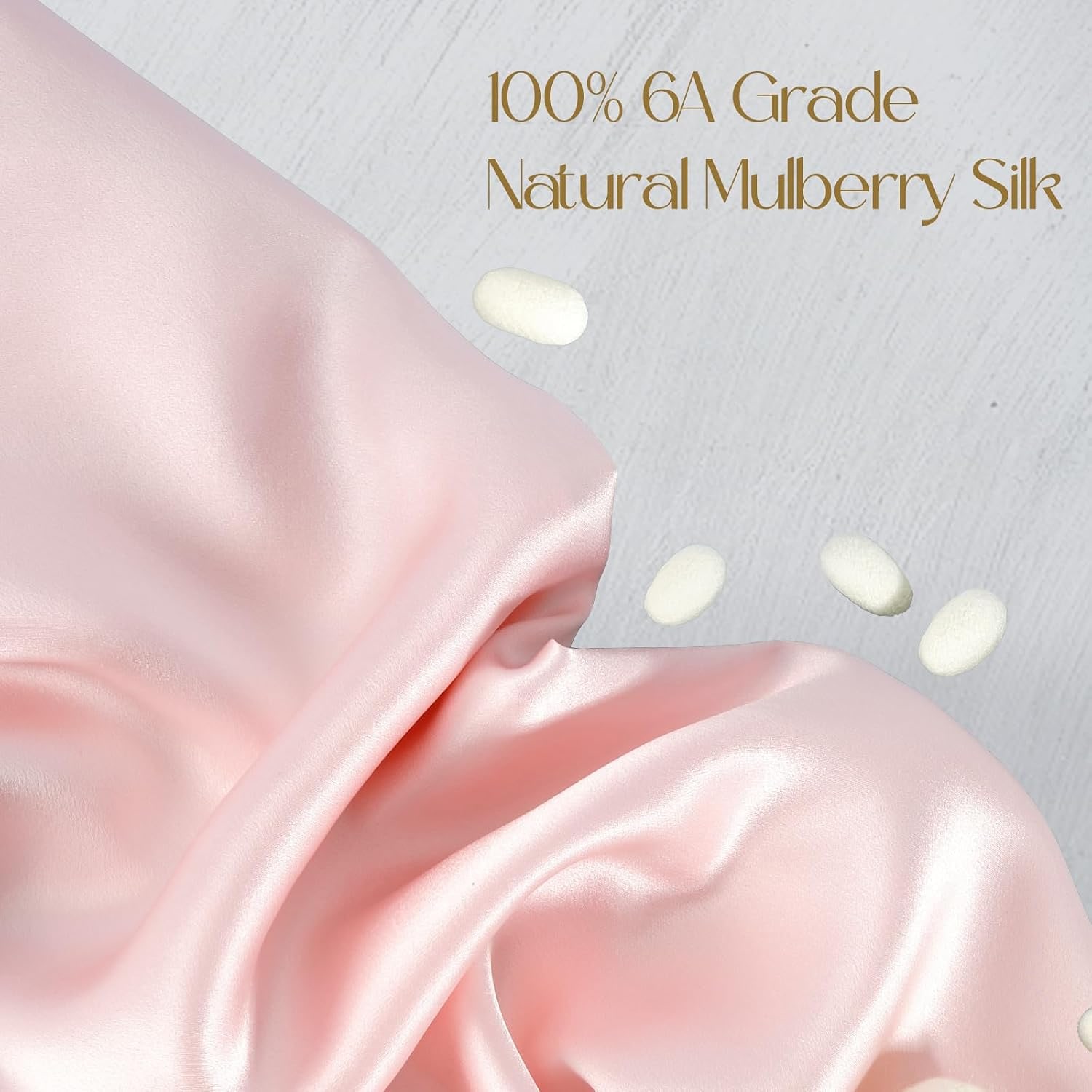
Silk comes from silkworms, but not all silkworms produce the same thread. Mulberry silk comes from worms raised on a diet of mulberry leaves in controlled conditions. The result is a long, even, pale filament. Wild silks produce shorter, more irregular fibres, which weave into a fabric with more texture and more variation.
For bedding, long and even is what you want. It produces a surface with fewer slubs and bumps, and it holds up better to washing. That is why almost every quality silk pillowcase on the market says mulberry on the label.
The Grade 6A marking goes a step further. It is a trade grading applied to the raw silk based on filament length and consistency. The higher grades are reserved for the most uniform fibre. This pillowcase is made from Grade 6A mulberry silk, which is the grade most commonly used for better quality silk bedding.
Momme is the number to check first
If you only learn one piece of silk vocabulary, make it momme. Written as "mm" in some listings, momme measures the weight of silk fabric. It works a bit like GSM does for towels. A higher momme number means a heavier, denser cloth.
Silk pillowcases usually sit somewhere between 16 and 25 momme. Here is the rough picture:
Around 16 momme, the fabric is light and thin. It drapes beautifully but it is more fragile, and seams and corners tend to be the first thing to go. It is often where the cheapest listings sit.
Around 19 momme, you get a noticeably more substantial cloth that still feels soft and cool. It handles regular washing better. This is the weight most people settle on, and it is what this pillowcase uses.
Around 22 to 25 momme, the silk is heavier again. It feels dense and luxurious and lasts a long time, but it costs more and takes longer to dry after washing.
For a pillowcase you will sleep on most nights, 19 momme is the practical middle ground. You are paying for durability you will actually use rather than for a number on a label.
Thread count does something different in silk
Cotton shoppers are trained to look at thread count, and the habit carries over. In silk it tells you less on its own, because silk filaments are much finer than cotton threads. You can hit a high thread count with very light fabric.
That is why momme and thread count need reading together. This pillowcase lists 600 thread count alongside 19 momme. The thread count describes how tightly the fabric is woven. The momme tells you how much silk is actually there. Together they point to a dense, even surface, which is what you feel as smoothness when your face hits the pillow.
Check that both sides are silk
This is the detail that separates honest listings from clever ones. A lot of cheaper silk pillowcases use silk on the top face and a polyester or cotton blend on the back. It cuts the cost significantly, and the photographs look identical.
The problem shows up at three in the morning when you flip the pillow and land on the cheap side. You also get different washing and shrinking behaviour from the two fabrics, which can make the case pucker over time.
This pillowcase is silk on both faces. When you are comparing options online, look for the words double-sided or 100 percent silk both sides. If a listing stays quiet about the back, that silence usually means something.
Closures, and why the zipper matters more than you think
There are two common ways to close a pillowcase. An envelope flap folds the extra fabric over the open end. A zipper runs along one edge.
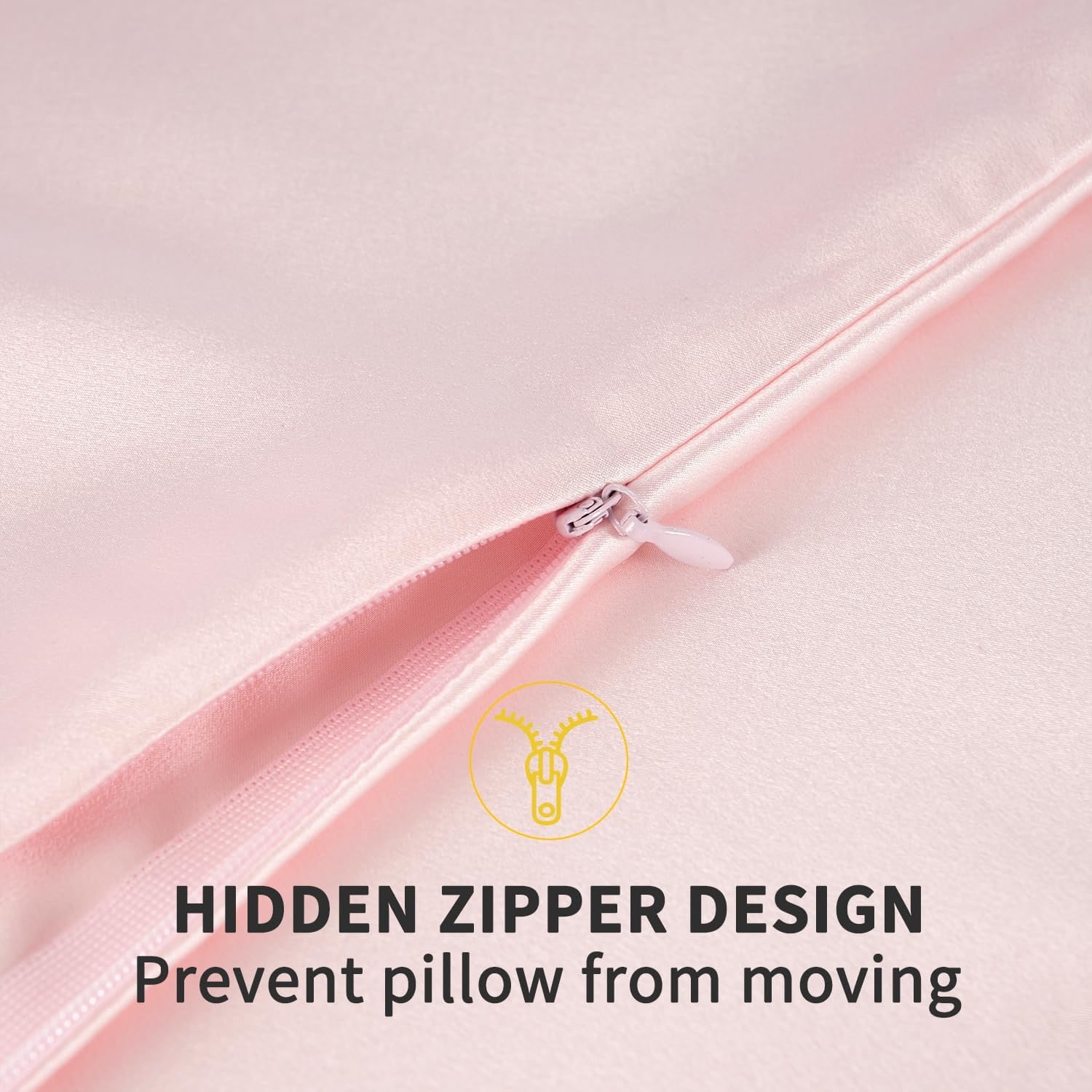
Envelope flaps are quick to use but the pillow can work its way out during the night, especially if the case is slightly roomy. You wake up with a bare corner of pillow sticking out.
A zipper keeps everything where it should be. This one is a hidden zipper, set into the seam rather than sitting exposed on the surface, so you get the secure hold without a plastic strip near your face. Most people put that edge at the bottom of the pillow and forget it exists.
Getting the size right
This is a queen size pillowcase, listed as 20 inches by 30 inches, which converts to 75cm long by 50cm wide. Those are the dimensions to check against your own pillow before you order.
Take a tape measure to your pillow while it is lying flat and uncompressed. If it comes in at or just under 75cm by 50cm, you are in good shape. If your pillow is a deep, heavily filled type, it may fit but will look tight and stretched. If it is a standard size rather than queen, the case will be loose, which is not a disaster but does look baggy.
One more thing worth saying: the listing is for one pillowcase. If you share a bed and want a matching pair, order two.
Living with silk
Silk needs a little more thought than cotton, but less than its reputation suggests. The care instruction for this pillowcase is hand wash only.
In practice that means a basin of cool water, a small amount of detergent made for silk or delicates, and a gentle swish for a few minutes. Rinse in cool water. Do not wring it, do not bleach it, and do not leave it soaking for ages. Press the water out between two towels, then lay it flat or hang it in the shade.
Avoid direct sun and avoid the dryer. Heat and UV are what break down silk fibres and fade dye. If you want it crisp, a cool iron on the reverse while the fabric is still slightly damp does the job, though plenty of people never bother.
Keep it away from rough fingernails, hair clips and jewellery with open settings. Pulled threads on silk come from snags, not from sleeping.
Who this suits
If you run warm at night, the cool feel of silk is the thing you will notice first. If you have long hair that tangles overnight, the lower friction surface is the reason you are probably reading this page. If your bedding is plain and you want one piece that lifts it without redecorating, a soft pink pillowcase does that quietly.
It is also an easy gift. There is no sizing to guess at beyond the pillow itself, and silk reads as thoughtful without being personal in an awkward way.
The short version
Buy mulberry silk rather than unspecified silk. Check the momme, and treat 19 as the sensible middle. Make sure both sides are silk, not just the side in the photograph. Measure your pillow before you order. Then hand wash it in cool water and keep it out of the sun, and it will stay smooth for a long time.
This one ticks those boxes: 19 momme Grade 6A mulberry silk on both faces, 600 thread count, 75cm by 50cm, hidden zipper, in a plain pink. Delivery runs 3 to 7 working days from Australian warehouses, and returns are open for 14 days from delivery on unused, unwashed items.