
The complete guide
How to Choose and Wear a Small Square Silk Scarf
The accessory problem nobody talks about
Most wardrobes have a gap in them. You have the shirts, the jackets, the shoes. You put an outfit together and it is fine. It is just not finished. There is a flatness around the collar and the neckline, and nothing in the drawer quite fixes it.
A jewellery piece can do the job, but jewellery is committing. It has a price, a style, and a certain formality. A knitted scarf is too warm for nine months of the year and too bulky under a jacket collar. What fills the gap, cheaply and without fuss, is a small square of silk.
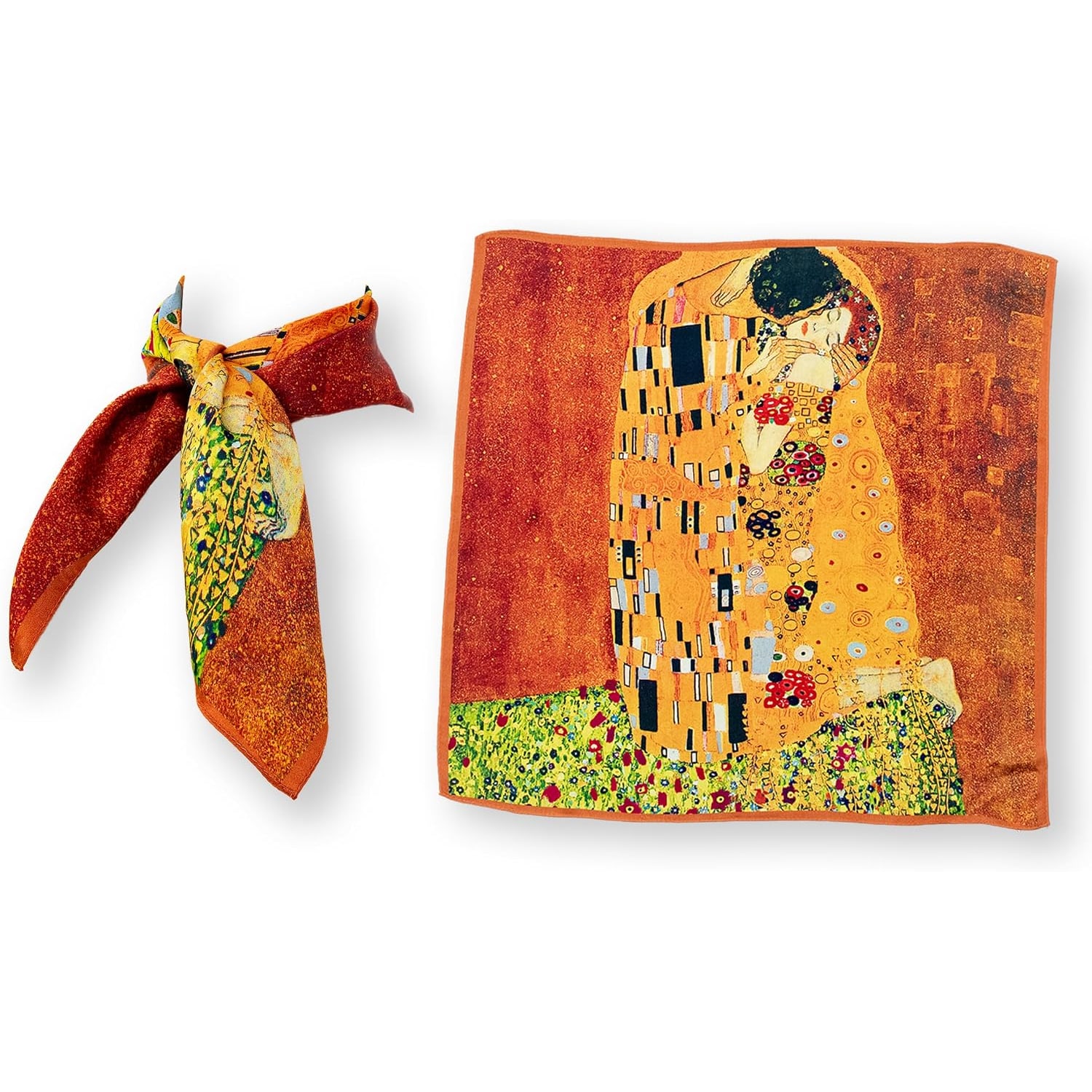
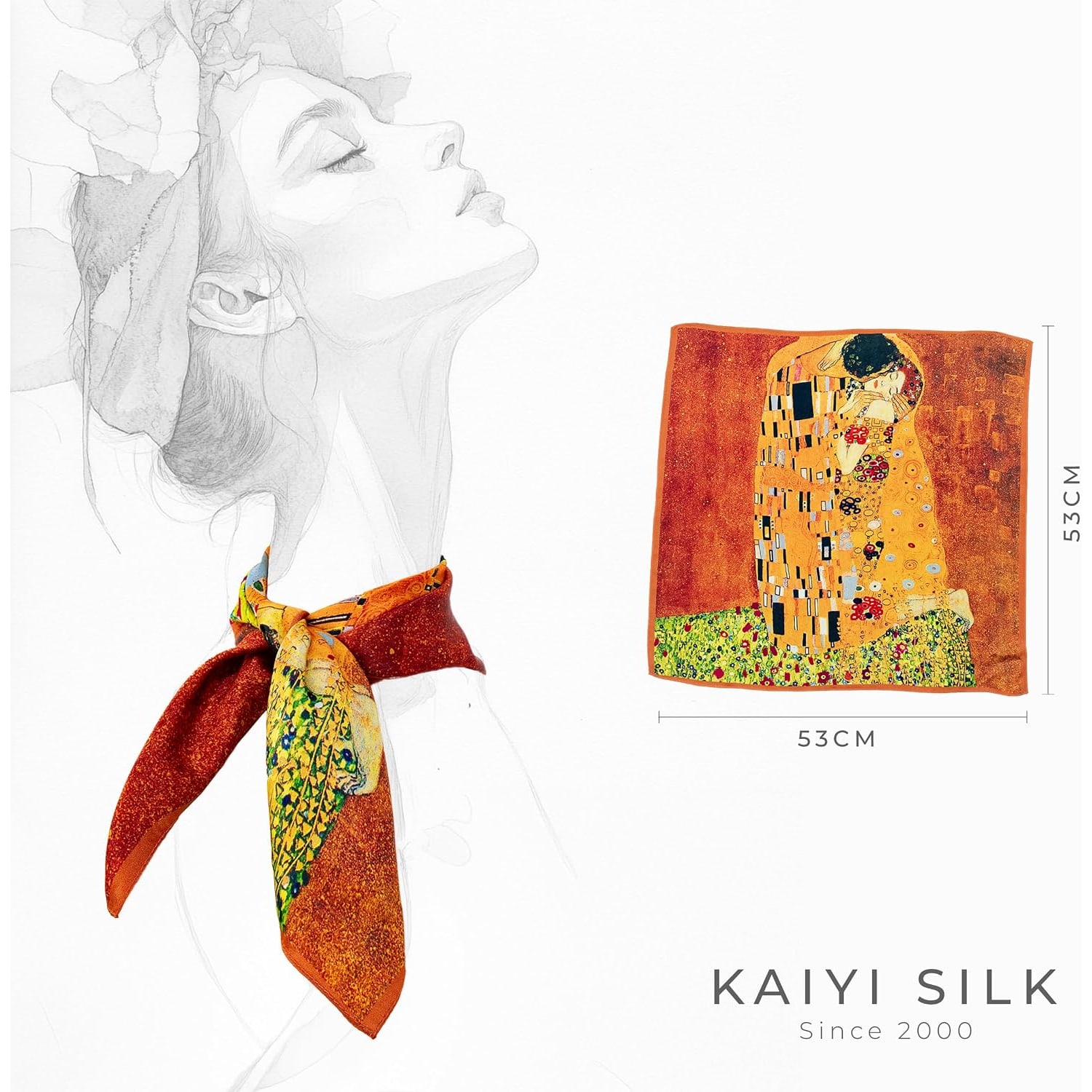
A 53 x 53cm square is the size most people end up with. It is small enough to knot and forget, and big enough to be styled more than one way. You can wear the same scarf three days running and nobody will clock it as the same item, because folded at the neck it looks nothing like the same scarf rolled through a ponytail.
What the specifications actually mean
Two numbers matter on a silk scarf. The size and the momme.
Size is simple. At 53 x 53cm you have a small square. Fold it on the diagonal and you get a triangle long enough to go around most necks with room to knot. Go much smaller and it becomes a pocket square. Go much bigger, up to 90cm, and you are into head wrap and shoulder territory, which needs more handling and more fabric knowledge to style well.
Momme is the one people have not met before. It is the traditional measure of silk weight, written as mm, and it tells you how dense the cloth is. Lower numbers mean lighter, more transparent fabric. Higher numbers mean heavier, more opaque cloth with more body. This scarf is 12 momme, which is the sweet spot for a neck square. It drapes properly, it ties without bulk, and it does not hang limp.
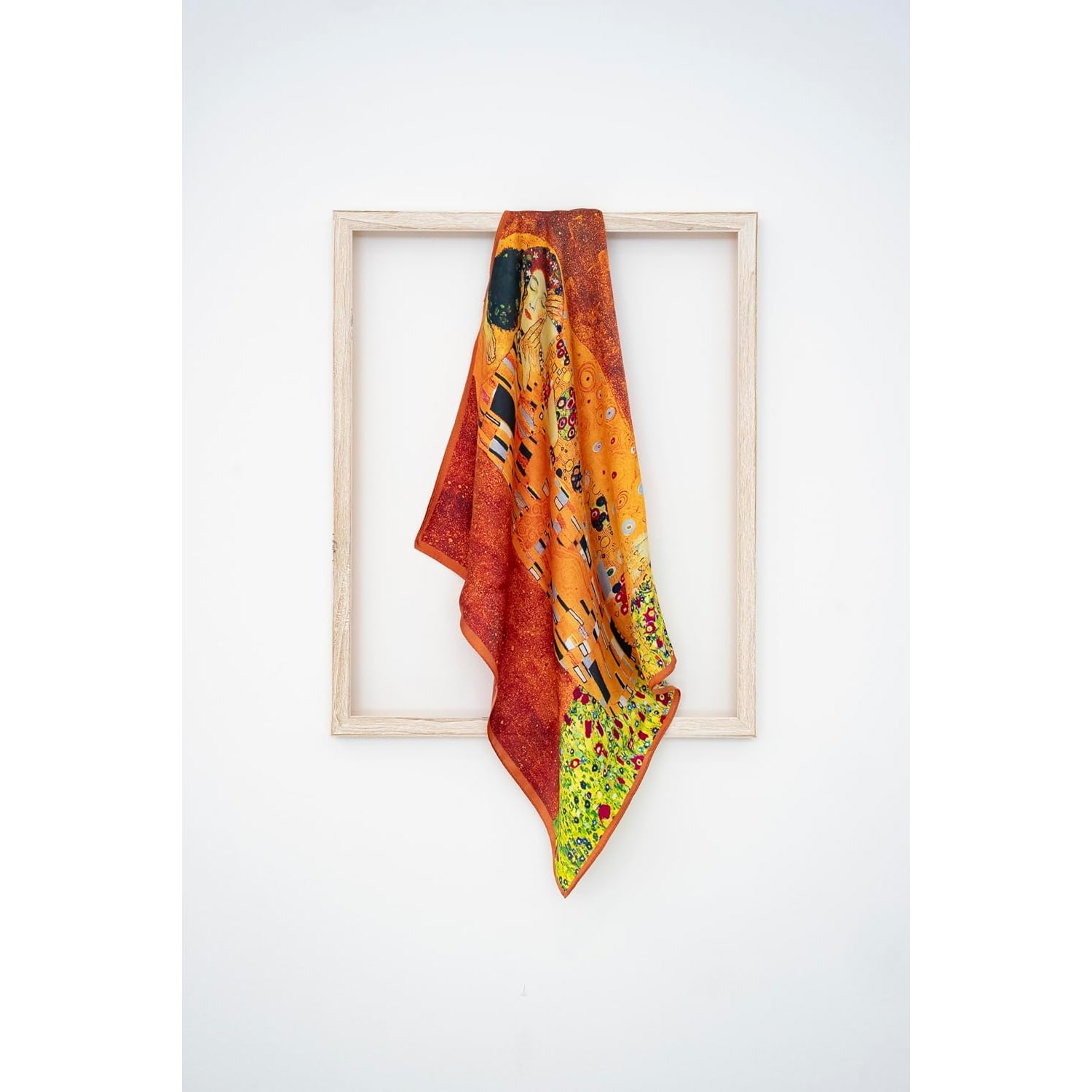
The weave here is crepe satin, a plain weave with a satin face. In practice that means two things you can feel. The front has the quiet sheen of silk, not the glassy shine of a cheap polyester satin. And there is a faint texture in the cloth, which is useful, because texture is what stops a knot sliding undone an hour after you tied it.
The fibre itself is 100% mulberry silk. Mulberry refers to what the silkworms were fed, and it matters because that diet produces long, even filaments. Long filaments make smoother cloth with fewer slubs. That smoothness is the reason hair and skin pass over silk with less friction than over cotton, which is why silk shows up so often in hair accessories.
Finally, the weight. The whole scarf is 22 grams. That is less than a slice of bread. It explains why a silk square ends up permanently in a handbag while a wool one lives in a cupboard.
Who it suits
If you work somewhere with a dress code, this is useful. A plain shirt and a knotted silk square reads as deliberate without looking like you tried hard. It also travels well, because it folds into nothing and does not crease the way linen does.
If you have long hair, it has a second life as a hair accessory. Rolled narrow it becomes a band for a ponytail or a wrap for a bun. Many people buy the best silk hair scarf they can find for exactly this and then realise it doubles as a neckerchief.
If you are buying a present and you do not know sizes, a square scarf solves that. There is no small, medium or large to get wrong. It suits a twenty year old and a seventy year old, which is not true of many accessories.
If you travel, it earns its space. One square works over a summer dress, inside a coat collar in winter, and over your shoulders in a cold aeroplane cabin at a pinch. The best lightweight silk scarf for travel is always the one that weighs nothing and takes no room.
How to choose between square sizes
People often ask whether to go 53cm or larger. Here is the plain answer.
Choose the 53cm small square if you mostly want a neckerchief, a hair tie, a headband or a bag accent. It knots easily, it sits flat, and it will not overwhelm a small frame. This is the everyday size.
Choose a 70cm or 90cm square if you want to wear it over your head as a full headscarf, drape it over the shoulders, or do the larger knotted styles that need a lot of fabric to hang properly. Those sizes look wonderful but they need more fabric management, and they can look like a lot on a narrower neck.
If you are buying your first silk scarf, start at 53cm. It is the version you will actually wear, and it is the easiest size to learn to tie.
Four ways to wear it
The neckerchief. Fold corner to corner into a triangle, then roll the long edge up towards the point until you have a band a few centimetres wide. Place the middle at the front of your throat, cross at the back, bring the ends forward, and tie a small knot slightly off centre. Off centre looks less stiff than dead middle.
The ponytail wrap. Gather your hair, secure it with an elastic first, then tie the rolled scarf over the elastic in a small bow or double knot. Let the ends fall with the hair. This is the easiest styling trick on the list and takes about four seconds.
The headband. Roll the scarf into a band, lay it across the crown from ear to ear, and tie underneath at the nape with the knot hidden under your hair. It holds back a fringe on a windy day without the dent an elastic headband leaves.
The bag tie. Fold it narrow and knot it around the base of a handbag handle, leaving the tails hanging. It is the cheapest way to make a plain bag look considered, and it is reversible in ten seconds when you want the scarf for your neck instead.
Looking after silk
Silk is a protein fibre, closer in behaviour to hair than to cotton. Treat it accordingly and it lasts for years.
This scarf is dry clean or hand wash only. If you hand wash it, use cool water, not hot, and a detergent made for delicates. Swirl it gently for a minute or two. Do not scrub it, do not wring it, and do not leave it soaking for long periods.
To dry, lay it flat on a clean towel, roll the towel up and press to get the water out, then dry it flat or hang it out of direct sun. Sun fades dye and weakens the fibre. So does a clothes dryer, so keep it out of there entirely.
If you need to press it, use the lowest silk setting on the iron, work on the reverse side, and press while the scarf is slightly damp. A thin cotton cloth between the iron and the silk is a cheap insurance policy.
For storage, flat or loosely rolled in a drawer beats a tight fold. Hard folds along the same line eventually wear a crease into the cloth. Keep it away from perfume sprayed directly onto it, and away from rough jewellery clasps that can snag a filament.
A note on honest expectations
Silk is a natural material and it behaves like one. It is strong for its weight but it is not armour. Rough handling, hot water and direct sunlight will shorten its life. Treated kindly, a 12 momme square will still look good after years of wear, and it tends to soften slightly with age rather than degrade.
The short version
A 53 x 53cm square of 100% mulberry silk, woven as crepe satin at 12 momme, weighing 22 grams. It ties at the neck, wraps a ponytail, works as a headband, or dresses up a handbag. It breathes, so it works in summer and in winter under a coat. Care is dry clean or hand wash, cool water, dry flat out of the sun.
If you have never owned a silk scarf and you want one thing that will get used, this is the size to start with.