


The complete guide
How to Choose a Silk Pillowcase, Momme Weight, Fit and Care
The problem with your current pillowcase
Most pillowcases are cotton, and cotton does a reasonable job. It is cheap, it washes well, it lasts. The trouble is that cotton has a textured surface at a microscopic level. Every thread in the weave is a small ridge, and over seven or eight hours of moving around, your hair and the side of your face drag across all of those ridges thousands of times.
That is where the morning tangles come from. It is also why a lot of people wake up with creases pressed into their cheek that take half an hour to settle. None of this is a disaster, but once you have slept on silk for a week and then gone back to cotton, the difference is hard to ignore.
Silk sits differently. The fibre is long, smooth and even, and the woven surface is far more slippery than cotton. Your hair slides rather than catches. Your skin moves across the fabric instead of gripping it. That is the whole pitch, and it is worth being honest that it is the whole pitch. Silk is a nicer surface to sleep on. Everything else people say about it tends to stretch past what the fabric actually does.
What momme weight actually tells you
If you take one number away from this guide, make it momme. It is pronounced "mummy" and it is the traditional Japanese measure of silk weight, roughly how much a fixed area of the fabric weighs.
Silk bedding usually runs from about 16 momme up to 25. Below 19, the fabric starts to feel thin and papery, and it will not survive many washes before it looks tired. Above 25, you are paying a lot more for a difference most sleepers cannot detect. The range from 19 to 22 is where almost all good silk pillowcases live.
This pillowcase is 22 momme. In practice that means the fabric has real body. When you hold it up, it hangs with weight instead of drifting. When you put it on the pillow, it lies flat rather than clinging in odd places. And because there is more fibre in the fabric, it generally handles repeat washing better than lighter silk does.
Thread count gets mentioned too, and this one is 600. With cotton, thread count is useful. With silk, it is a secondary figure, because silk threads vary so much in thickness that the count on its own does not tell you how much material you are getting. Momme does. If a product lists only thread count and not momme, that is usually a sign the momme figure is low.
Mulberry silk versus everything else
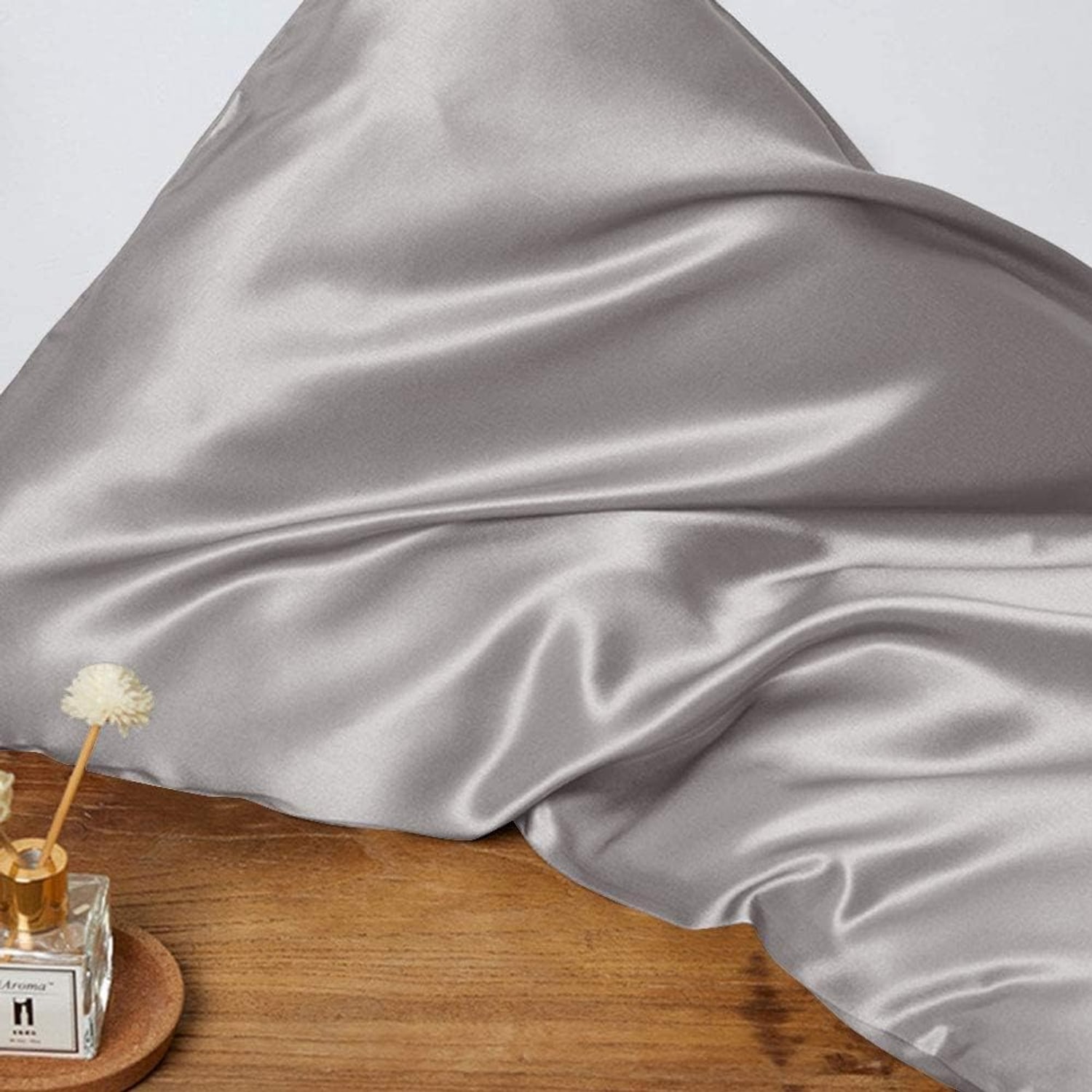
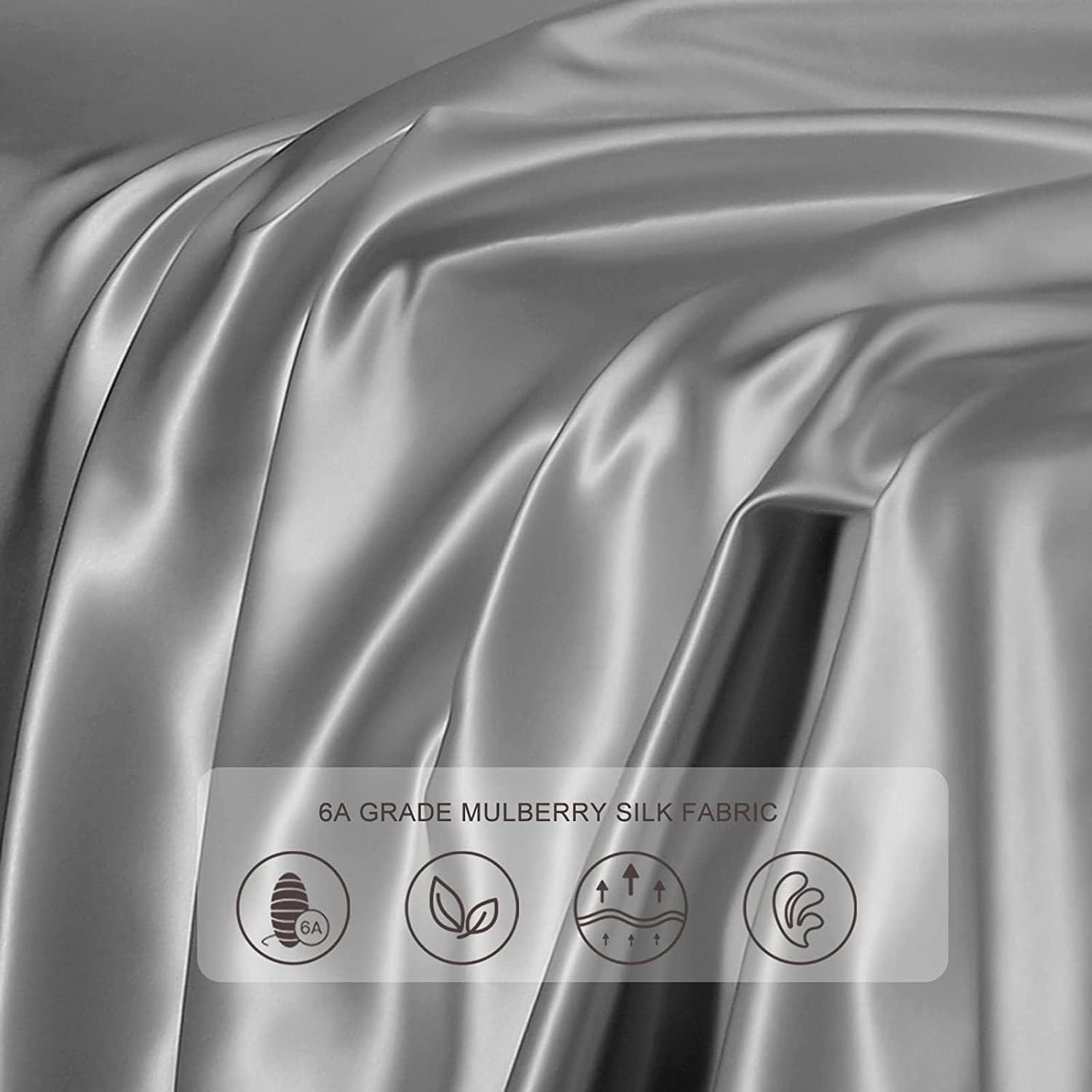
Not all silk is the same. Mulberry silk comes from silkworms fed exclusively on mulberry leaves, which produces long, consistent strands. Those long fibres weave into a uniform, smooth cloth with very few slubs or irregularities. It is the grade used for the best mulberry silk pillowcase products you will find, and this one is 100% mulberry silk.
The other thing worth sorting out is satin. Satin is a type of weave, not a material. You can weave satin from silk, but the overwhelming majority of satin pillowcases on the market are polyester. They are shiny, they are cheap, and they are slippery, which is why they get marketed in the same space. What they are not is breathable. Polyester traps heat and moisture in a way natural silk does not. If you have tried a satin pillowcase and found it clammy, that is why, and it is not a fair test of silk.
The closure matters more than you think
Pillowcase closures come in three main styles. Open end is the cheapest and the pillow falls out constantly. Envelope closures tuck the pillow behind a flap, which works until you move, at which point the pillow starts working its way towards the opening.
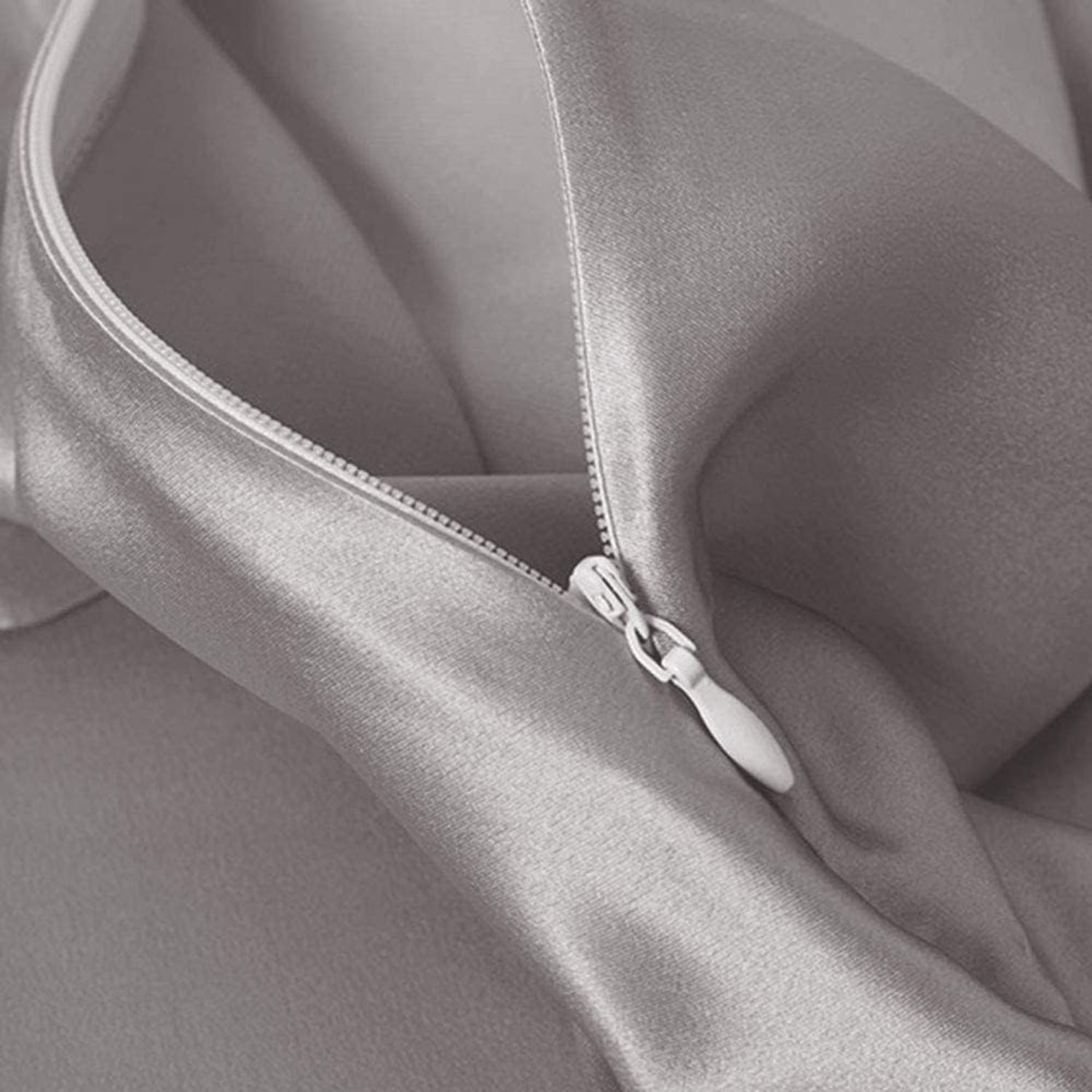
This one uses a concealed zip. The zip runs along one short edge and sits tucked inside the seam, so you get a clean rectangle with no visible hardware. The pillow stays where you put it all night. When it comes time to wash, you unzip and the pillow slides straight out with no wrestling.
It is a small thing that you only appreciate after living with the alternative. Anyone who has spent a few minutes at six in the morning shoving a pillow back into an envelope case knows exactly why the zip is worth having.
Getting the size right
This is a queen pillowcase, 76.2 cm long by 50.8 cm wide, which works out to 20 inches by 30 inches.
Pillow sizing is inconsistent across countries, so do not assume. Pull the pillowcase off your current pillow, lay the pillow flat and measure it from seam to seam in both directions. If you land near 76 by 51 centimetres, you have a queen and this will fit nicely.
If your pillow is shorter, around 66 cm, you have a standard. A queen case will still go on, but you will have loose fabric at one end that bunches when you make the bed. If your pillow is longer, around 91 cm, you have a king and this will be too tight to get on comfortably.
Depth matters too. A very plump or contoured pillow takes up more of the case than a flat one, and silk has only a little give. If your pillow is unusually thick, expect a snug fit.
Choosing a colour
Grey is the quiet option, and that is a compliment. Silk has a natural lustre, so colour reads differently on silk than it does on cotton. Bright shades can look louder than you expect. Pure white shows every shadow and crease.
A mid grey sits between the two. It picks up the sheen without shouting about it, and it works against white sheets, charcoal doonas, natural linen and most patterned bedding. It is also more forgiving of the small creases silk picks up overnight, which pale colours tend to highlight.
Looking after it
Silk is not fragile, but it is particular. The three rules are cool water, mild detergent and no heat.
Hand washing in cool water is the gentlest approach and takes about five minutes. Swirl it through, rinse, press the water out without wringing, and lay it flat. If you would rather machine wash, use the gentle cycle and put the pillowcase inside a mesh laundry bag. The bag protects the fabric from snagging on the drum and stops the zip catching on other items.
Use a liquid detergent made for delicates or wool. Skip bleach, skip oxygen brighteners and skip fabric softener. Softener in particular leaves a film that dulls the surface of silk over time, which is the opposite of what you want.
Dry it flat or on a line in the shade. Direct sun is the fastest way to fade any dyed fabric, and heat from a tumble dryer weakens silk fibres. If you want to press it, use the lowest iron setting on the reverse side while the fabric is still slightly damp.
Washing every week or two is about right. Two pillowcases in rotation makes that easy, since one can be in the wash while the other is on the bed.
Who this suits
People who wake up with tangled hair. Side sleepers who are tired of pressed creases on one cheek. Anyone who runs warm at night and finds polyester bedding clammy. Also anyone buying a small, well-made gift where you do not know the recipient's taste, because grey silk is about as safe as bedding gets.
It is less useful if your pillow is not queen sized, or if you want something you can throw in a hot wash and a tumble dryer without thinking. Silk asks for a little care.
The short version
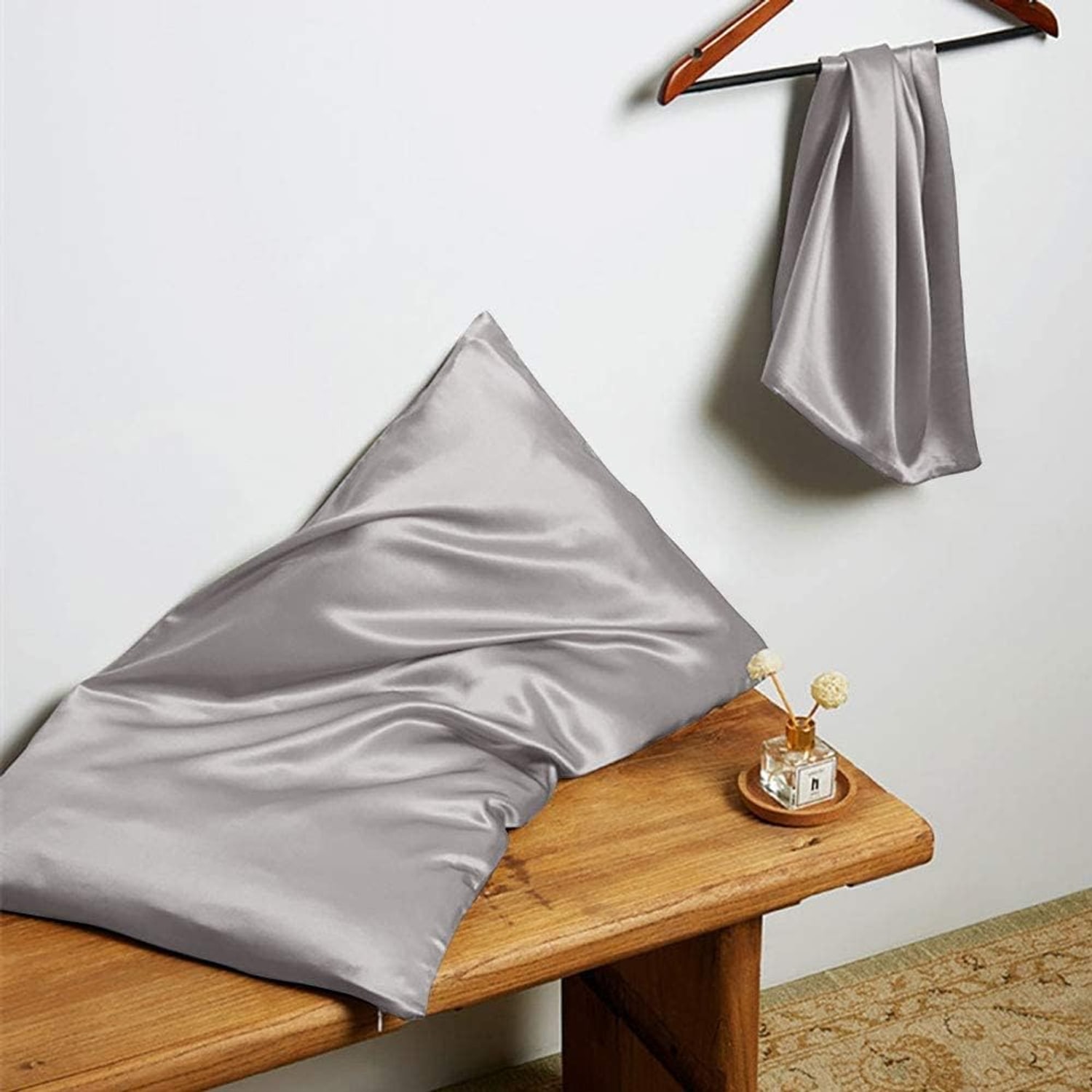
This is a 22 momme pillowcase in 100% mulberry silk, grey, queen sized at 76.2 cm by 50.8 cm, with a hidden zip. The momme weight means the fabric has substance rather than feeling thin. The zip keeps the pillow in place and the finish flat. The care routine is cool water, gentle detergent and no heat.
Measure your pillow first. If it matches queen dimensions, this will fit well and you will notice the difference the first night you use it.