

The complete guide
How to Choose a Silk Pillowcase, Momme Weight, Sizing and Care
The problem with most pillowcases
Most of us never think about the pillowcase. It comes in a set with the sheets, it gets washed with everything else, and it stays on the bed until it wears out. That is fine until you notice that the fabric is dragging. Cotton has a surface that grips. Hair catches on it, skin catches on it, and in warm weather it holds heat against your face.
Silk sits at the other end of that scale. It has a smooth surface, so hair and skin slide over it with far less friction than they do over cotton. It feels cool when you first lie down. And a good one looks considerably better on a made bed than the third-string case you have been using since you moved in.
The catch is that silk pillowcases vary enormously. Some are heavy and substantial. Some are so thin you can see the pillow through them. Some have silk on one side and a cheap backing on the other. Price does not always tell you which is which. So it helps to know what the numbers mean before you buy.
What momme actually tells you
Momme is the key number. It is a weight measure specific to silk, and it tells you how much silk is packed into the fabric. Higher momme means a heavier, denser cloth.
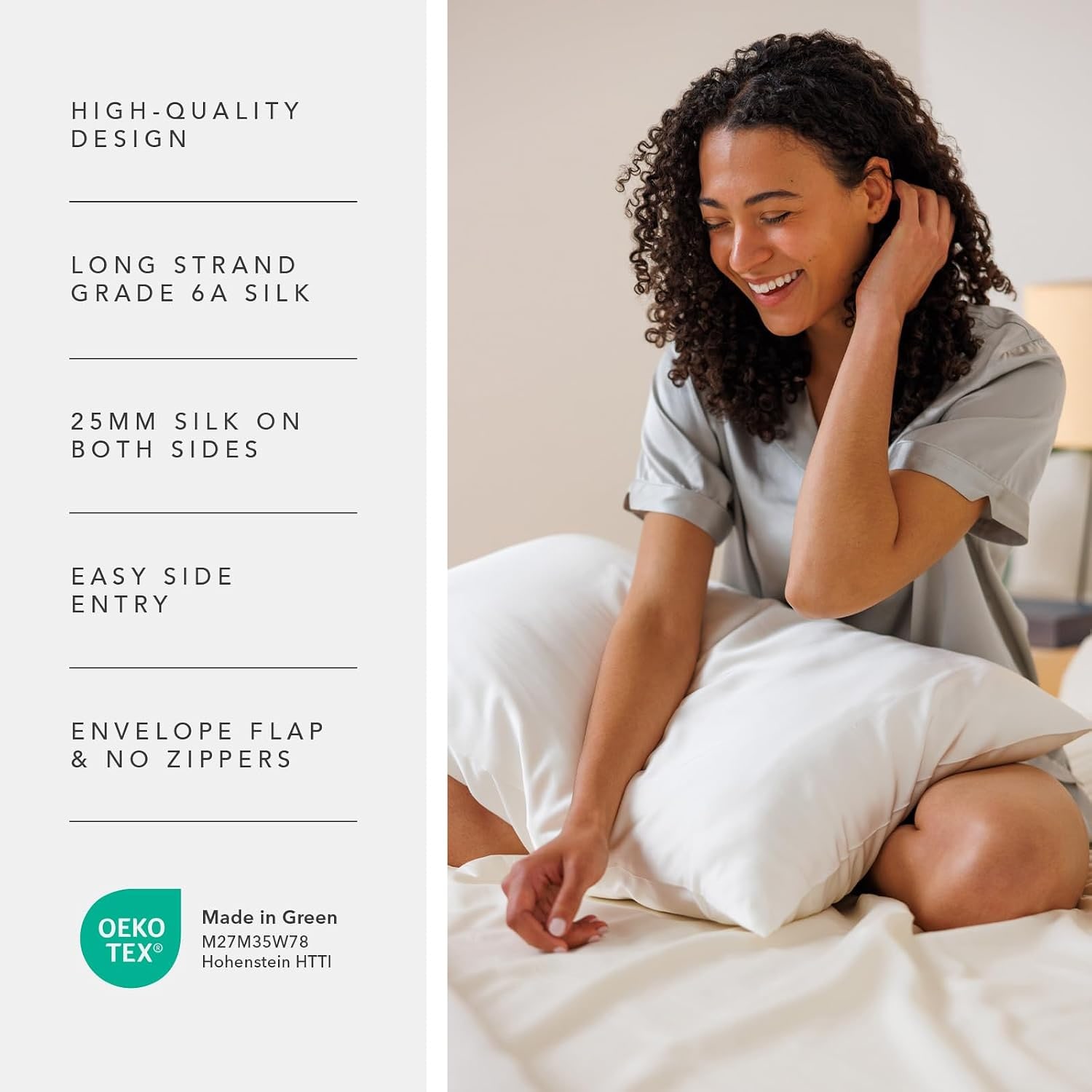
Silk sold for bedding generally runs somewhere between 16 and 25 momme. At the low end the fabric is light and a bit flimsy. It still feels smooth, but it does not drape well and it tends to show wear sooner. Around 19 to 22 momme is the common middle ground. At 25 momme, which is what this pillowcase uses, you are at the heavier end of what gets made for bedding.
You can feel the difference immediately. Heavier silk has body. It settles over a pillow rather than floating on it, and it does not slide off the bed the way thin silk sometimes does. If you have handled a cheap silk case before and thought it felt insubstantial, that was the momme weight talking.
The thread count sits alongside it. Here it is 700, which describes how tightly the fabric is woven. A tight weave contributes to that smooth, even surface. With silk, though, momme is the more useful number of the two. A high thread count on thin silk still gives you thin silk.
Why silk on both sides matters more than you think
Plenty of silk pillowcases are silk on the top face only. The underside is cotton, polyester or something similar, which keeps the cost down. On paper that seems sensible, since you only lie on one side.
In practice you do not lie on one side. You flip the pillow halfway through the night, you fold it, you shove it under your shoulder. Half the time you end up on the backing fabric without realising. The whole point of the upgrade is lost.
This pillowcase is silk on both faces. Whichever way the pillow lands, the surface is the same. It also tends to wear more evenly, because you are not always putting the pressure on one particular side.
The closure makes a difference
The closure is the part people ignore and then get annoyed by. There are three common approaches.
A zip holds the pillow securely but puts a hard strip of plastic or metal near your face. It can catch on hair. On a fine fabric, a zip is also a point where things tear.
A buttoned opening looks tidy but adds small lumps along one edge, and the buttons eventually work loose in the wash.
An envelope closure uses the fabric itself. The pillow slides in and a flap folds back over the opening to hold it in. Nothing hard, nothing to snag, nothing to replace. This case uses an envelope opening that is offset slightly to one side rather than sitting dead centre, which keeps the folded edge out of the middle of the pillow where your head sits. It is a small design decision that you notice every night without quite registering why.
Getting the size right
This is a queen pillowcase. It measures 76.2 cm long by 50.8 cm wide, listed in imperial as 20 by 30 inches.
Before you order, take your pillow off the bed, lay it flat and measure it edge to edge along the longest side. Do not measure while it is propped up, because a plumped pillow reads longer than it is. If your pillow comes in at roughly 75 cm long, a queen case is the right call. If it is noticeably longer, you need a king size, and this one will not fit.
A very thick or overstuffed pillow can feel tight in any case, even one that is technically the right length. If yours is on the generous side, allow for that. Silk has some give but not a lot.
Most people buying for a double or queen bed want two cases. Each listing here is a single pillowcase, one piece, one pack. So order accordingly.
Choosing the colour
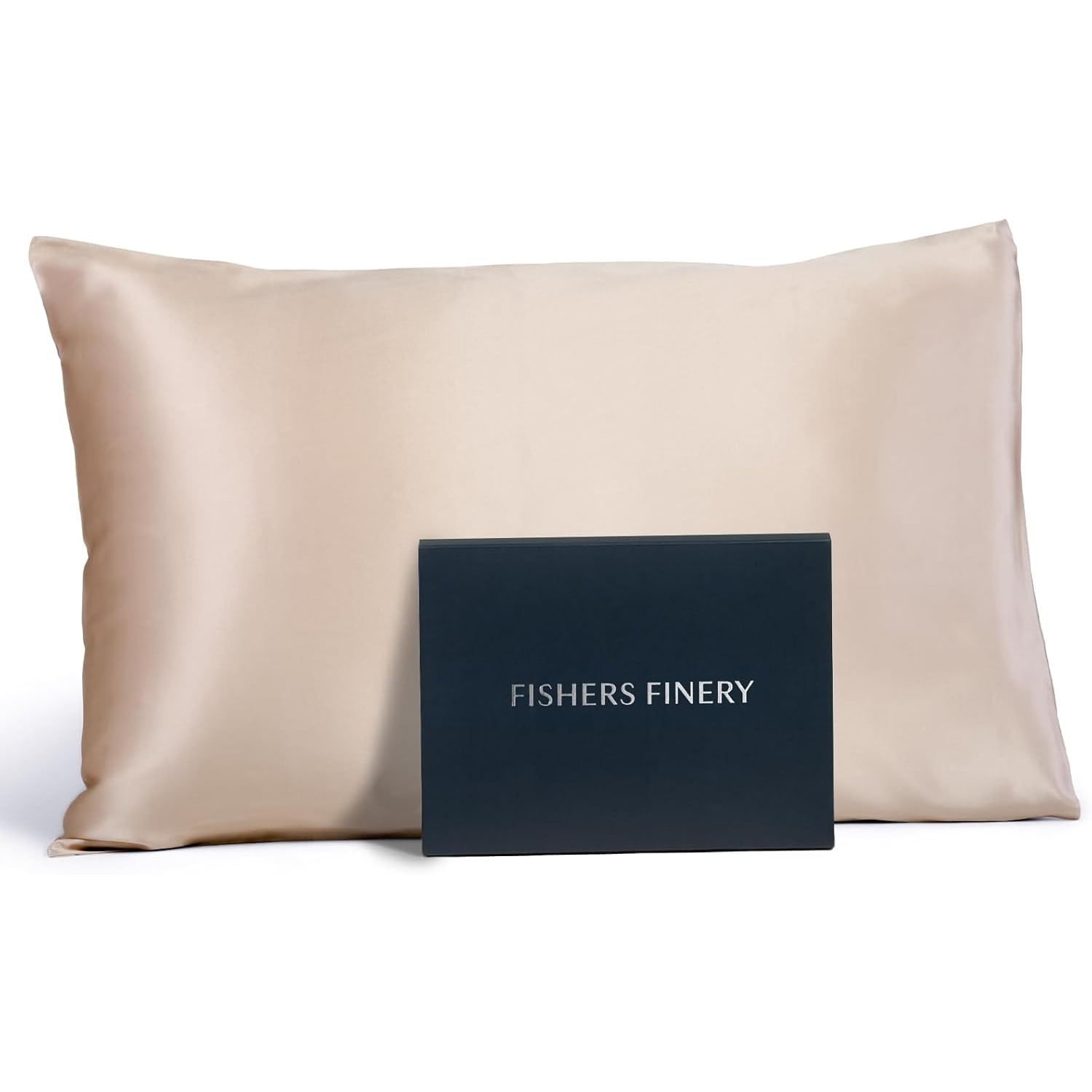
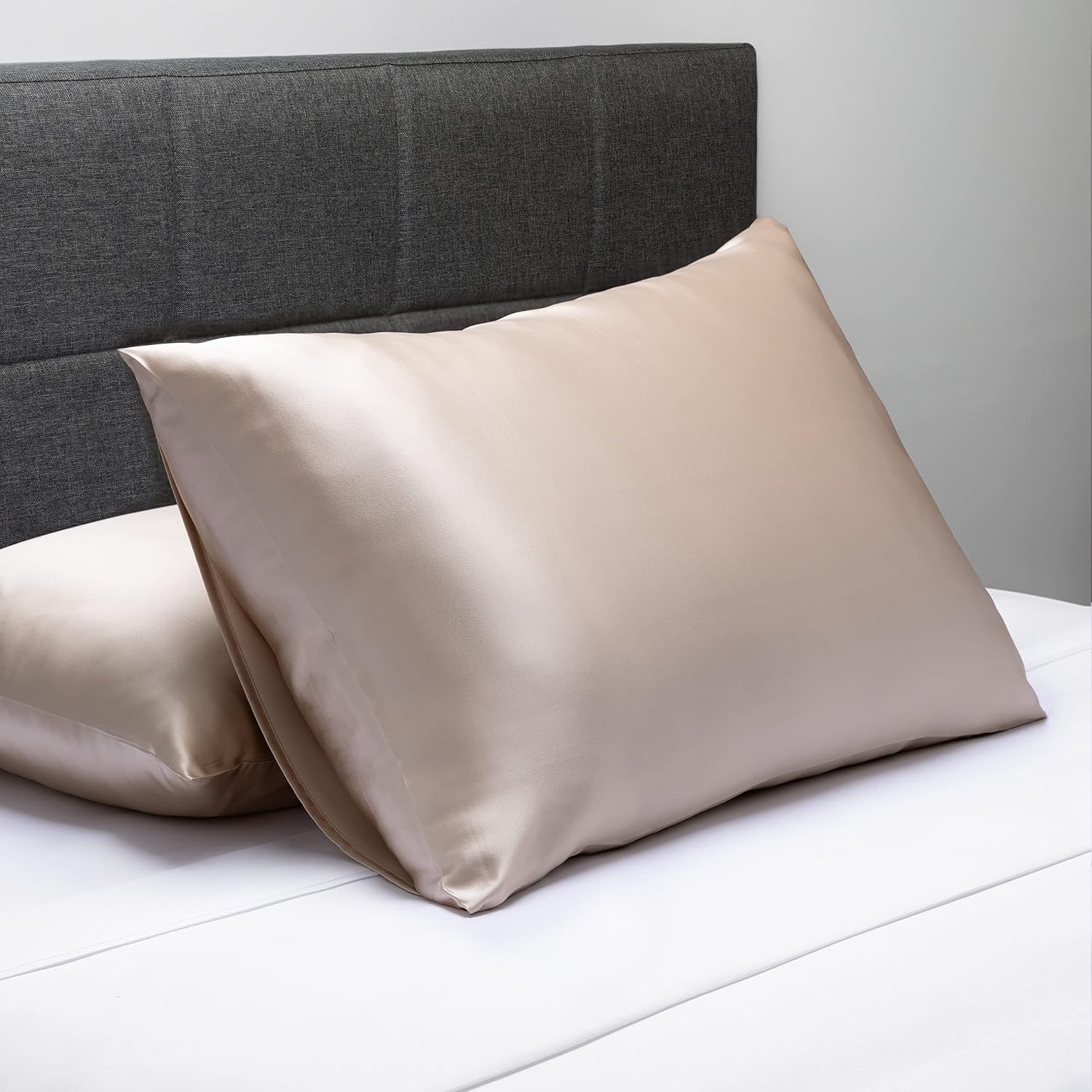
Taupe is the neutral option. It is a warm grey-brown, solid with no pattern, and it tends to soften a bed that would otherwise look very white and very flat. It sits comfortably with oatmeal linen, charcoal or grey throws, timber bedheads and pale painted walls.
Silk has a natural sheen, which means any colour shifts a little with the light. Taupe looks lighter and warmer in morning sun and deeper in shade. That is normal for the fabric, not a fault, and it is part of why silk looks richer than a matte cotton in the same shade.
If you are matching to existing bedding, neutrals are the forgiving choice. A strong colour has to work with everything else in the room. A warm neutral generally just fits.
Looking after it
Silk is not difficult to care for, it just has rules, and most of them come down to avoiding heat.
Dry cleaning and hand washing are the gentlest options. For hand washing, use cool water and a small amount of mild detergent made for delicates or wool. Swirl it through, do not scrub or wring, then rinse until the water runs clear.
Machine washing is listed as acceptable too. Use a gentle or delicates cycle, cool water, and put the case inside a mesh laundry bag so it does not get tangled with zips and hooks elsewhere in the load.
Skip bleach and skip fabric softener. Bleach damages the fibre directly. Softener coats the surface and takes away the very smoothness you paid for.
Lay it flat to dry, away from direct sunlight and away from radiators or heaters. It dries quickly. If it needs pressing, use the lowest iron setting on the reverse side while the fabric is still slightly damp, and keep the iron moving.
Washing every one to two weeks, in line with your sheets, suits most households. Owning a spare makes this much easier, because you always have one on the bed while the other dries.
A few practical notes
The case weighs 0.11 kg, which is almost nothing. That makes it an easy thing to pack if you travel and want a familiar surface on a hotel pillow. Roll it rather than folding it tightly and it comes out without hard creases.
Silk is a natural fibre, so it can snag on rough fingernails, ring settings or velcro, as any fine fabric will. Smooth nails and removing jewellery before bed solves most of that. The tight weave here helps.
Store spares loosely folded in a drawer or linen cupboard, out of strong light.
The short version
Momme weight is the number worth checking, and 25 momme is at the heavier, more substantial end of silk bedding. Silk on both faces means it does not matter which way the pillow lands. The offset envelope closure keeps hard edges away from your face and stays tidy on a made bed.
Measure your pillow flat before ordering, buy two if you have a queen or double bed, wash cool and gently, and dry it flat. Do that and a heavier silk case holds its surface for a long time.
Delivery runs from Australian warehouses, usually 3 to 7 working days. Returns are open for 14 days from delivery as long as the case is unused and unwashed, so if the size or shade is not what you pictured, you are not stuck with it.