
The complete guide
How to Choose a Contoured Silk Sleep Mask That Does Not Press on Your Eyes
The problem with most sleep masks
Most people buy their first sleep mask, wear it for three nights, and quietly stop. The mask is not lost. It is sitting on the bedside table because something about it was annoying.
Usually it is one of two things. Either the fabric was lying flat on the eyelids, so every blink felt like fabric dragging across the lashes, or the strap had to be pulled so tight to block the light that it left a headache by morning. Both problems come from the same design shortcut. A flat rectangle of fabric cannot follow the shape of a face, so it either floats and lets light in, or it is strapped down hard and presses.
A contoured mask solves it a different way. Instead of relying on tension to seal out light, it uses shape.
How the contoured design works
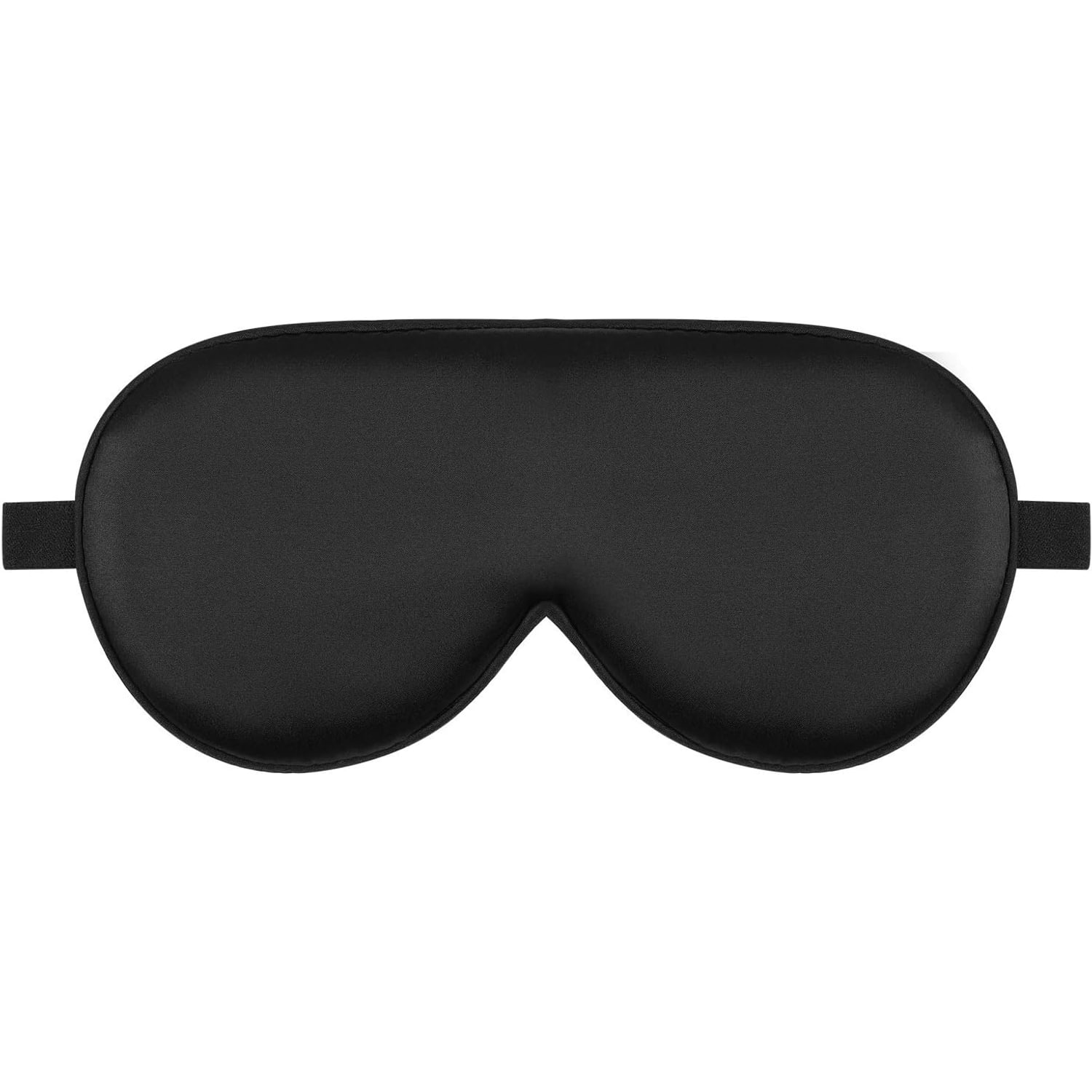
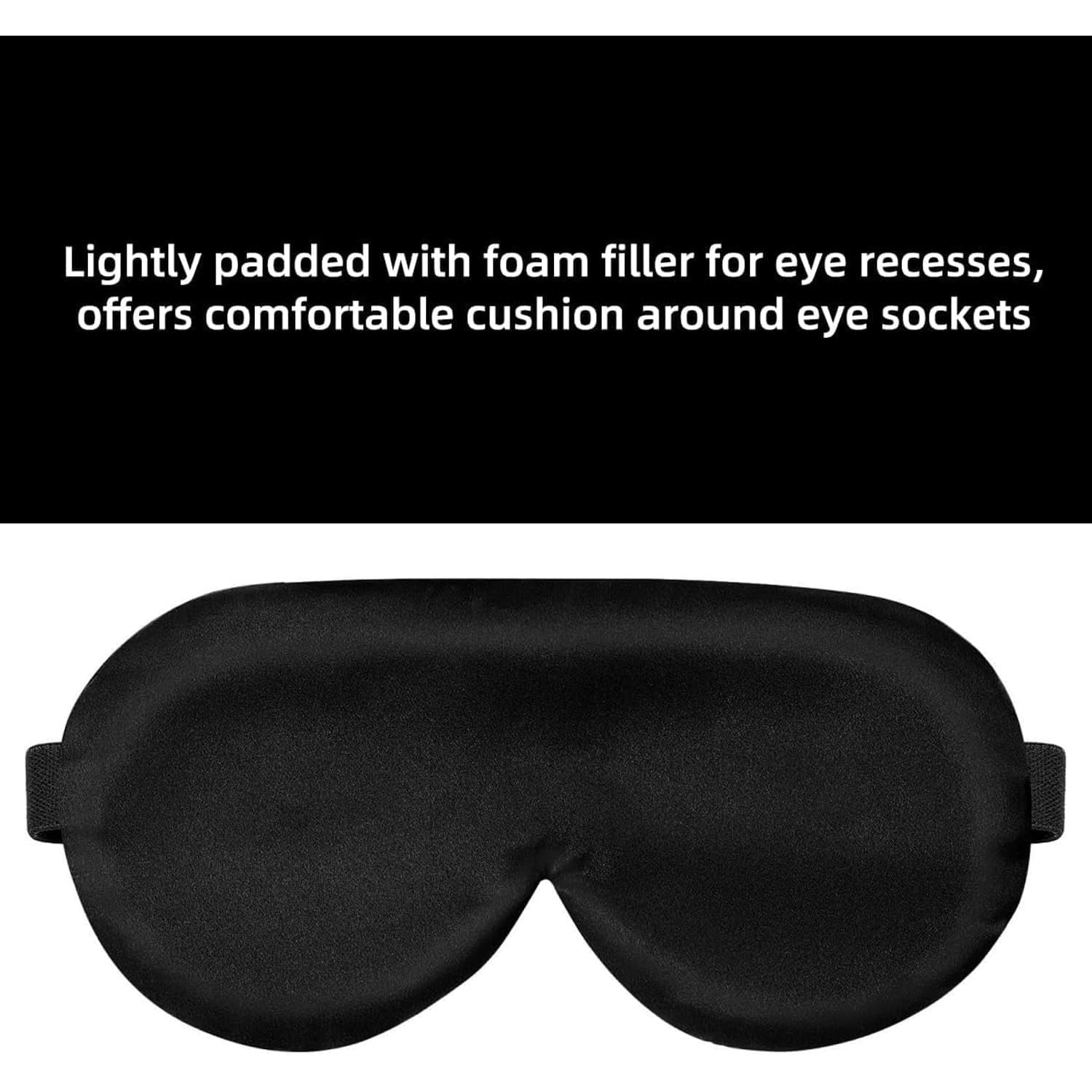
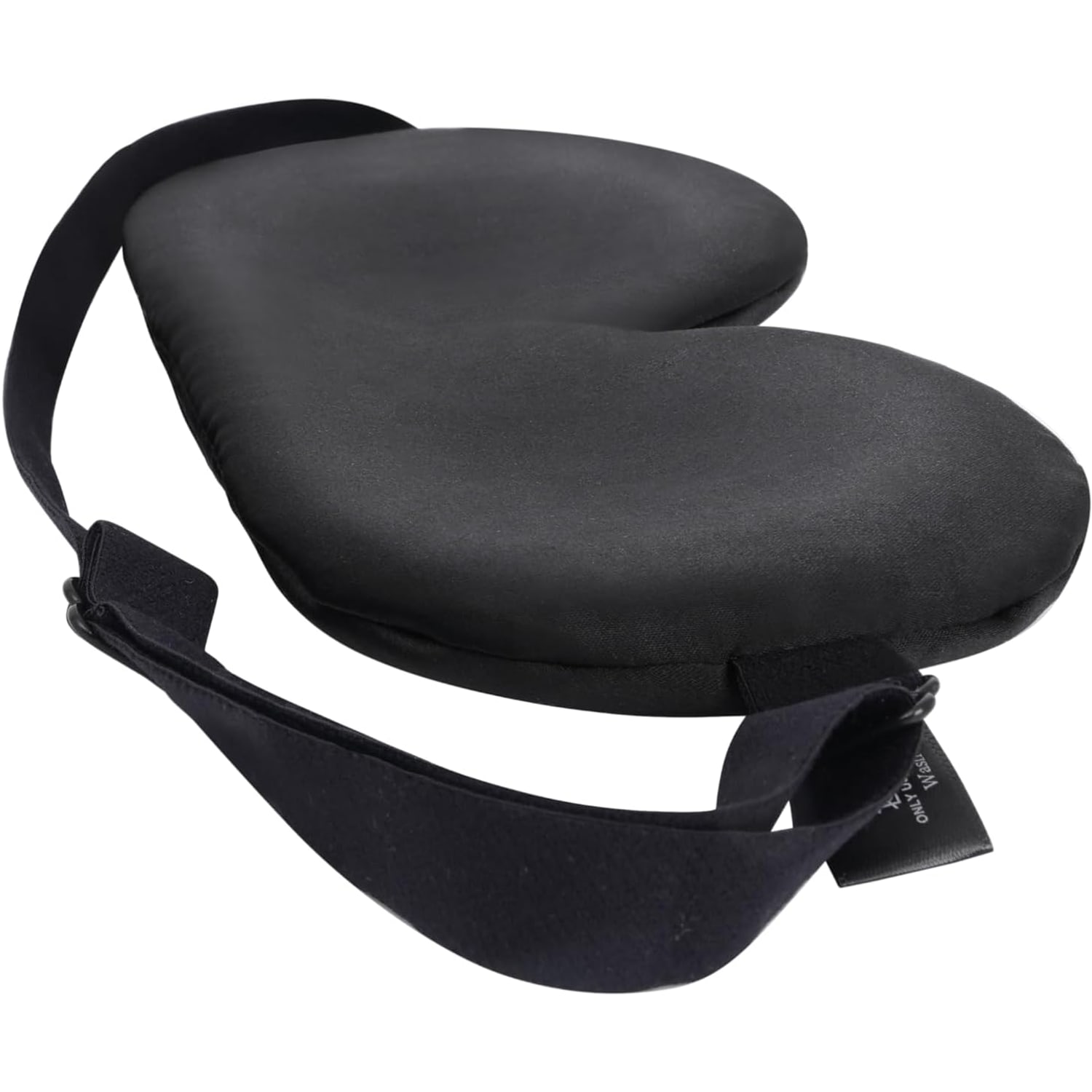
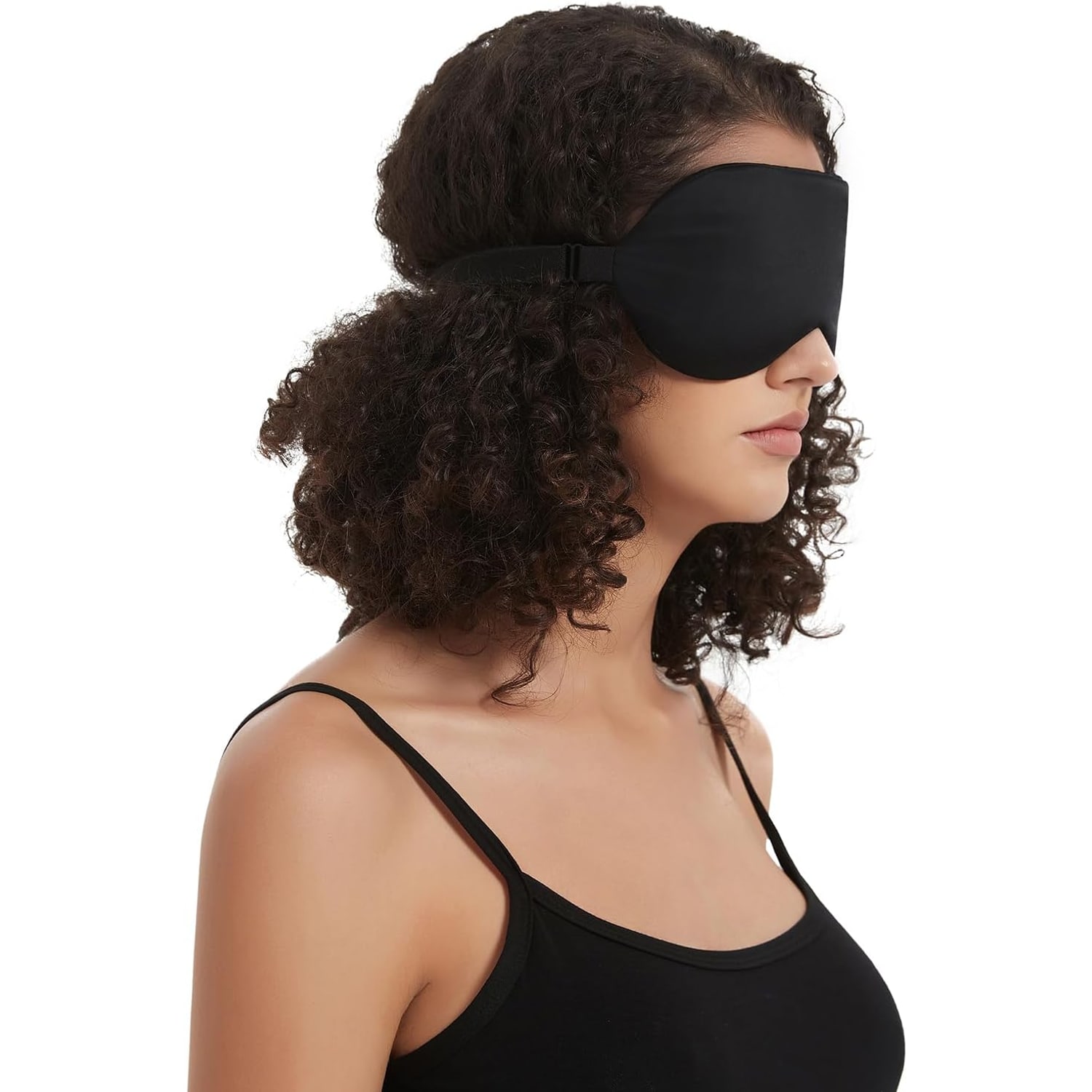
Inside this mask is a foam insert that creates two recessed cups, one for each eye. The silk face panel is held away from the eyelids by that structure, so there is a small pocket of air in front of each eye. You can open your eyes fully inside the mask and feel nothing touching them.
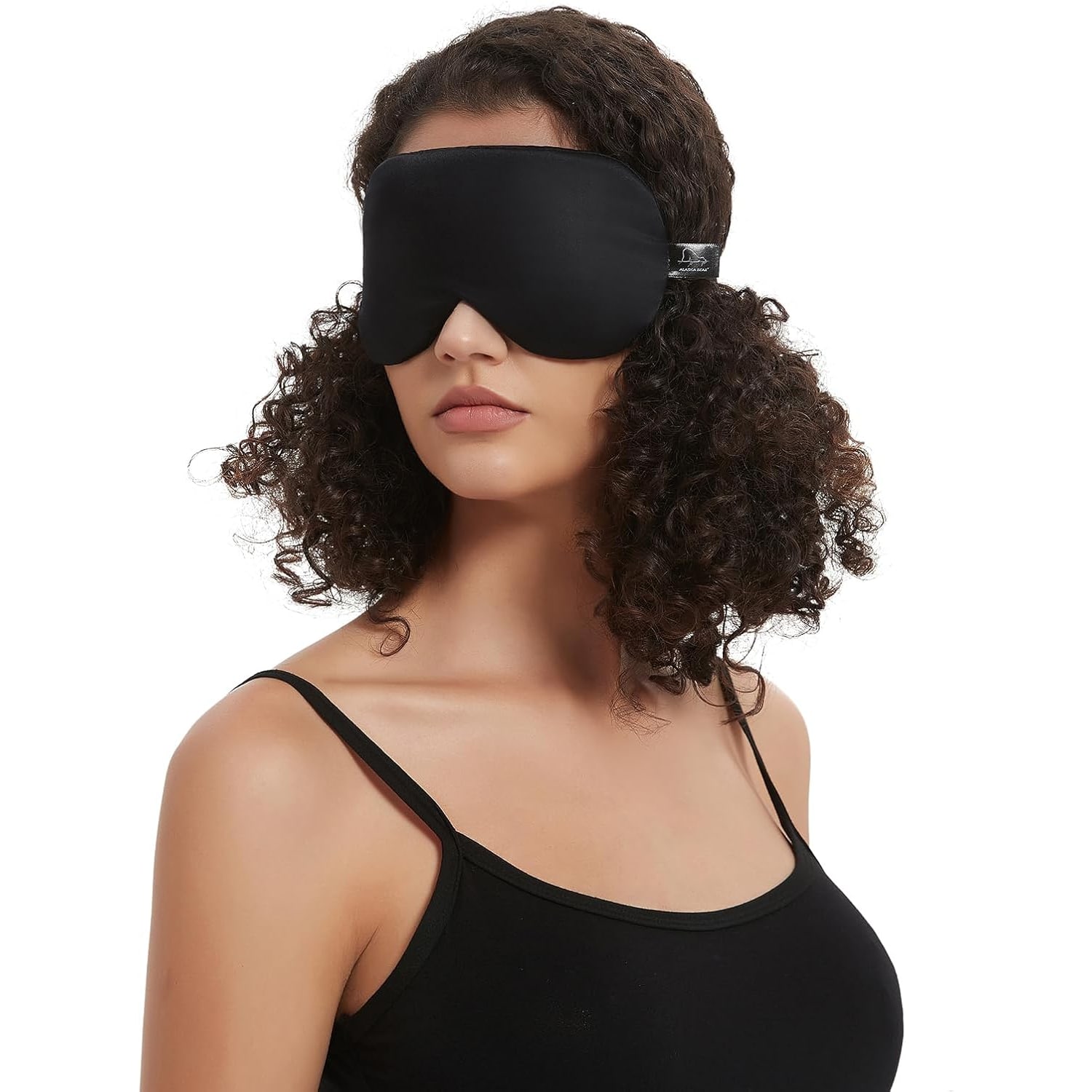
The second piece is the nose curve. On a flat mask, the nose creates a little tent, and daylight pours in through the triangle underneath. This mask has a higher, shaped curve that follows the bridge of the nose and the top of the cheeks. That is where the light sealing actually happens. Because the shape is doing the work, you do not need to over-tighten the strap, and there is no constant pressure dragging down on the nose bridge.
The third piece is what is missing. There is no piping, no binding tape and no raised seam running along the eye area. Those edges are what leave a crease in the skin under the eyes, the kind you are still rubbing out at breakfast. Here the silk meets the face smoothly.
Why silk on the face side
Silk is the surface that touches your skin for seven or eight hours. It is smooth, it slides rather than grips, and skin moves across it with less friction than cotton or a brushed synthetic lining. That matters most around the eye area, where the skin is thin and pulls easily.
It also feels cool when you put it on, which some people find helps them settle. The supplier describes the silk panel as breathable and non-irritating against the face.
What this record does not state is the momme weight of the silk, or the country of origin. If those details matter to you, treat them as unspecified rather than assuming a figure.
Who this suits
Light sleepers at home. If a street light, a hallway lamp or an early sunrise is waking you, a contoured mask is the cheapest fix available. Blockout curtains cost a great deal more and only work in one room.
Travellers. At around 17 grams and 12.7 cm square, this packs flat into a seat pocket or the side of a handbag. For anyone comparing options for the best travel sleep mask, the combination of light weight and real light blocking is the thing to look for. Flat masks pack smaller but tend to leak light at the nose exactly when you need darkness most, mid-flight with the cabin lights up.
Shift workers. Sleeping during daylight is a different job to sleeping at night. A mask that only dims the room will not cut it. The contoured shape is a better bet here, and it holds position through a long sleep rather than creeping up onto the forehead.
Anyone with lash extensions or a nightly eye cream. The recessed cups mean the mask is not sitting on your lashes or wiping product off your lids. Very long extensions may still brush the inside of a cup, so that is worth bearing in mind.
Side sleepers. Contoured masks generally work well here because the cups keep their shape against the pillow. You will feel the outer edge of the cup on whichever side you are lying on. A slightly looser strap usually sorts that out.
How to choose and how to fit it
Three things decide whether a mask works for you: the shape, the strap and the surface.
Shape is covered above. Contoured beats flat if your main problem is light leaking at the nose or fabric touching your eyes.
Strap matters more than people expect. A hook and loop closure like the one on this mask lets you set an exact length rather than living with whatever an elastic band decided. That is useful if you share the mask, if you wear your hair up some nights and down others, or if you simply find most masks too tight. The trap with hook and loop is hair catching on the hooked side, so press the strap closed when you are not wearing it and position it above or below a hair tie.
Surface is about what touches the skin. Silk is the common choice for a reason. If you have tried a fleece or polyester lined mask and found your face felt hot or sticky by morning, the switch is noticeable.
Fitting it on the first night takes a minute. Put the mask on with the nose curve seated against the bridge of your nose, then pull the strap just until the bottom edge of each cup rests against your cheek. Stop there. If you can see a sliver of light, slide the mask down slightly rather than tightening further. Over-tightening is the single most common mistake, and it makes masks shift more during the night, not less.
Looking after it
Care is straightforward. Machine wash on a gentle cycle inside a lingerie bag, using cool water and a mild detergent made for delicates. The lingerie bag is not optional with a hook and loop strap. Loose in the drum, that strip will find every delicate thing in the load.
Skip bleach. Do not wring the mask out, since twisting is hard on both silk and the foam insert. Reshape the cups with your fingers and dry it flat, away from a heater, a dryer or direct sun. If you need to press it, use a cool iron on the strap side only.
Washing every week or two is sensible for nightly use. Wash sooner if you have been wearing sunscreen, makeup or a rich night cream, since those transfer onto the fabric even with cups holding it off the skin. A spare mask makes this easy, which is why people often order two, one for the bedside and one that lives permanently in the travel bag.
The short version
This is a black silk sleep mask built around hidden eye cups and a raised nose curve. The cups keep fabric off your eyelids and lashes. The nose curve closes the light gap without you having to strap the thing down hard. The silk panel has no piping along the eye area, so it does not scratch or press a line into the skin.
It weighs about 17 grams, measures 12.7 x 12.7 x 1.78 cm, closes with an adjustable hook and loop strap, and washes on a gentle cycle in a lingerie bag.
If your current mask lives on your forehead by 3 am, the problem is almost certainly the shape. This is the shape that fixes it.