

The complete guide
How To Choose A King Silk Pillowcase That Actually Lasts
The problem with the pillowcase you already have
Most people never think about their pillowcase. It came with the sheet set, it is cotton, it does the job. Then one morning you notice the creases pressed into one side of your face, or you pull your hair out from under the pillow and half of it comes with you, and the thought arrives: maybe the fabric matters.
It does, mostly because of friction. Cotton is a short-staple fibre woven into a textured surface. Under a microscope it looks like a tiny landscape of ridges and loops. Your skin and hair move against that landscape every time you roll over, and you roll over a lot. Nothing dramatic happens in one night. Over years, the drag adds up.
Silk is built differently. The fibre is a continuous protein filament, long and smooth, and when it is woven into a fine fabric the surface is close to slippery. Your cheek slides. Your hair slides. There is simply less for anything to catch on.
That is the whole pitch, and it is a material fact rather than a promise about outcomes. It is also why silk pillowcases have gone from a niche luxury to something people buy as a standard replacement.
What momme actually tells you
If you shop for silk bedding for more than ten minutes you will run into the word momme. It is the traditional Japanese unit for silk weight, and it is the single most useful number on the label.
Momme measures how much a fixed area of silk weighs. Higher momme means more silk per square centimetre, which means a denser, heavier, more durable fabric. Silk pillowcases usually land between 16 and 25 momme.
At 16 momme the fabric is light and inexpensive. It feels nice in the shop. It also wears thin at the corners faster than you would like, especially around a zip.
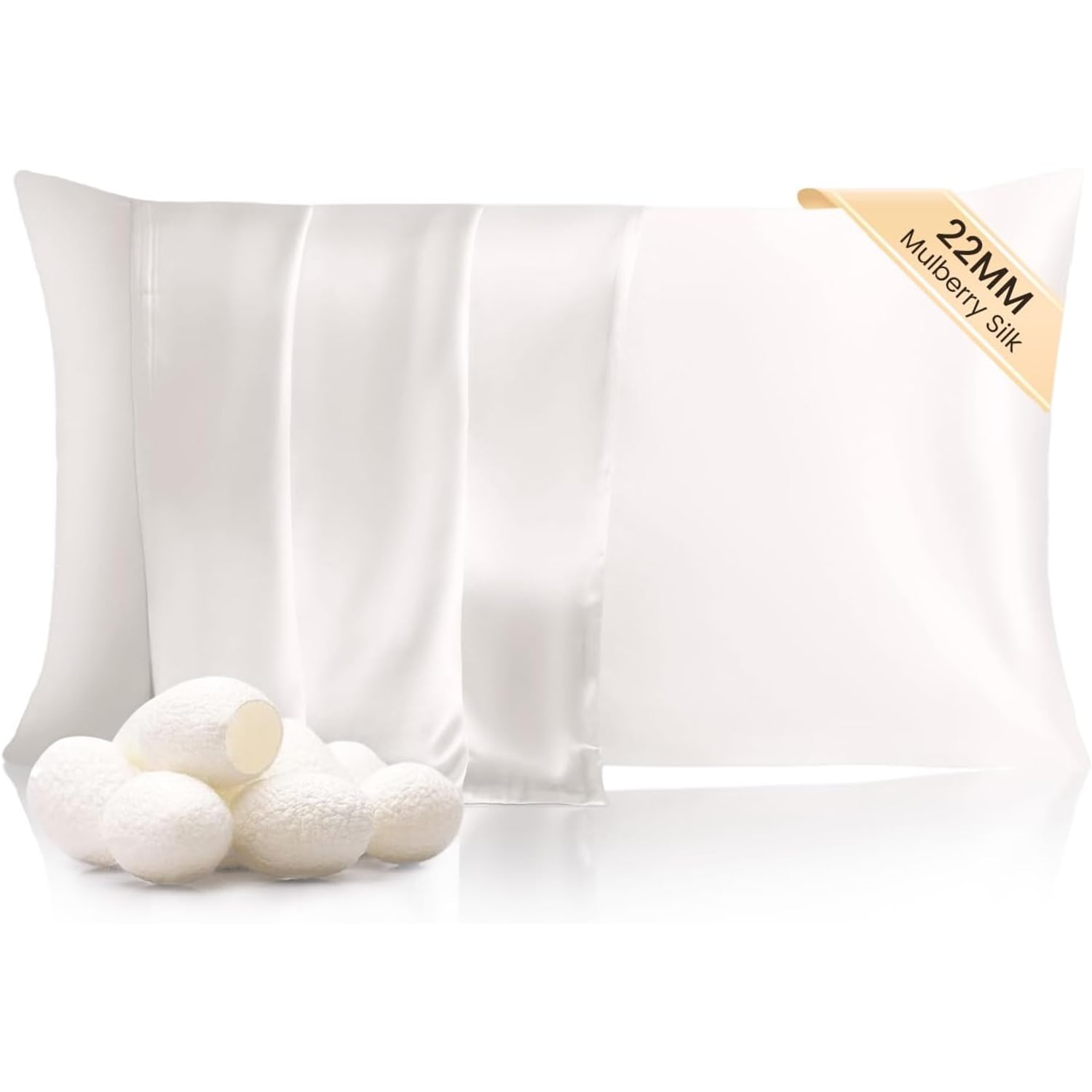
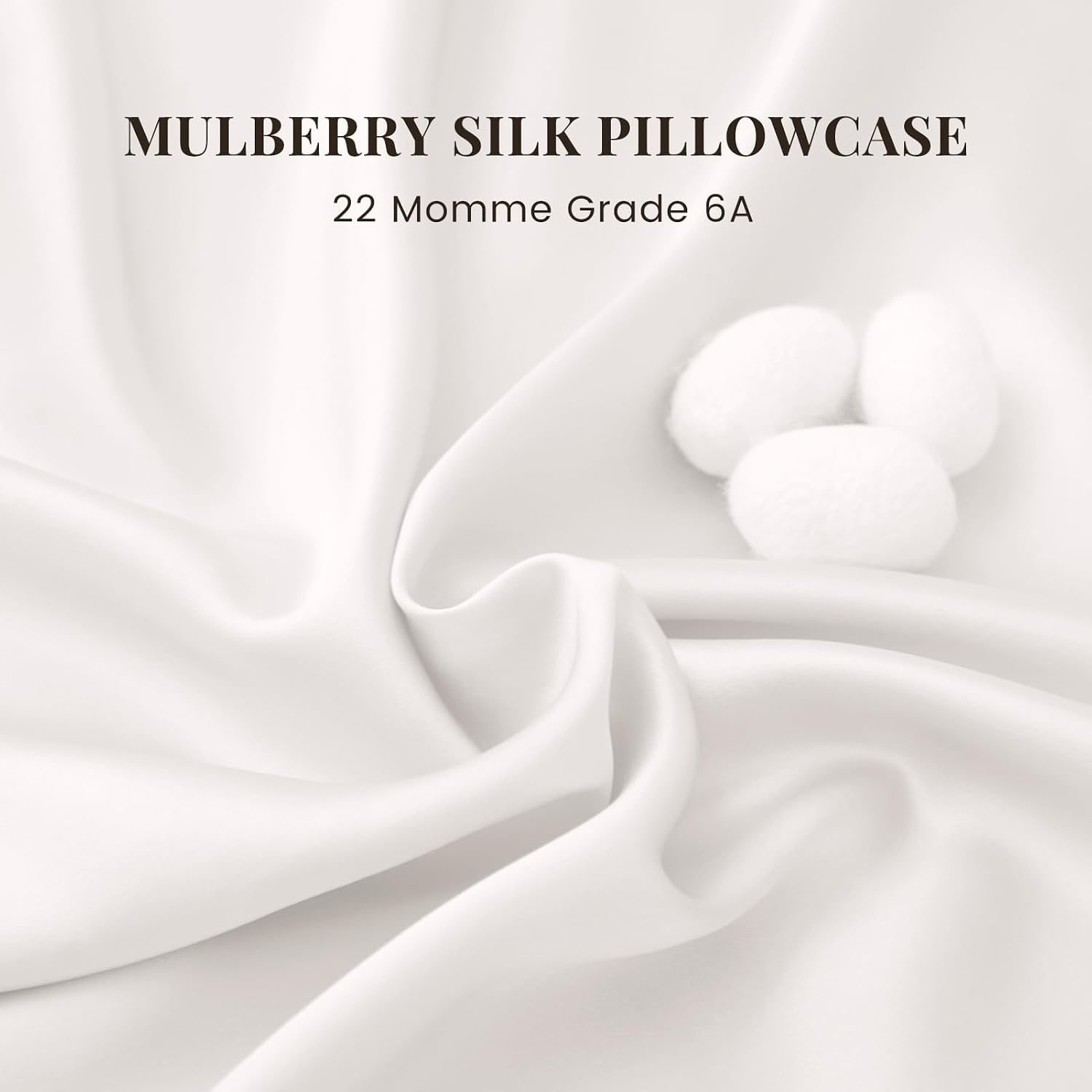
At 22 momme, which is what this pillowcase uses, you get a noticeably more substantial hand. The fabric has weight to it. It drapes rather than floats. It survives regular washing without going papery. Most people who have owned a few silk pillowcases end up at 22 momme and stay there.
Above that, around 25 momme, silk starts to feel firmer and the price climbs steeply. Some people love it. Most find the extra cost does not change the nightly experience much.
The thread count on this one is listed at 600, which tells you the weave is fine and tight. With cotton, thread count is the headline number. With silk, momme matters more, and 22 momme at 600 thread count is a sensible combination.
Mulberry silk versus everything else
Not all silk is the same. Mulberry silk comes from Bombyx mori silkworms raised on a diet of nothing but mulberry leaves. The controlled diet produces filaments that are long, uniform and pale. Wild or tussah silk comes from moths eating whatever they find, and the filaments are shorter, coarser and uneven in colour.
For bedding, the long uniform filaments are what you want. They weave into a smoother surface with fewer interruptions, which is exactly the property that makes silk worth buying in the first place.
There is also the satin confusion to clear up. Satin is a weave structure, not a fibre. You can weave satin from polyester, and most cheap "satin pillowcases" are precisely that. Polyester satin is slippery, which gets you part of the way, but it does not breathe. Heat and moisture sit against your skin instead of moving away. A pure silk pillowcase behaves completely differently in that respect, which is the main reason it costs more.
Why the closure is not a minor detail
Silk pillowcases come in two basic constructions. Envelope style has a flap of fabric that folds over the open end. Zip style has a zipper, usually hidden in the seam.
Envelope closures look clean and cost less to make. The trouble is that pillows move. Over a night of turning, a pillow inside an envelope case works its way toward the opening, and by morning the flap has ridden up and half the pillow is exposed. It is a small irritation that repeats every day.
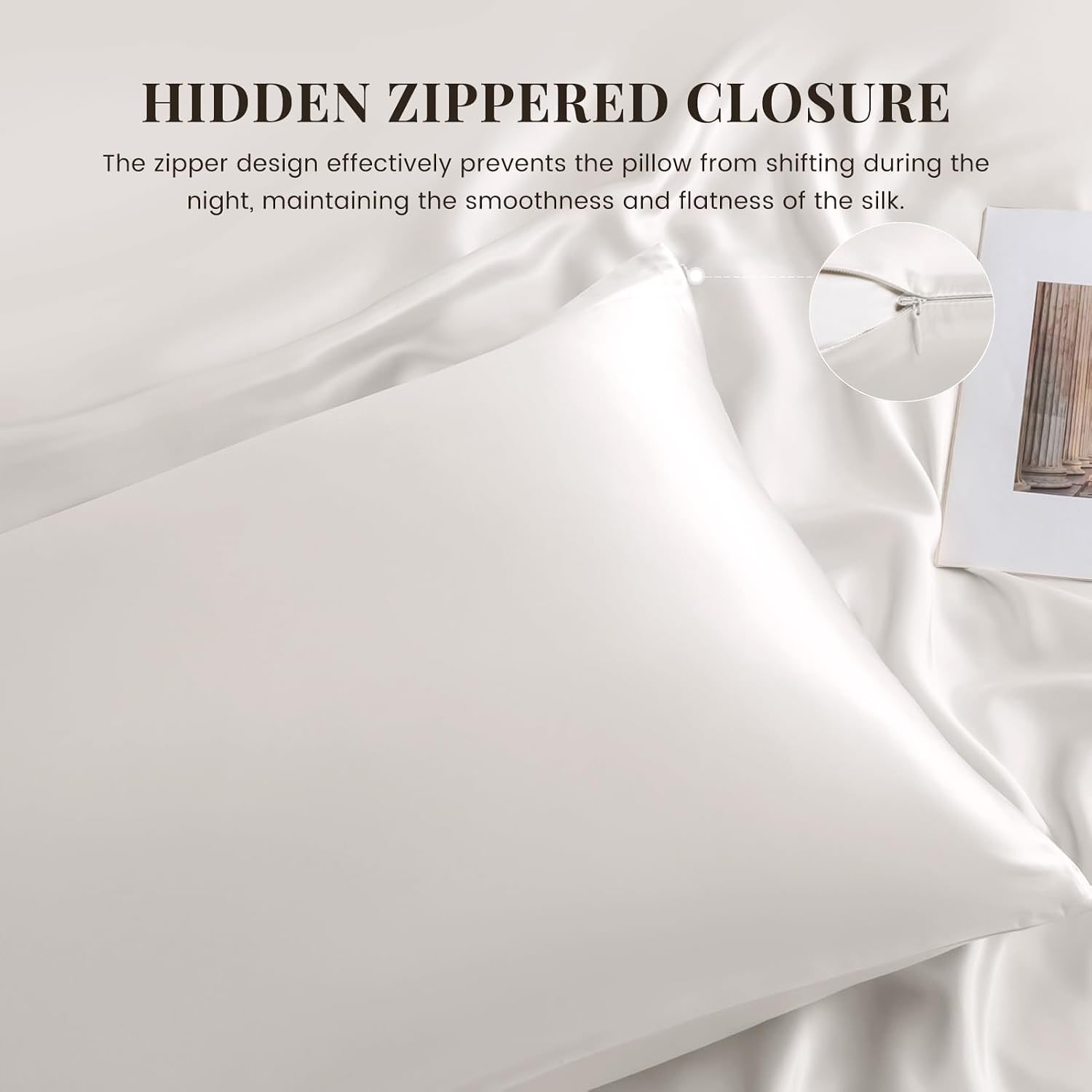
This pillowcase uses a concealed zip along one edge. The pillow goes in, the zip closes, and the pillow stays exactly where you put it. Because the zip is hidden within the seam rather than sitting on the surface, the outside of the case stays smooth and uninterrupted. You do not lie on hardware.
The practical bonus is laundry. A zip means you can get a king pillow in and out in a few seconds, which makes you more likely to actually wash the thing on schedule.
Getting the size right
This is a king pillowcase at 91.4 by 50.8 centimetres, or 20 by 36 inches in the imperial sizing silk is usually sold in.
Pillow sizing is less standardised than you would hope, so measure rather than assume. Lay your pillow flat on the bed, press it down gently, and measure edge to edge in both directions. Then compare.
For reference, a standard pillow is roughly 20 by 26 inches, a queen is 20 by 30, a king is 20 by 36 and a California king is 20 by 40. If your pillow measures close to 36 inches long, this is your size.
A slightly loose pillowcase is not a disaster. Silk has drape and some extra fabric looks relaxed rather than wrong. A pillowcase that is too small is a real problem, because forcing a pillow into a case that will not take it stresses the seams and the zip.
Living with silk, practically
People talk themselves out of silk because they imagine hand washing in a basin every Sunday. It does not have to work like that.
The gentlest approach is a hand wash in cool water with a mild detergent made for delicates or wool. Swish, do not wring, rinse in cool water, press the water out between towels.
The realistic approach for most households is the washing machine. Use the delicate or hand-wash cycle, cool water, and put the pillowcase inside a mesh laundry bag so it cannot tangle with anything else in the drum. That bag matters more than people expect. Dry cleaning is also suitable if you would rather hand it over.
A few things to avoid regardless of method. Bleach damages protein fibres. Fabric softener coats them and kills the finish you paid for. Hot water and tumble dryers are hard on silk. Lay the pillowcase flat on a towel or hang it in the shade, and it will dry quickly because silk does not hold much water.
If you want to press it, use the lowest iron setting with a cloth between the iron and the fabric, ideally while it is still a little damp. Plenty of people skip ironing entirely and the pillowcase looks fine.
One more habit worth building. If you use heavy night creams or hair oils, wash the case weekly rather than fortnightly. Product residue is the usual culprit behind white silk looking tired, not the silk itself.
Who this suits
Anyone with long hair tends to feel the difference first, because less drag at night means less tugging when you get up. People who wake with sleep lines pressed into one side of their face notice it too, since the fabric moves with the skin instead of gripping it.
It also suits anyone who sleeps warm. Silk does not trap heat the way thick cotton can, and it does not have the clammy quality of polyester satin.
And it suits people buying a gift. A plain white king silk pillowcase is about as safe as a present gets. It matches whatever bedding the recipient already owns, it feels considered, and the only sizing question is one they can answer by looking at their own bed.
The short version
Twenty-two momme is the sensible weight for a silk pillowcase you intend to keep. Mulberry silk gives you the smooth, even surface that makes the whole thing worthwhile. A concealed zip keeps the pillow where it belongs and makes washing painless. The king cut at 91.4 by 50.8 centimetres fits a standard king pillow, so measure yours before you order.
Wash it cool, wash it gently, keep it away from bleach and the dryer, and let it air dry. Do that and a good silk pillowcase stays good for years rather than months.