
The complete guide
How to Choose a Silk Bonnet That Actually Stays On
The problem nobody notices until the ends go rough
Hair damage at night is boring. There is no single moment where something goes wrong. You put your head down, you turn over four or five times, and every one of those turns drags your hair across cotton. Cotton is made from short staple fibres with a slightly fuzzy surface, so hair catches on it instead of sliding. One night makes no difference. Three hundred nights is a different story, and it usually shows up at the ends first.
The other half of the problem is less about damage and more about effort. If you spent forty minutes on a blow-dry, or you have a wash-day routine with four products in it, you want that to last more than one evening. Cotton undoes it. You wake up with volume in the wrong places, a flattened crown, and frizz along whichever side you slept on.
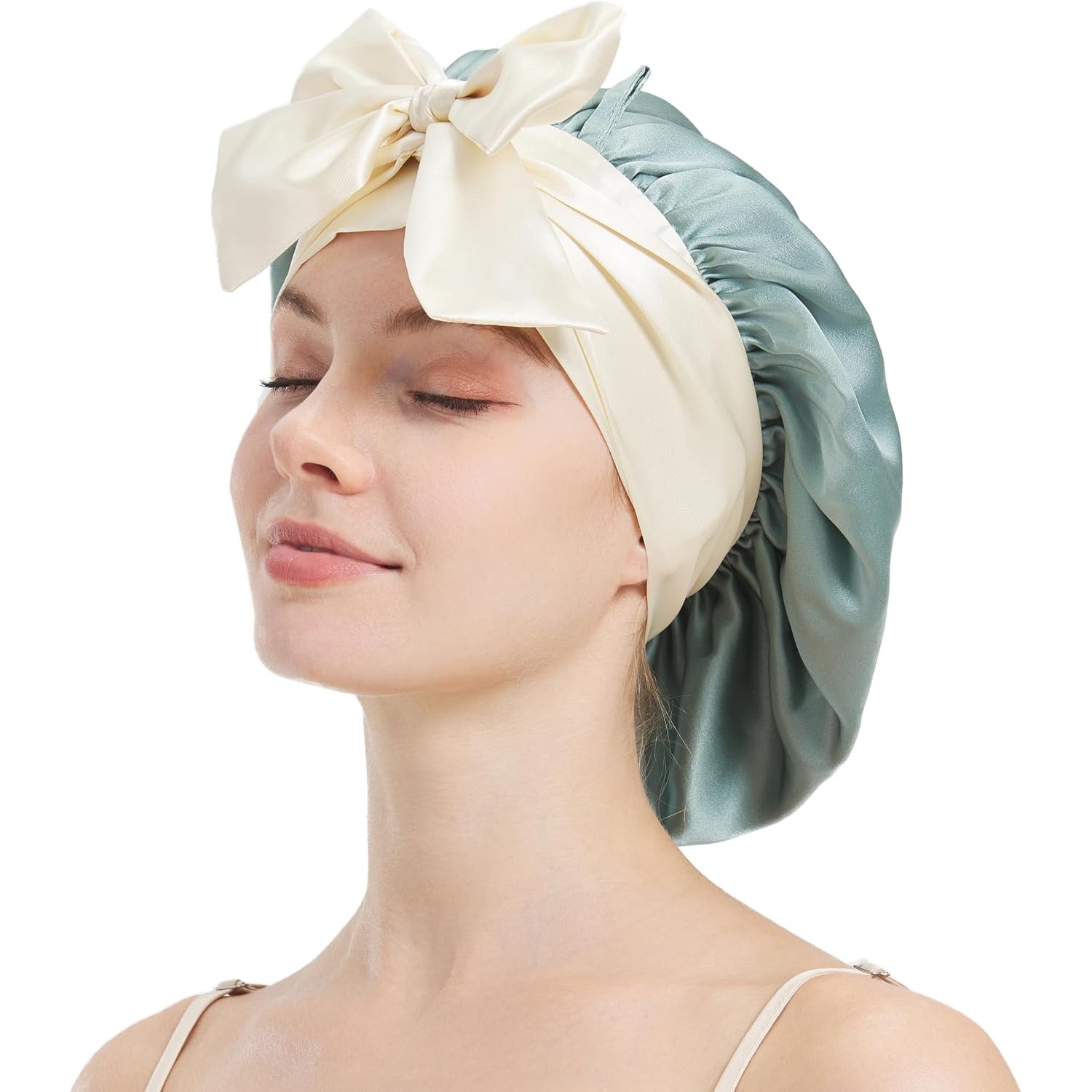
A tie silk bonnet is the low-effort fix. It is a smooth cover that moves with your head, so the friction happens between the bonnet and the pillow rather than between your hair and the pillow.
Why silk, specifically
Silk is a filament fibre. One long, continuous strand, smooth along its length, which is why fabric woven from it has that slippery hand. Cotton and most synthetics are built from short fibres twisted together, leaving a surface with microscopic texture. That texture is what grabs the raised edges of your hair cuticle.
Mulberry silk is the type produced by silkworms fed a controlled diet of mulberry leaves, which gives a longer, more even filament than wild silk. Within mulberry silk there is a grading system, and 6A sits at the high end of what you will see described on consumer products. This bonnet specifies 6A mulberry silk, and importantly it uses it for both the inner and outer layer.
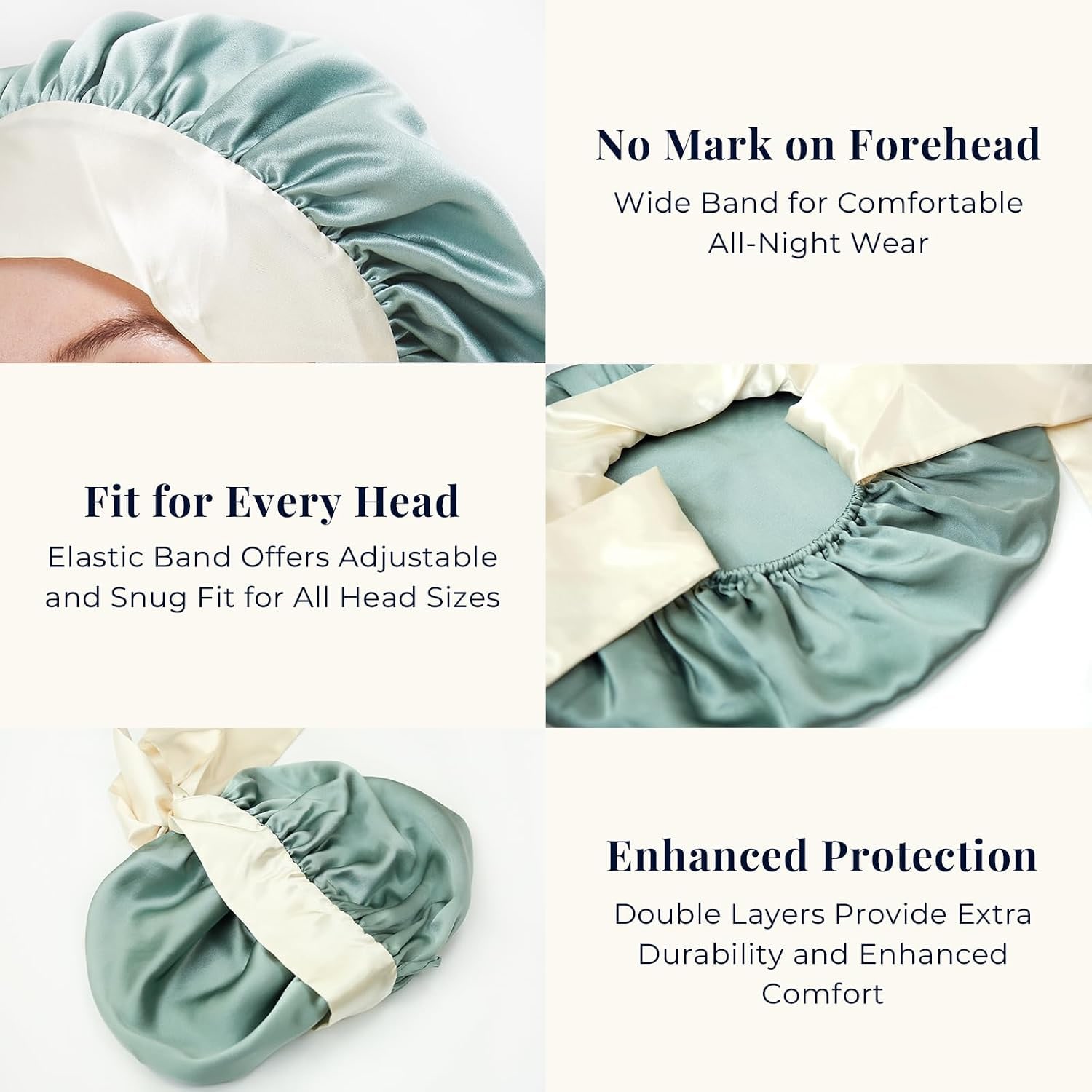
That last point is worth slowing down on, because it is where a lot of bonnets cut corners. It is common to find a bonnet that advertises silk but only puts it on the surface that touches your hair, with polyester satin forming the outside. There is nothing immoral about that, but it changes how the bonnet feels, how it ages, and how it behaves in a wash. A double-layered construction in the same material means the bonnet is consistent all the way through.
Ties versus elastic
Most bonnets on the market use an elastic band. It is cheap, it is quick to put on, and for some people it is fine. The three issues with elastic are that it only offers one level of tightness, it relaxes over months until it offers none, and it concentrates pressure in a narrow strip across the forehead. If you have ever woken with a red line above your eyebrows, you have met that third issue.
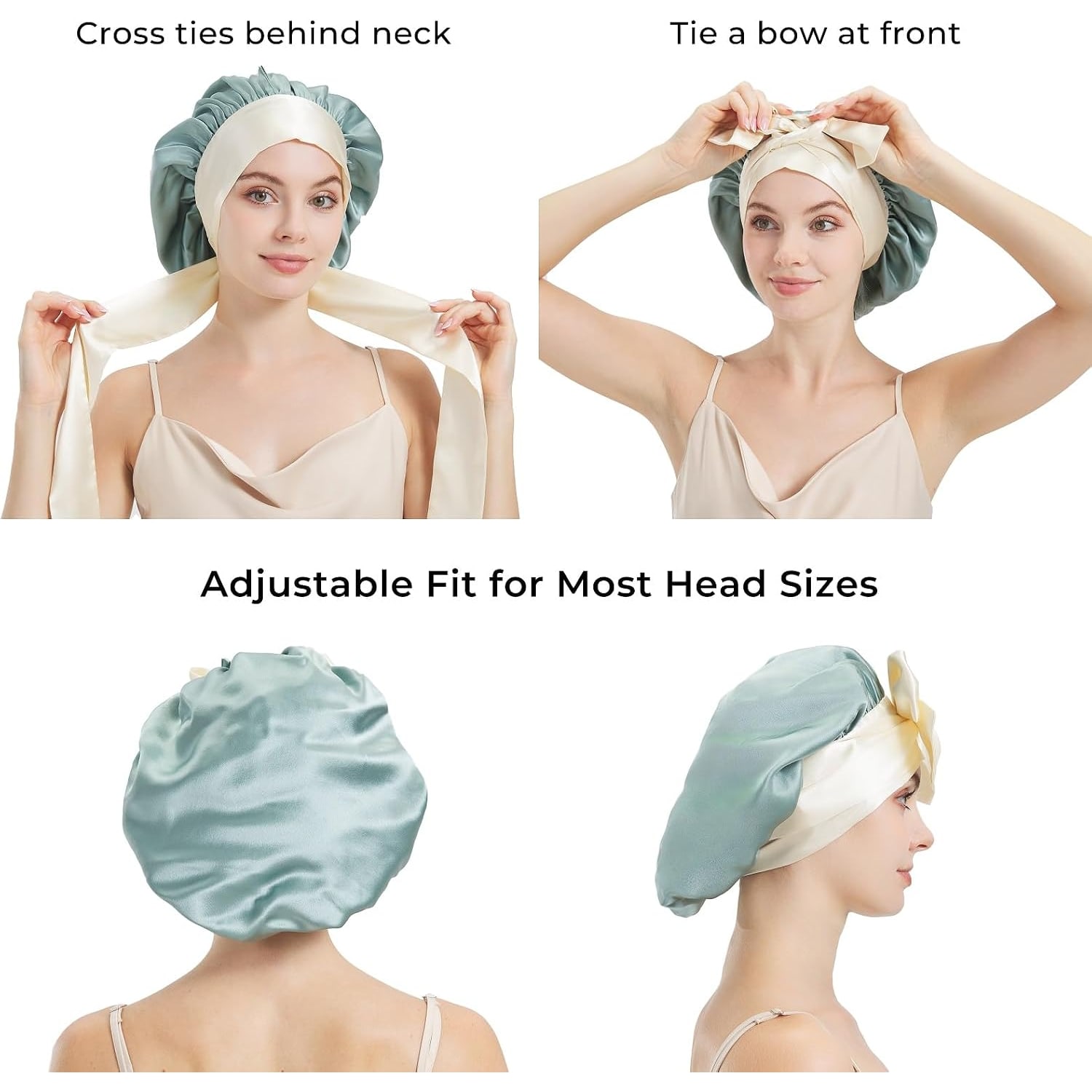
Fabric ties solve all three in one go. You set the tension yourself, you reset it every night, and the pressure is spread across a wide band rather than a thin elastic cord. The trade-off is about five extra seconds at bedtime.
There is also a practical fit advantage. A bonnet with ties can open much wider than its resting size, which makes it far easier to get over braids, a bun or a lot of curl volume without flattening everything on the way in. Then you pull it snug once your hair is inside.
Getting the fit right
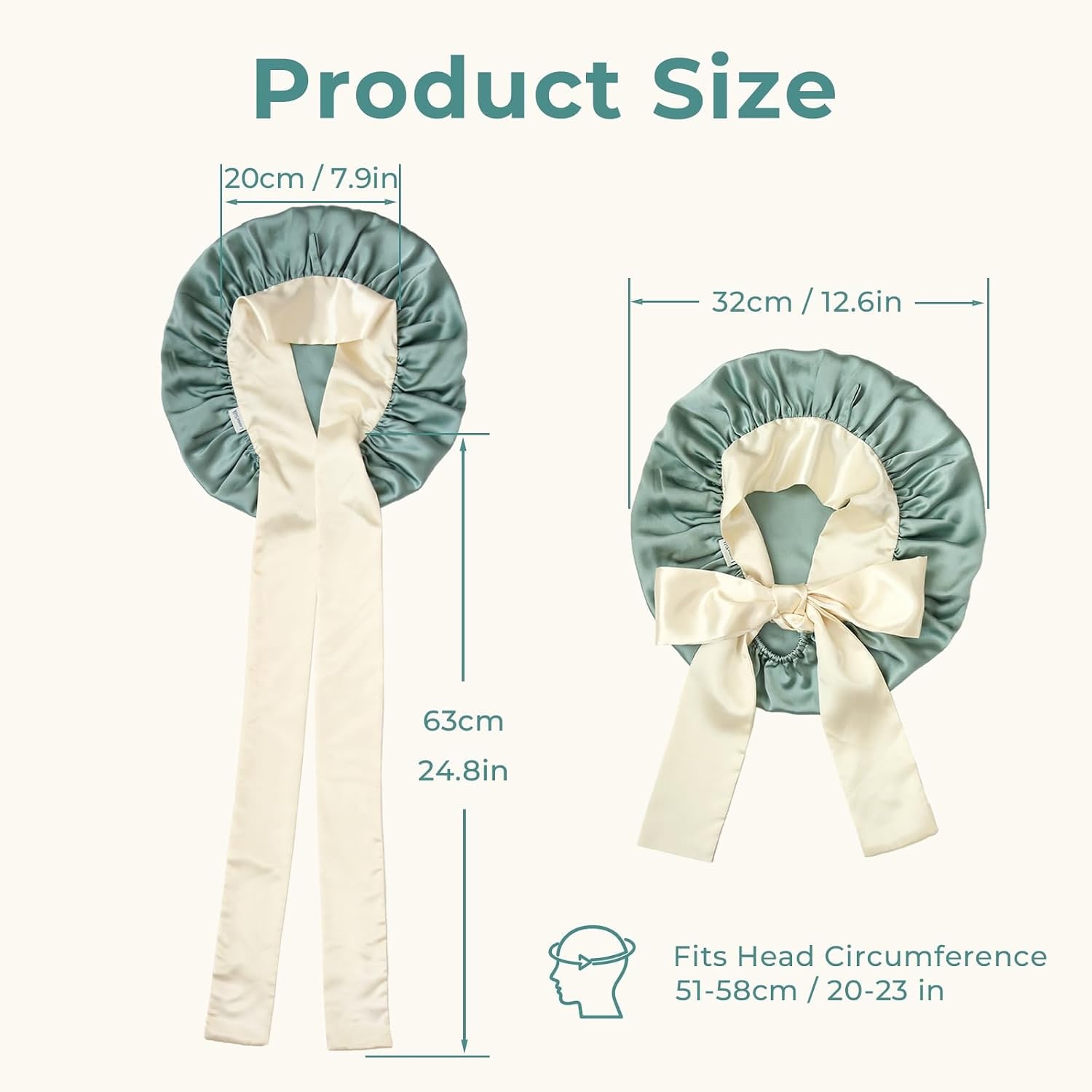
This bonnet is built for head measurements of 51 to 58 cm, which is 20 to 23 inches. To check yours, run a soft tape measure around your head just above the ears and across the middle of the forehead, where the bonnet edge will sit. Most adults fall comfortably inside that range.
Fit should feel secure, not tight. A good test is whether you can slide one finger under the edge at the forehead without forcing it. If you cannot, loosen the ties. If the bonnet shifts when you shake your head gently, tighten them. Where you place the knot matters too. A knot at the nape tends to stay put better for side sleepers, while a knot on top can press into the pillow.
For long hair, gather it loosely at the crown first, like a soft pineapple, then lower the bonnet over it. For shorter hair, just tuck the edges behind the hairline and tie.
Who gets the most out of it
Textured hair benefits most, simply because curls and coils have more surface area exposed to friction and the cuticle is naturally more lifted along the bends of a curl. Anyone searching for the best silk bonnet for curly hair is chasing exactly this, less drag overnight so the curl pattern survives until morning.
Protective styles are the second big group. Braids, twists and locs all stay neater under a bonnet, and the fuzz that usually appears along the parts takes longer to arrive. A silk bonnet for braids is one of the few pieces of kit that pays for itself in extra days between appointments.
Straight and fine hair benefits in a quieter way. Fewer tangles in the morning, less static, and a blow-dry that holds its shape through a second day. If you have had colour work done or you heat style regularly, the case is stronger again, because treated hair is already more fragile.
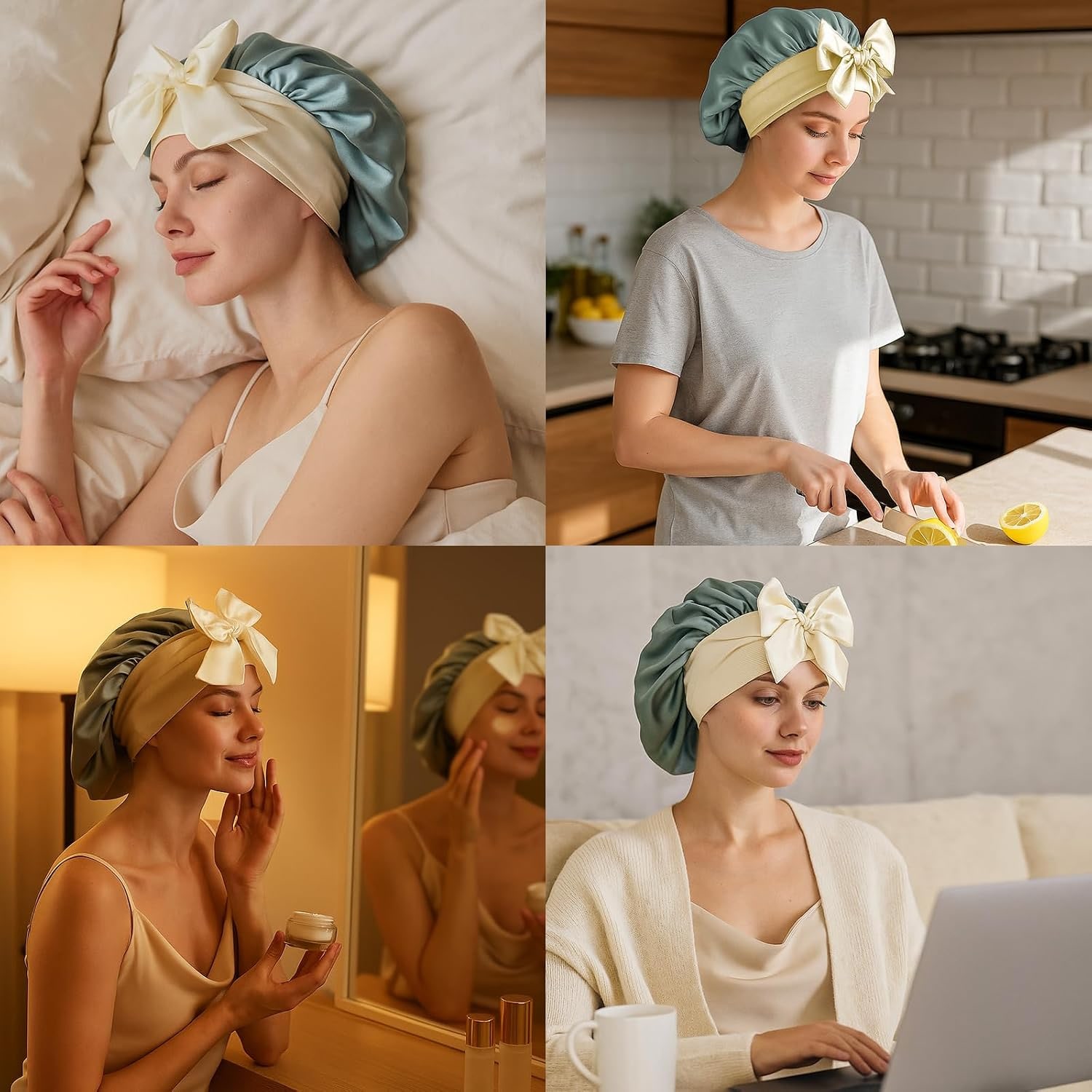
And it is not only for sleeping. Plenty of people reach for a pure silk turban while doing skincare, applying makeup, or getting through housework. It keeps hair off the face without the tension of a tight headband.
Looking after it
Hand wash only. That is the care instruction for this bonnet and it is worth following, because the stress of a machine cycle is hard on both the silk filaments and the stitching at the ties.
The routine is simple. Cool water, a small amount of gentle detergent, swirl the bonnet through for a minute or two. Do not scrub the fabric against itself and do not wring it out. Lift it, support the weight, and press the water out between the folds of a clean towel. Then lay it flat to dry somewhere with air movement but out of direct sunlight. Sun fades silk and heat makes it brittle.
Wash it every week or two in normal use. If you apply oils, leave-in conditioners or treatment masks, wash it more often, because product builds up on the inner surface and eventually transfers back to your hair. Some people keep two bonnets in rotation for this reason, one for clean nights and one for treatment nights.
Creases usually fall out as you wear it. If you want it flat for a gift, press on the lowest setting with a cloth between the iron and the fabric, or hold a steamer slightly away from the surface.
What to compare before you buy
If you are weighing up options, there are four things worth checking on any listing. First, whether the silk is on both layers or only the inside. Second, the grade of mulberry silk, since not every seller states it. Third, the closure type and whether it is adjustable. Fourth, the fit range in centimetres rather than a vague "one size".
This bonnet gives you a clear answer on all four, with 6A mulberry silk inside and out, fabric ties, and a stated 51 to 58 cm range. Momme weight, flat dimensions and country of origin are not listed in our product record, so we are not going to guess at them.
The short version
A silk bonnet does one job and does it quietly. It puts a smooth surface between your hair and your bedding so that a night of turning over does not undo your style or rough up your ends. This one is double-layered mulberry silk rather than silk over a lining, it ties rather than grips, and it fits most adult head sizes from 51 to 58 cm. Hand wash it, dry it flat, and it will become one of those things you stop thinking about because it is simply part of going to bed.