
The complete guide
How to Choose a Silk Pillowcase, Momme Weight, Size and Care Explained
The small problem nobody mentions until it bugs them
You change your sheets, the bed looks great, and then you lie down and your hair wraps around your face like it has a grudge. Or you wake up with those pressed lines across one cheek that take an hour to settle. Neither of these is a crisis. They are just small, repeated annoyances, and they come from the same place, which is friction between your face and the fabric.
Cotton weaves, even expensive ones, have texture. Thousands of short staple fibres lie across each other and the surface has tiny ridges. When you turn over at two in the morning, your skin and hair drag across those ridges. Silk works differently. It is a continuous filament, long and smooth, so the woven surface is far more even. Things slide. That is the whole mechanical story, and it is why people who switch tend to stay switched.
What 22 momme actually tells you
Momme is an old silk measure and it describes fabric weight. One momme is about 4.3 grams per square metre, so a 22 momme cloth carries roughly 95 grams per square metre of silk. You do not need the arithmetic. What matters is the comparison.
Silk bedding usually runs from about 16 momme at the light end to about 25 at the heavy end. Light silk is cheaper and it feels slippery, but it can go slightly see-through over a white pillow and it tends to show wear sooner. Heavy silk is lovely and costs more. Twenty-two sits in the sweet spot that most people land on when they compare a few. The fabric has body, it drapes over the pillow instead of clinging to it, and it stands up to regular washing without going limp.
This pair is 22 momme mulberry silk with a 600 thread count weave. Thread count and momme are measuring different things, so do not try to compare them against each other. Thread count counts threads in a square inch, momme weighs the cloth. Together they tell you the weave is close and the fabric has substance.
Why mulberry silk specifically
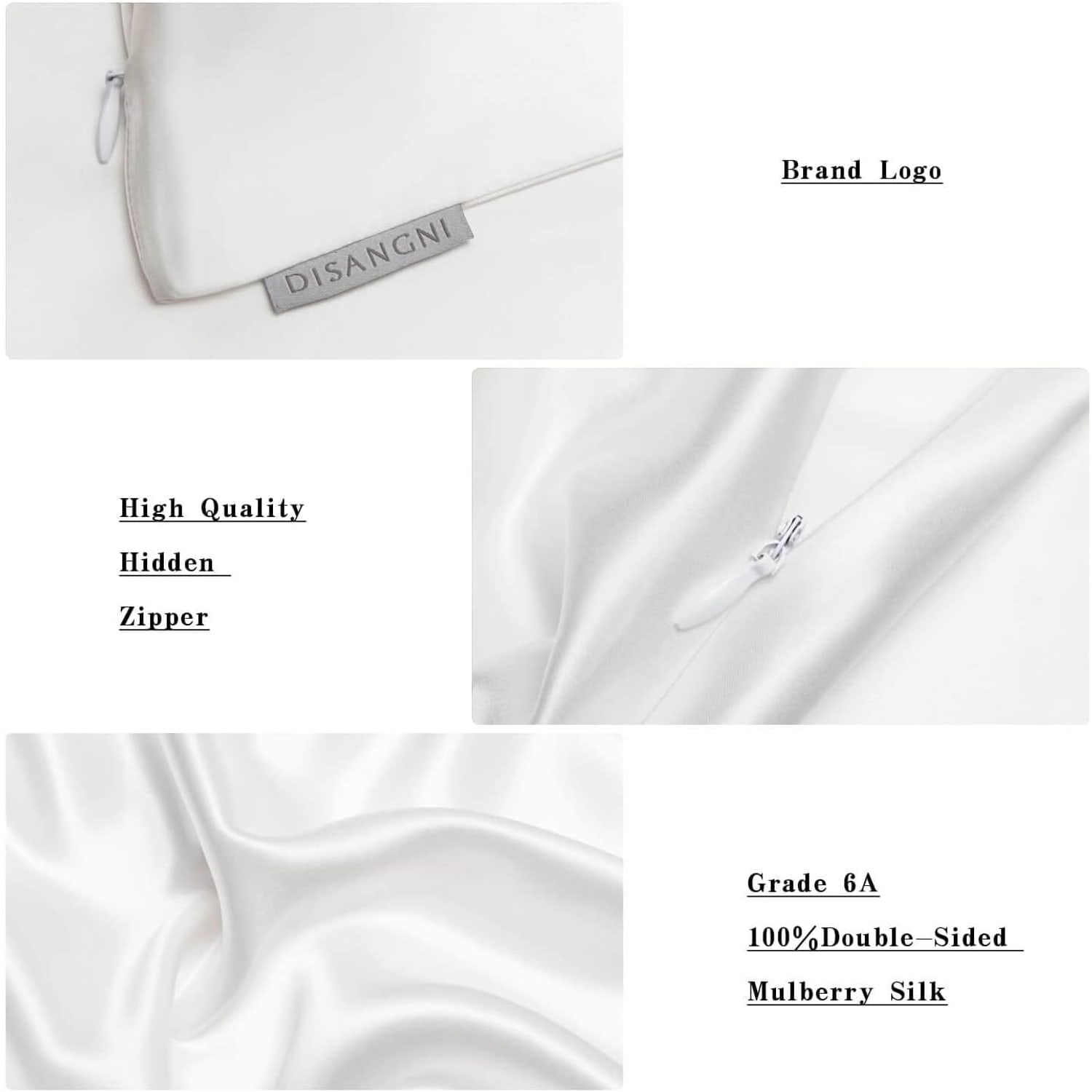
Mulberry silk comes from silkworms raised on a controlled diet of mulberry leaves. The result is long, even filaments of consistent colour, which is exactly what you want for a smooth woven fabric. Wild silks produce shorter, more irregular fibres, which makes a more textured cloth. That texture can be beautiful in a scarf or a cushion. On a pillowcase, where the entire point is a low-friction surface, you want the even stuff.
So when you see a 22 momme silk pillowcase described as mulberry silk, that is a statement about fibre consistency, not just marketing. It is the reason the surface feels uniform right across the case rather than slubby in patches.
Getting the size right
This is where most returns come from, so it is worth two minutes with a tape measure.
These cases are standard size, listed as 20 by 26 inches, which works out to about 66 cm long by 50.8 cm wide. That matches the pillow size most Australian households already own. The trouble starts when people assume their pillows are standard and they are not. European pillows are square and much bigger. King pillows are noticeably longer. Some hotel-style pillows are deeper than normal and need more fabric even if the length looks right.
Lay your pillow flat, measure it end to end and front to back, and compare. If your pillow is a touch smaller than the case, that is fine, the fabric just sits a little looser. If it is bigger, the zip will strain and the case will not sit flat, and no amount of pushing will fix it.
The zip, and why it matters more than you would think
A hidden zipper runs along one edge of each case. Two things come from that. The pillow stays where it is put, so you are not fishing a bare pillow corner out from under the doona at 3am. And the finished edge looks tidy, with no envelope flap poking out or gaping open on the side of the bed that faces the door.
Envelope closures are common and they work fine, but they rely on gravity and a deep fold. On a smooth fabric like silk, which by design does not grip, a zip is the more reliable choice. A zippered silk pillowcase simply stays closed.
Who gets the most out of these
People with long hair tend to notice the difference first, because that is where friction is most obvious. Side sleepers often notice it second, since their face spends hours in contact with one patch of fabric. People who run warm at night like that the weave is breathable and the fabric feels light rather than muffling.
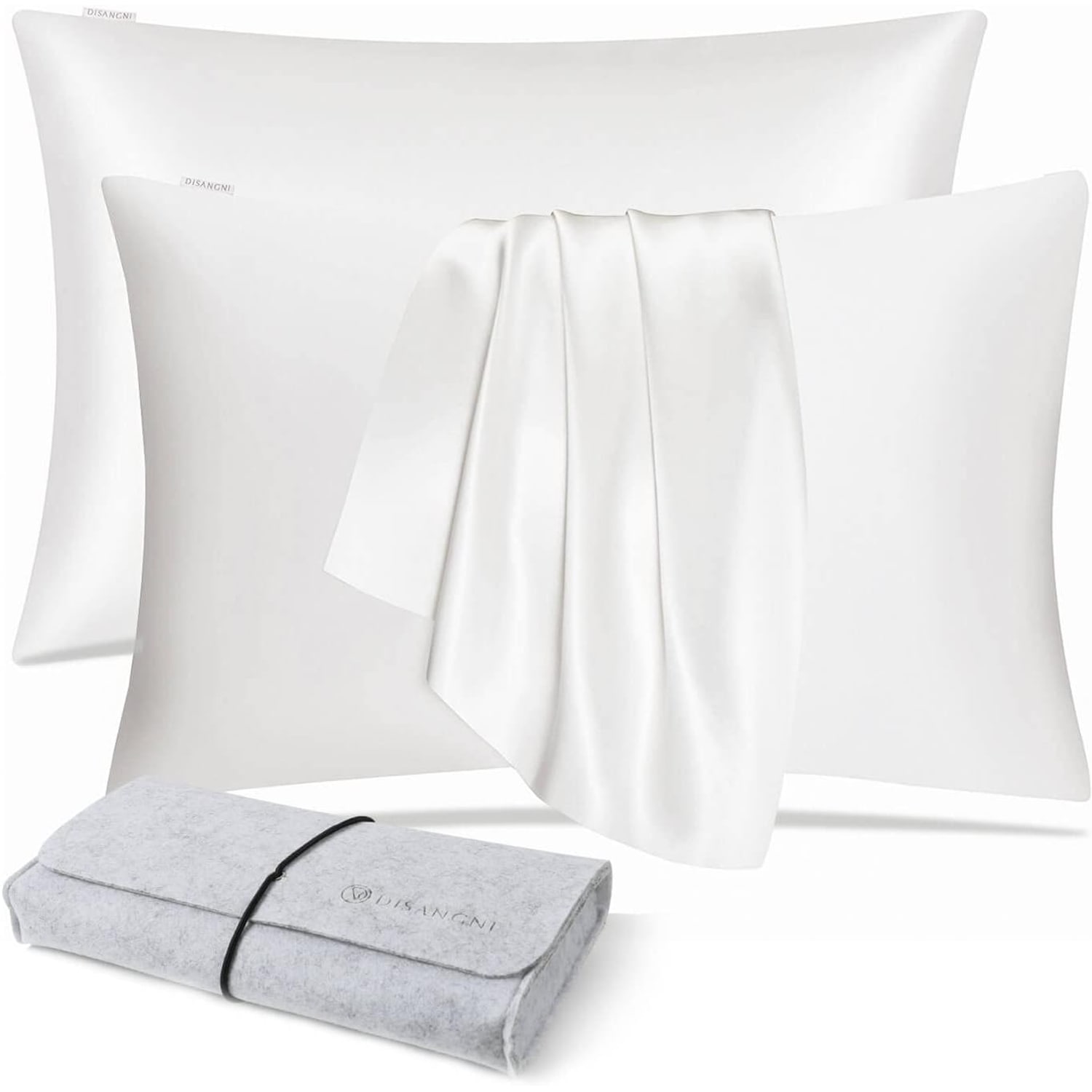
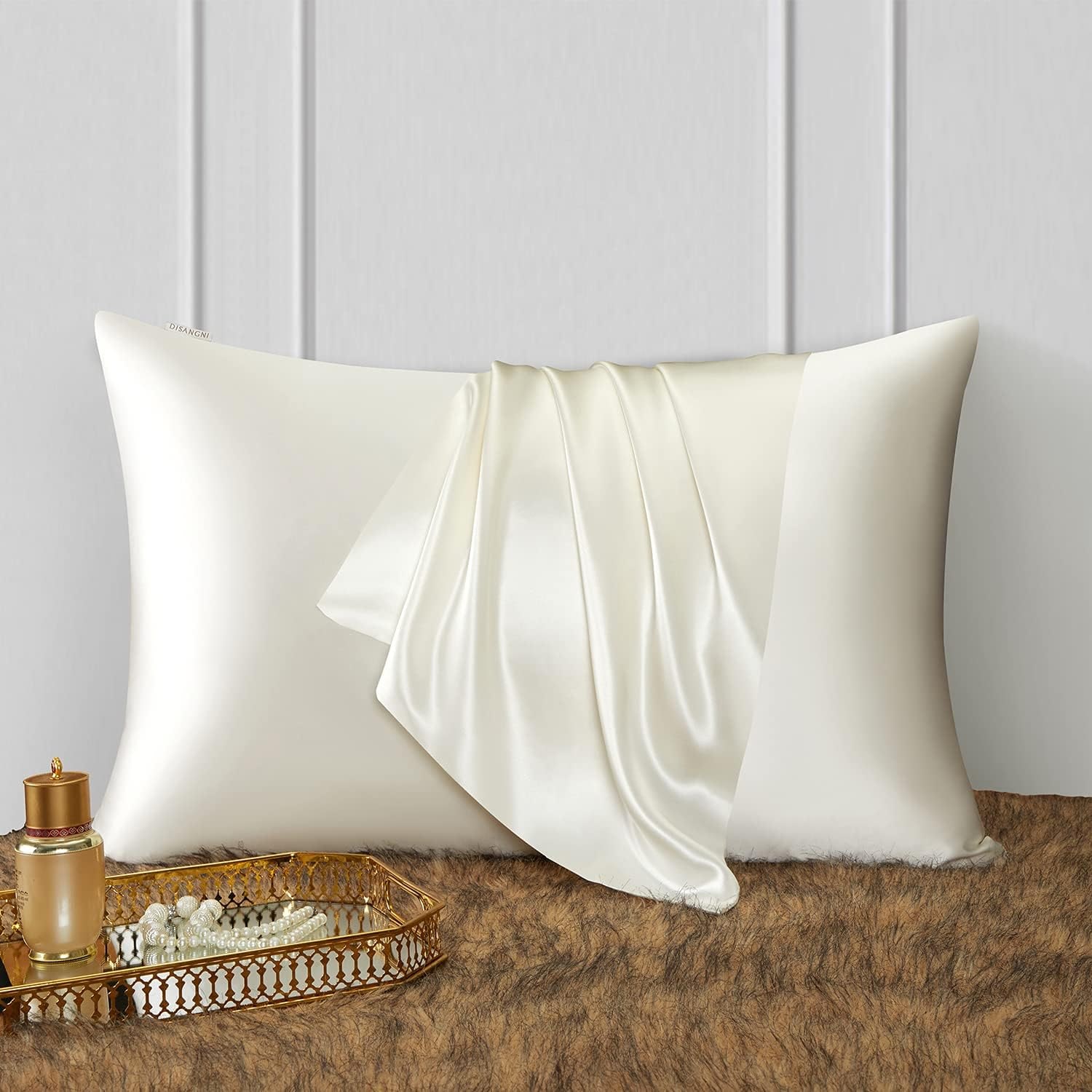
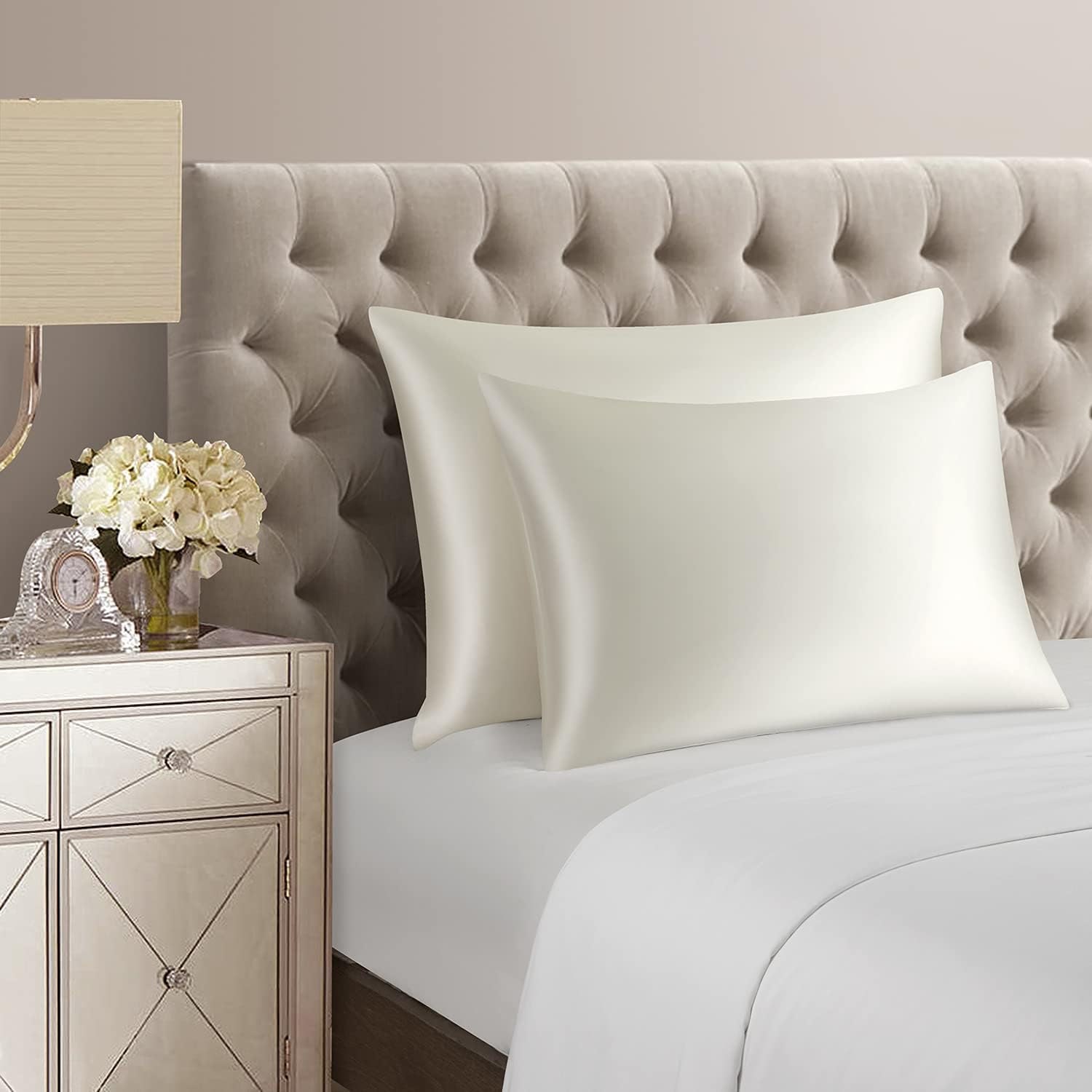
It is also a sensible pick if you are buying bedding for a guest room and you want it to look pulled together without thinking too hard. White sits with everything. A white silk pillowcase pair across two pillows reads as deliberate in a way that mismatched cases never do.
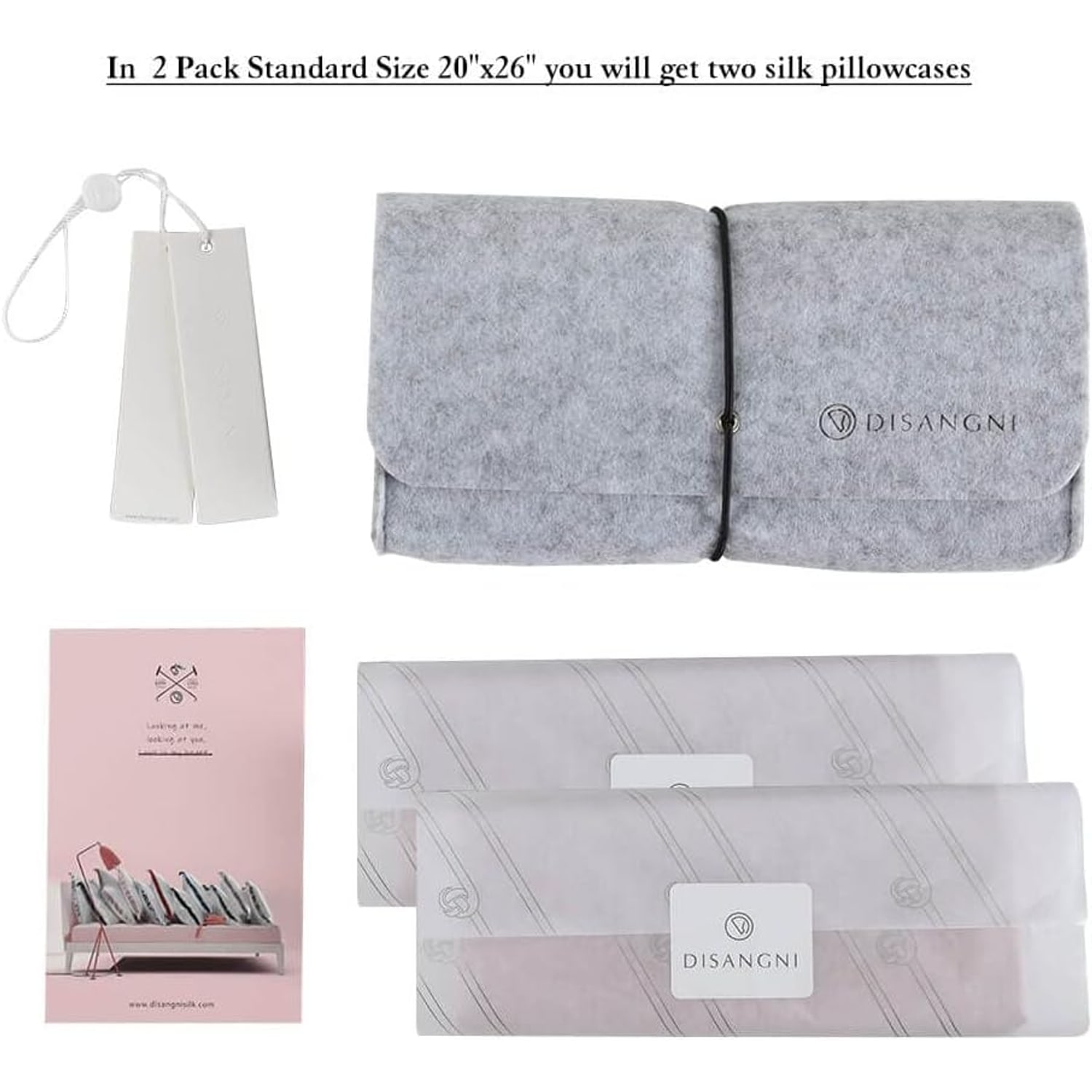
Two cases also means you are never stuck. One on the bed, one in the drawer, swap on washing day. If you have ever bought a single silk case and then found yourself sleeping on cotton for two nights while it dried, you will understand why the pack of two makes life easier.
Care, honestly
Silk needs a gentler routine than cotton. Here is the short version of what the care information says.
Wash by hand in cool water, 30°C at the very warmest. Dissolve a mild detergent completely in the water before the silk goes in, so you never get a concentrated blob sitting on the fabric. Soak the case in clean water first. Wash it on its own or with similar colours. No bleach, ever.
If something spills or marks the case, deal with it that day. Fresh marks come out easily. Set-in ones fight back.
When it comes out of the water, do not wring it. Press the water out gently, roll it in a towel if you like, then dry it flat or hang it in the shade. Direct sun and radiator heat are the two things that age silk fastest. If it needs pressing, use a low iron on the reverse side and let it cool before it goes back on the pillow.
That is maybe five minutes in the sink. Plenty of people do it while the kettle boils. And because you have two cases, there is no rush on getting it dry.
What to compare when you are shopping
If you are weighing a few options, four things tell you most of what you need.
Check the momme weight. Anything that does not state it is worth a question. Check whether the silk is on both sides or just the sleeping face, since a cheaper backing fabric is a common corner to cut. Check the closure type, because a zip behaves better on slippery fabric than an open envelope. And check the actual measurements in centimetres rather than trusting the word "standard", which drifts between markets.
Price follows those specs fairly closely. A 600 thread count silk pillowcase at 22 momme with silk on both faces will not be the cheapest thing on the page, and if something similar is dramatically less, one of those four details is usually doing the explaining.
The short version
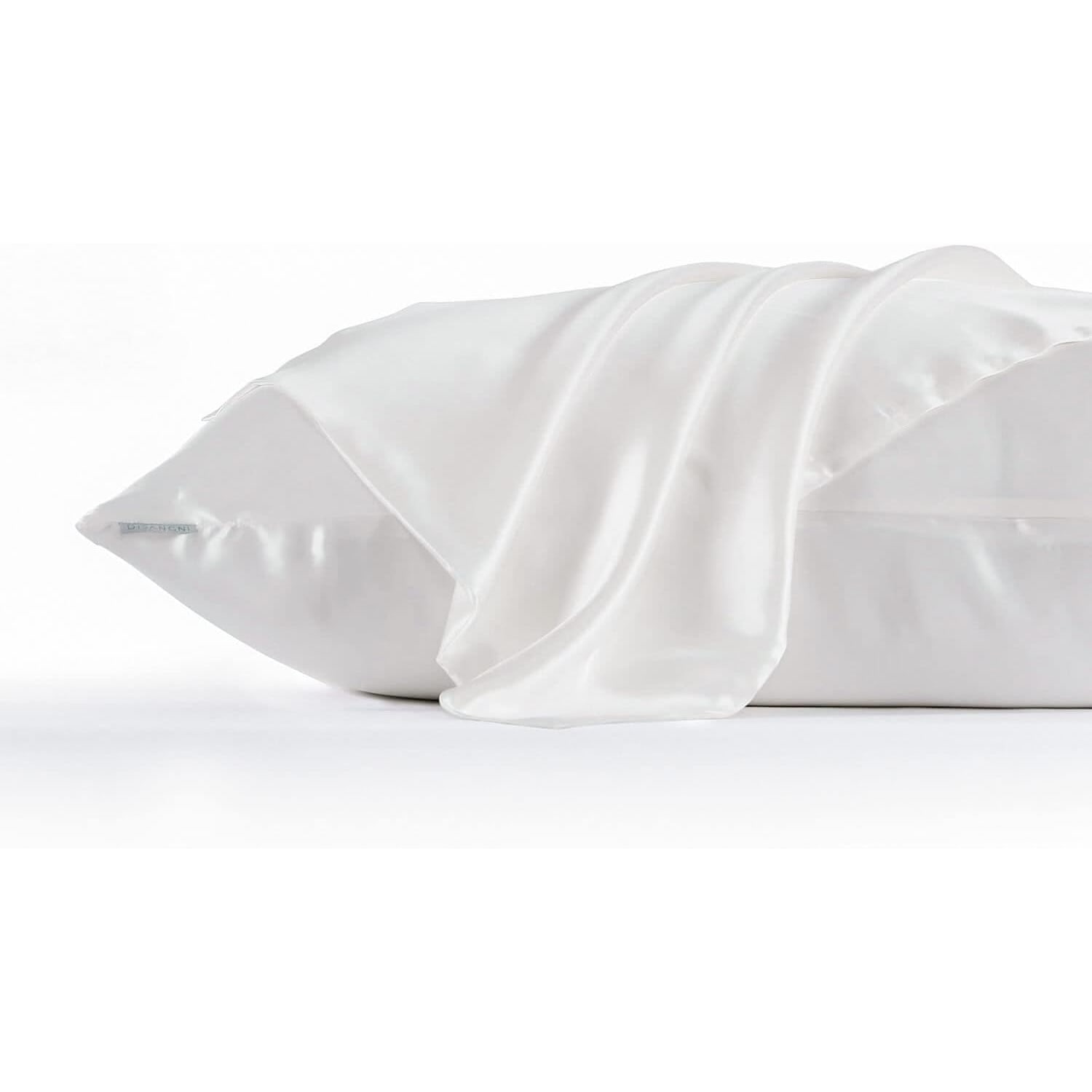
This is a pair of white pillowcases in 100% mulberry silk, 22 momme, 600 thread count, standard size at 66 by 50.8 cm, closing with an invisible zip. The fabric is smooth on both sides, the colour goes with anything, and two cases means you always have a clean one.
Measure your pillow before you order. Hand wash it cool, keep it out of the sun, and it will stay good for a long time. That is really all there is to it.