
The complete guide
The Practical Buyer's Guide to Queen Silk Pillowcases
The problem with your current pillowcase
Most of us never think about the pillowcase. It comes with the sheet set, it goes on the pillow, and that is the end of it. Then you notice your hair looks slept-on in a way that takes twenty minutes to fix, or you wake with a crease across one cheek that hangs around until morning tea.
Cotton weave is the usual culprit. It is a good fabric for a lot of things, but under a magnifying glass the surface is a textured grid of loops and fibres. Your face and hair spend seven or eight hours pressed into that grid, turning and shifting, and the friction adds up. Silk does not have that texture. The surface is smoother, so hair and skin slide over it instead of catching.
That is the whole pitch. No miracle claims, just a different surface under your head.
What momme actually tells you
Silk is sold by momme, written as "mm" or just "momme". It is a weight measure. Higher momme means more silk packed into the same area of fabric.
You will see silk pillowcases at 16, 19, 22 and sometimes 25 momme. Sixteen is light and often feels thin once you have handled anything heavier. Nineteen is the common middle ground. Twenty-two, which is what this set uses, is where the fabric starts to feel substantial. It drapes over the pillow rather than shrink-wrapping it, and it holds up better through repeat washing because there is simply more material to work with.
Going higher than 22 is possible but the gains flatten out. You pay more, the fabric gets heavier, and the difference in how it feels is small. For most people shopping for a best 22 momme silk pillowcase, this weight is the practical sweet spot.
Thread count in silk is not thread count in cotton
The 600 thread count on this set is worth explaining, because thread count works differently across fabrics. In cotton it has become a marketing number, often inflated by counting plied threads twice. In silk, a high count generally means very fine individual filaments woven tightly together.
What you feel as a result is evenness. The surface has no coarse patches, no slubs, no rough runs where the weave loosens. Run your hand across it and it is consistent end to end. That consistency is what makes the low-friction surface actually work, because one rough section undoes the benefit of the rest.
Pair a fine weave with a 22 momme weight and you get a fabric that is both smooth and solid, which is the combination you want.
Double-sided silk versus silk-and-something-else
Here is a detail worth checking on any silk pillowcase you consider. Some are silk on the top face and a cheaper synthetic or cotton blend on the back. The reasoning is cost, and the manufacturer will argue you only sleep on one side anyway.
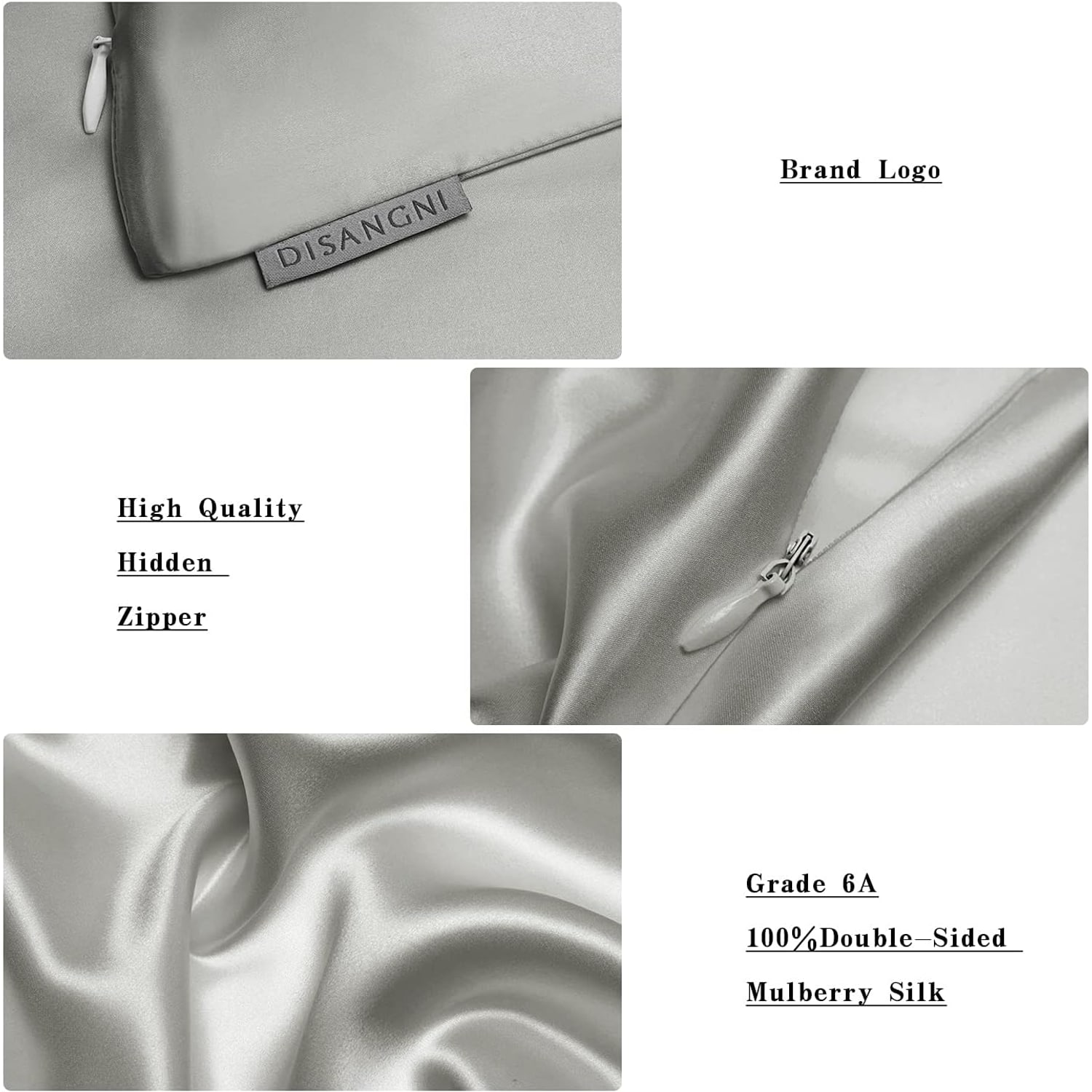
In practice you do not sleep on one side. You flip the pillow at some point in the night, most people do, and if the back is a different fabric you feel it immediately. This set is 100% mulberry silk on both faces, so it does not matter which way the pillow lands.
Mulberry silk, for what it is worth, refers to silk produced by silkworms raised on mulberry leaves. The filaments tend to be longer and more uniform than other silk types, which is why it is the standard for a best pure silk pillowcase.
Why the zip matters more than you would think
Closure type sounds like a trivia detail. It is not.
An envelope closure is a flap of fabric that folds over the open end of the case. It is cheap to make and it works fine on a bed that is not slept in. Once you start moving around at night, the flap works loose and the corner of the pillow pushes out. By morning you have a pillow half out of its case and a bed that looks untidy.
This set uses an invisible zipper. The pillow goes in, the zip closes, and the pillow stays put. The zip itself sits inside a seam so you do not see it or feel it. It also makes the bed look tidier when it is made, because the edge is a clean line instead of a doubled-over flap. Anyone choosing the best silk pillowcase with zipper is usually doing it for exactly that reason.
One tip: always close the zip before washing. An open zip can catch on the fabric and pull threads.
Getting the size right
The cases here measure 75 cm long by 50 cm wide, listed as a queen at 20 inches by 30 inches. That fits standard queen pillows, which is the most common pillow size on Australian beds.
Before you order, take a tape measure to your actual pillow. Pillow sizing is not as standardised as you would hope, and a "queen" pillow from one brand can run a few centimetres off another. You want the case slightly snug rather than loose, since a loose case bunches under your head.
King pillows are longer and will not work with this size. European pillows are square and much larger, so they are a different product entirely. If you are between sizes, go to the one that fits your pillow properly rather than trying to stretch a case over something oversized. Stretching strains the seams and the zip.
Living with light grey
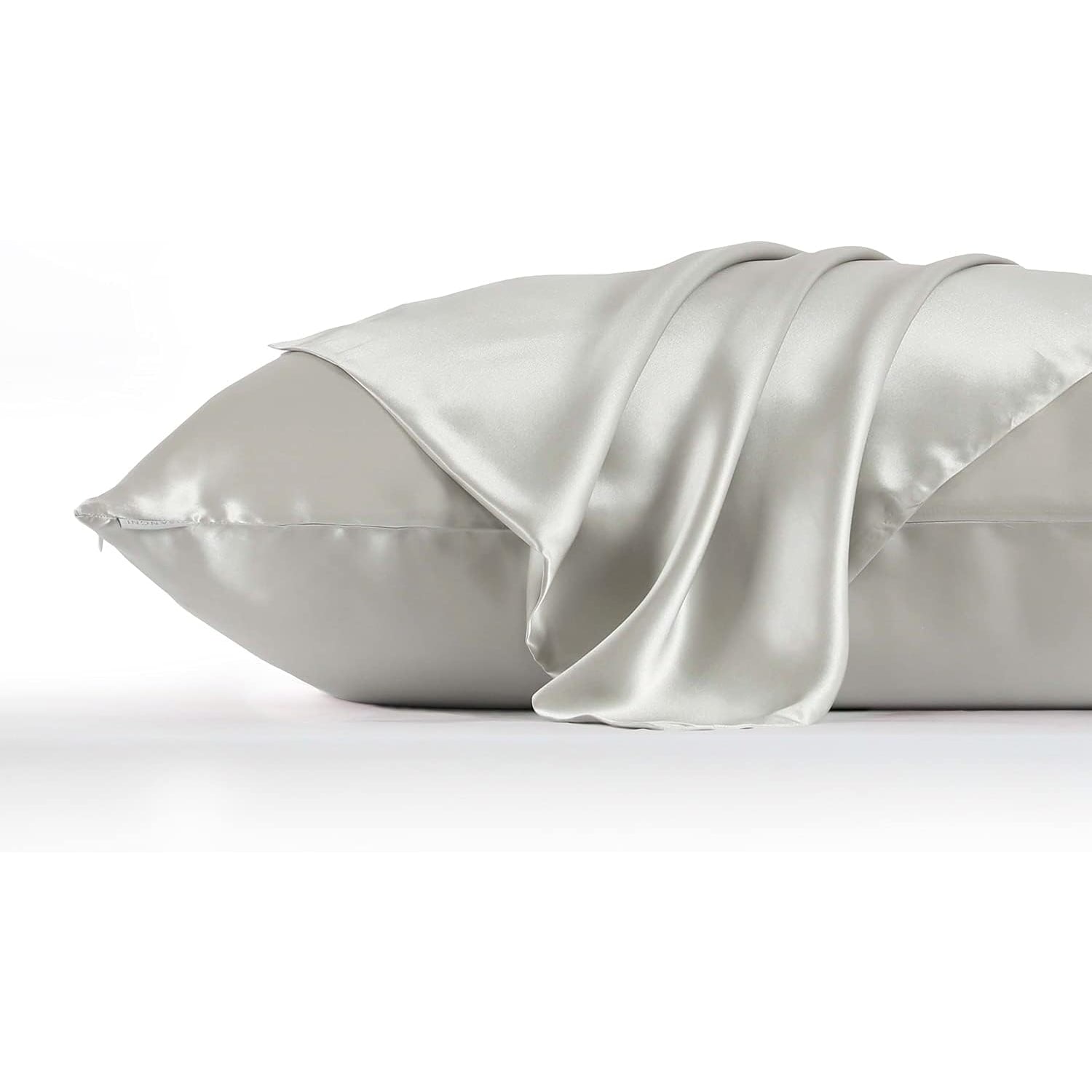
Colour choice on bedding is usually about what else is in the room. Light grey is one of the safest picks because it is genuinely neutral, not a grey that leans blue or green.
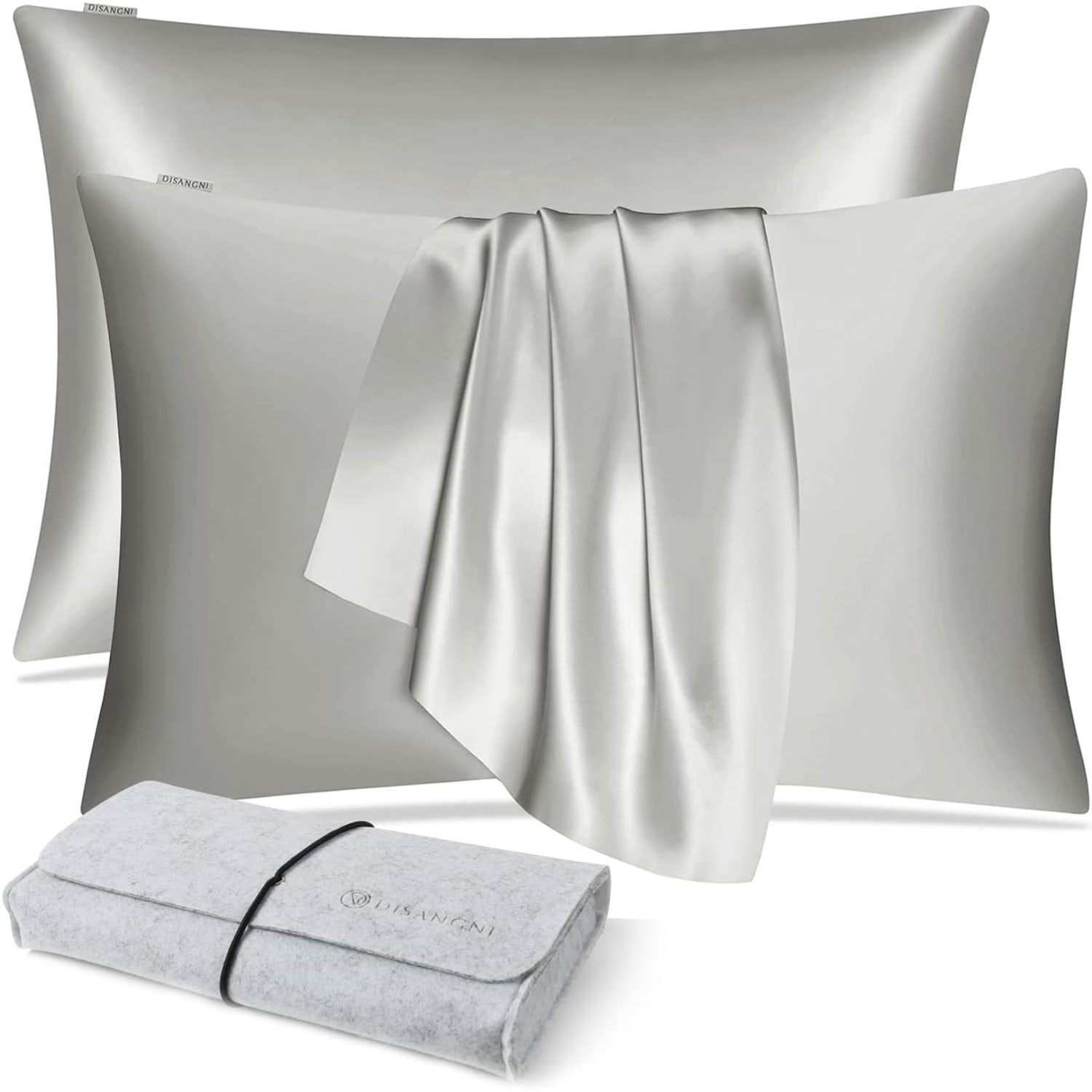
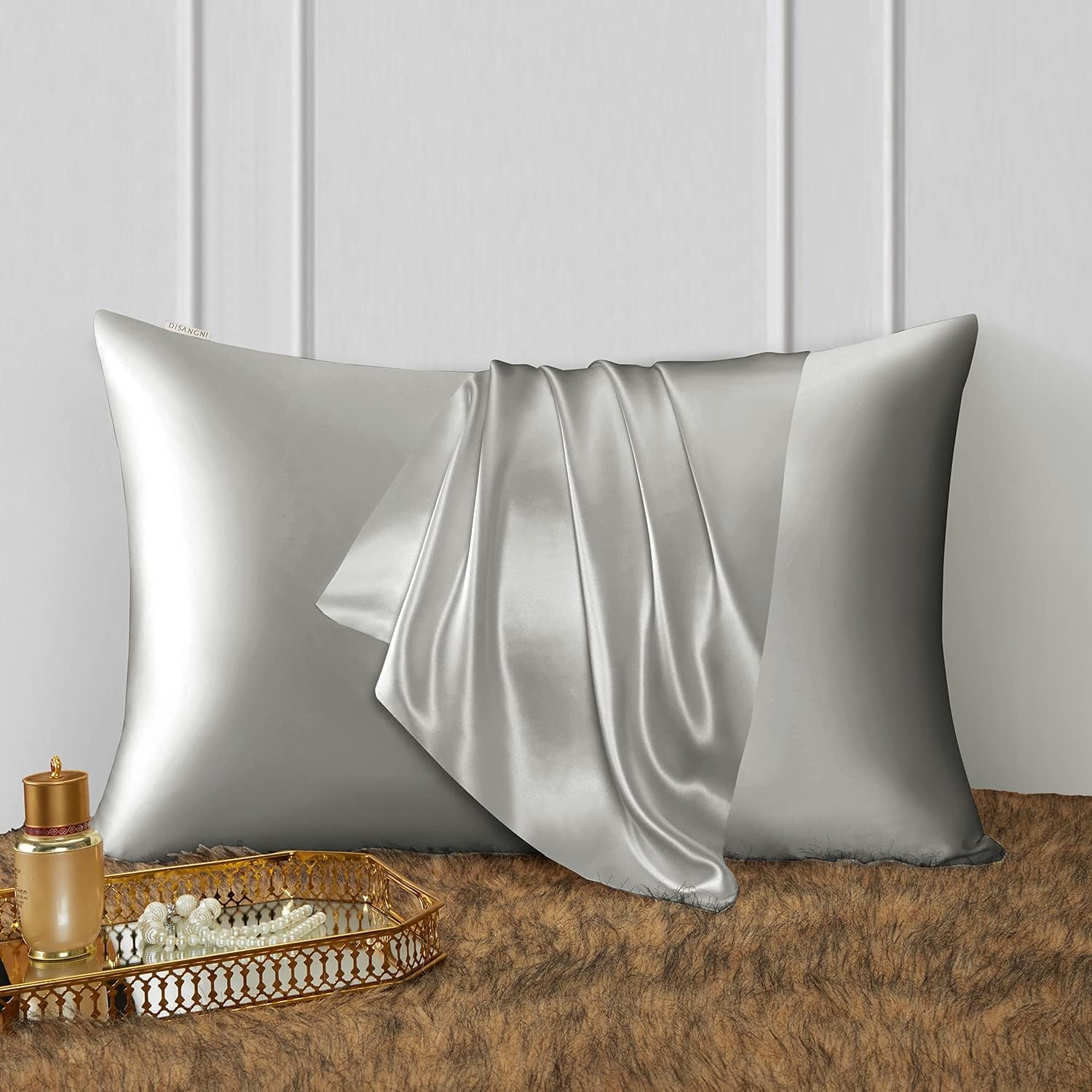
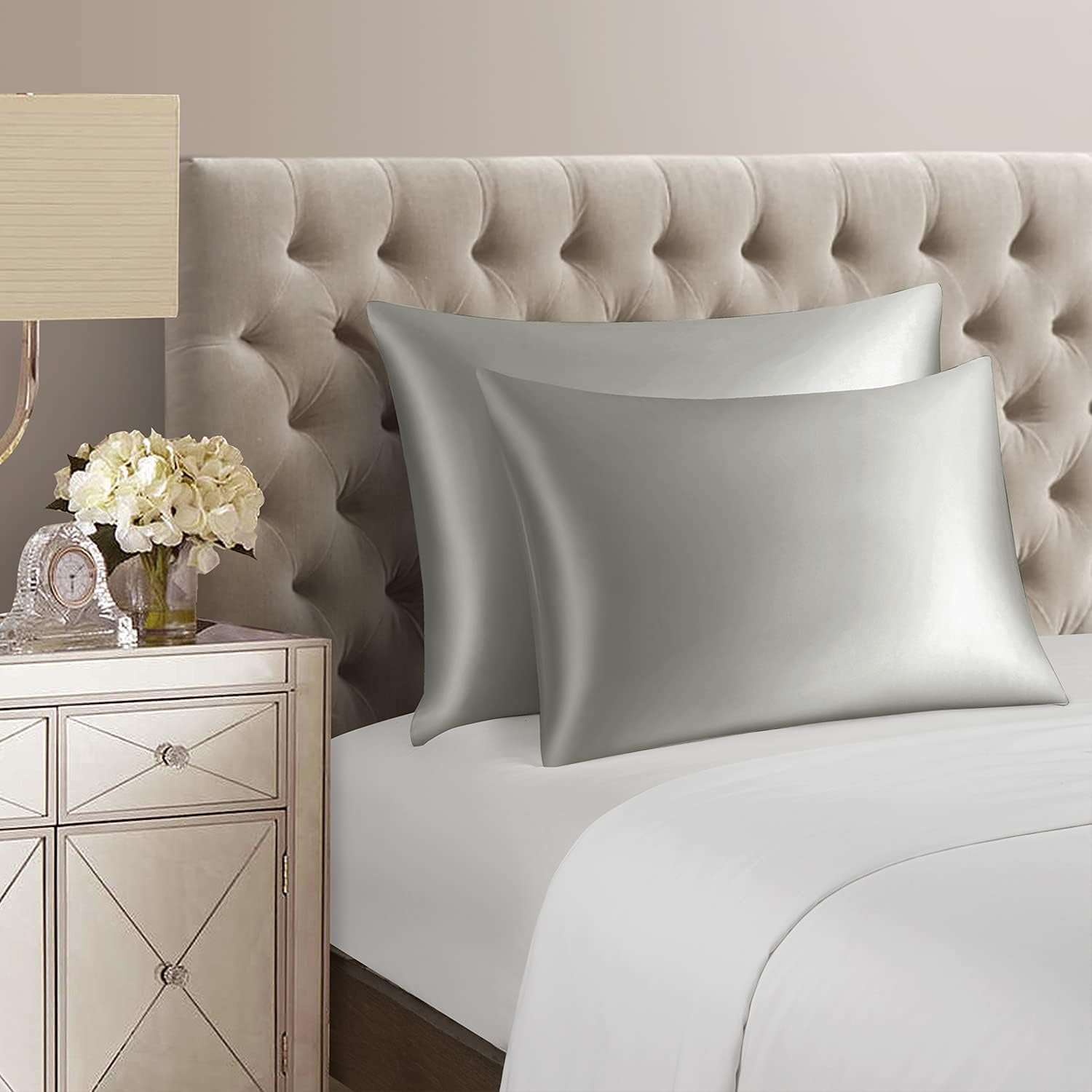
It works against crisp white sheets, where it gives a bit of contrast without looking deliberate. It works with charcoal or navy, where it lifts the darker tones. It sits well next to timber bedheads and natural linen. And it hides the ordinary marks of use better than white does, which is a small practical benefit on something you use every night.
The pattern is solid and the style is described as modern, which in plain terms means there is nothing fussy about it. That is what you want from something permanently in your eyeline.
How to look after it
Silk is not difficult to care for, it just has rules. Follow them and these cases will outlast several cotton sets.
Hand wash only, at a maximum of 30C. Fill a basin with cool water, dissolve a small amount of mild detergent in the water before the silk goes in (undissolved detergent sitting on silk can mark it), then submerge the case fully. Work it gently with your hands. Do not scrub, do not twist, do not wring.
Rinse until the water runs clear. Press the water out by pressing the fabric between your palms or rolling it in a towel. Then lay it flat or hang it to dry somewhere out of direct sun and away from any heat source. No dryer, ever.
If it needs pressing, use a low setting on the reverse side, with the case slightly damp or a cloth between the iron and the silk. Keep the iron moving.
Wash it on its own or with similar colours. Never bleach it. And deal with spills the same day they happen rather than letting them set, which is the single most useful habit for keeping a best washable silk pillowcase looking new.
Why a two pack is the sensible buy
Buying silk pillowcases one at a time is a false economy. Silk needs washing roughly as often as the rest of your bed linen, and if you only own one case you either sleep on a bare pillow for a day or you put the cotton one back on and lose the point of the exercise.
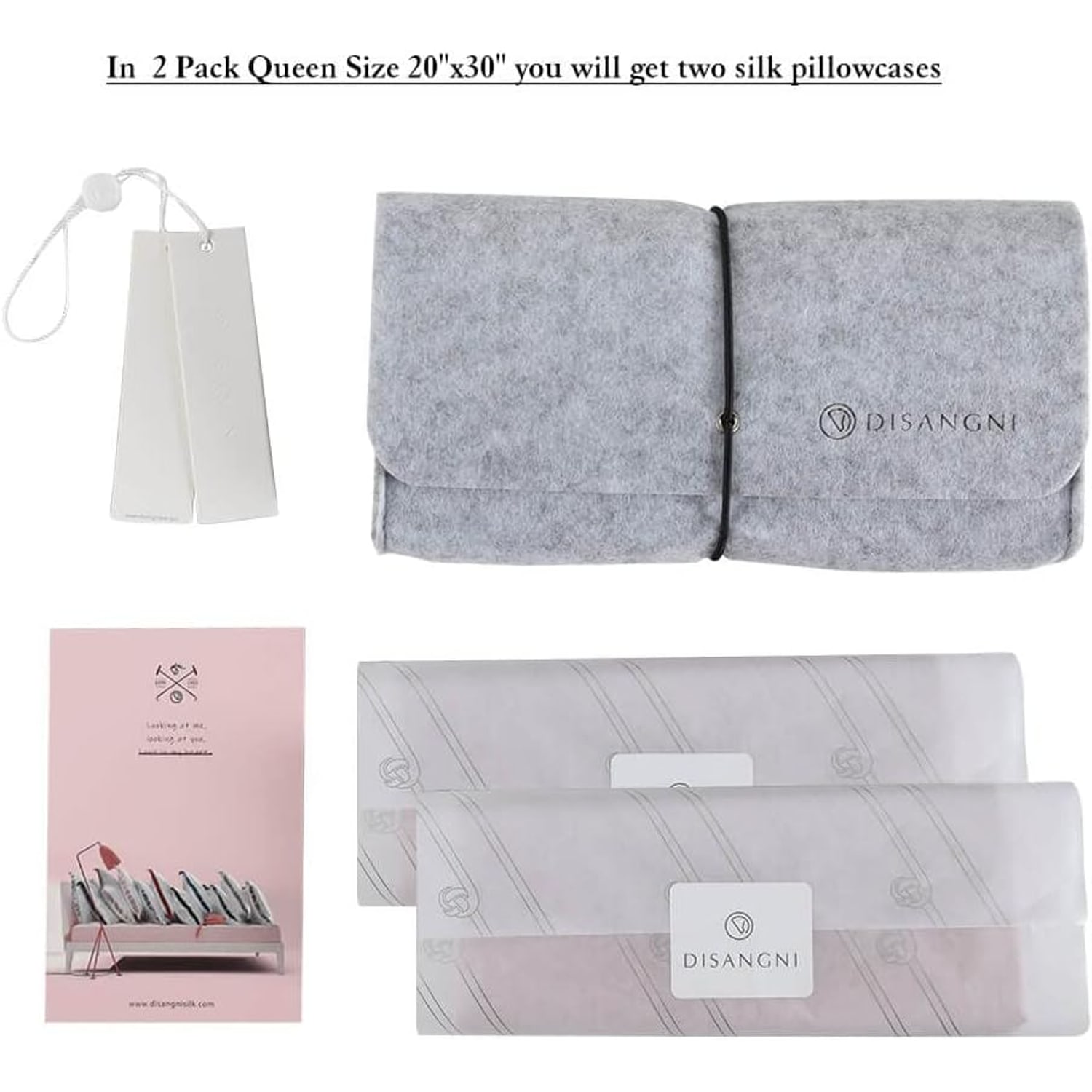
Two cases means one on the bed and one in the rotation. It also covers both sides of a queen bed if you share, which is the usual situation. And for anyone buying a best silk pillowcase set as a gift, a pair reads as a proper present rather than a half-measure.
The short version
A silk pillowcase is a simple upgrade with a clear mechanism behind it. Smoother surface, less friction, less tugging on hair and skin through the night.
This set gives you the specs that matter. Twenty-two momme weight for substance, 600 thread count for an even surface, 100% mulberry silk on both sides so there is no cheap backing, and an invisible zip so the pillow stays where you put it. The light grey is easy to live with and the queen size at 75 x 50 cm covers the most common pillow on the market.
Measure your pillow, order the two pack, and commit to hand washing. That is really all there is to it.