
The complete guide
How to Choose a King Silk Pillowcase, A Practical Buyer's Guide
The small annoyance that sends people looking for silk
Nobody buys a pillowcase out of excitement. It usually starts with a small, repeated annoyance. You wake up with hair knotted on one side. You catch your reflection and there is a line pressed into your cheek that takes an hour to fade. The pillowcase feels warm and faintly rough when you roll over at two in the morning. None of it is dramatic, but you notice it every single day.
Cotton is a good fabric. It is strong, it washes hard and it is cheap to replace. The trade-off is texture. Cotton yarns have a slightly irregular surface, and when your head moves across them there is drag. Over seven or eight hours of turning, that drag adds up. It tugs hair, it pushes skin into folds, and it holds the shape of those folds against your face.
Silk solves the problem in a very ordinary, physical way. The fibre is long, fine and smooth, so the finished fabric has very little grip. Your head slides across it instead of catching. That is the whole mechanism, and it is why a best mulberry silk pillowcase tends to stay on the bed once someone tries one.
What 22 momme actually tells you
If you are shopping for silk bedding you will see the word momme everywhere, usually written as a number followed by mm. It is the weight measure for silk fabric, the equivalent of GSM for cotton. The higher the number, the heavier and denser the cloth.
These pillowcases are 22 momme. That number sits in the sweet spot for bedding. Lighter silks, around 16 momme, feel thin in the hand and show wear sooner. Much heavier silks can feel warm and start to behave more like a decorative fabric than something you sleep on. At 22, the cloth has real body, drapes properly over a pillow, and stands up to regular washing without going limp.
The second number on this product is thread count, listed at 600. That describes how tightly the yarns are packed together. A dense weave gives you an even, close surface rather than a loose one you can see light through. For silk, momme is the figure to lead with and thread count is the supporting detail, but a best 600 thread count silk pillowcase gives you both.
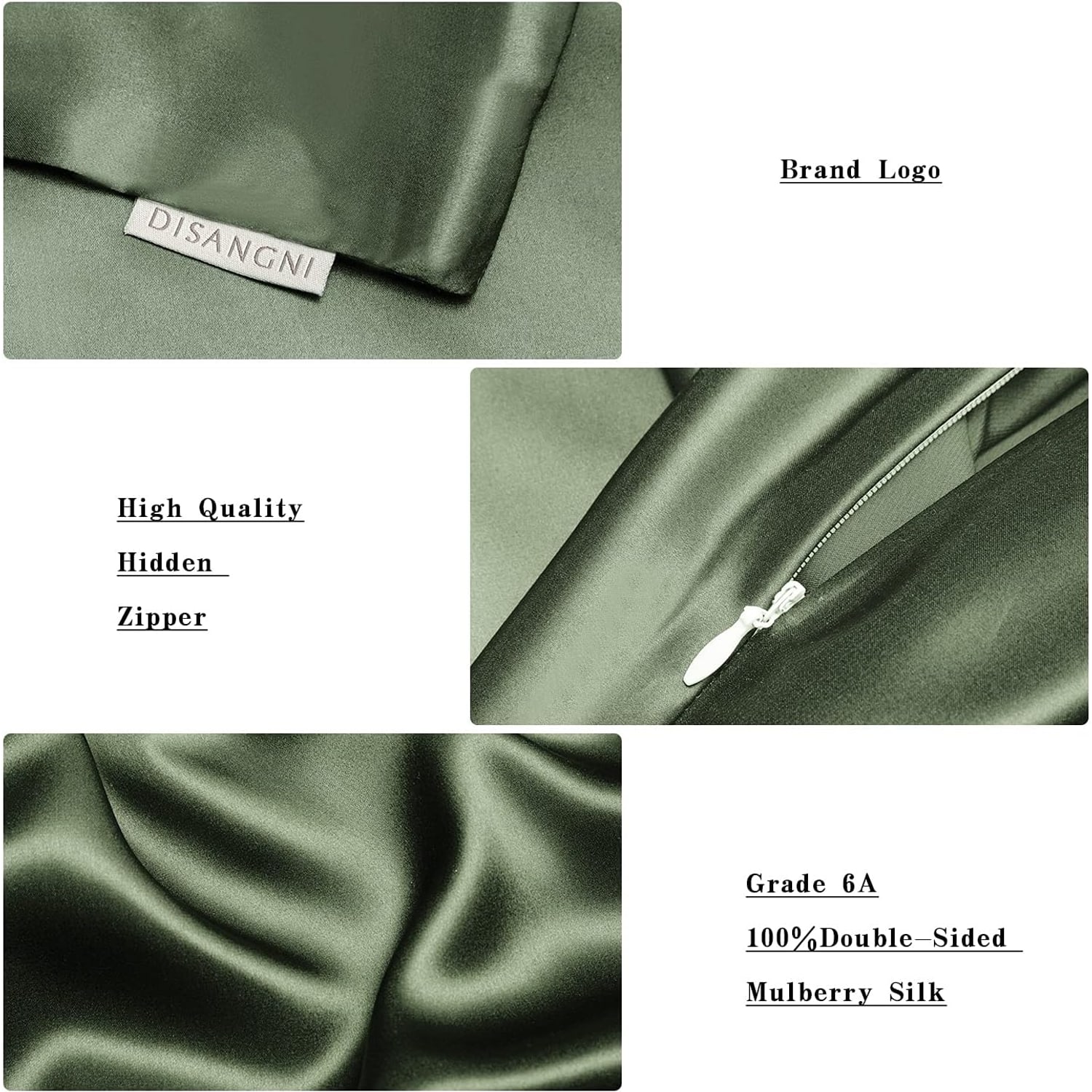
One more thing worth checking on any silk listing is whether the fabric is silk on both sides. Some cheaper covers use silk on the sleeping face and a synthetic backing underneath. This one is double-sided 100% mulberry silk, which means you can flip it without changing how it feels.
Getting the size right
This is where most pillowcase purchases go wrong, and it is entirely avoidable.
These are king-size covers, measuring 91.4 by 50.8 centimetres, which converts to 20 by 36 inches. A true king pillow is long, and a standard case will leave it bulging at the seams with the pillow squashed. Conversely, a standard pillow inside a king case will float around and the extra fabric will fold over itself.
So before you order, strip the case off your current pillow, lay it flat and measure the longest edge. If it comes in near 90 centimetres, you want king. If it is closer to 75, you need a standard or queen cut instead. It takes a minute and it saves a return.
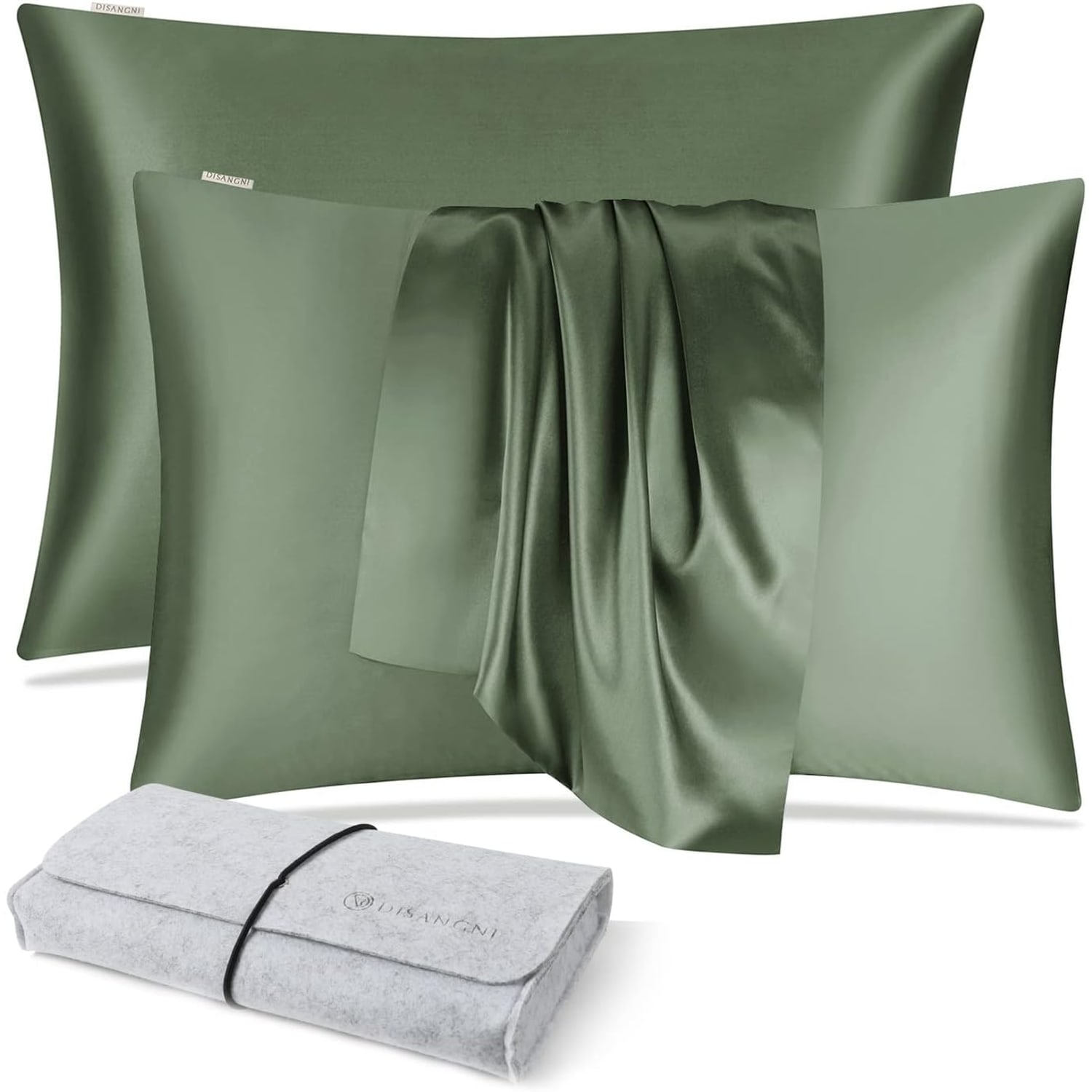
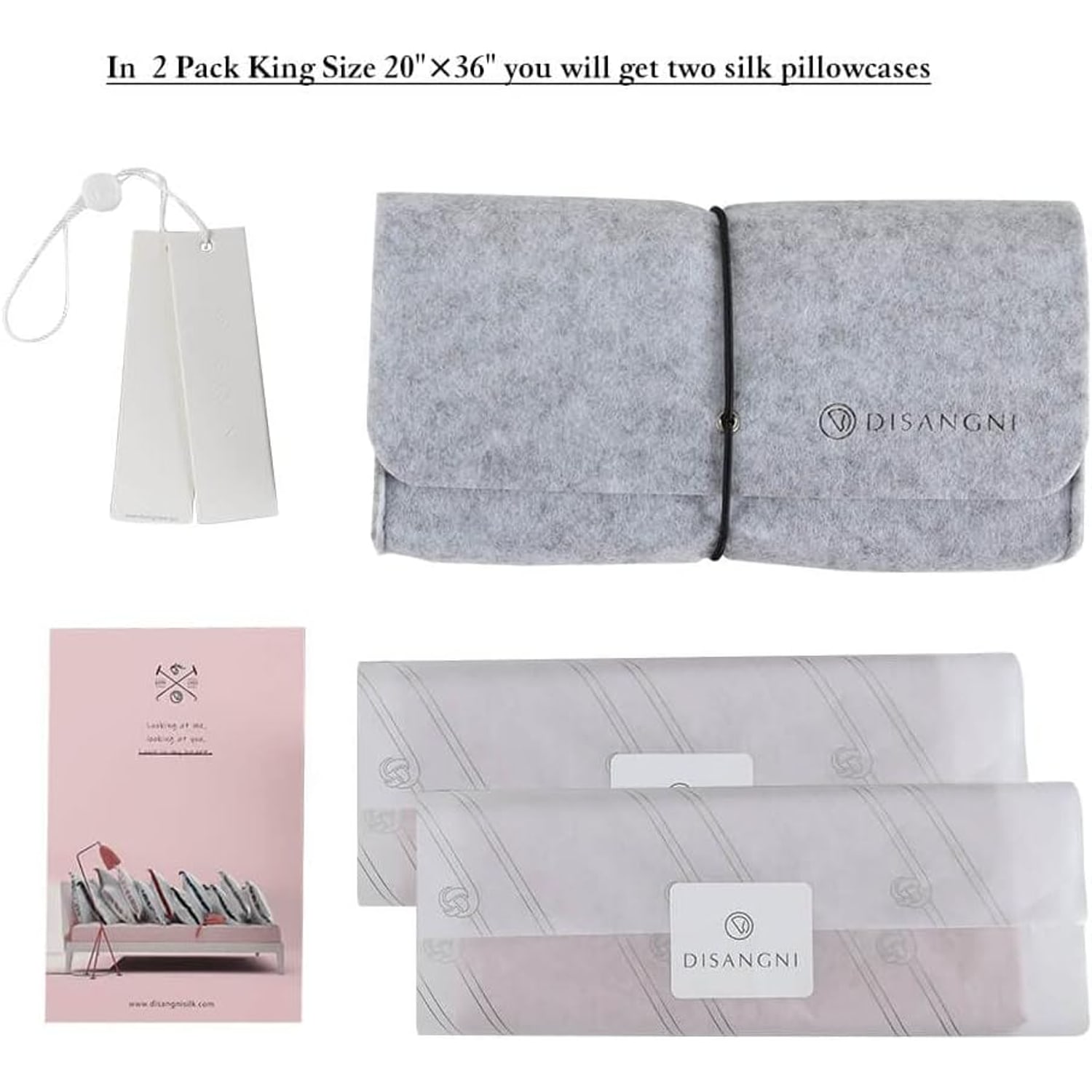
The pack contains two pillowcases. On a shared bed that matters more than it sounds. A single silk cover sitting next to a cotton one looks odd and it causes a quiet nightly negotiation about who gets the nice one. A best silk pillowcase 2 pack dresses the whole bed and gives you a spare while the other is drying.
Colour, and why green is easier than you think
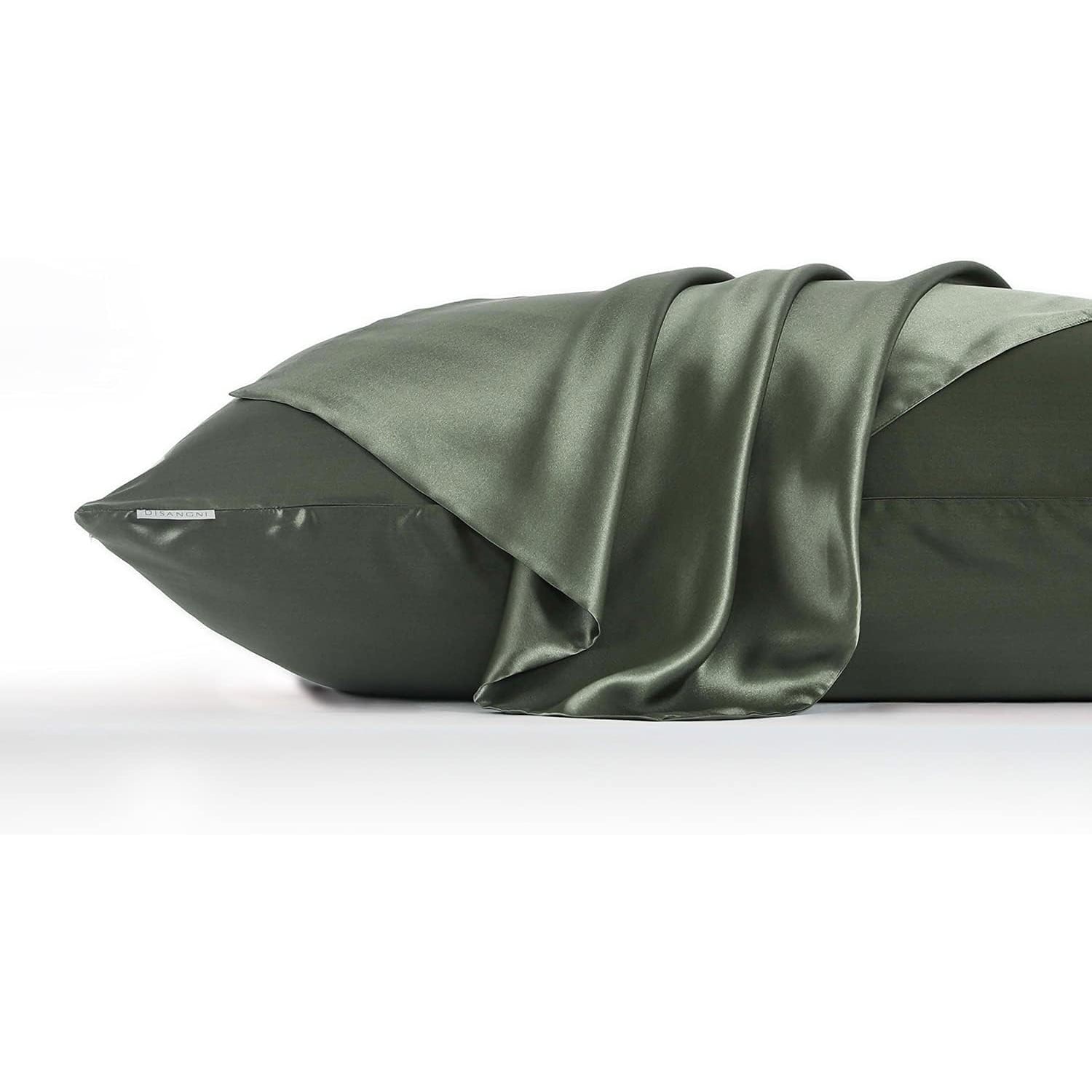
The colour here is a solid green with no pattern or print. People often default to white or grey for bedding, but a mid-tone colour has a practical advantage: it does not show the faint sheen variation that very pale silks can pick up over time, and it hides the ordinary life of a bed a little better.
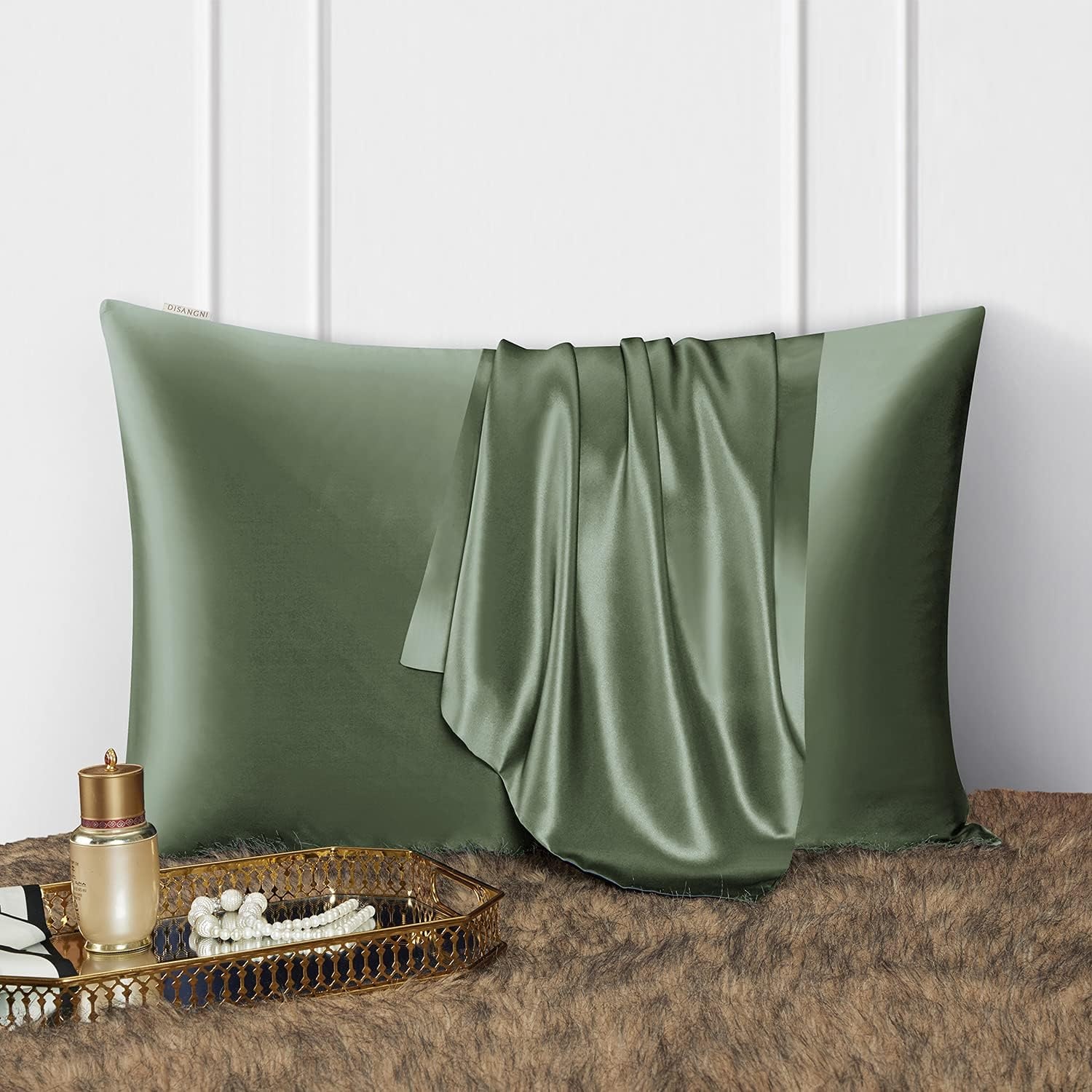
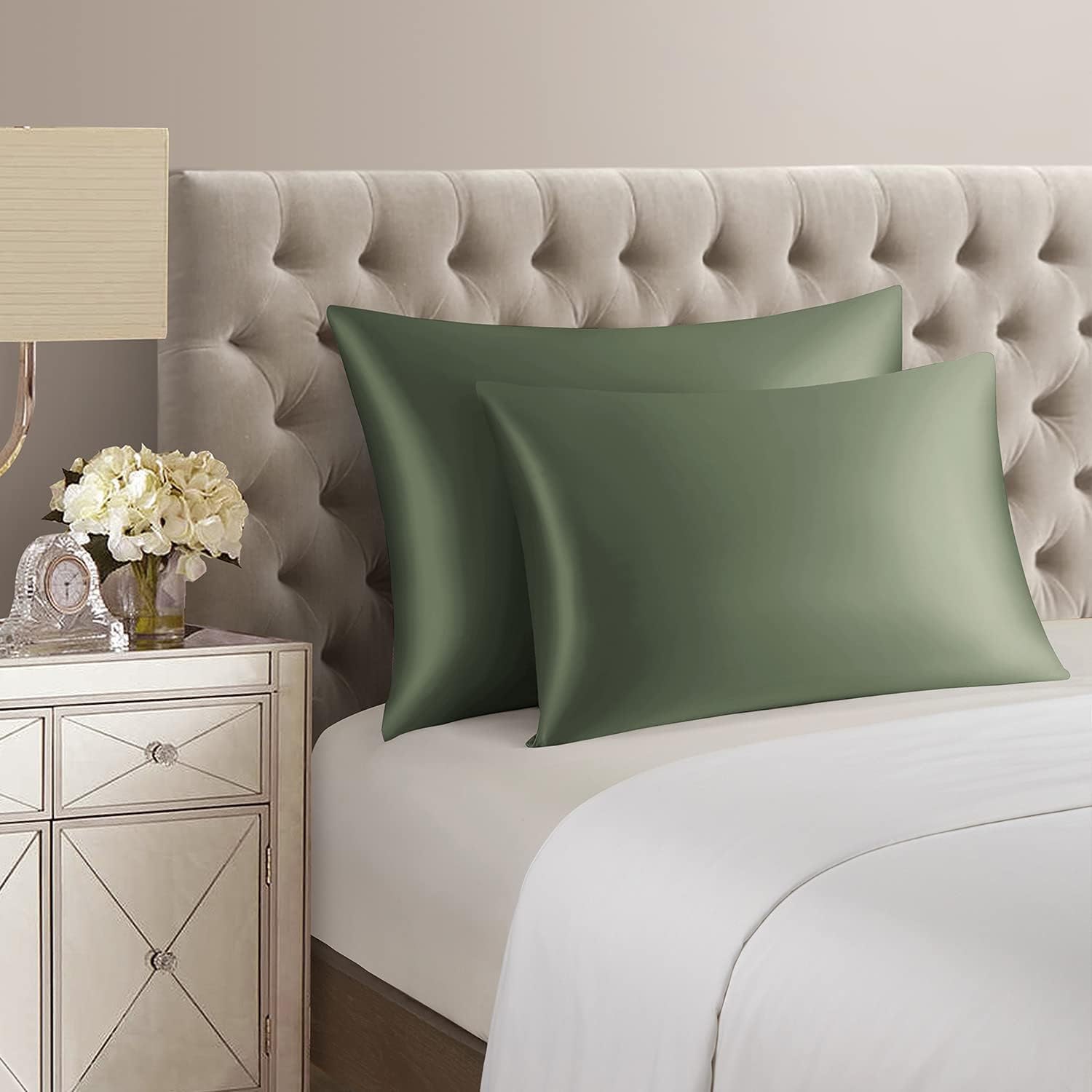
Visually, green is one of the simplest colours to place. It works against crisp white sheets, against cream, against natural linen, and with timber bed frames. If your room already has plants in it, the connection is obvious. A best green silk pillowcase reads as a deliberate choice rather than a leftover from a set.
Silk takes dye deeply, and the finish is a soft natural lustre rather than the hard shine of polyester satin. That difference is easiest to see in daylight. Satin looks glassy. Silk looks quiet.
The zip, a detail that earns its place
Each pillowcase closes with a hidden zipper down one side. It sounds minor until you have slept on an envelope-closure case for a few weeks and watched the pillow slowly work its way out.
A zip does three useful things. It keeps the pillow fully contained, so you are not pushing it back in at midnight. It keeps the finished edge clean, so the made bed looks like a flat rectangle of colour. And it means the case holds its shape through the wash instead of gaping open.
The zip sits along the side seam, away from where your face rests. Turn the closed end towards the headboard when you make the bed and you will never think about it again. If you prefer a best silk pillowcase with zipper over an open envelope style, this is the reason why.
Caring for silk without making it a chore
Silk has a reputation for being fussy. It is more accurate to say it is specific. Follow a short routine and it lasts; ignore it and you will be disappointed quickly.
Hand wash in cool water, at a maximum of 30 degrees Celsius. The order matters. Soak the pillowcase completely in clean water first, then add a mild detergent that you have already dissolved fully in the water. Dropping neat detergent straight onto wet silk is one of the common ways people end up with patchy marks.
Wash it on its own or with similar colours, and never use bleach. If something spills, deal with it that same day rather than letting it dry in. Fresh marks lift easily, set ones often do not.
When it comes out of the water, do not wring it. Press the water out gently, reshape the case and dry it flat or on a line in the shade. Heat and direct sun are what break silk down over time, so skip the tumble dryer and the sunny windowsill. If you want it crisp, iron on the lowest setting on the reverse while slightly damp.
Wash it about once a week, the same as your sheets. Having the second case in the pack makes that painless.
Who this suits
People with long hair are the most obvious group, since the listed recommended use is hair protection and friction is the thing silk reduces. Anyone who wakes with sleep lines on their face tends to notice the difference too.
It also suits people who are simply tired of their bed looking tired. A matched pair of silk king cases does more for the look of a bedroom than most things you can buy at this price, because the pillows sit at eye level the moment you walk in.
And it makes a straightforward gift. There is no sizing guess beyond knowing the bed, no fit issue, and the pair feels more considered than a single. A best silk pillowcase gift works for a housewarming, a birthday, or for someone who never gets around to buying nice things for themselves.
The short version
These are two king-size covers at 91.4 by 50.8 centimetres, made from double-sided 100% mulberry silk at 22 momme with a 600 thread count, in a solid green with a hidden zip. The fabric is smooth, so hair and skin slide rather than catch. The size is genuine king, so measure your pillow before you order. The care routine is hand wash cool, mild detergent dissolved first, no bleach, dry flat in the shade.
Get those four things right and a good silk pillowcase quietly improves something you do every single night.