
The complete guide
How To Choose Silk Scrunchies That Actually Hold
The small annoyance nobody talks about
Hair ties are the most used accessory in the house and the least thought about. Most people buy a bag of thin elastics at the supermarket, use them until they snap, then buy another bag. The result is a drawer full of stretched-out bands, a wrist with a red mark on it, and that familiar kink across the ponytail that shows up around three in the afternoon.
The problem is friction and pressure. A thin rubber band concentrates all its grip into a narrow line. It grabs at individual strands, especially when you pull it out, and it leaves a dent because all that tension sits in one place. Add a rough fabric cover and you get snagging on top of the pinching.
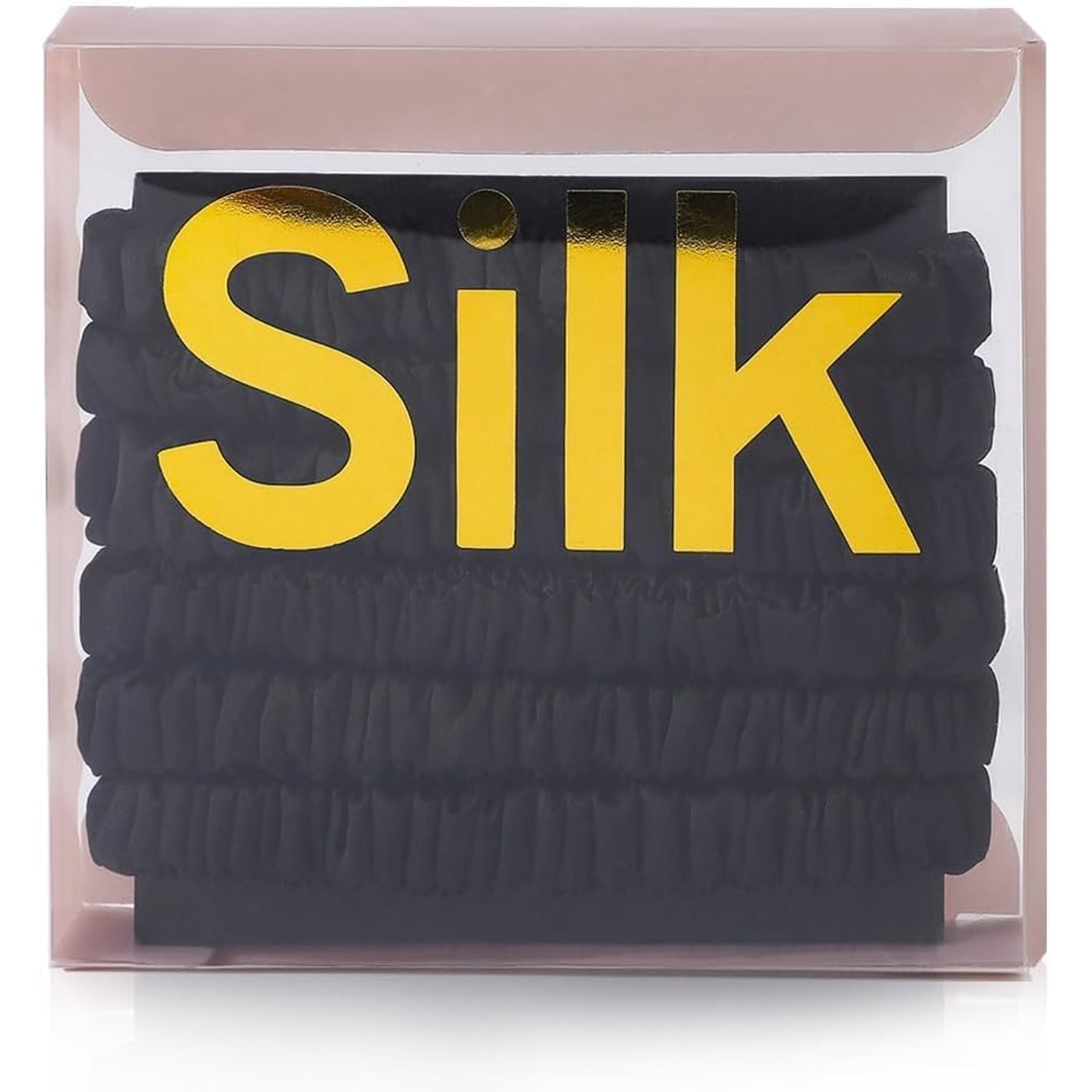
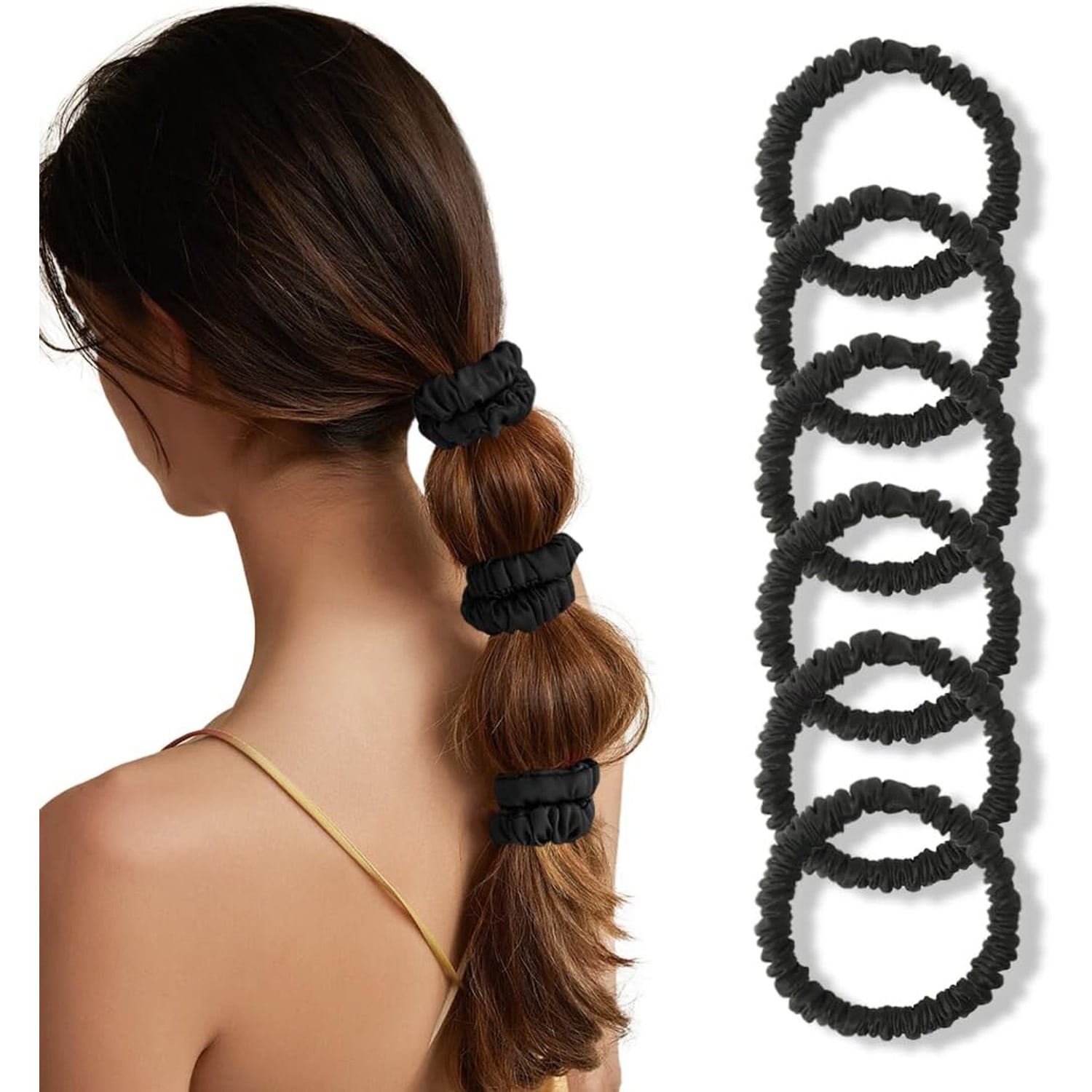
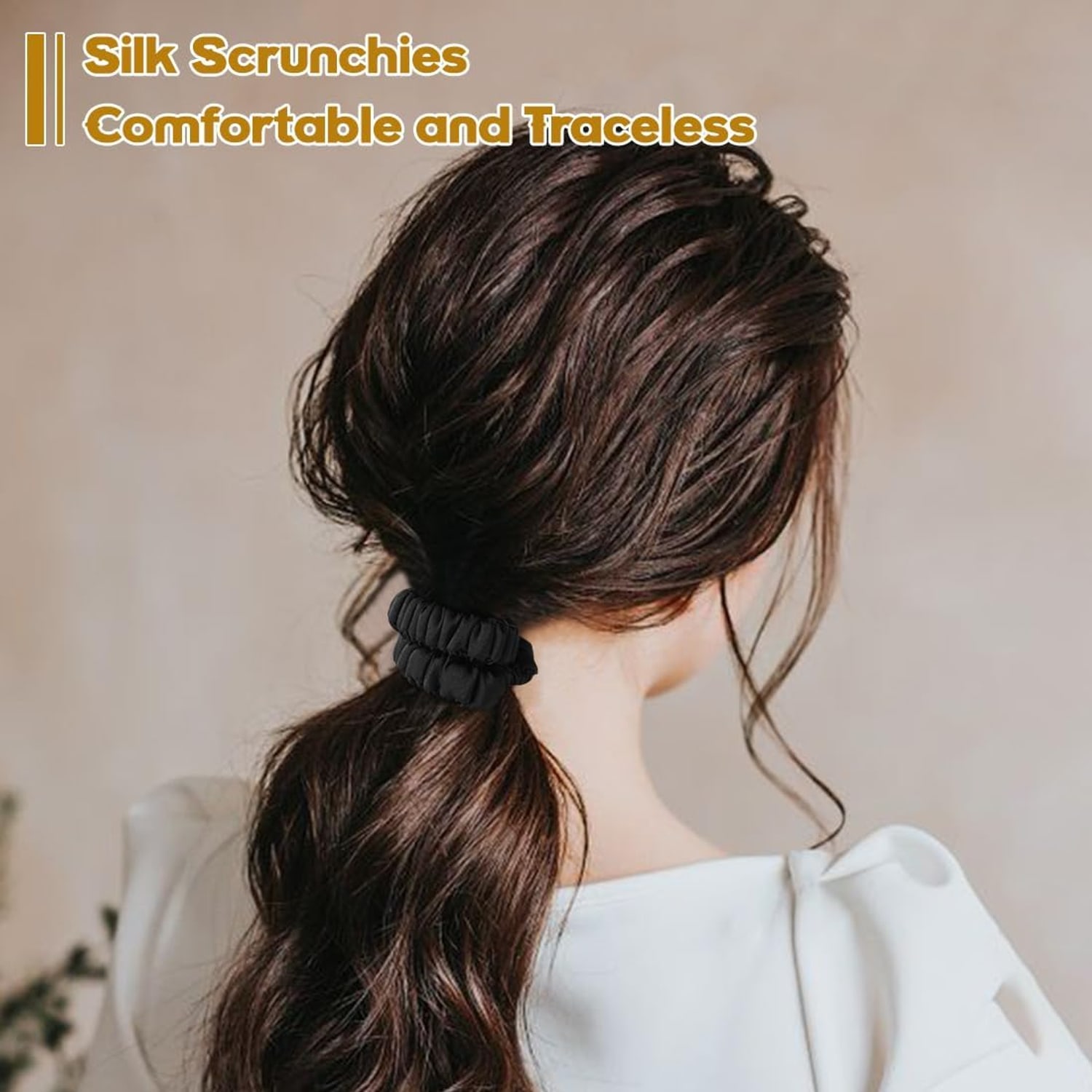
A silk scrunchies 6 pack solves it from two directions. The band is wide, so the same amount of hold is spread over a bigger surface. And the surface is silk, which is naturally smooth, so hair slides across it rather than catching. It is not magic. It is just a better shape made from a better fibre.
What mulberry silk actually brings
Silk is a long, fine filament. Because the fibre is long rather than short and fuzzy, the surface of a silk fabric is unusually smooth. That is the whole story, and it is enough.
When something smooth sits against hair, strands slide over it. When something textured sits against hair, strands catch. That is why a cotton elastic can feel grippy and a silk one feels like it lets go when you pull it out. It is also why people keep a silk tie specifically for overnight, where hair rubs against the same spot for hours.
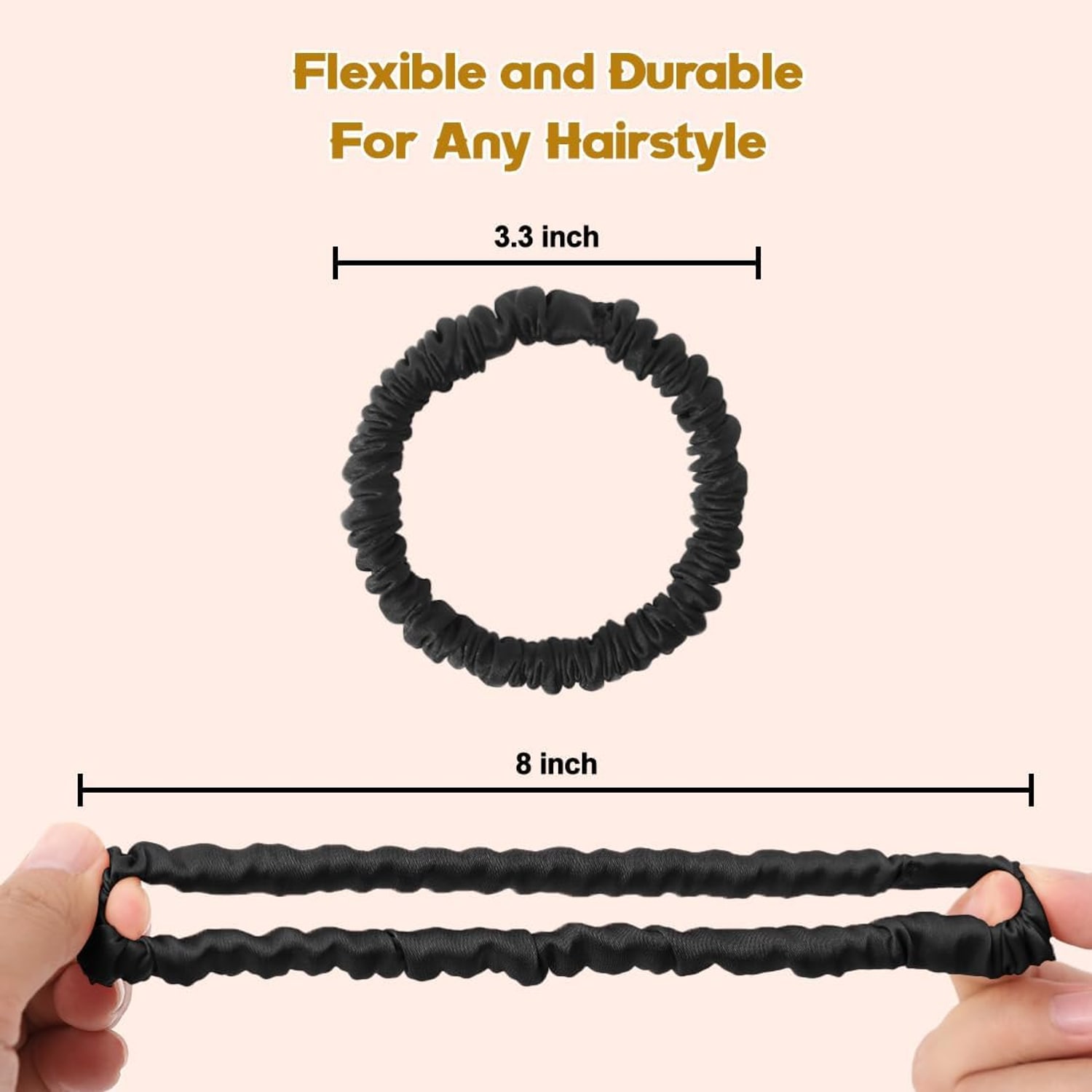
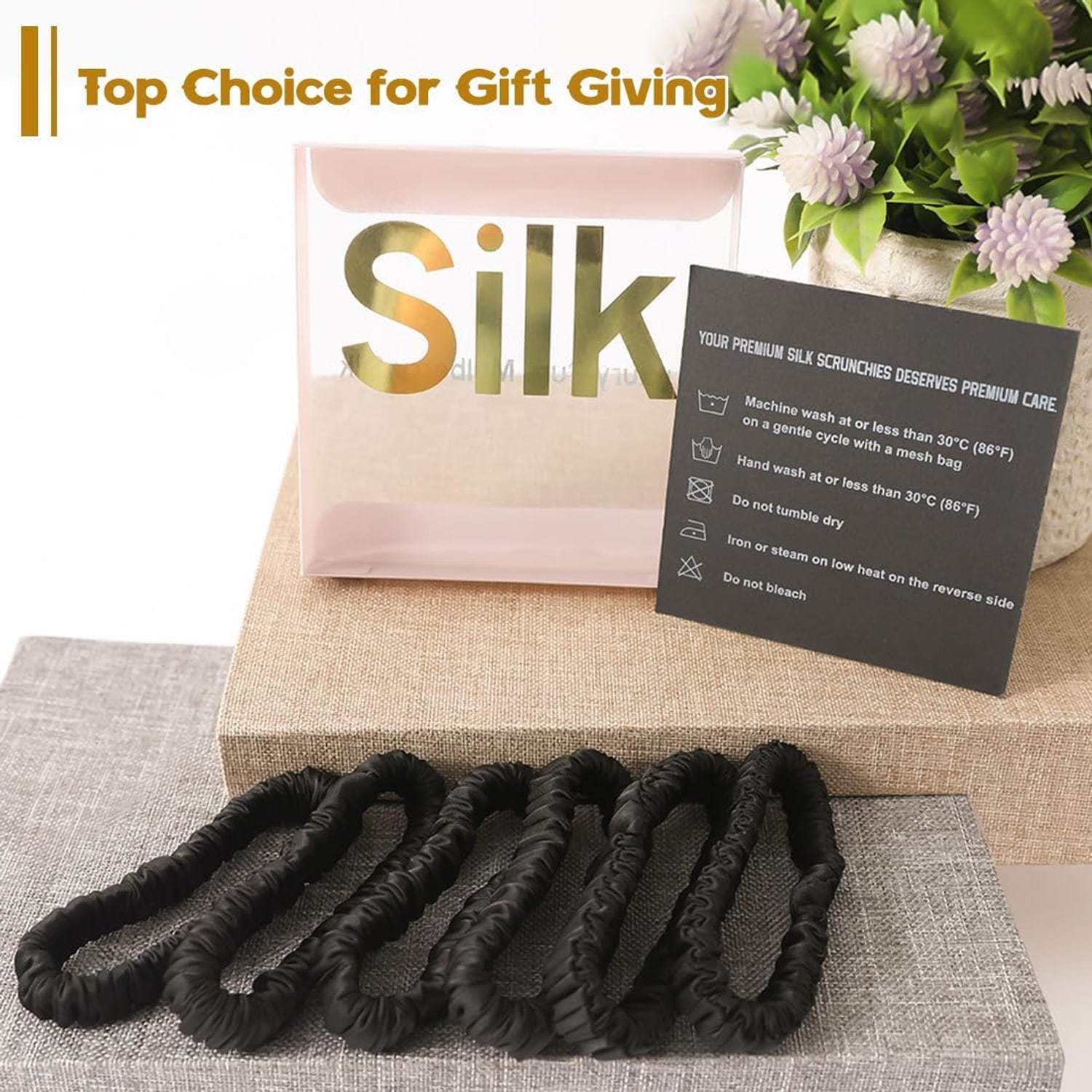
This set is described as mulberry silk. The supplier record lists the material type as silk, but it does not specify the momme weight or the exact silk percentage, so we will not quote a number we cannot back up. What we can say is that the material is listed as silk, the colour is black, there are six in the pack, and the elastic stretches to around eight inches.
Who this suits
Fine hair benefits most from the reduced snagging. Thin strands are the first to break at a stress point, and a smooth band gives them less to catch on. With fine hair you will usually want three wraps, and the eight inch stretch allows that comfortably.
Thick and curly hair benefits from the width of the band. One or two wraps will hold a bun, and the wider contact area means less of that squeezed feeling at the base of the ponytail. Anyone searching for the best silk scrunchies for thick hair is usually trying to escape the tight pinch of a double-looped rubber band, and a fabric scrunchie does that straight away.
Sleepers are a big group too. If you tie your hair up at night, the band is in contact with your head and your pillow for seven or eight hours. A slim silk scrunchie in a loose bun is far less intrusive than a chunky one. That is why the best silk scrunchies for sleeping tend to be low-profile designs rather than the big statement ones.
And then there are people who simply want a tie that looks tidy. Black goes with everything. No colour matching, no clashing with an outfit, no bright band ruining a photo.
How to pick the right one
Think about stretch, not diameter. Relaxed size tells you very little because a scrunchie is elastic. The number that matters is how far it opens. Eight inches is a good general-purpose figure. Much less and thick hair struggles. Much more and fine hair needs four or five wraps to feel held.
Think about profile. A thick, heavily gathered scrunchie looks great and is a nuisance under a helmet, a hat or your own head on a pillow. A slimmer gather is the one you will actually use every day.
Think about quantity. Hair ties are lost, not worn out. Buying a single premium tie and then losing it in a changing room is a familiar story. A six pack is the sensible unit. You keep one in each place you need one, and you still have spares.
Think about colour. If you only buy one set, make it black. It is the shade that disappears against dark hair and reads as neutral against everything else. Brighter sets are fun as an addition, but black is the one that earns its keep.
Think about how you will wash them. Silk likes cool water and gentle handling. If you know you will throw everything in a hot wash, you will get less life out of any silk accessory. If you are happy to hand wash occasionally, it lasts a long time.
Using them well
Start with fewer wraps than you think you need. People habitually overtighten because they are used to elastics that slip. A fabric band grips more evenly, so a looser wrap often holds just as well and feels much better after a few hours.
Pull the scrunchie off rather than dragging it down the length of the ponytail. Sliding a tie through the hair is where most breakage happens, regardless of what it is made from.
For sleeping, go loose and go high or low rather than right at the crown. A soft bun at the nape or a loose plait keeps hair contained without pressure on one point.
For the gym, add a wrap. If you are doing anything with a lot of movement, a slightly tighter configuration keeps the ponytail in place. Rinse it afterwards if it has been sweaty, then dry it flat.
Caring for silk without fuss
Hand wash in cool water with a gentle detergent. Swish rather than scrub. Rinse until the water runs clear, then press the scrunchie between the folds of a towel to get the water out. Do not wring it, because twisting strains both the silk and the elastic inside.
Reshape it with your fingers and lay it flat to dry. Keep it away from radiators, hot sun and the tumble dryer. Heat is the fastest way to ruin elastic and to dull a silk surface.
Avoid bleach entirely. If you need to spot clean, dab rather than rub.
Storage matters more than people expect. Loose in a handbag with keys, clips and a nail file is how silk gets snagged. A small pouch or a divided drawer section keeps the surface intact. Rotating through all six also means no single tie takes all the wear.
Silk versus satin, briefly
These two words get used as if they mean the same thing. They do not. Silk is a natural fibre spun by silkworms. Satin is a type of weave, and most satin accessories are made from polyester. Both feel slick to the touch, so a satin scrunchie also reduces snagging compared to a cotton one.
Where they differ is in breathability, how they age and how they handle washing. Natural fibres tend to feel cooler and settle in over time. Synthetic satin can feel warmer against the skin and may pill after repeated washes. Neither is wrong, but if you have decided you want silk, read the material field rather than the product name.
The short version
This is a six pack of black silk scrunchies with about eight inches of stretch, a slim profile and a smooth surface that lets hair slide instead of catch. The material type is listed as silk, the pack weighs 40 grams, and the colour is a plain black that goes with everything.
Buy it if you are tired of thin elastics leaving dents and snapping strands, if you tie your hair up at night, or if you simply want enough hair ties that you stop running out. Hand wash them in cool water, dry them flat, and keep them away from heat.
Delivery is from Australian warehouses in 3 to 7 working days. Returns run for 14 days from delivery on unused, unwashed items. If the fit or hold is not right for your hair, get in touch and we will help you sort it out.