


The complete guide
How to Choose a Silk Bonnet, and How to Make It Last
The problem with pillowcases
Most of us never think about what our hair does for eight hours a night. It gets dragged. You turn over, your head moves, and the hair underneath stays pinned by the weight of your skull for half a second before it catches up. Cotton has a textured surface made of short, twisted fibres, and those fibres grip. Multiply that by a few hundred turns a night and you get the familiar result. Flat on one side, frizzy on the other, static in winter, and a style that lasted about as far as the bedroom door.
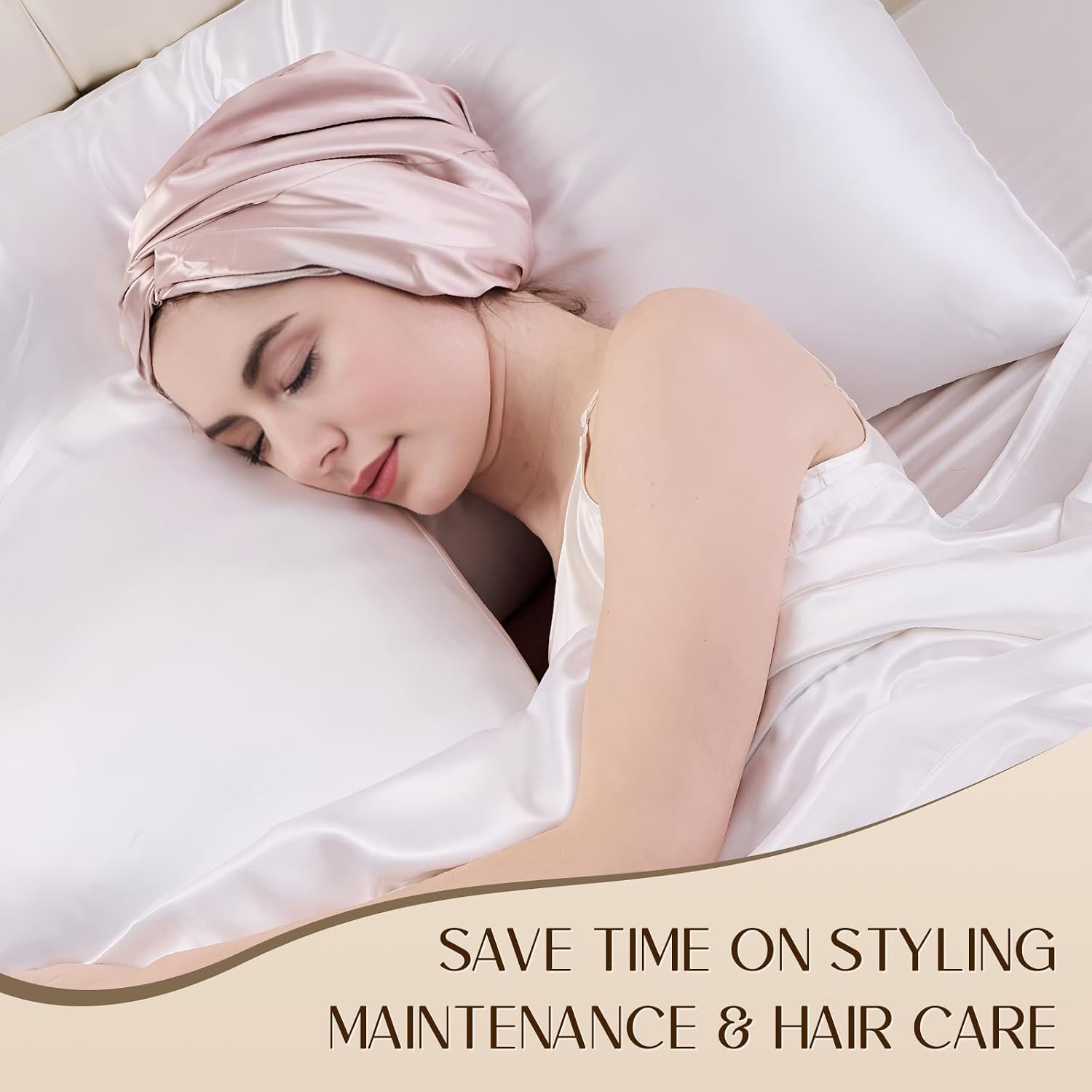
A silk bonnet deals with this by changing the surface your hair touches. Silk filaments are long and smooth. Hair slides across them rather than catching. That is the whole mechanism, and it is worth being clear that it is a physical one, not a treatment. Nothing is being added to your hair. The bonnet simply stops the pillow from pushing it around.
What momme means and why 22 is a sensible number
Silk is not measured in thread count. It is measured in momme, a Japanese unit that describes weight per unit area. Lightweight silks sit around 12 to 16 momme. Heavier ones climb into the high twenties and beyond. This bonnet is 22 momme, which lands in the medium weight class.
Why does that matter in a bonnet? Two reasons. The first is feel. Low momme silk can feel insubstantial, almost like a scarf lining. It also tends to show wear faster because there is simply less fibre in the weave. The second is shape. A denser silk holds its form. A bonnet made from thin silk collapses onto your head and becomes a loose bag within a few washes, and once that happens it stops staying put.
Twenty-two momme is a practical middle ground. It is dense enough to feel like a proper garment and to survive regular hand washing, but not so heavy that the bonnet becomes stiff or warm. Both the shell and the lining here are the same 22 momme mulberry silk, which is worth checking on any bonnet you look at. A silk exterior with a synthetic lining gives you the look without the function, because the lining is the only part your hair actually touches.
Fit is the part people get wrong
Ask anyone who has given up on bonnets and the reason is almost always the same. It fell off. Elastic-only bonnets are sized by guesswork and they either squeeze a groove into your forehead or quietly work their way loose by two in the morning.
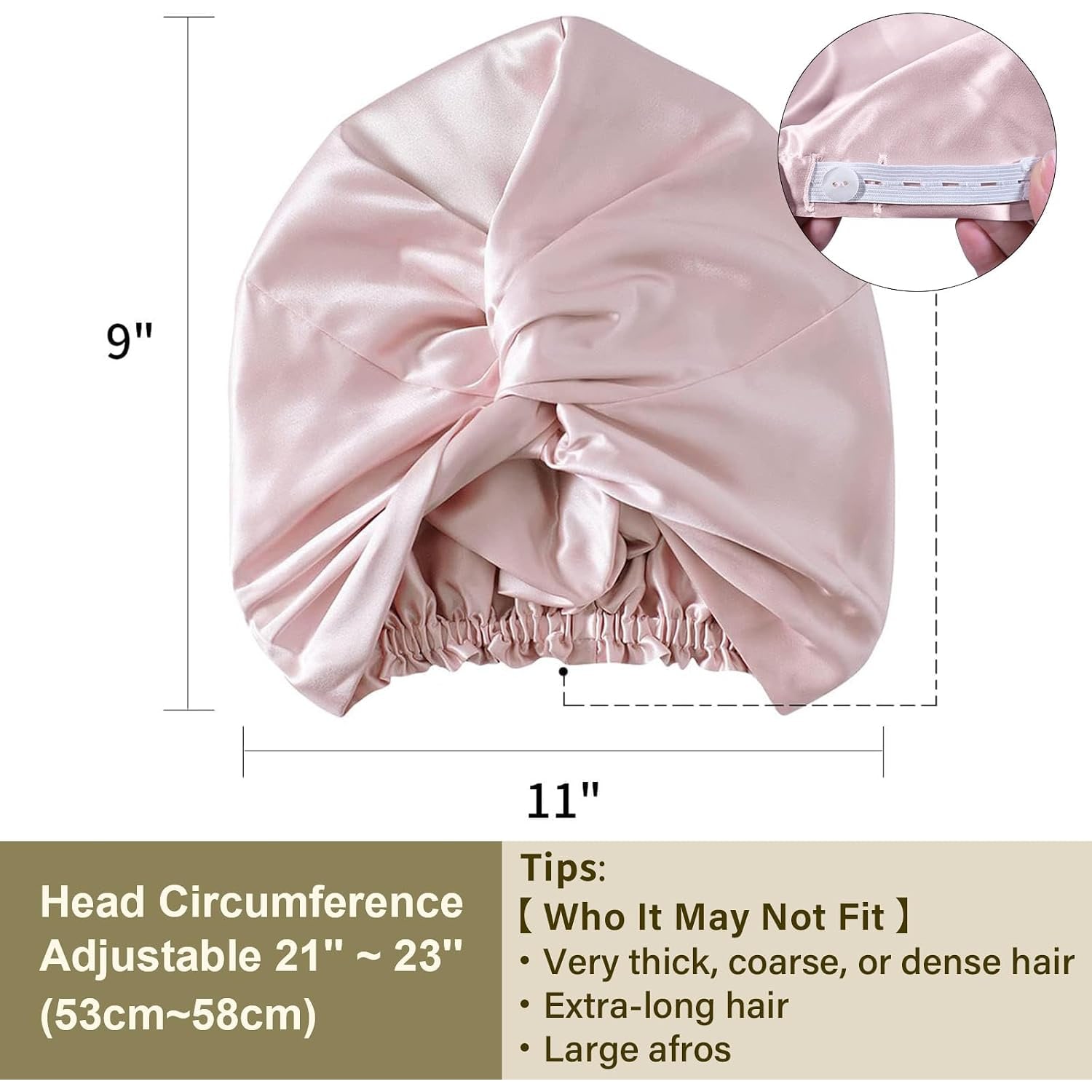
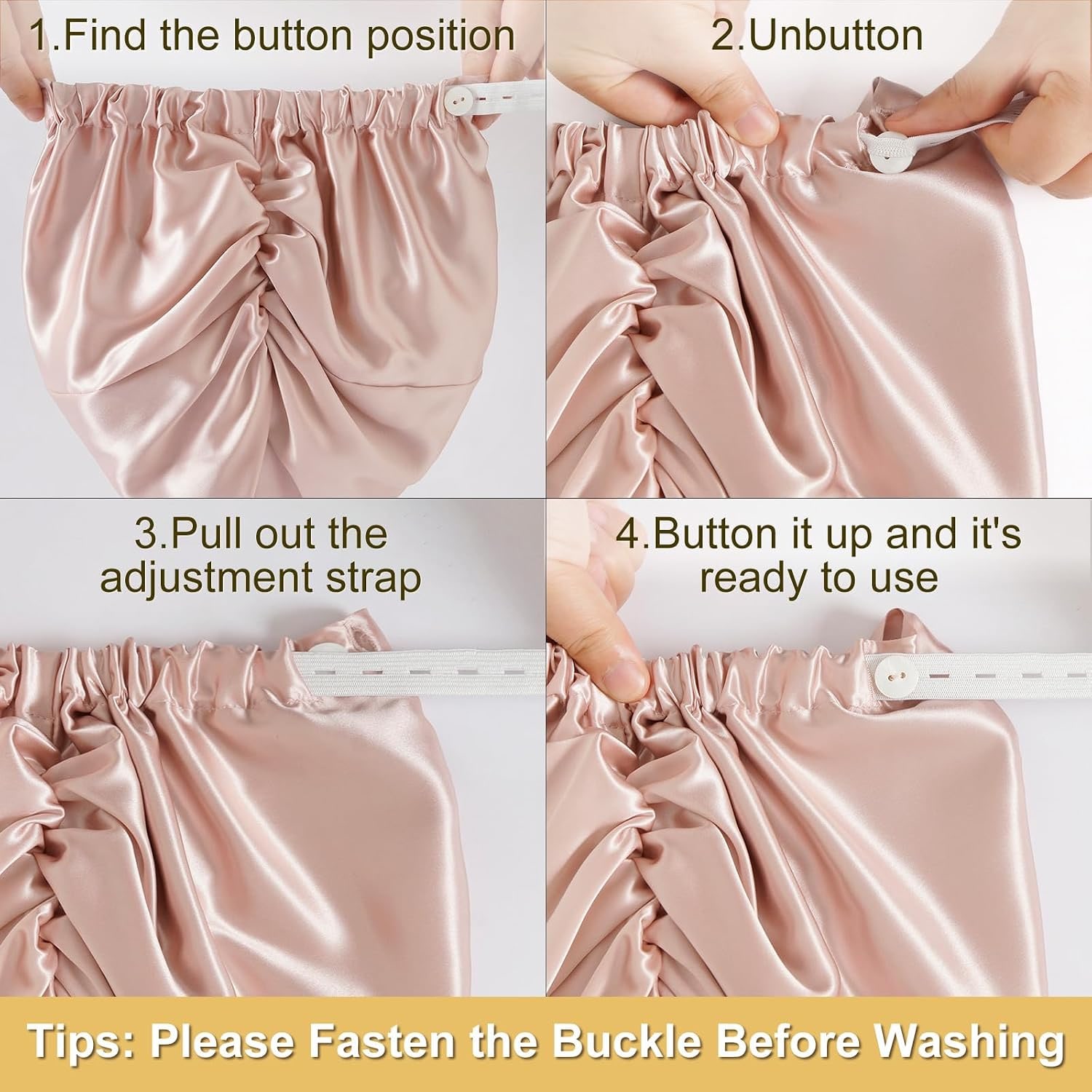
This one uses a buckle at the back plus a drawstring. The buckle sets the circumference. You adjust it once, on the first night, and then leave it alone. The drawstring handles the other dimension, which is how much room there is up top for your hair. Someone with a short bob and someone with shoulder-length hair need different amounts of space inside the same bonnet, and the drawstring is what covers that gap.
The silk itself has no stretch. That is normal for a woven silk and it means the closures are doing all the sizing work rather than the fabric. The upside is that the fit you set is the fit you get, night after night, with no slow loosening as elastic tires.
One small practical note. If you sleep flat on your back, swing the buckle slightly to one side before you lie down so it is not directly under your head. Most people do this without thinking after a couple of nights.
Who it suits, and who might want something else
Straight hair, wavy hair, curls, coils, braids, a fresh blow-dry: the friction benefit applies across the board. What changes is the reason you want it. Straight hair benefits most from less static and fewer pillow kinks. Curls benefit from keeping their pattern intact instead of being flattened on one side. A set style lasts longer simply because nothing is disturbing it.
The honest caveat is volume. This is a standard adult bonnet, not an oversized one. If you have very thick or very voluminous hair, you may find it a squeeze. Loosely gathering hair on top of the head before you put the bonnet on usually solves it, but if the silk is visibly stretched tight, this is not the right size for that style and you will be happier with a roomier cut.
It is also not for wet hair. Silk is not water resistant, and sealing wet hair inside anything is uncomfortable and slow to dry. Get hair to dry or barely damp first.
Washing it without ruining it
Here is where most silk gets destroyed, so it is worth a minute.
Hand wash only, cool water, a detergent made for delicates. Not regular laundry liquid, which usually contains enzymes and brighteners that are hard on protein fibres. Fasten the buckle before the bonnet goes in the water, because loose hardware swishing around is exactly how a snag starts.
Work the bonnet gently through the water for a minute or two. No scrubbing, no twisting. Rinse until the water runs clear. Then lift it out supporting the whole thing, lay it on a towel, roll the towel and press. Do not wring it. Wringing stretches the weave and once silk is stretched it does not go back.
Dry it flat, away from direct sun, radiators and heated airers. Heat and UV are what fade dyed silk and make it brittle. At room temperature it will be dry faster than you expect.
If it needs pressing, use a low iron on the reverse side and keep well away from the buckle and drawstring. Honestly, most creases fall out on their own if you lay it flat while it is still slightly damp.
How often? If you use light products or none, weekly is fine. Heavy oils, leave-in creams or scalp treatments mean more frequent washing, because whatever is on your hair transfers to the bonnet.
Living with it day to day
The bonnet packs down to 28 x 23 x 2 cm and weighs 227 grams. That is small enough to live in a bedside drawer without being a nuisance and flat enough to disappear into a weekend bag. Hotel pillowcases are usually heavily laundered cotton, so a bonnet in the suitcase is one of the easier travel upgrades.
Plenty of people end up with two. One in use, one in the wash, no gap. It is a single-item pack, so if that appeals, order accordingly.
The colour is a solid pink with no print or trim. Plain is the right call for something you wear every night and wash regularly. It also makes it an easy gift, since the adjustable closure removes the sizing guesswork that makes most clothing a risky present.
The short version
A silk bonnet is a simple bit of kit doing one job, which is putting a smooth surface between your hair and your pillow. The things worth checking are the momme weight, whether both sides are silk, and how it fastens. This one is 22 momme mulberry silk inside and out, medium weight, with a buckle and drawstring so the fit stays where you set it.
Treat it gently at the sink, dry it flat, keep it out of the sun, and it will go on doing that job for a long time.