
The complete guide
How to Choose a Silk Pillowcase That Is Actually Worth the Money
The problem with the pillowcase you already own
Most people never think about their pillowcase. It came with the sheet set, it is cotton or a cotton blend, and it goes on the bed without comment. Then you notice something. Your hair looks slept-on in a way that takes real effort to fix. There are creases on one cheek that take an hour to fade. The cotton feels warm and a little grabby when you roll over at two in the morning.
None of that is a crisis. It is just friction. A woven cotton surface has short fibres that stand up slightly from the weave, and anything that drags across it, hair or skin, catches on those fibres. Silk is different because the fibre is long and continuous, so the face of the fabric is smoother. Things slide instead of catching.
That is the whole mechanical story. A silk pillowcase is not magic, and anyone selling it as a treatment is overreaching. What it is, honestly, is a nicer surface to put your head on, and a surface that moves against hair and skin with less drag than cotton does.
What momme actually tells you
If you have shopped for silk bedding you have seen the word momme and probably skipped past it. It is worth two minutes.
Momme is a weight measure specific to silk. It describes how many pounds a particular size of the fabric weighs, which in practical terms tells you how much silk is packed into each square metre. Cotton uses thread count for a similar idea, but thread count is easy to inflate with thin, multi-ply yarns. Momme is harder to fudge because it measures weight, and weight is weight.
Silk bedding generally runs from about 16 momme up to 25 momme. At the lower end the fabric is thin and light, and it tends to wear through sooner because there is simply less material. At the very top end it is heavy and expensive and, for most people, more than they need.
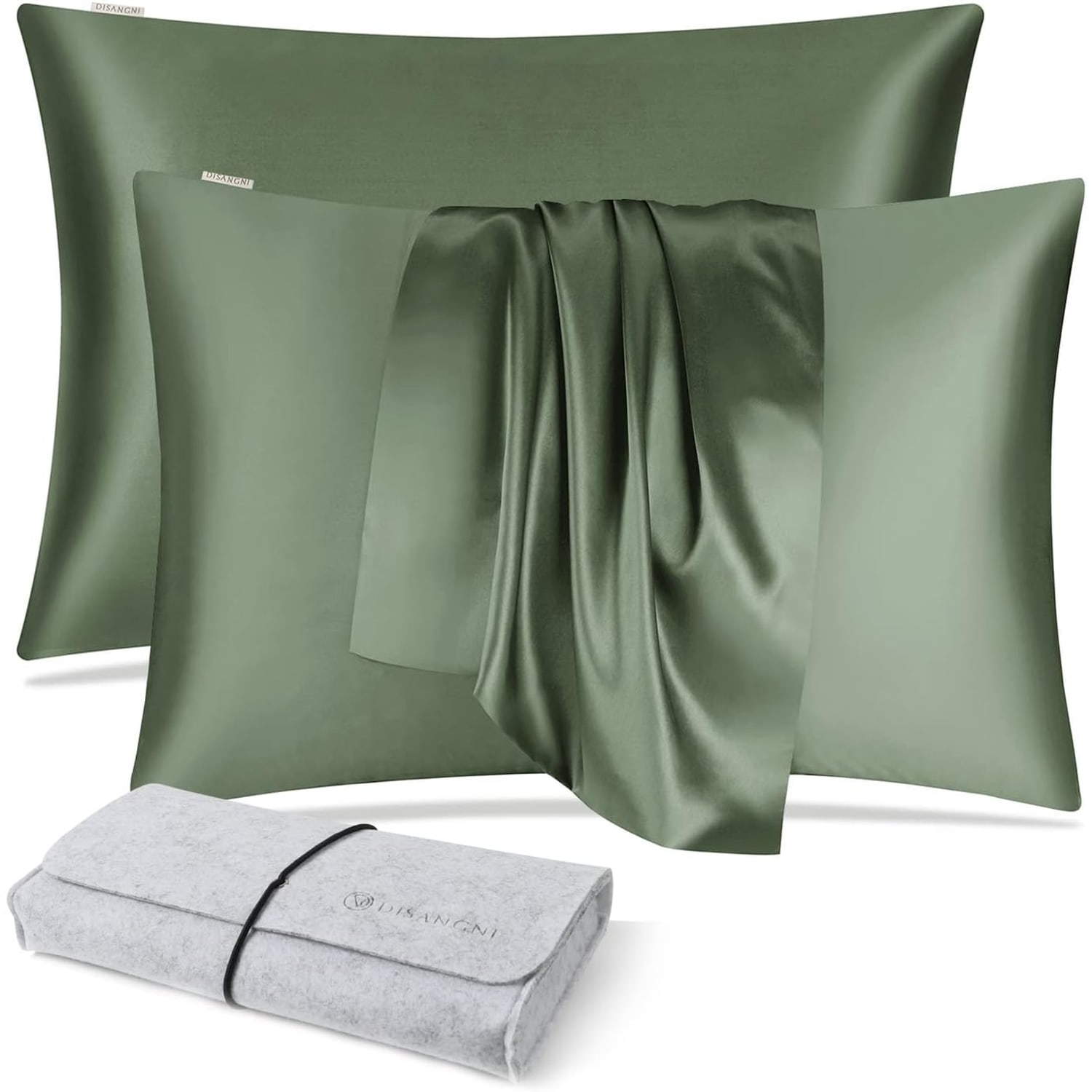
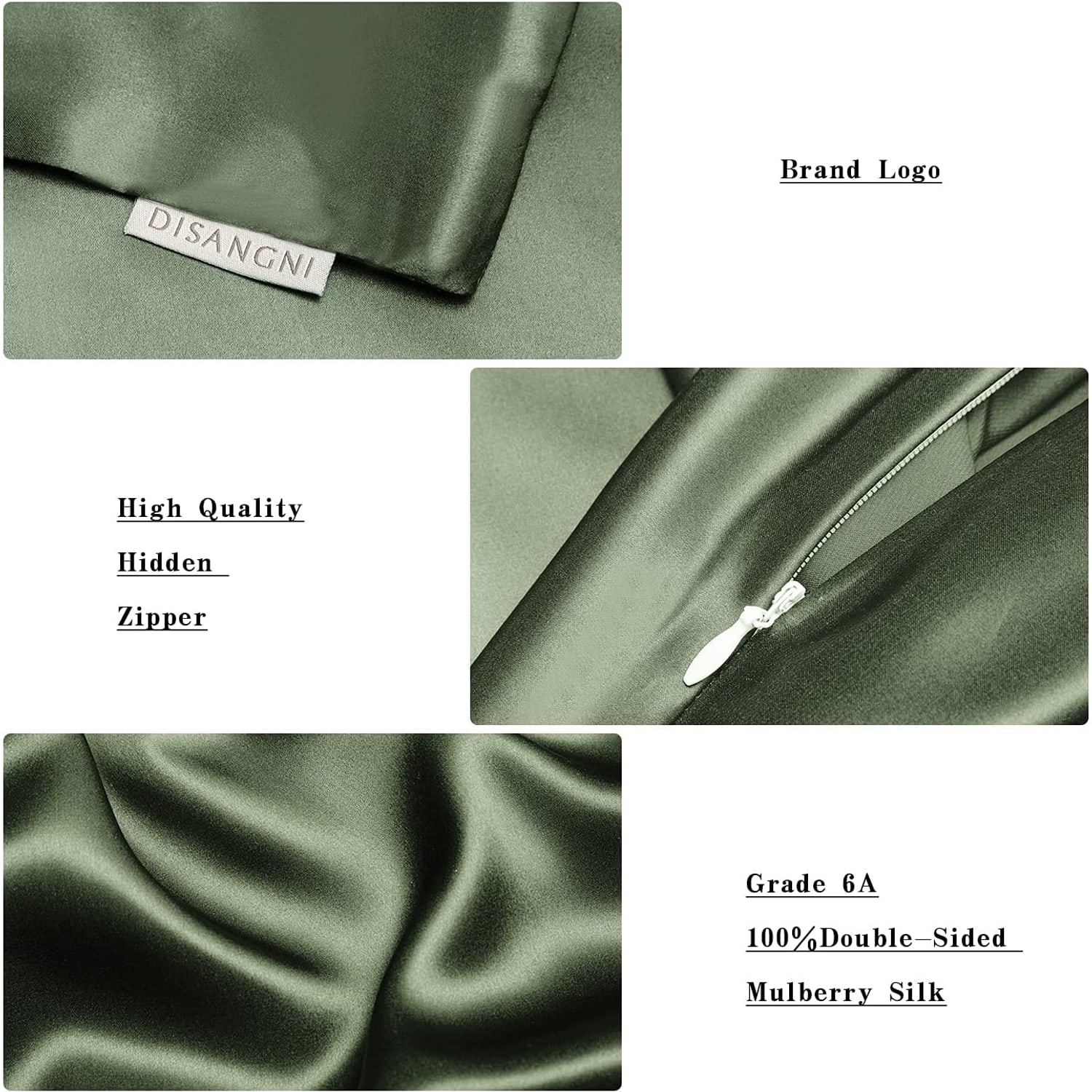
This pair sits at 22 momme, which is the range most silk bedding buyers land on. The fabric has enough weight to drape properly over a pillow instead of clinging to it, and enough density to survive regular washing. Combined with the 600 thread count weave listed for these cases, you get a close, even surface with a soft sheen rather than the glassy shine of synthetic satin.
If you have been comparing options and trying to work out what makes the best 22 momme silk pillowcase, the short answer is that the momme number is the floor, and construction decides the rest.
Both sides matter more than you would think
Here is a trick used across a lot of the silk pillowcase market. A case is advertised as silk, the price looks surprisingly good, and when it arrives one face is silk and the other is cotton or polyester. It is cheaper to make that way, and you will not spot it in a product photo.
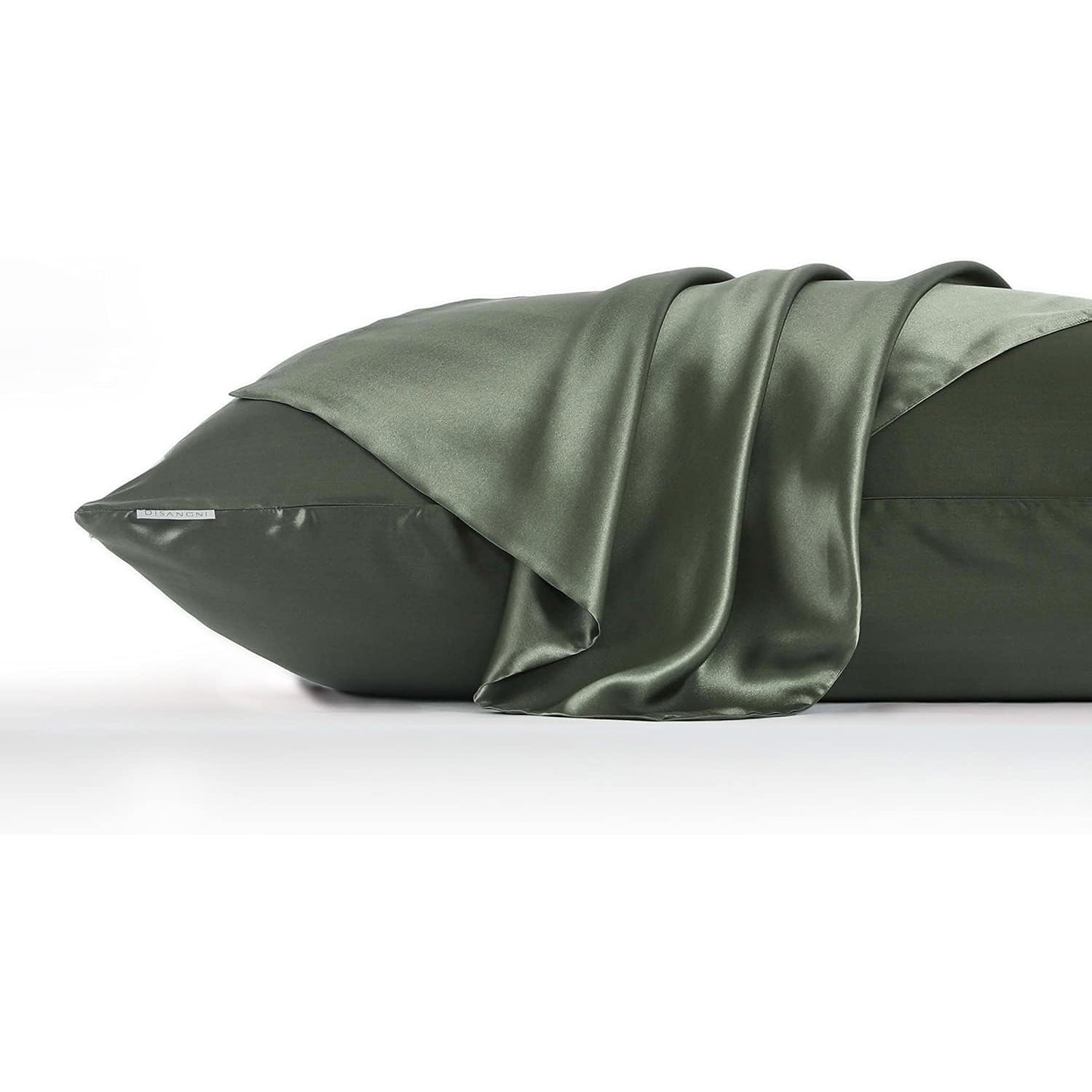
These cases are mulberry silk on both faces. That matters for a simple reason. You turn your pillow over. Everybody does, usually when the side you have been lying on gets warm. If only one side is silk, half your night is spent on something else entirely.
Double-sided silk also wears more evenly. Two different fabrics stitched together shrink at different rates and pull against each other at the seams, which is how a case ends up puckered after a dozen washes.
Zips, flaps and why the closure is not a boring detail
Pillowcase closures come in three flavours. There is the plain open end, where the pillow just goes in. There is the envelope flap, a folded tail of fabric tucked over the pillow. And there is a zip.
The open end is the worst option for silk because silk is slippery. Your pillow will work its way out and by morning there will be a bare corner poking into your neck. The envelope flap is better, but the fold sits under the pillow and creates a ridge you can sometimes feel.
A hidden zipper, which is what these cases use, closes the end completely and sits inside the seam so you do not see it. The pillow stays put all night, the edge stays flat, and the case keeps a clean line when the bed is made. For a slippery fabric, a zip is the sensible choice, and it is one of the things that separates the best zippered silk pillowcase from a bargain one that looks fine in the photo.
Check the stitching along the seams too. Silk is a demanding fabric to sew because it shifts under the needle, so neat, straight seams are a good sign that the maker took their time.
Getting the size right
This is where most disappointment comes from, and it is entirely avoidable.
These cases are standard size, 66 cm long by 50.8 cm wide, or 20 inches by 26 inches in the older measure. That is the most common pillow size in Australian homes, and if you bought your pillows from a regular bedding retailer there is a good chance that is what you have.
But not always. Queen pillows run longer. King pillows run longer again. European square pillows are a different shape entirely. If you put a standard case on a queen pillow it will stretch tight, the seams will take strain, and it will look wrong.
So measure. Take the pillow off the bed, lay it flat, and run a tape along the length and the width. Two minutes now saves a return later. If your pillow is a standard, this pair will fit the way it is meant to.
Why a two-pack is the right way to buy
Silk needs hand washing, and hand washing takes a bit of time. If you own exactly one silk case, washing day means either sleeping on cotton or sleeping on a damp pillowcase. Neither is appealing.
Owning two solves it. One is on the bed, one is clean and folded in the cupboard, and you swap them over. That is the simple reason a pair is the standard way silk pillowcases are sold, and why a set of two is a more useful purchase than a single case at a lower price.
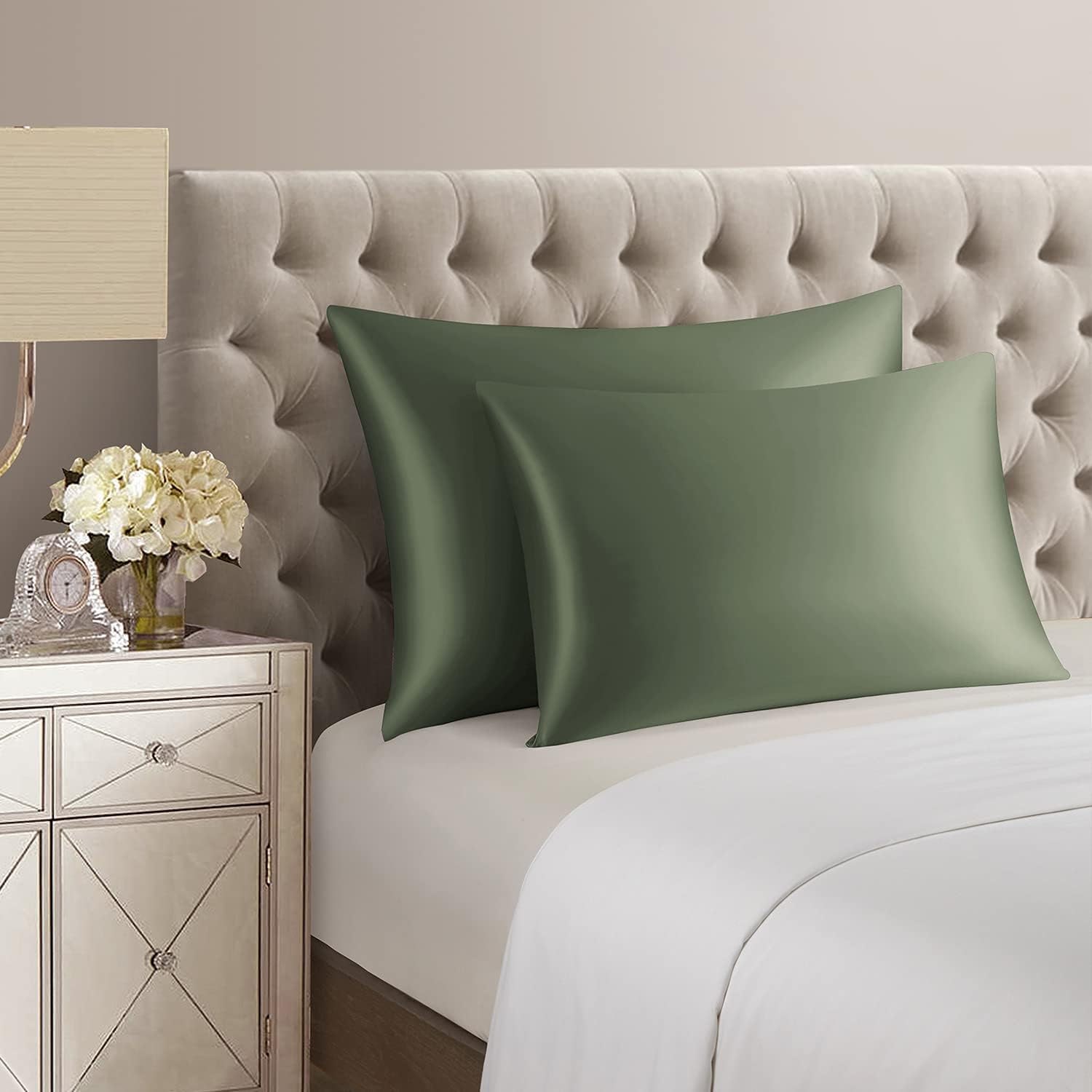
A pair also splits neatly. Put one on each side of a double bed, or keep one for yourself and send the other to the guest room.
Looking after them
Silk is not fragile, but it is particular. The care guidance for these cases is hand wash at a maximum of 30 degrees Celsius, which is cool to lukewarm, not warm.
Start by soaking the case fully in clean water. Then add a mild detergent to the water and dissolve it completely before the silk goes anywhere near it. Dropping undiluted detergent straight onto silk can leave marks. Wash separately, or with similar colours only, and keep bleach well away.
When you are done, press the water out between your hands rather than wringing or twisting. Wringing stretches the fibres. Dry flat or hang in shade with good airflow, never in direct sun and never over a heater. If you want to press it, use the lowest iron setting and work from the reverse.
One more habit worth building. If something spills, wash the case that day. Marks that dry into silk are far harder to shift than fresh ones.
Treated this way, a 22 momme case will last for years of weekly washing. Treated carelessly, it will not.
Colour, and living with green
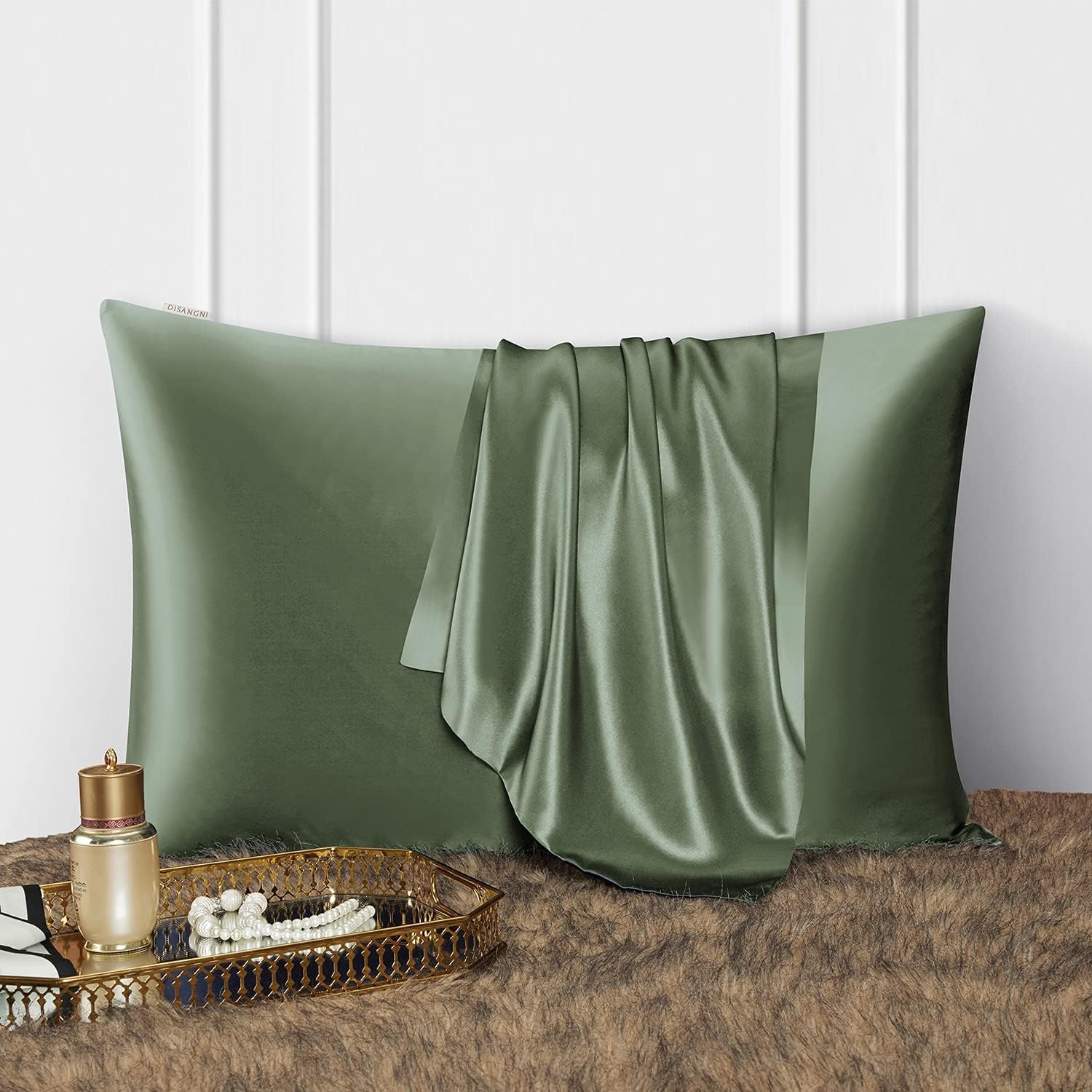
Solid colours are easier to live with than patterns, and green sits comfortably alongside white, cream, grey, navy and most natural timber tones. It reads as a considered choice rather than a loud one.
Silk takes dye differently to cotton. The sheen means the colour shifts a little depending on how the light hits it, which is part of the appeal. It also means screen photos are a rough guide, not an exact match.
The short version
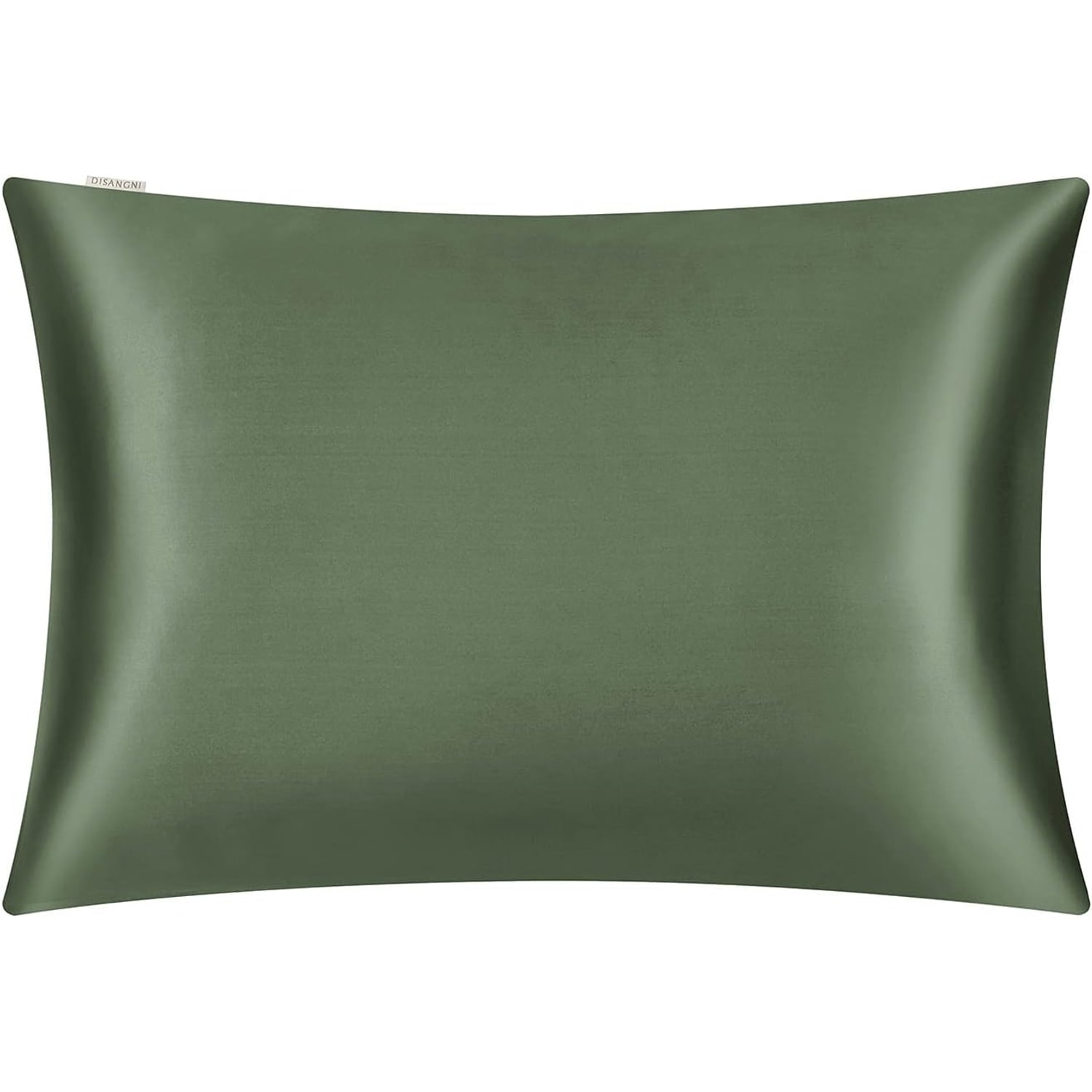
A silk pillowcase is a surface upgrade, nothing more mystical than that. What you want is real mulberry silk on both faces, a momme weight in the low twenties, a closure that holds the pillow, and a size that matches the pillow you own. This pair ticks all four, in a standard 66 cm by 50.8 cm cut with a hidden zip and a plain green finish.
Measure your pillow, commit to hand washing, and rotate the two cases. That is the whole job.