
The complete guide
The Practical Guide to Buying a 70cm Square Silk Scarf
The problem with most scarves
Most scarves sit in a drawer. They are either too big, too warm, or too complicated to tie, and so they come out twice a year and go back in. The 70cm silk square exists because it solves all three of those problems at once. It is small enough to wear indoors, light enough for a warm afternoon, and simple enough that you can tie it in a mirror in thirty seconds without a tutorial.
There is a second problem it solves, which is the flat outfit. A plain shirt, plain trousers, plain bag. Everything fits, nothing is wrong, and the whole thing still looks like you got dressed in the dark. A printed silk square at the neck fixes that without changing anything else you are wearing. That is why it is the accessory people reach for when they are running late.
What mulberry silk actually is
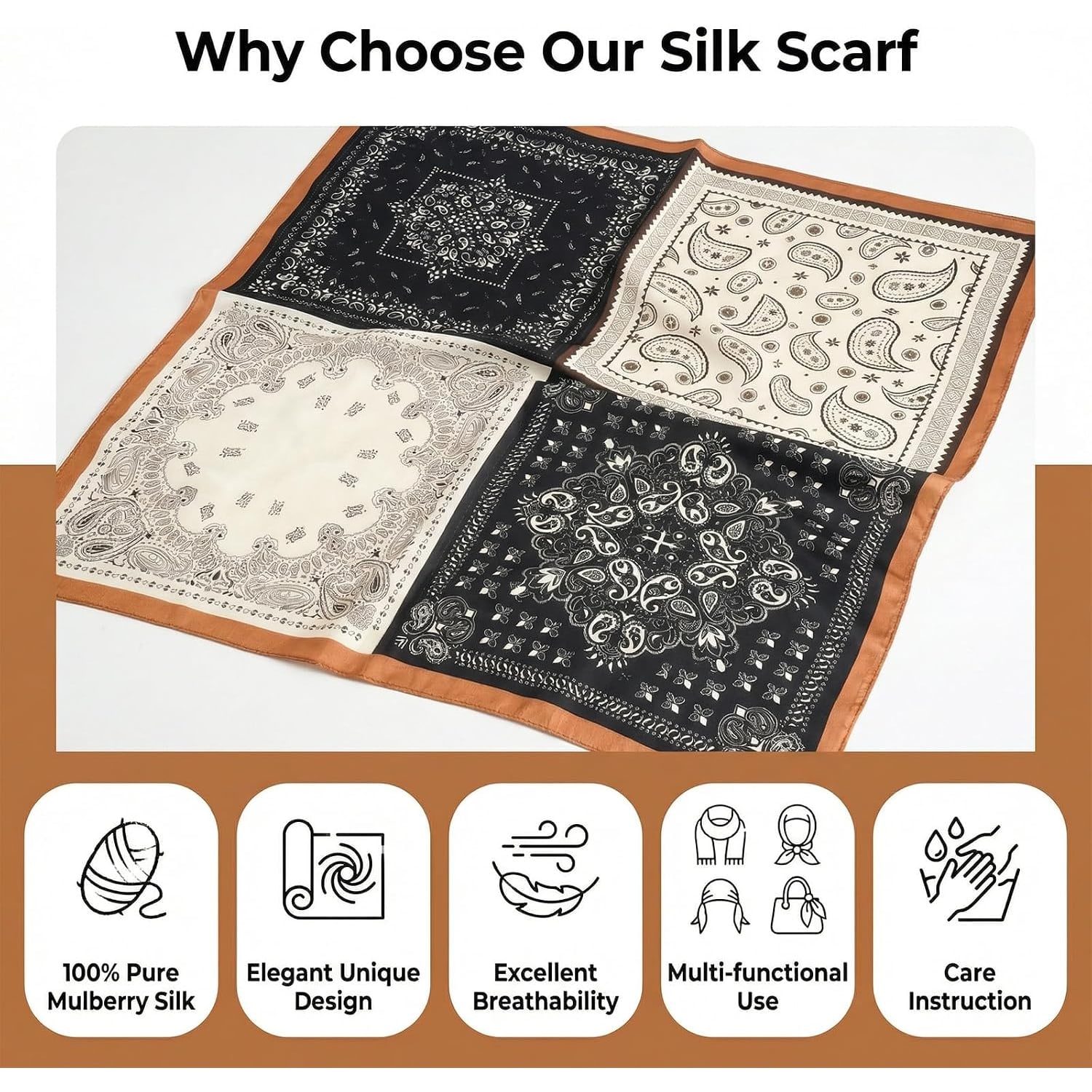
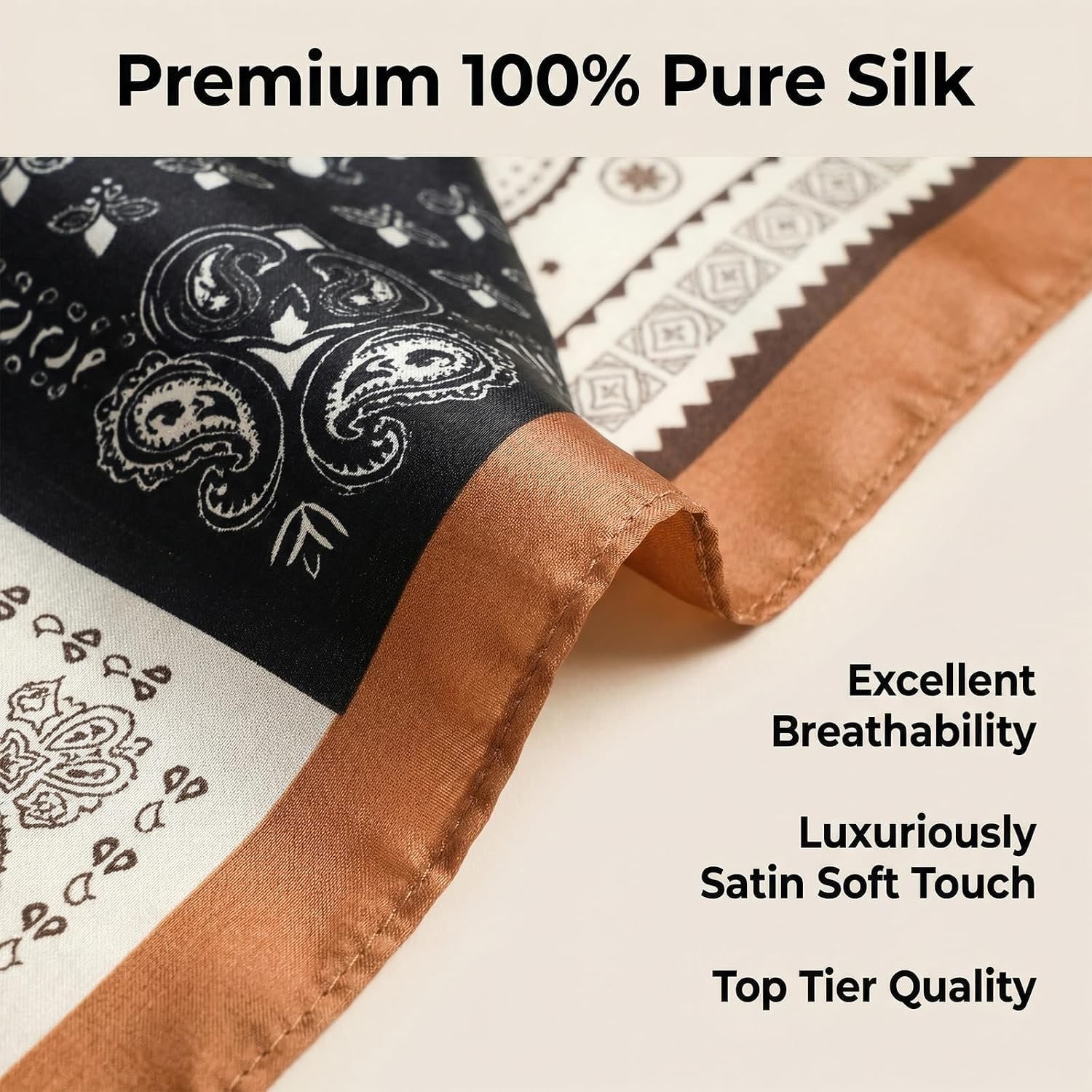
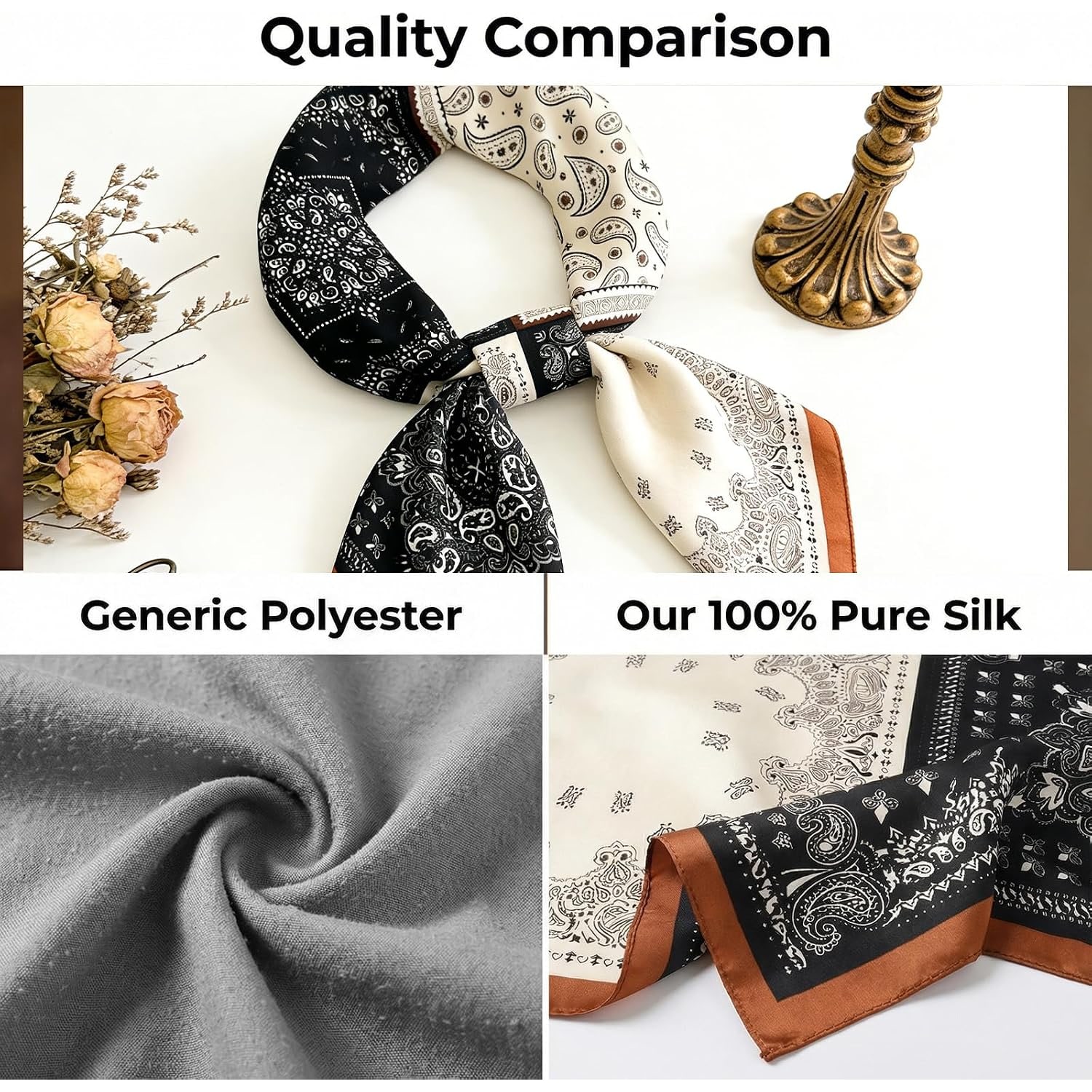
Silk is spun by silkworms, and mulberry silk comes from worms raised on a diet of mulberry leaves. The diet matters because it produces long, even filaments rather than short, irregular ones. Long fibres mean a smoother surface with fewer joins, and a smoother surface is what gives silk its cool hand feel and its particular way of catching light.
That smoothness has a practical side too. Silk has less surface friction than cotton, so it glides over hair and skin rather than dragging. It is the same property that made silk pillowcases popular. For a scarf, it means the fabric does not catch on a wool jumper, and a knot you tie at eight in the morning is still sitting where you put it at lunchtime.
Silk is also very light for its strength. A scarf this size weighs almost nothing in a bag, which is a large part of why it actually gets used rather than left at home.
Why 70cm is the size to buy
Square silk scarves come in a range of sizes, roughly from 50cm up to 90cm and beyond. Each has a job.
A 50cm or 53cm square is a neckerchief. It ties neatly at the throat and that is about all it does. It is too small to cover the hair properly and too small to drape.
A 90cm square is the classic large format. It drapes beautifully over the shoulders and makes a proper head covering, but it is a lot of fabric around the neck. Fold it down for a neck tie and it bulks up under a collar.
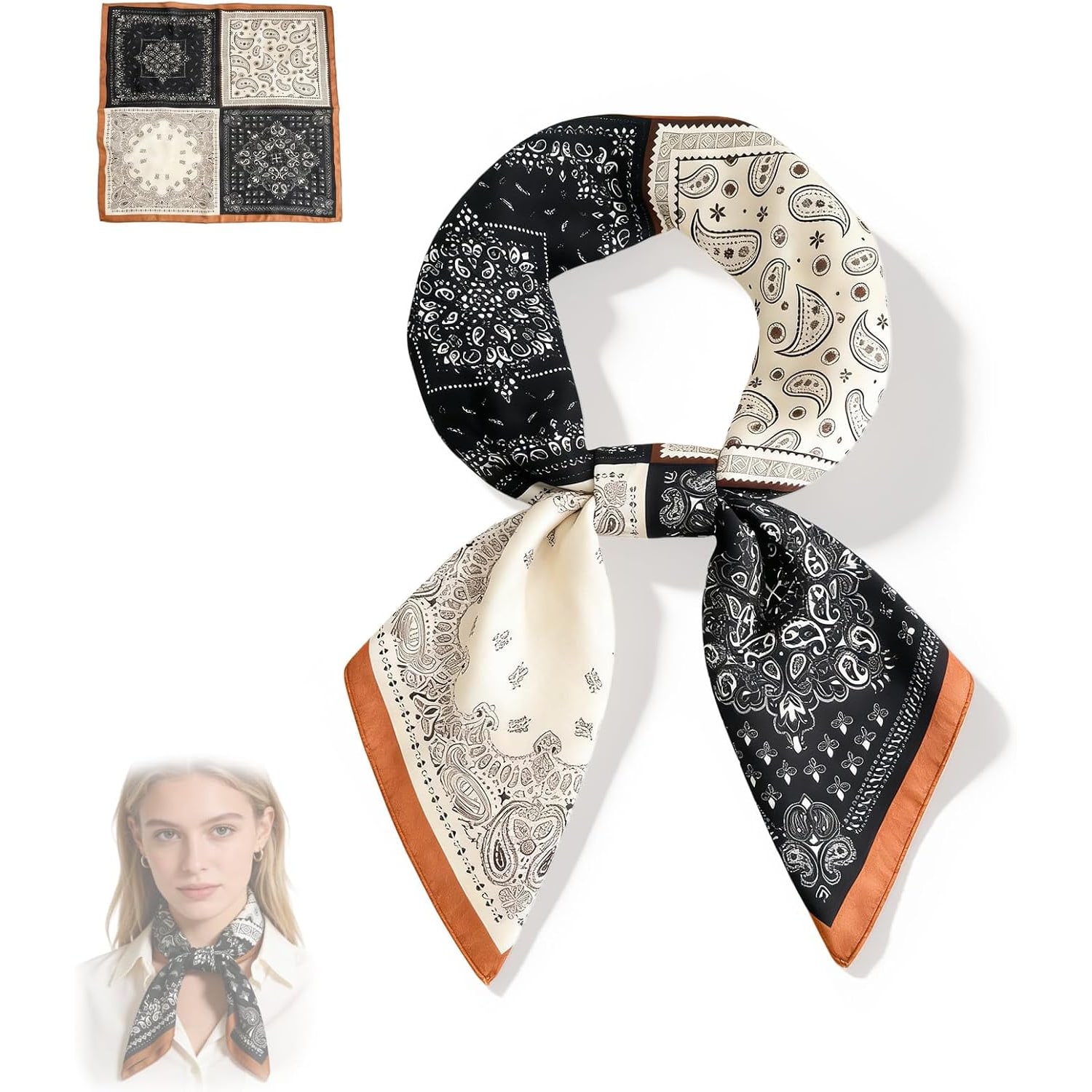
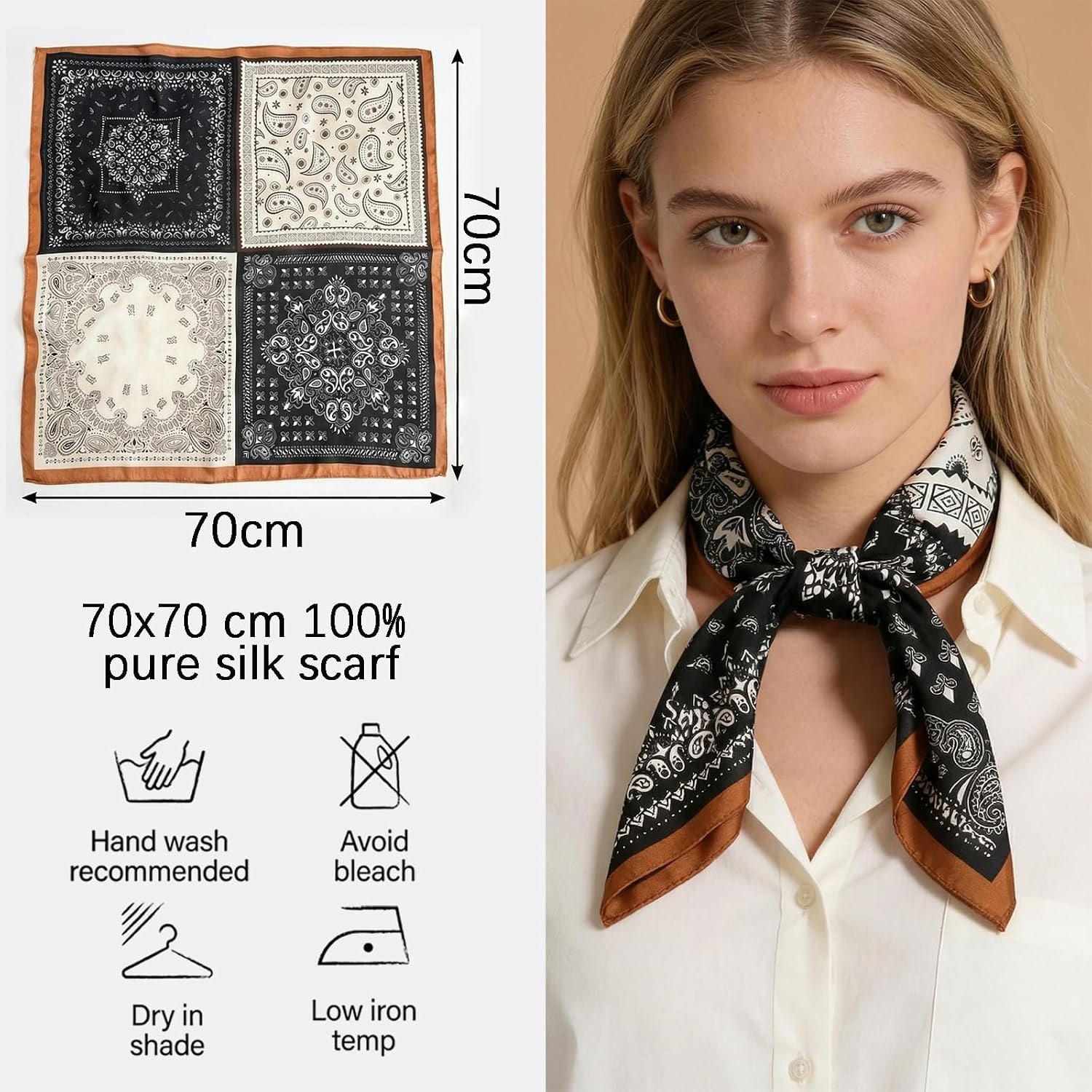
70cm sits in between, and that is why it is the most useful single size to own. Rolled on the bias it makes a thin neck band with tails long enough to knot properly. Folded once into a triangle it covers the hair and ties at the nape. Opened out it is big enough to drape over one shoulder or tie at the waist. If you are only going to buy one square silk scarf, buy this size.
How to wear it
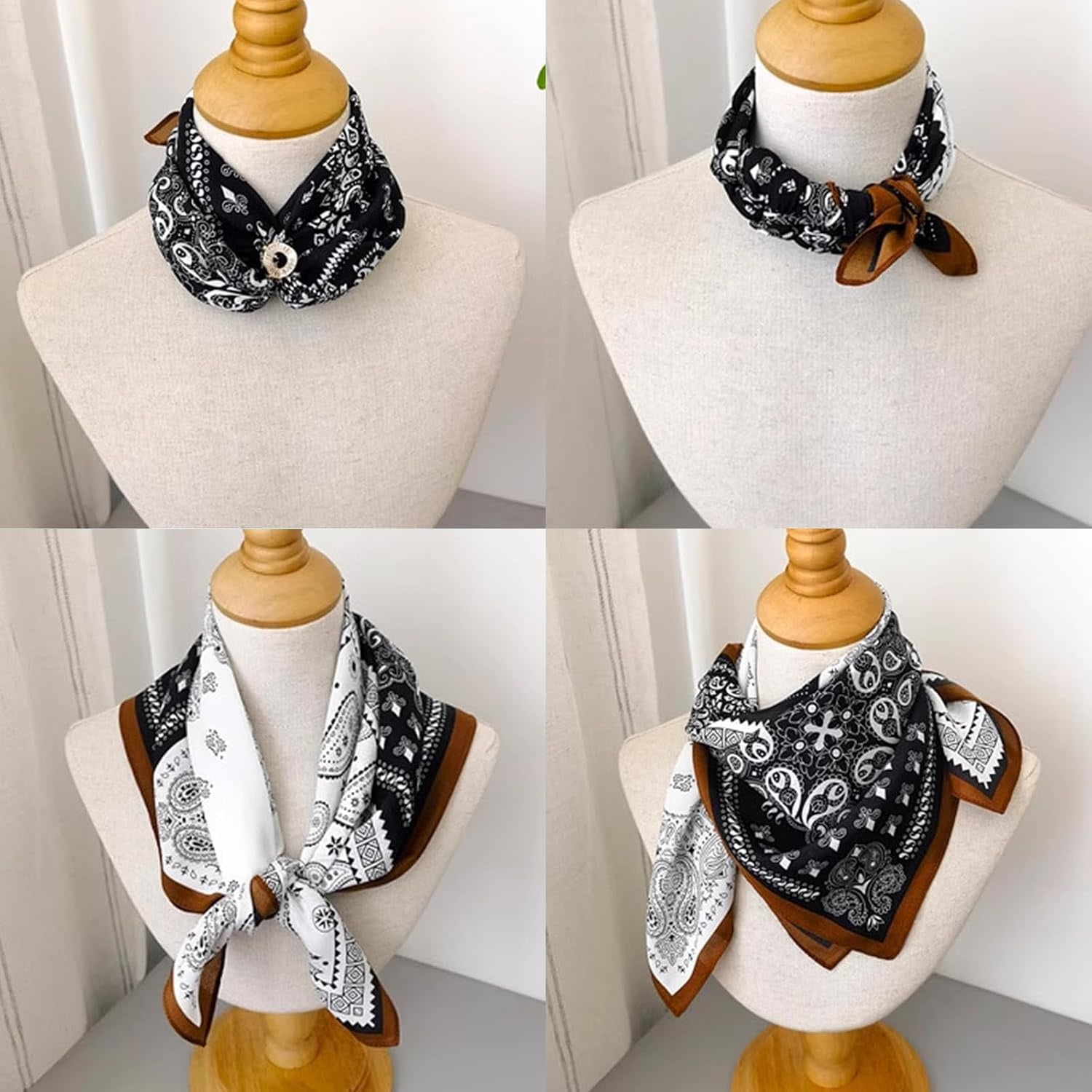
Here are the ties worth learning, in the order most people use them.
The rolled neck knot is the default. Lay the scarf flat, fold corner to corner into a triangle, then roll from the long edge towards the point until you have a band. Wrap it once around the neck and knot it at the side or front. Tuck the tails or leave them out.
The triangle head scarf is the second. Fold corner to corner, lay the long edge across your forehead or just behind your hairline, and tie the two ends at the nape over the hanging point. For a 1960s look, bring the ends under your chin instead and knot them there.
The bag tie is the laziest and arguably the most effective. Roll the scarf thin, loop it twice around the base of a bag handle, and tie a small bow. It takes ten seconds and makes an ordinary bag look considered.
The ponytail wrap is good for hot days. Tie your hair back first, then knot the rolled scarf around the elastic and let the tails fall with the hair.
The belt is the one people forget. Roll it, thread it through the loops of linen or denim trousers, and knot it at the front. It works best when the print picks up a colour already in the outfit.
Who this suits
Anyone who wants to add colour without committing to a bold garment. A printed silk square is a low-risk way to wear a pattern, because you can take it off at any point in the day.
It suits people who travel light, because it folds to nothing and does several jobs. It covers your hair on a windy ferry, keeps the sun off the back of your neck, dresses up a plain dress for dinner, and ties onto your bag when you are not wearing it.
It suits people who work in offices with a quiet dress code, where a rolled scarf under a collar is about as much personality as the room allows.
It also suits gift buyers, because there is no size to get wrong. The only decision is the print, and a scarf is one of the few accessories where the recipient genuinely does not mind if they swap it.
How to choose between scarves
Three things actually matter once you have settled on size.
The print is first. Busy, multi-colour prints carry an outfit on their own and work best over plain clothes. Simpler prints with two or three colours are easier to pair with patterned shirts. Think about what is already in your wardrobe rather than what looks best on its own.
The weight of the silk is second. Lighter silk drapes loosely and knots small, which is good for neck ties and hair. Heavier silk has more body and holds a shape better, which suits draping. Momme weight is the usual measure, and where it is not listed, judge by how the scarf behaves in the images.
The hem is third. A hand-rolled hem gives a soft, slightly raised edge and is the traditional finish on better scarves. A machine hem is flatter and perfectly serviceable. It is a detail most people never notice from across a room.
Looking after it
Silk rewards a bit of attention and punishes neglect faster than cotton does.
Hand wash only, on its own, in cool water below 30 degrees Celsius. Use a mild detergent, swirl rather than scrub, and rinse until the water runs clear. Press the water out between your palms or in a towel. Do not wring it, because twisting stresses the fibres along the fold lines.
Dry it flat or hang it in the shade. Direct sun fades printed silk faster than anything else, and a dryer will ruin it. Iron on low, on the reverse side, or with a thin cloth over the top.
Dry cleaning is also fine and is the easy option if you would rather not risk it. Many people hand wash through the year and have it cleaned properly once.
Two habits prevent most damage. Put perfume and hairspray on before the scarf, not after, because alcohol spots silk. And store it loosely folded or rolled rather than crushed under heavier things.
The short version
A 70cm square mulberry silk scarf is the most useful single accessory you can keep in a bag. It is light, it folds to nothing, and it ties five or six different ways without any skill. The silk is smooth, which means it slides rather than drags and holds a knot once snugged. Care is simple but strict: hand wash cool, no bleach, low iron, out of the sun.
If you have been putting off buying one because you were not sure you would wear it, this is the size that gets worn.