
The complete guide
The Honest Buyer's Guide to Mulberry Silk Pillowcases
The problem with the pillowcase you have now
Think about what actually happens on a cotton pillowcase overnight. You turn over maybe twenty or thirty times. Each turn drags your cheek and your hair across a woven surface made from short, slightly rough fibres. That is friction, and friction is why you wake up with a crease across one side of your face and hair that looks like it lost an argument.
Cotton also holds moisture. It will happily soak up the water from your skin and whatever serum or moisturiser you put on before bed. That is part of why your face can feel tight in the morning and why night creams seem to vanish.
Silk behaves differently because the fibre itself is different. A silk filament is long, round and smooth, closer to a fishing line than a piece of twine. Weave thousands of those together at a high density and you get a surface with very little grab to it. Hair slides over it. Skin slides over it. Nothing catches.
That is the whole pitch. It is not complicated, and it does not need to be dressed up. A good silk pillowcase is a smoother surface to sleep on, and most people notice the difference the first morning.
What the numbers on a silk pillowcase actually mean
Shopping for silk gets confusing fast because sellers throw around three or four different measurements. Here is what each one tells you.
Momme is the important one. It is a weight measurement specific to silk, written as mm but pronounced "mommy". The useful range for bedding sits between 16 and 25. Below 16 the fabric feels thin and the hems wear out quickly. Above 22 you are paying considerably more for a difference that most sleepers cannot feel. This pillowcase is 19 momme, which lands squarely in the sweet spot that most quality silk bedding uses. It has weight and body without going stiff or expensive.
Thread count works the same way it does for cotton, counting threads per square inch. At 600, the weave here is dense and fine. With silk, thread count is less decisive than momme, but a high count does support that smooth, close-knit surface.
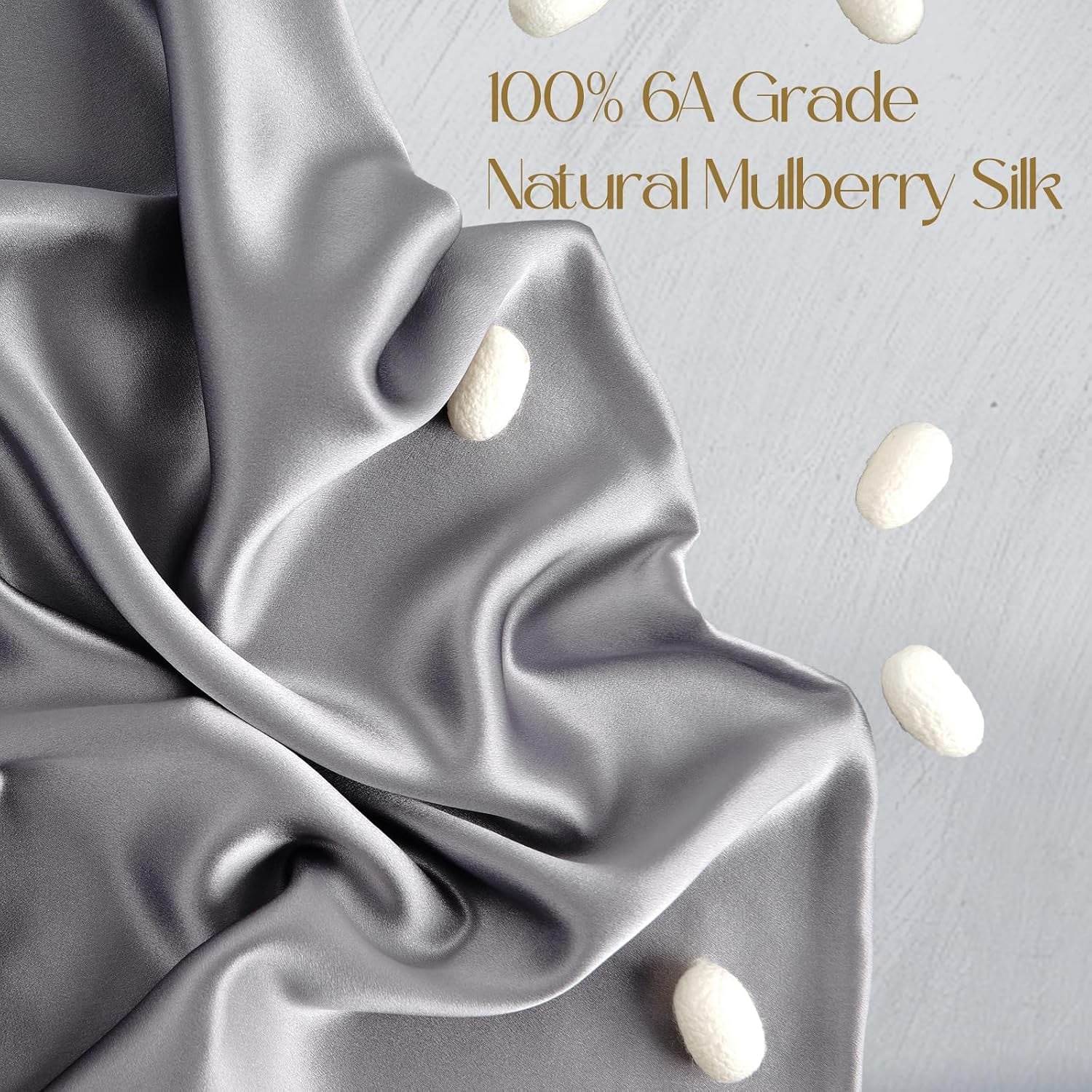
Grade refers to the raw fibre quality, running from 6A at the top down through lower letters. Grade 6A means long, even filaments with fewer breaks, which produces a more consistent fabric with fewer flaws. This case is described as Grade 6A mulberry silk.
Mulberry is the type of silk, named for the leaves the silkworms eat. A restricted diet produces a very uniform fibre, which is why mulberry silk is the benchmark for bedding. If you are comparing the best mulberry silk pillowcase options, these four numbers are what separate them, not the marketing photos.
Double-sided matters more than you think
This is the detail that trips up a lot of first-time buyers. Plenty of pillowcases are sold as silk when only the top face is silk. The underside is cotton, polyester or a blend, which brings the price down considerably.
It sounds like a reasonable compromise until you use one. You flip the pillow over in the night and land on the cheap side. You remake the bed in a hurry and put the wrong face up. A restless sleeper rolls off the silk entirely within an hour of lights out.
This case is mulberry silk on both faces, so there is no wrong side. It also wears more evenly, because the use spreads across both surfaces instead of hammering one. If a listing does not state double-sided clearly, assume it is not.
Zip or flap
The two common closures are an envelope flap, where a tongue of fabric folds over the pillow end, and a zipper.
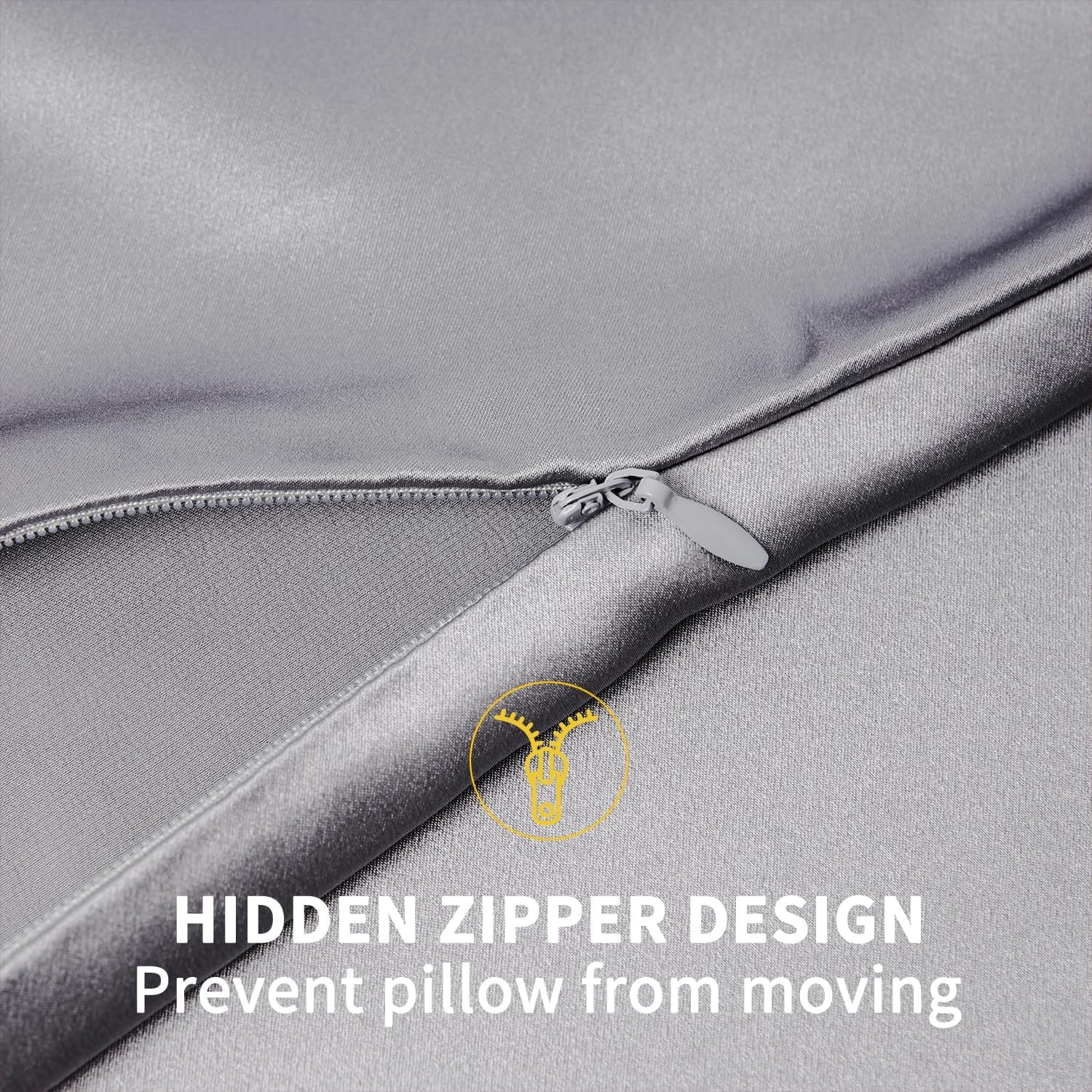
Envelope flaps are cheaper to make and they look clean. The trouble is that they let the pillow creep out, especially with a firm or oversized pillow. You end up reaching behind your head at three in the morning to shove it back in.
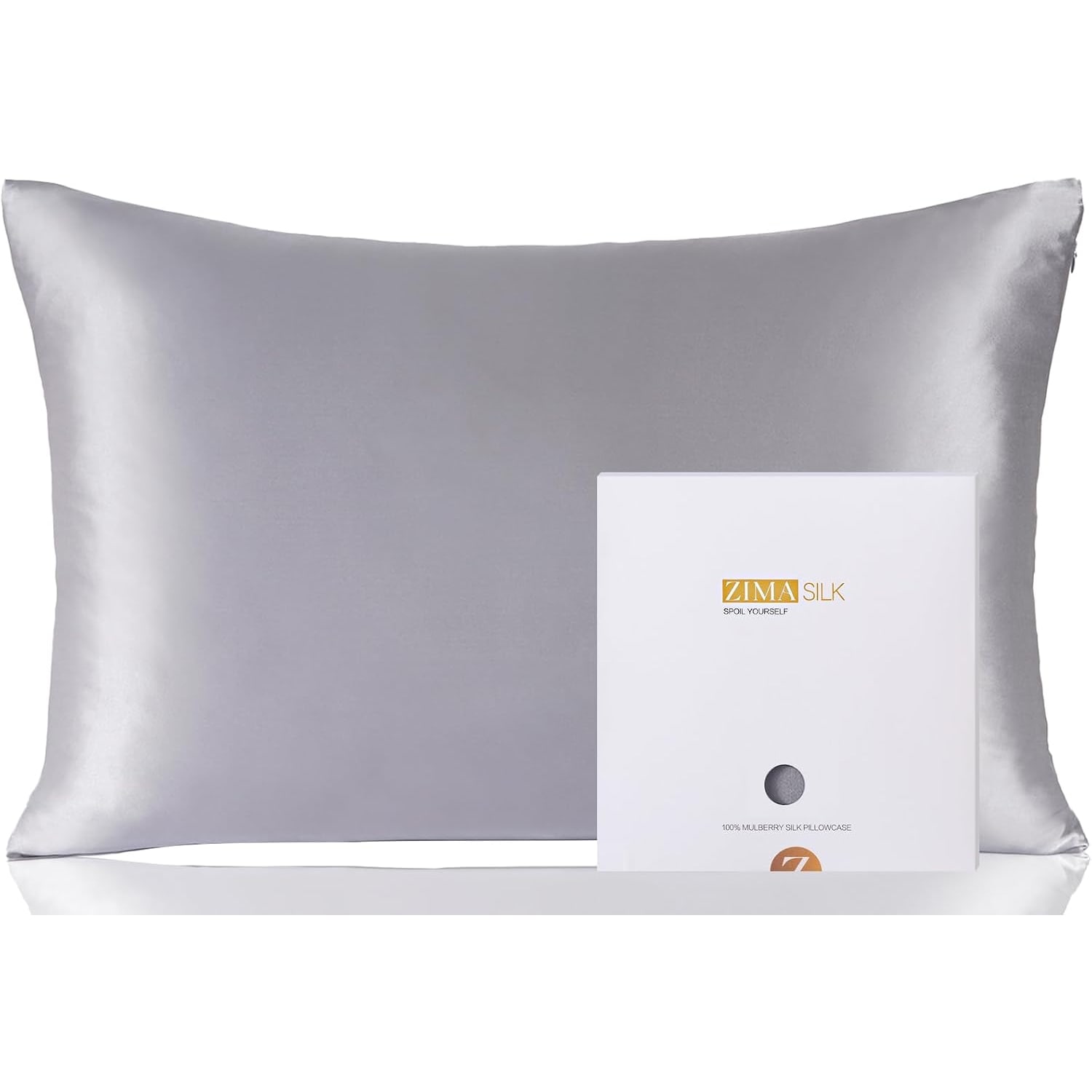
This case uses a hidden zipper. The zip is set into the seam so it does not show, and it holds the pillow where you put it. The corners stay square and the bed looks properly made. Pick the zipped edge to sit at the foot of the bed and you will never feel it.
Who this suits
If you sleep hot, silk is worth a look. It breathes well and has a genuinely cool initial touch, which is a small mercy in February. It settles to your body temperature after a minute rather than holding heat like a synthetic.
If you have long hair, the friction difference is the most obvious thing you will notice. Hair that would normally tangle against cotton slides across silk instead.
If you use skincare at night, a smoother surface means less of it gets rubbed off onto the fabric.
And if you are buying a present, this is a reliable one. Silk bedding is a thing almost everyone enjoys and very few people buy for themselves. Iron grey is a safe colour when you do not know someone's bedroom, which is why it is a common pick as the best silk pillowcase gift.
Choosing your size and colour
This is a Queen, 75cm long by 50cm wide, or 20" by 30" in the imperial listing. A standard Australian pillow is usually around 48cm by 73cm, so it should slide in with a touch of room to spare.
A slightly relaxed fit is what you want with silk. Stretched tight, the fabric loses its drape and the seams take more strain. Before ordering, lay your pillow flat and measure it. Sizing mismatch is by far the most common reason anyone sends a pillowcase back.
Iron grey is one of the more versatile shades on the shelf. It sits comfortably next to crisp white cotton, works with charcoal and navy, and complements the natural linen tones that have taken over bedroom styling. It also hides the normal marks of use better than a pale colour does between washes.
Caring for silk without making it a chore
The care instruction here is hand wash only, and people hear that and picture a long production. It really is not.
Fill a basin with cool water. Add a small amount of detergent made for silk, wool or delicates. Put the case in, swirl it gently for a minute, leave it a few minutes, then rinse under cool running water until the suds are gone. Press the water out between your palms or roll it in a towel. Do not wring it and do not twist it.
Dry it flat on a towel or hang it in the shade with air moving around it. Sunlight and heat are what damage silk, not water. Skip the dryer completely.
If you want it crisp, iron on the lowest silk setting, on the reverse, while it is still a little damp. Most people find they do not bother, because light creases fall out once the case is on the pillow.
A few things to avoid: bleach, fabric softener, hot water and long soaking. Bleach destroys the fibre. Softener leaves a film that kills the sheen. Heat does the rest.
Wash every one or two weeks, which is the same rhythm you would use for cotton. Buying a second case makes it easy, since one is always clean while the other dries.
The short version
A silk pillowcase is a smoother surface to sleep on, and the specifications tell you whether a given one is any good. This one is 19 momme, which is the standard weight for quality silk bedding. It is Grade 6A mulberry silk on both faces, so there is no cheap backing. The weave is 600 thread count, dense and fine. The closure is a hidden zip rather than a flap that lets the pillow escape.
Size is Queen at 75cm by 50cm, the colour is a deep iron grey that works with most bedding, and the whole thing weighs about 0.1kg. Care is hand wash in cool water and dry in the shade, which takes a few minutes and keeps it smooth for years.
Measure your pillow, order one, and sleep on it for a week. That is the only test that really answers the question.