


The complete guide
How to Choose a Silk Pillowcase, Momme, Size and Closure Explained
The problem with the pillowcase you already own
Most of us never really choose a pillowcase. It arrives as part of a sheet set, it gets washed a hundred times, and it stays on the bed until it wears through. That is fine for a while. Then you notice your hair looks slept-on in a way it did not used to, or your cheek wakes up with creases pressed into it, or the cotton feels warm and a bit rough against your face at two in the morning.
A standard cotton weave has texture. Up close it is a grid of raised threads, and every time you move your head overnight your hair and skin drag across that grid. You do not feel it happening, but you see the result in the mirror.
Silk is a different surface entirely. The fibre is long and smooth, the weave is tight, and the face of the fabric offers very little for hair to catch on. That is the whole proposition. It is not magic and it is not medicine, it is just a slicker thing to sleep on.
What momme actually tells you
If you have shopped for silk bedding before you will have run into the word momme, usually written with a number in front of it. It is a weight measurement, and it describes how dense the silk fabric is. A low momme silk is thin and flyaway. A very high momme silk is heavy and stiff, more suited to upholstery than bedding.
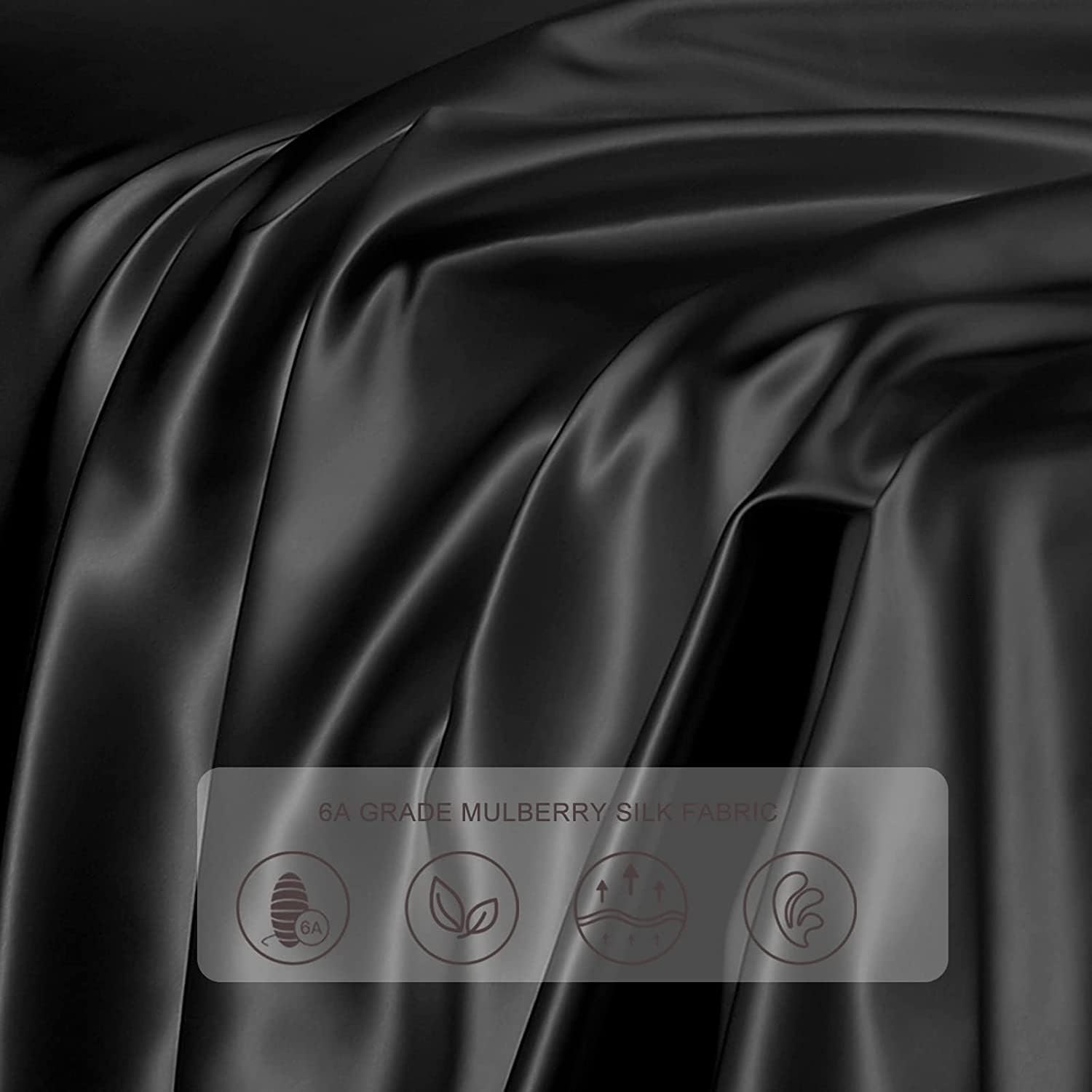
Twenty-two momme is the number that keeps showing up on good pillowcases, and there is a reason for that. It has enough weight to drape properly over a pillow, to hold its shape at the seams, and to survive regular washing. It still feels light and cool when you put your face on it. That balance is why people hunting for the best 22 momme silk pillowcase tend to end up comparing products at exactly this weight.
This pillowcase also lists a 600 thread count for its woven face. Thread count and momme are measuring related but different things, so do not treat a high number in one as a substitute for the other. Momme tells you about weight and density. Thread count tells you about how many threads are packed into the weave. A silk that scores well on both is the one worth buying.
Mulberry silk, and why it keeps getting named
Mulberry silk refers to silk produced by silkworms raised on mulberry leaves. The practical upshot is longer, more uniform fibres, which means a smoother and stronger thread. Shorter-fibre silks exist and they are cheaper, but they pill sooner and they lose their slip faster.
When people search for the best mulberry silk pillowcase they are really searching for consistency. Long fibres make a fabric that behaves the same way on night four hundred as it did on night one. That is the thing worth paying for.
Getting the size right
This is the part buyers most often get wrong, and it is the easiest to fix. The pillowcase here is a standard size, 20 by 26 inches, or 66 by 50.8 centimetres. That matches the standard bed pillow sold through most Australian bedding ranges.
Before you order, pull the case off your current pillow and measure the pillow itself, flat, across its widest points. If it comes in close to 66 by 50 cm, you are in standard territory. If it is noticeably longer, you may own a queen or king pillow, and this case will be too tight.
Why fuss over a few centimetres? Because an oversized case bunches. All that loose fabric gathers under your cheek and folds into ridges, which defeats the point of a smooth surface. An undersized case strains at the seams every time you plump the pillow, and seams are where any pillowcase fails first. The best standard silk pillowcase is simply the one that fits the pillow you actually own.
The case for a zip
Closures get overlooked. Most pillowcases use an envelope flap, a tucked-in tail of fabric that holds the pillow in by friction alone. It works until you move. Over a full night the pillow inches its way toward the opening, and by morning there is a flat, empty corner of case flapping about.
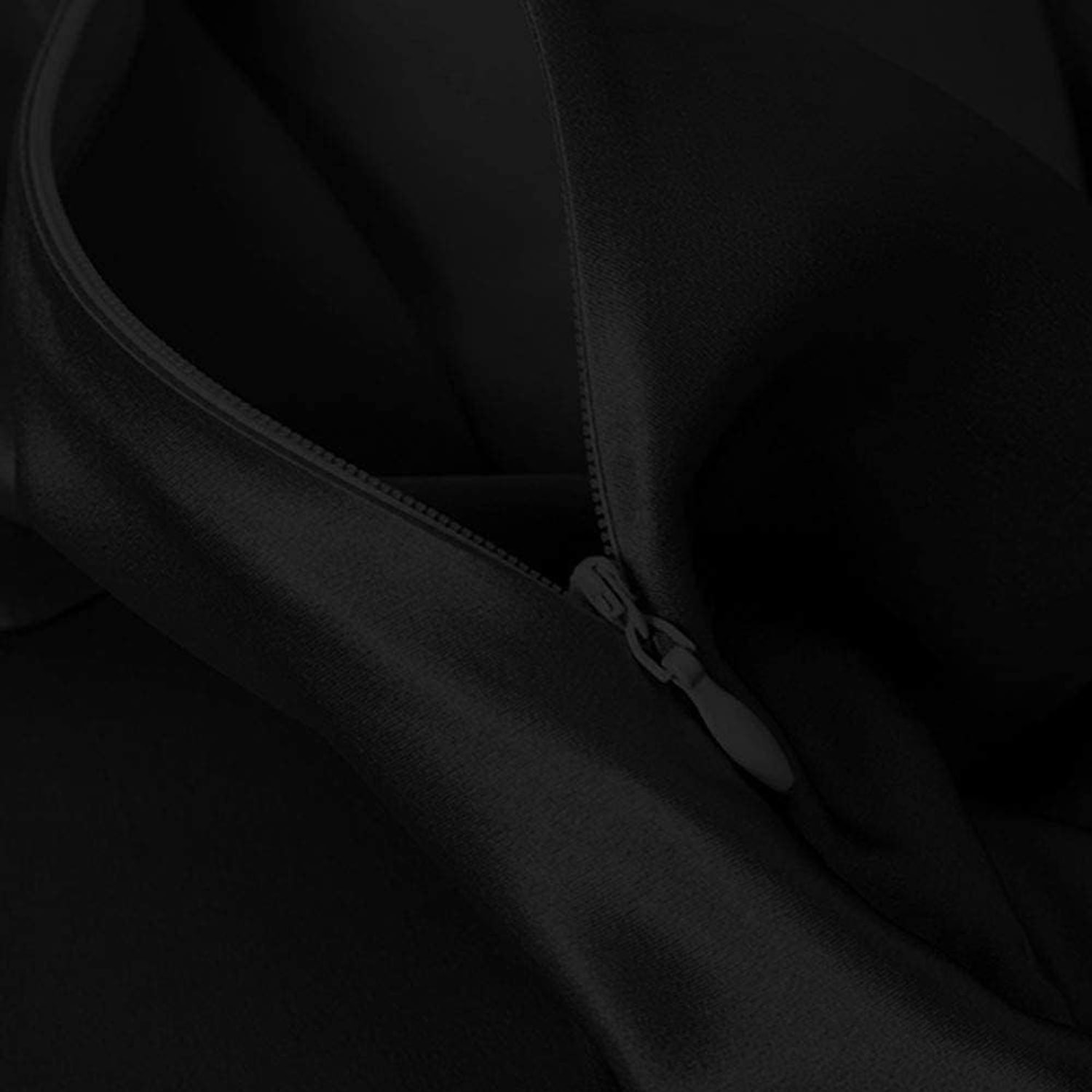
A zip solves that. This one is concealed, sitting behind the fabric along one edge, so from the outside you see an unbroken expanse of black silk. The pillow goes in, the zip closes, and nothing shifts. It also makes laundry day quicker, since you are not shaking and tugging at a pillow to get it free. If you have ever wrestled a pillow out of an envelope case while half asleep, the appeal of the best zippered silk pillowcase is obvious.
One small habit worth forming: close the zip before you wash. An open zip can catch on fabric in the machine, and that is the single most common way a delicate pillowcase picks up a snag.
Why black works
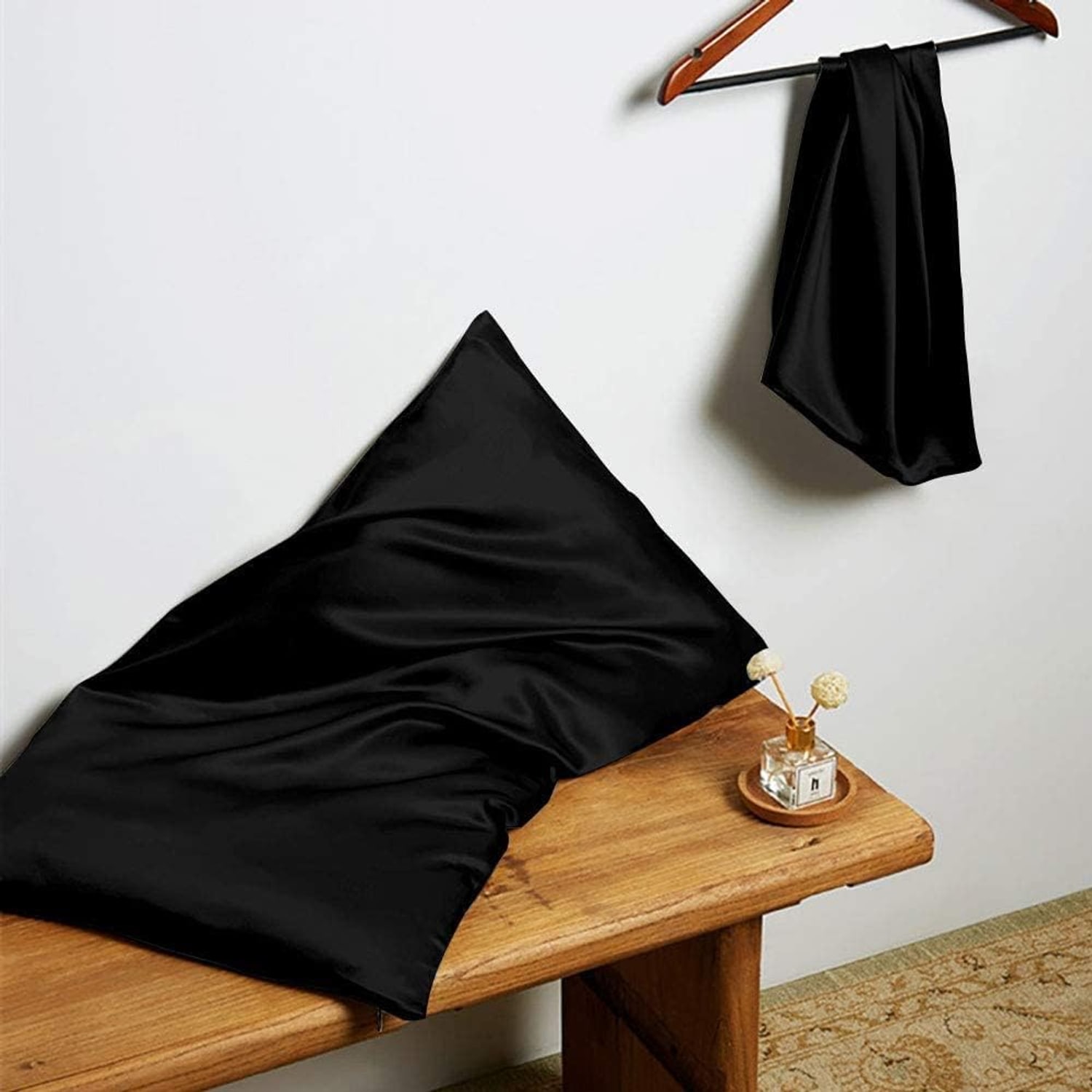
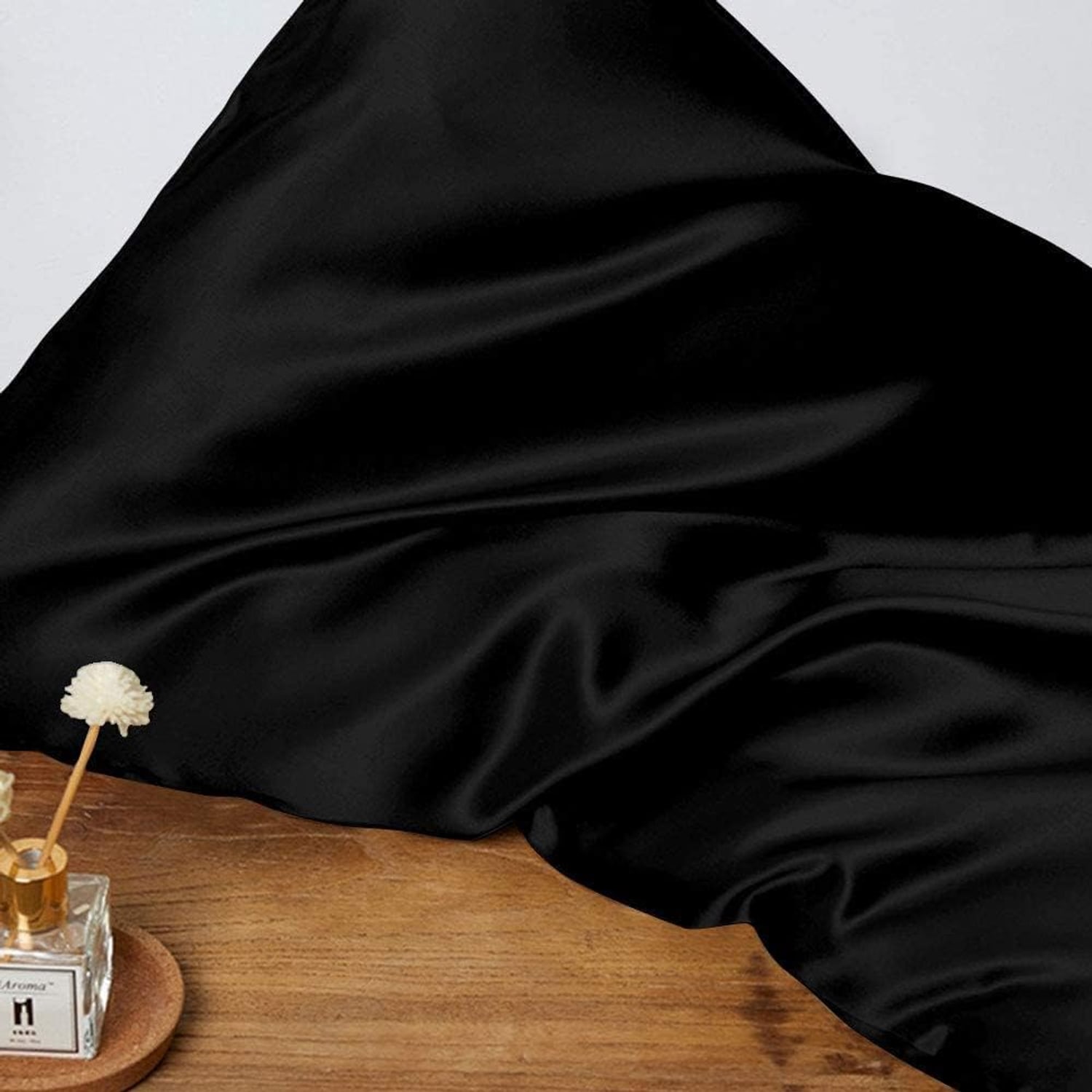
Pale silk is lovely and it shows absolutely everything. Black is the pragmatic alternative. It hides the light marks that any pillowcase picks up, it reads as neutral against almost any doona cover you own, and silk gives a dark colour a depth that matte cotton cannot match. Under lamplight it catches a soft sheen rather than looking like a flat panel of darkness.
The pattern here is solid, with no print. That makes it flexible. It sits quietly in a minimal bedroom and it holds its own against busier bed linen without competing.
Looking after it
Silk needs a gentler routine than cotton, but the routine is short.
Wash it in cool water. Hand washing is the kindest approach, and it takes about five minutes in a basin with a small amount of detergent made for delicates. If you would rather use the machine, that is fine too. Choose a gentle or delicates cycle, keep the water cool, and put the pillowcase inside a mesh laundry bag so it cannot tangle or snag on anything else in the drum.
Leave out the bleach and the fabric softener. Softener coats the fibres with a residue that dulls the natural slip, which is the opposite of what you bought it for. Bleach will damage protein fibres like silk outright.
For drying, lay the pillowcase flat somewhere with air movement and out of direct sun. Do not wring it. Do not put it in the tumble dryer. Sunlight and heat are the two things that age silk fastest, and avoiding both costs you nothing.
If it needs pressing, use the lowest iron setting, work on the reverse side, and do it while the fabric is still a little damp. Most of the time this is not necessary, since silk falls smooth once it is back on a pillow.
Wash every one to two weeks, in step with the rest of your bed linen. If you use hair products or you go to bed with damp hair, lean toward weekly.
Who it suits
Hot sleepers tend to appreciate silk because it does not hold warmth the way heavier fabrics do. People with long hair notice the difference first, since long hair is what drags most across a textured weave. Anyone who has worked out that the best pure silk pillowcase is cheaper than most of the products they were using to fix the problem will understand the logic.
It also makes a straightforward gift. Silk bedding is something plenty of people enjoy and very few buy for themselves, and black removes the guesswork about whether it will suit their bedroom.
The short version
You are buying a black pillowcase in pure mulberry silk, 22 momme, with a 600 thread count face, in a standard 66 by 50.8 cm size, closed with a concealed zip. Measure your pillow before you order. Wash it cool and gently, skip the softener, and dry it flat in the shade. Do that and it will stay smooth for a very long time.