

The complete guide
How To Choose And Wear A Brushed Mulberry Silk Scarf
The problem with most scarves
Most people own one of two kinds of scarf. There is the heavy wool one that is genuinely warm but sits like a collar brace, rides up under your jaw and itches by lunchtime. Then there is the thin fashion scarf that looks fine for a photo but does nothing when the wind picks up and slides off your shoulder every ten minutes.
A brushed silk scarf lands in the gap between those two. It is light enough that you forget you are wearing it, warm enough that you notice when you take it off, and the brushed surface gives it just enough grip to stay where you put it. That is a small detail, but it is the difference between an accessory you wear and one that lives in a drawer.
What brushing actually does to silk
Silk on its own is slick. Think of a classic charmeuse scarf, the glossy kind, and how it tends to slip out of a knot. That shine is lovely for evening wear, but it is not practical for a daily scarf.
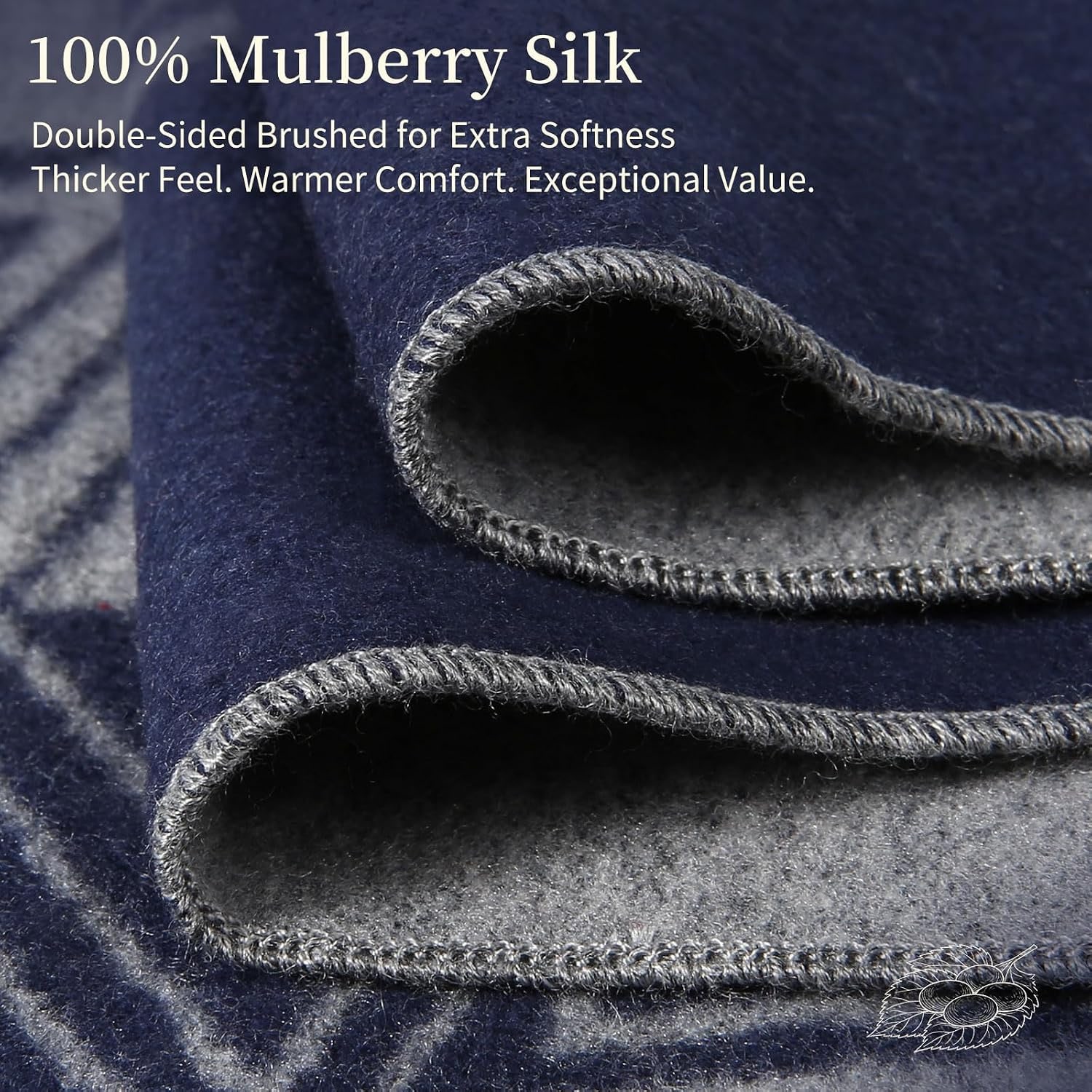
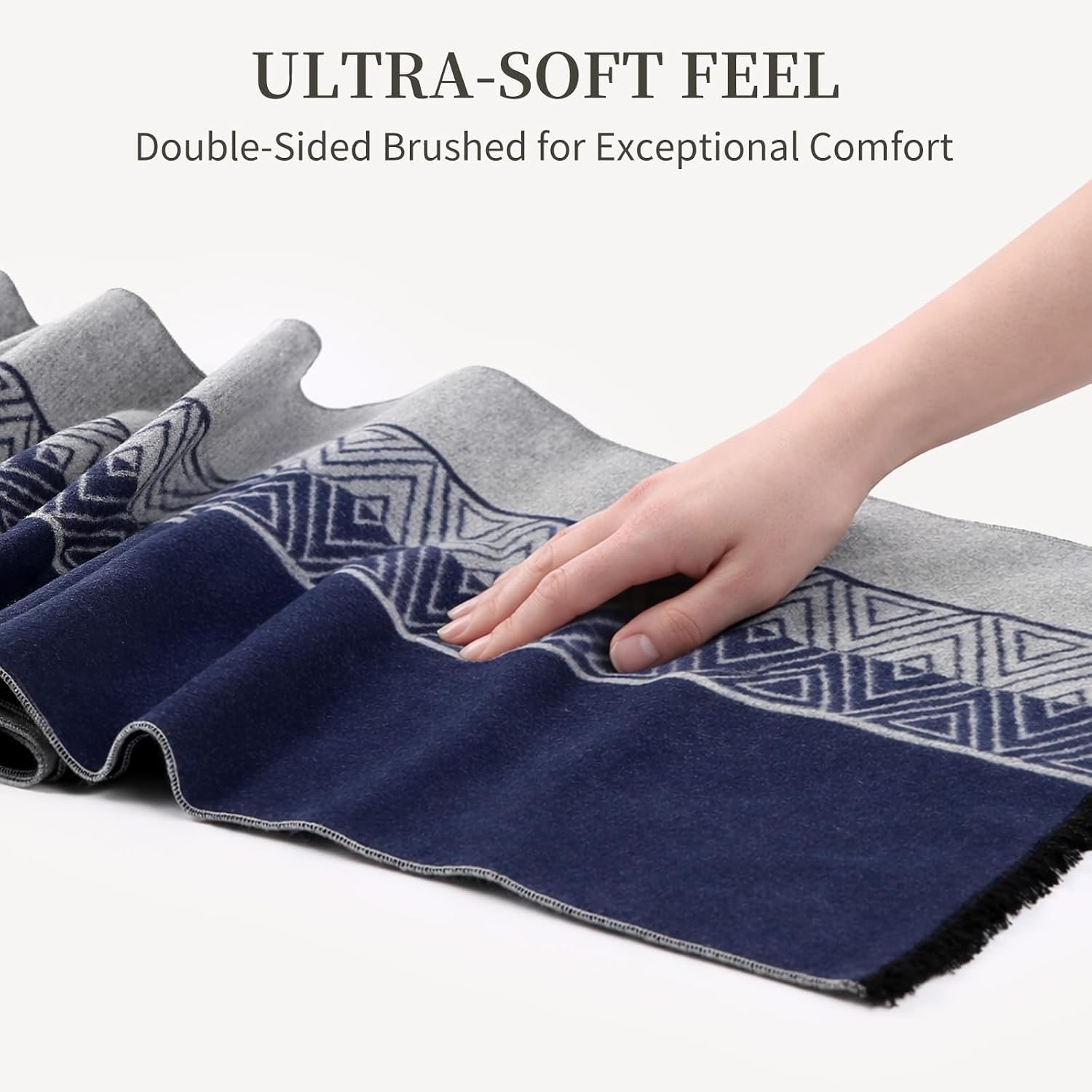
Brushing is a finishing step applied after the fabric is woven. The surface is lightly raised so the fibres open out a fraction. Three things change as a result. The handle becomes softer and more matte. The fabric picks up a slight nap, so it grips itself and holds a knot. And the raised surface traps a little more air, which is where the extra warmth comes from.
You still get the properties that make silk worth buying. The fibre is fine and smooth, so it feels gentle at the throat rather than prickly. It breathes, so it does not turn into a sweatbox when you walk into a heated building. And it folds down to almost nothing.
Who this scarf suits
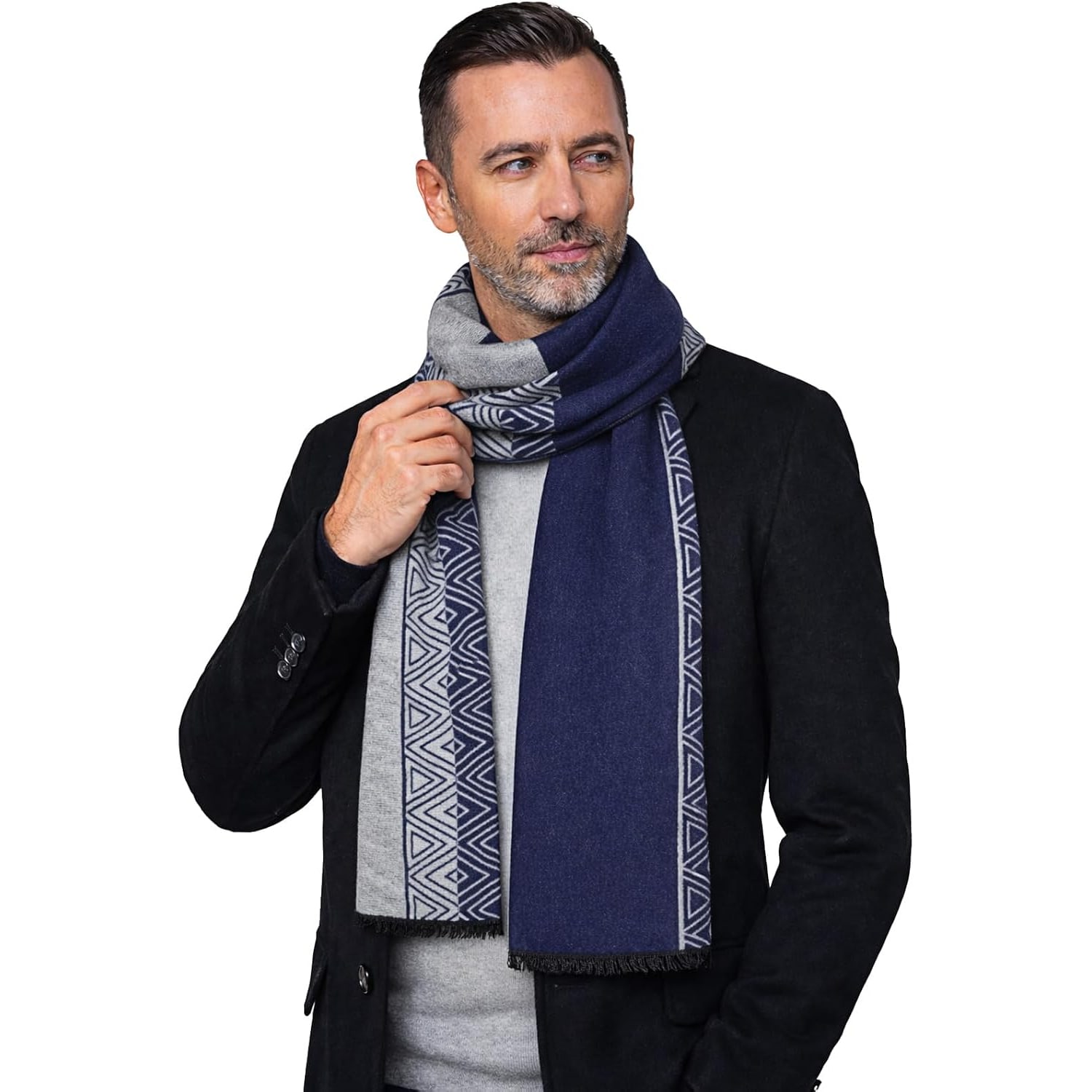
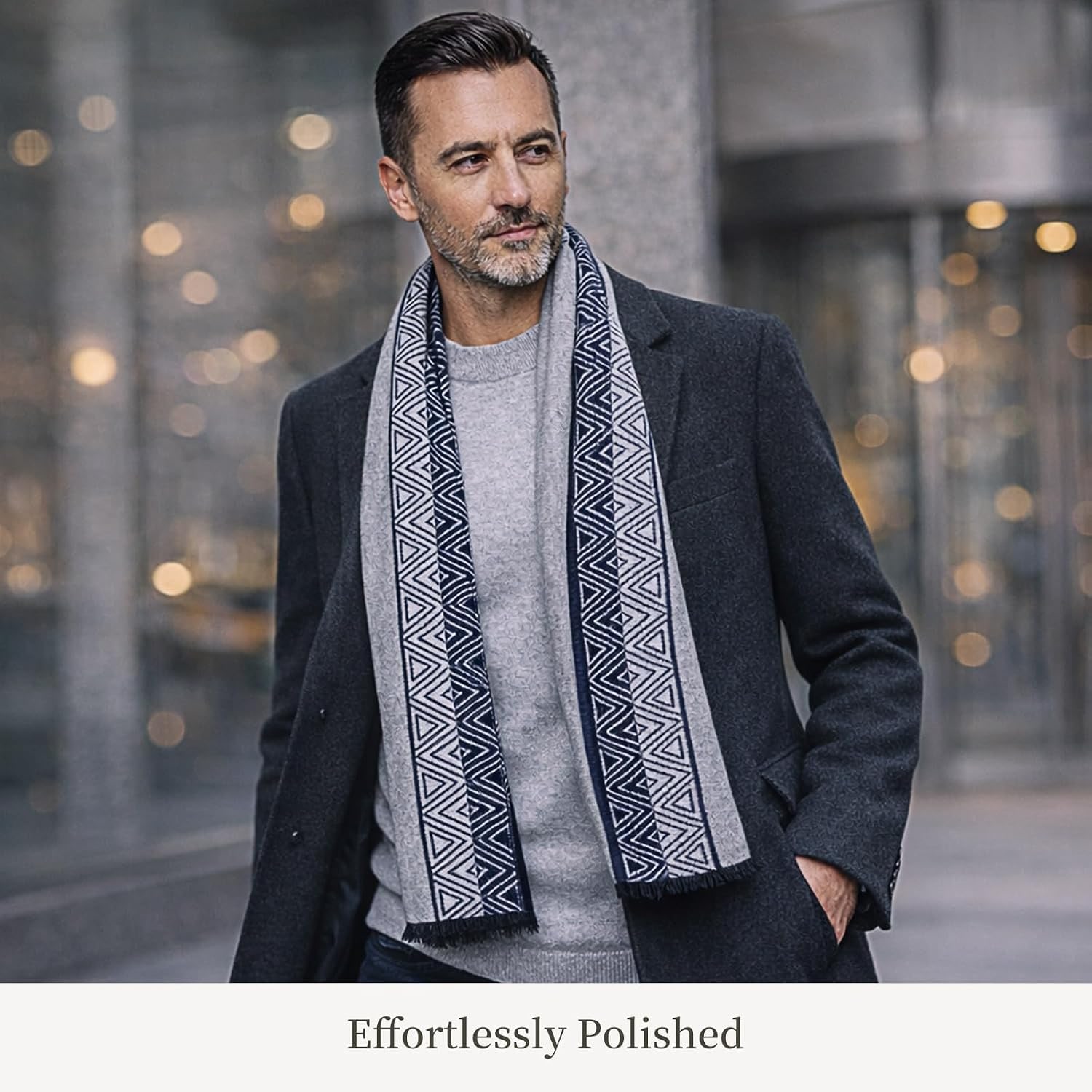
This one is a quiet grey blue, and that matters more than people expect. Colour is the single biggest reason a scarf gets worn or ignored.
Grey blue is a neutral in practice. It sits beside navy without clashing, lifts black and charcoal, works against camel and tan, and looks completely natural with denim. If most of your outer layers are dark, this is an easy win. If you wear a lot of warm browns and rust tones, a cooler blue grey can read slightly off, and you might prefer something in that warmer family instead.
It is also comfortably unisex. A long scarf in a muted tone is one of the few accessories that genuinely crosses over. Men usually wear it looped once under a coat collar. Women tend to go for a looser drape or a slip knot. Both look right.
It suits commuters, people who work in cold offices, anyone who flies regularly and anyone who finds wool uncomfortable against the neck. It is less suited to someone who wants a statement piece in a bold print. This one is deliberately understated.
How to choose between scarf types
If you are weighing this against other options, a few simple questions sort it out.
How cold does it actually get where you live? In a mild climate, a silk scarf is often all you need across autumn, winter and spring. In genuinely cold conditions, silk works best as a first layer under wool, not instead of it.
Do you need it to pack small? Silk wins here, easily. It rolls into a side pocket and comes out without permanent creases. A chunky knit does not.
Do you want shine or softness? A polished charmeuse scarf reads as formal and dressy. A brushed finish reads as relaxed and everyday. For daily wear, brushed is usually the better buy.
Do you knot your scarves or drape them? Knotters benefit most from the brushed surface, because the slight grip stops the knot working loose. If you only ever drape flat, the difference matters less.
Ways to wear it
A long scarf is more flexible than a square, and you do not need complicated styling.
The simplest is the flat drape. Lay it over your shoulders with even ends hanging down the front of a coat. It adds a vertical line, which is flattering on most people, and it shows the colour clearly.
The loop and tuck is the everyday option. Fold the scarf in half lengthways, put it around your neck, then pass the loose ends through the loop and pull it snug. It stays put, it fills the collar gap on a coat, and it takes about three seconds.
For warmth, wrap it twice around the neck and let short ends sit at the front. That doubles the layer where you need it without creating bulk at the back of your neck.
And when the weather turns mild, just let it hang open inside a blazer. It reads as considered rather than cold-weather gear.
Looking after it properly
Silk is not fragile, but it does not forgive rough treatment either. The care instruction here is hand wash or dry clean, and both work fine.
If you hand wash, use cool water and a detergent made for delicates. Wool wash products are usually suitable. Swirl the scarf gently for a minute or two, rinse in cool water, and resist the urge to wring it out. Instead, lay it flat on a clean towel, roll the towel up and press. Then dry it flat or hang it somewhere shaded and airy.
Heat is the main enemy. Hot water, a hot dryer and a hot iron all flatten the brushed surface and can dull the colour. Press on low, on the reverse side, with a cloth between the iron and the silk if you want to be careful.
Sunlight is the second enemy. Dyed silk fades in direct sun, so dry it in the shade and store it in a drawer rather than draped over a chair by a window.
Store it folded loosely or rolled. Hanging it on a hook for months puts all the weight on one point and can stretch the weave there. Keep it away from velcro, rough watch straps and jewellery with open clasps, since those are what cause snags.
A note on expectations
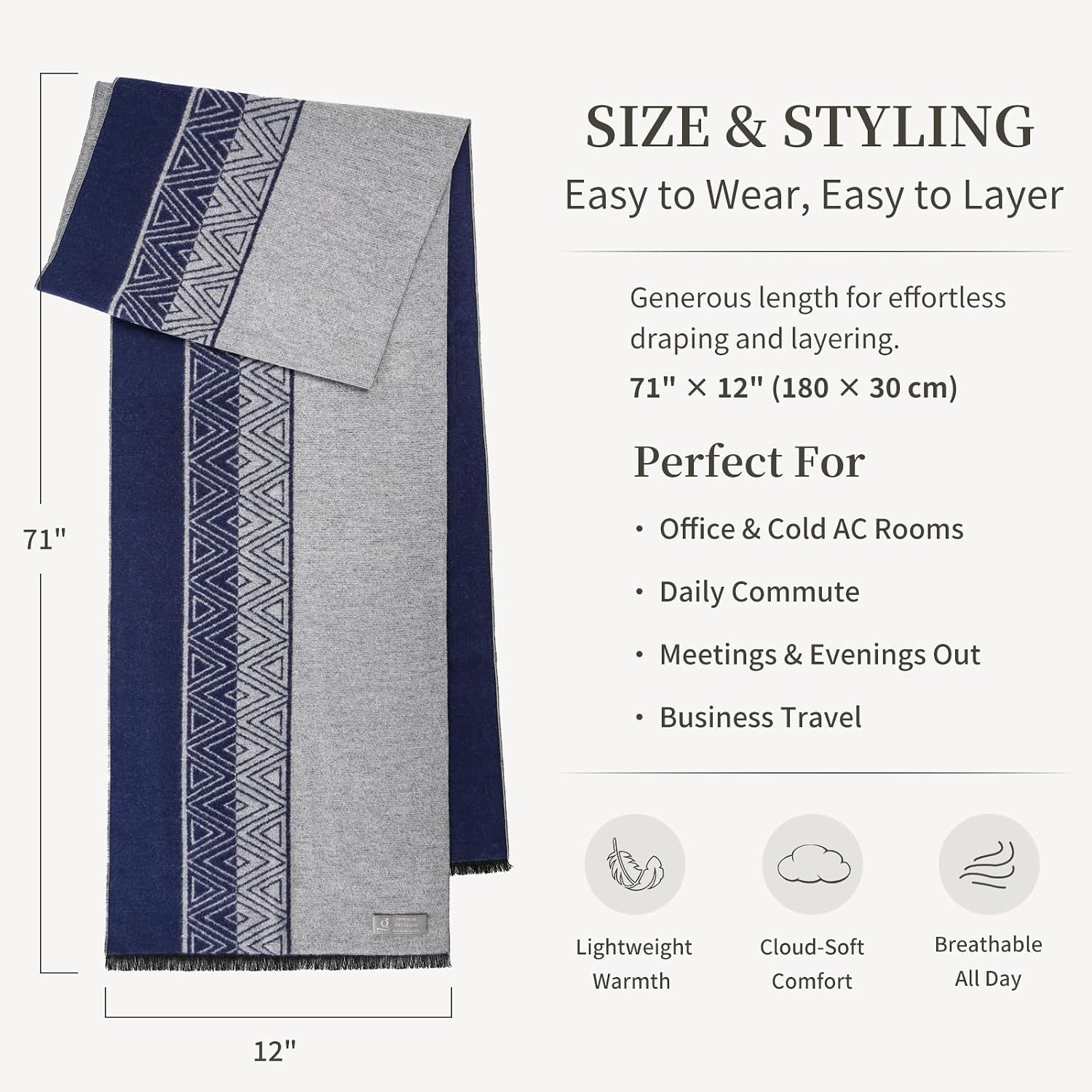
We only publish what we can verify. This scarf is woven from mulberry silk and brushed for softness, and the care instruction is hand wash or dry clean. Exact dimensions, momme weight and composition percentage are not listed in our record for this item, so we have not quoted numbers for them. If one of those details is a deciding factor for you, email us before ordering and we will check the current stock.
Delivery runs from Australian warehouses, generally 3 to 7 working days. Returns are open for 14 days from delivery on anything unused and unwashed.
The short version
A brushed mulberry silk scarf is the quiet workhorse of a cool-weather wardrobe. It gives you a real layer of warmth without the bulk of wool, it feels smooth against the neck instead of scratchy, and the brushed finish means it actually stays where you put it.
The grey blue colourway is the kind of neutral you can wear with almost anything dark or denim, which is why it also makes a sensible gift when you are not sure of someone's taste. Wash it cool, keep it out of the sun, store it folded, and it will still look right in five years.
If you want one scarf that handles a cold commute, a chilly office and a flight without taking up any room in your bag, this is a good one to own.