
The complete guide
Silk Pillowcase Buyer's Guide, Momme, Sizing and Care
The problem with a normal pillowcase
You do not really think about your pillowcase until something about it annoys you. Maybe you wake up with hair that looks slept on in a way that takes twenty minutes to fix. Maybe the fabric feels warm and slightly clammy by two in the morning and you flip the pillow for the cool side. Maybe you just notice that the cotton case you have had for four years feels a bit rough now, with that fuzzy, washed-out texture that sheets get after enough cycles.
Cotton is a good fabric, but it has a texture. Under a microscope the surface looks like a woven mesh of short fibres, and that mesh grips. It grips hair, and it holds onto warmth and moisture. For a lot of people that is fine. For others it is the reason they start looking at silk.
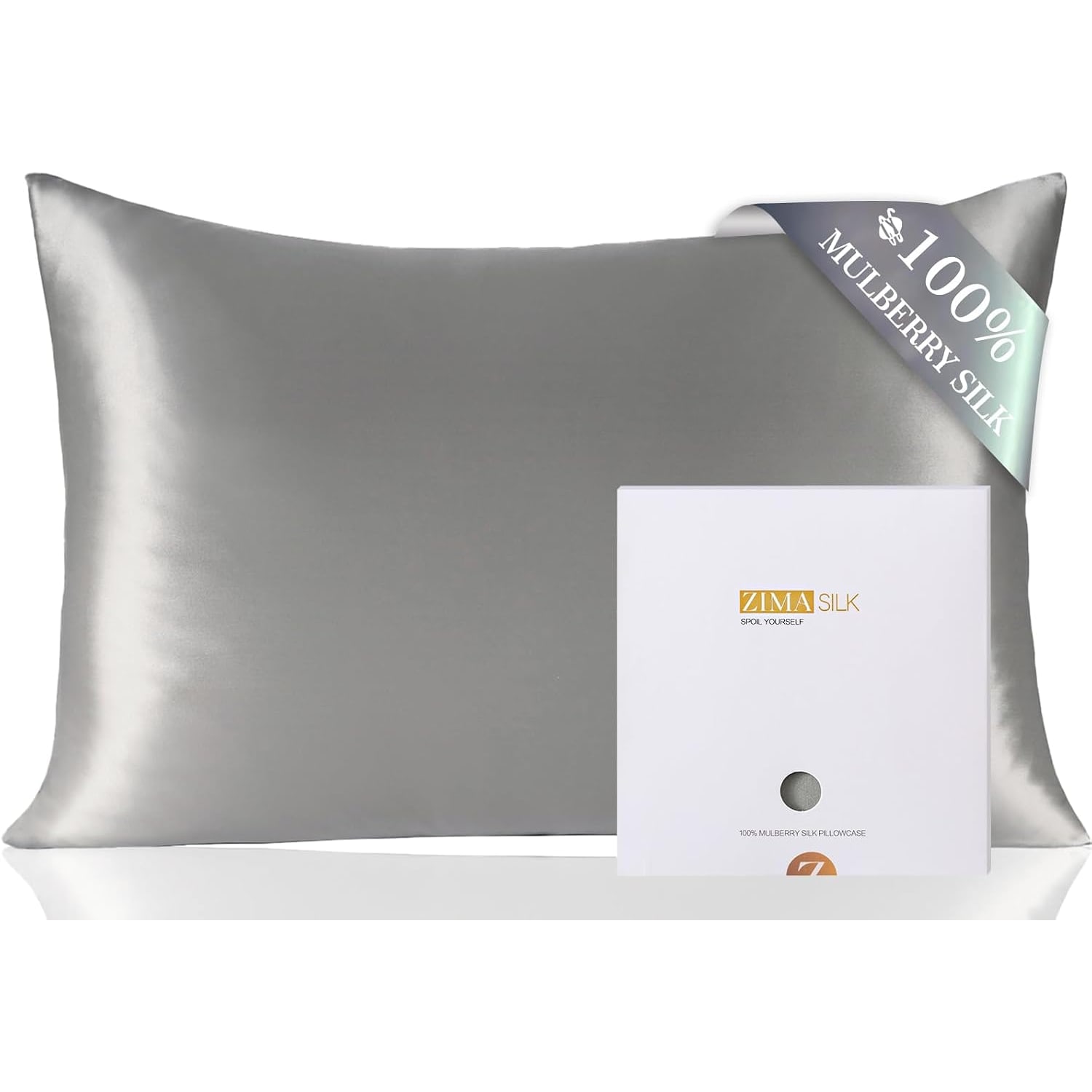
A grey mulberry silk pillowcase queen size solves a very specific set of small irritations. The surface is smoother, so there is less friction every time you turn your head. The fabric feels cool when you lie down on it. And it looks good, which is not nothing when you make the bed every morning.
What momme actually tells you
If you compare silk pillowcases, the first number to look at is momme. It is pronounced "mummy" and it measures the weight of the fabric. The higher the number, the heavier and denser the silk.
Most silk bedding sits between 16 and 25 momme. Below 16 the fabric starts to feel thin and papery, and seams tend to be the first thing to give out. Above 22 the silk gets noticeably heavier and the price climbs with it, which some people love and others find excessive for a pillowcase.
This one is 19 momme. That is right in the middle of the useful range, which is why so many silk bedding makers land there. You get fabric with enough weight to sit properly over the pillow instead of clinging, and enough fluidity that it still falls softly under your head. If you are shopping for the best 19 momme silk pillowcase, the things to compare after momme are whether both faces are silk and what kind of closure it has.
Grade 6A and why both sides matter
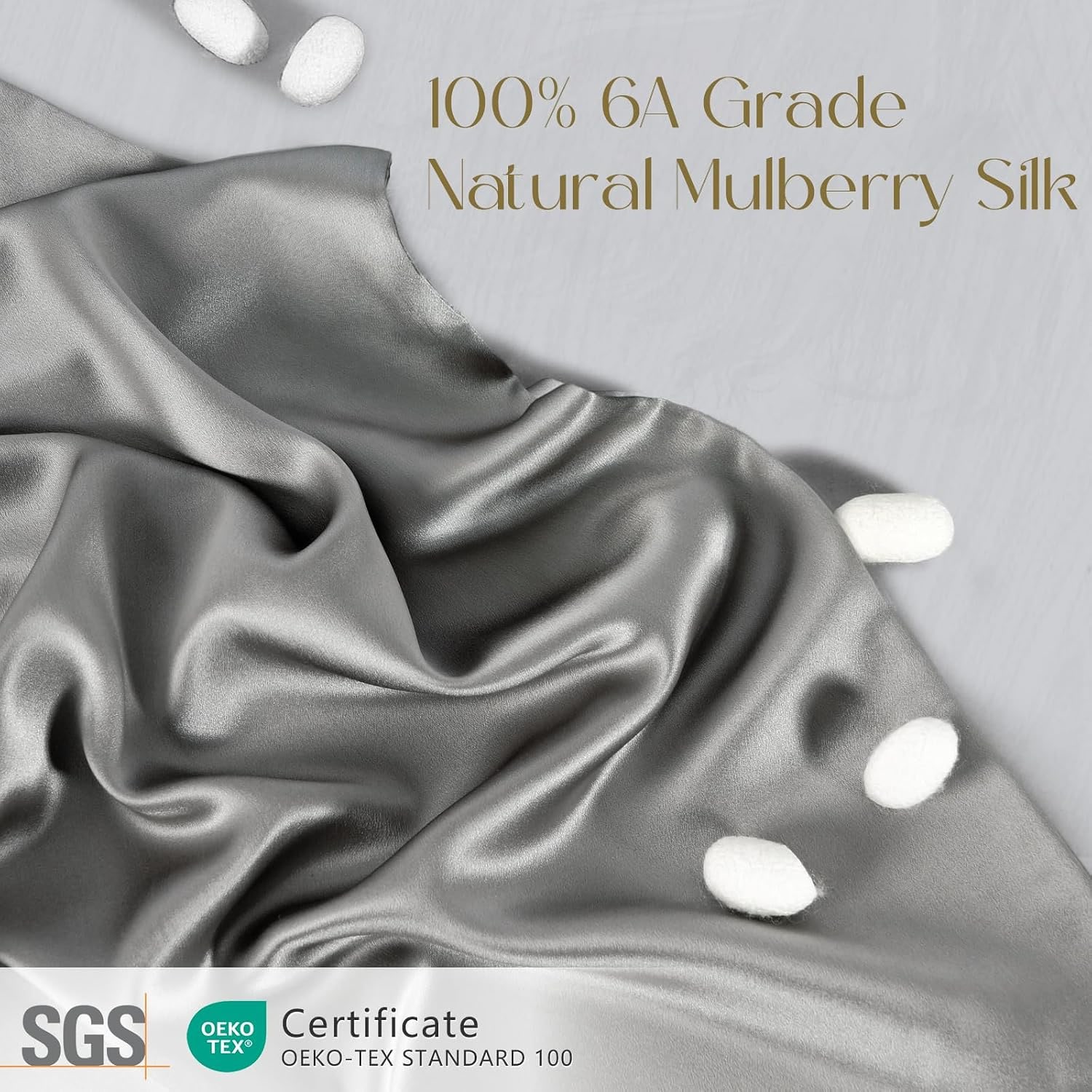
Silk grading describes the raw filament before it is woven. Grade 6A is the top tier, meaning long, even, consistent threads. Shorter or more uneven filaments make fabric that looks slightly duller and pills more readily. This case is woven from Grade 6A mulberry silk.
The other detail worth checking on any listing is whether the silk is double-sided. There are plenty of pillowcases sold as silk where only the panel facing up is silk, and the underside is a polyester or cotton blend to cut the cost. You notice it the moment you flip the pillow in the night and land on a completely different texture. This one is silk on both faces, so it behaves the same whichever way round you have it.
The weave is 600 thread count. Thread count is a more familiar number from cotton bedding, and with silk it is less important than momme, but it does tell you the weave is tight and even rather than loose. A close weave gives you that flat, uninterrupted surface that makes silk feel the way it does.
Who it suits
Warm sleepers get the most immediate benefit. Silk feels cool against skin on contact and the supplier describes it as breathable and temperature-controlling. If you are someone who spends half the night hunting for the cool side of the pillow, that is worth trying.
People with long hair are the other big group. Hair slides across silk instead of catching on it, so there is less pulling as you move. Anyone who has woken up with a nest at the back of their head knows the problem.
It also suits anyone buying a gift and not knowing what to get. A plain grey case is genuinely hard to get wrong. It does not need to match an existing set, it does not depend on sizing a person's body, and silk bedding is the kind of thing most people enjoy but do not buy for themselves. If you are hunting for the best silk pillowcase gift, a single queen case in a neutral shade is an easy call.
Who it does not suit is anyone who refuses to hand wash. This is a hand wash only item. If everything you own goes in the machine on a hot cycle, silk will not last for you.
Getting the size right
Queen pillowcases are 75 cm long by 50 cm wide in Australia, which is what this one measures. The supplier also lists it as 20 by 30 inches, which is the same dimension expressed the other way.
Before you order, take your pillow off the bed and measure it flat. Do not measure it while it is stuffed into an old case, because a tight case compresses the pillow and gives you a smaller reading. If your pillow is closer to 90 cm long, you have a king and this case will not fit. European square pillows and body pillows are also different again.
A slightly plump pillow will still go in. The silk has enough give at 19 momme to stretch a little over a fuller pillow, and the zip edge takes the strain. A pillow that is genuinely oversized will stretch the seams and shorten the life of the case, so it is worth the thirty seconds with a tape measure.
The hidden zipper
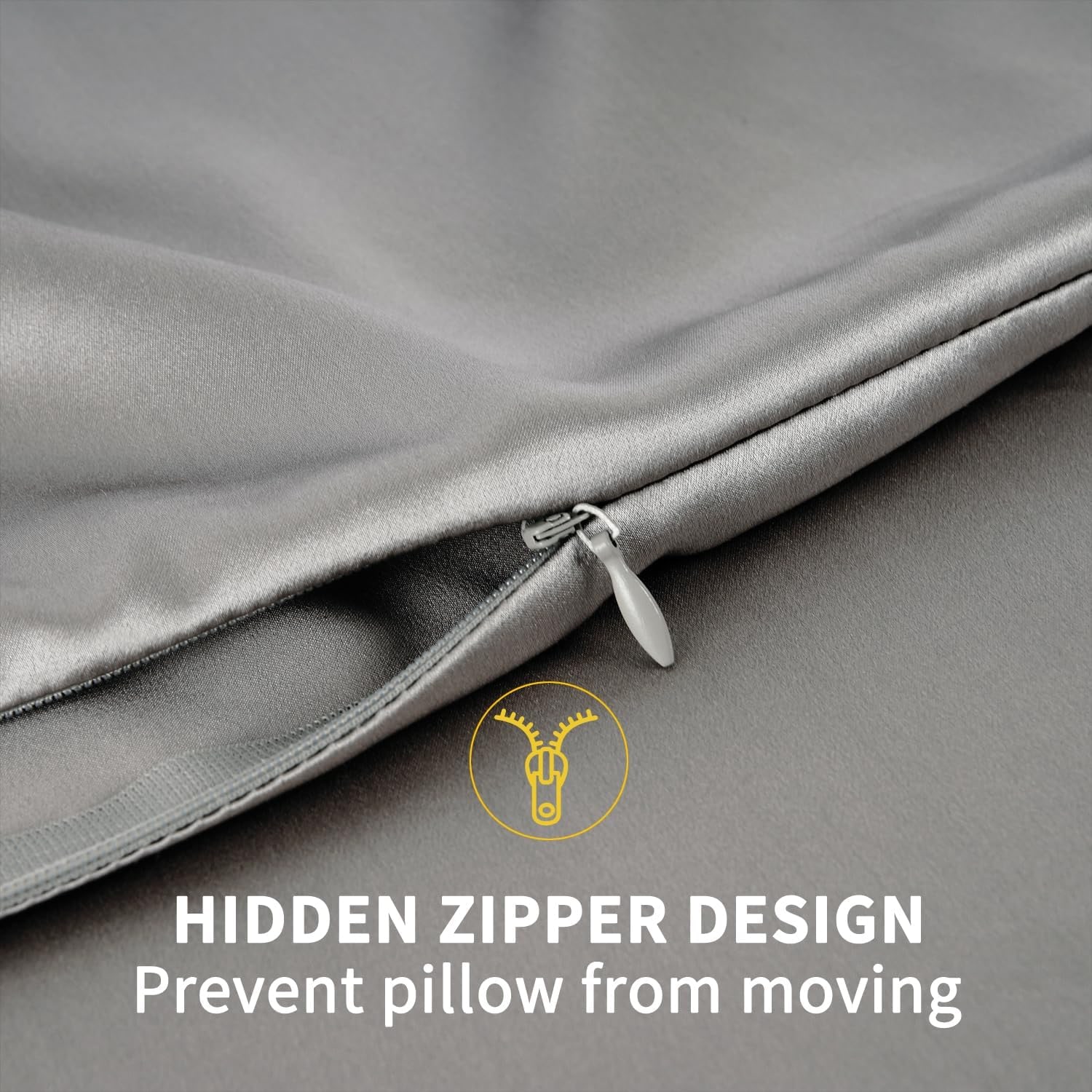
Closure style sounds like a minor detail and then you live with it. Envelope closures, where one flap of fabric tucks over the pillow end, work fine on cotton because cotton grips itself. On silk, which is slippery by nature, an envelope flap can work loose overnight and leave half your pillow hanging out.
A zip solves it. This case has a hidden zipper, meaning the zip sits behind a fabric flap rather than exposed along the edge. You do not feel the teeth against your face and hair does not catch in it. It also makes the case easier to get on and off at wash time, because you can open the whole edge instead of wrestling a pillow through a flap. If you are comparing the best silk pillowcase with hidden zipper options, check that the flap actually covers the zip rather than sitting beside it.
Looking after it
Silk is not fragile exactly, but it is specific. Three things damage it: heat, harsh detergent and rough handling.
Hand wash in cool water. Use a detergent made for delicates or wool, and only a small amount. Swirl the case gently rather than scrubbing or wringing it. Rinse in cool water until the water runs clear.
To dry, lay the case flat on a clean towel, roll the towel up and press to absorb most of the water. Then dry it flat or hang it in a shaded, airy spot. Never put silk in a tumble dryer and never leave it drying in direct sun, because sun fades dye and weakens the fibre over time.
If you want it crisp, iron on the coolest setting, on the reverse side, while the fabric is still slightly damp. Honestly though, most people skip this. Silk hangs smooth on its own once it is on the pillow.
Wash it roughly once a week, same as you would any pillowcase. Having a second case means one is always ready while the other dries, which is one reason people who like the best pure silk pillowcase they own end up buying a pair.
Colour and how it fits a room
Grey is the quiet choice and that is the point. It works against white sheets, charcoal linen, oatmeal, navy and most timber furniture. It does not clash, it does not date quickly, and it does not draw the eye in a photo of your bedroom.
A solid grey also hides the faint creasing silk gets where your head rests, better than a bright white does. The style is listed as classic with no pattern, so there is nothing to match up or line up when you put it on the bed.
The short version
This is a 19 momme Grade 6A mulberry silk pillowcase in queen size, 75 by 50 cm, grey, with a 600 thread count weave and a hidden zipper. Both faces are silk. One case comes per pack.
It suits warm sleepers, people with long hair, and anyone who wants their bed to feel a bit better without redoing the whole room. It asks for hand washing in return, which takes a few minutes a week.
Check your pillow measures 75 by 50 cm before you order. Delivery runs 3 to 7 working days from Australian warehouses, and returns are open for 14 days from delivery as long as the case is unused and unwashed.