
The complete guide
How to Choose a Silk Sleep Mask That Actually Blocks the Light
The problem is almost always light
Most people who sleep badly start by blaming the mattress. Sometimes that is right. More often the room is just not dark enough, and the fix is far cheaper than new bedding.
Light leaks from everywhere. A gap at the edge of a curtain. The standby glow on a television. A partner who reads later than you do. Summer sunrises that start before five. Hotel rooms where the blackout blind is a polite fiction. Each one on its own seems trivial, and together they chip away at the stretch of unbroken sleep you were hoping for.
A sleep mask fixes that directly. Not by helping you relax or by blocking sound, just by putting your eyes in the dark and keeping them there. It is a narrow job, and a good mask does it well enough that you stop thinking about it.
Why silk, and why momme matters
Sleep masks come in cotton, polyester, foam, satin and silk. The cheap ones work, in the sense that they are opaque. The difference shows up over hours of wear.
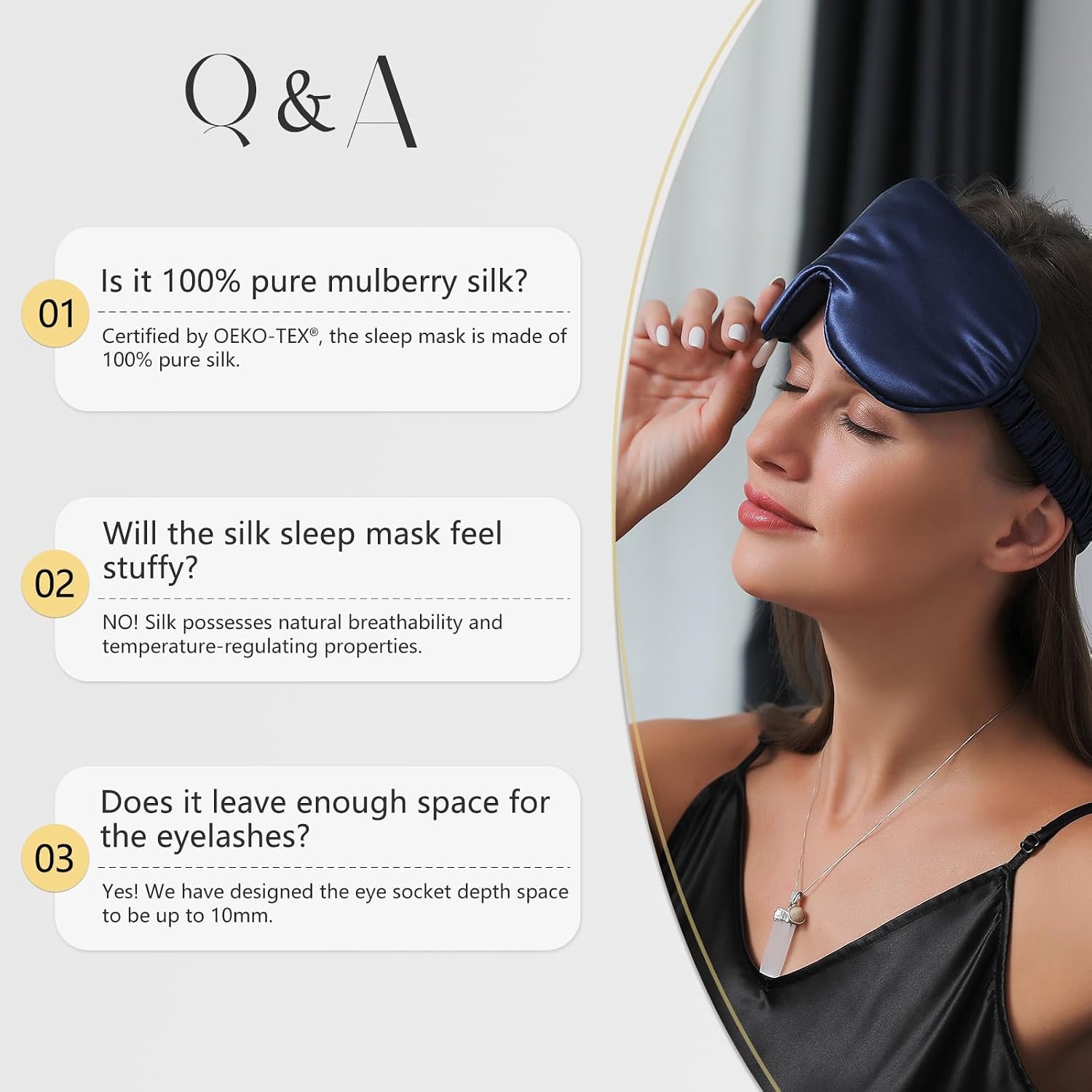
Silk is a smooth, fine natural fibre. Skin and lashes slide across it rather than catching, which is the main practical difference from cotton. It is also breathable and light, so a silk mask sits on your face without the warm, slightly damp feeling that synthetic masks tend to build up by the middle of the night.
Momme is how silk weight is measured. It is an old unit, but it is still the clearest way to compare two silk products. Lightweight silk for scarves might sit around 12 to 16 momme. At 22 momme, this mask uses a fabric that is noticeably denser. Dense silk drapes properly over the curves of your face instead of floating, it blocks light more effectively at the edges, and it holds up to repeated washing better than thin silk does.
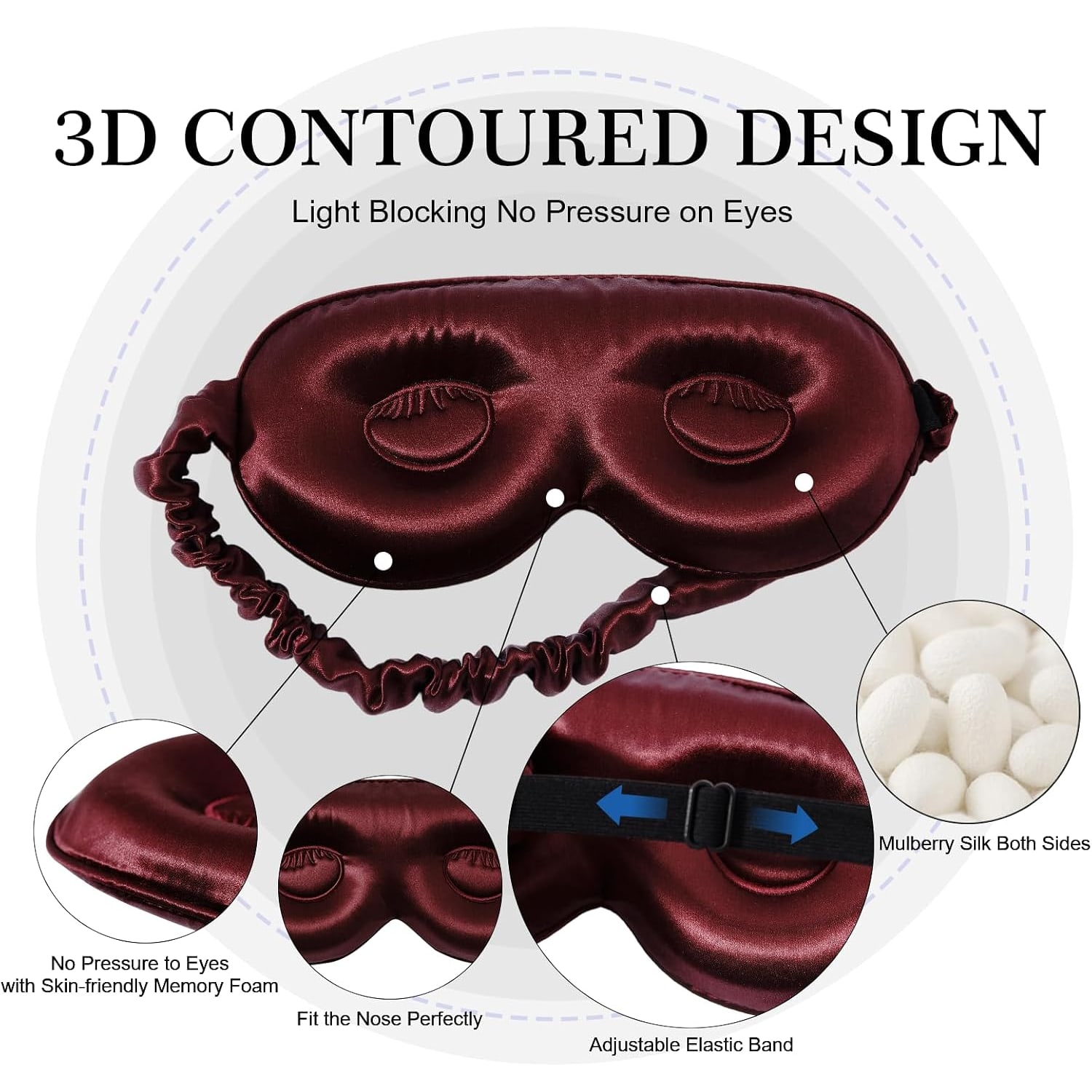
This mask also uses silk on both sides. That sounds like a small detail until you handle a mask with a polyester backing. The side you feel all night is the side that counts, and a lot of masks save money exactly there. Here the listing specifies 100% 6A grade mulberry silk front and back, with 6A being the top of the usual commercial grading scale for filament quality.
Flat masks versus contoured masks
This is the choice that makes the biggest difference to how a mask feels, and it has nothing to do with fabric.
A flat mask is a panel of material held across the face by elastic. It is thin, it packs small, and it rests directly on your eyelids. Some people never notice. Others find the pressure on closed eyes uncomfortable, and anyone with lash extensions finds the fabric dragging across their lashes every time they roll over.
A contoured mask is moulded into two cups that sit over the eye sockets. The edges press against the brow, the nose bridge and the cheekbones, which creates the seal, while the centre stays clear of your eyes. You can open your eyes inside it and blink normally. That sounds like a strange feature until you try it, and then it becomes hard to go back. If you have ever felt mildly trapped by a flat mask, the contoured style is the answer.
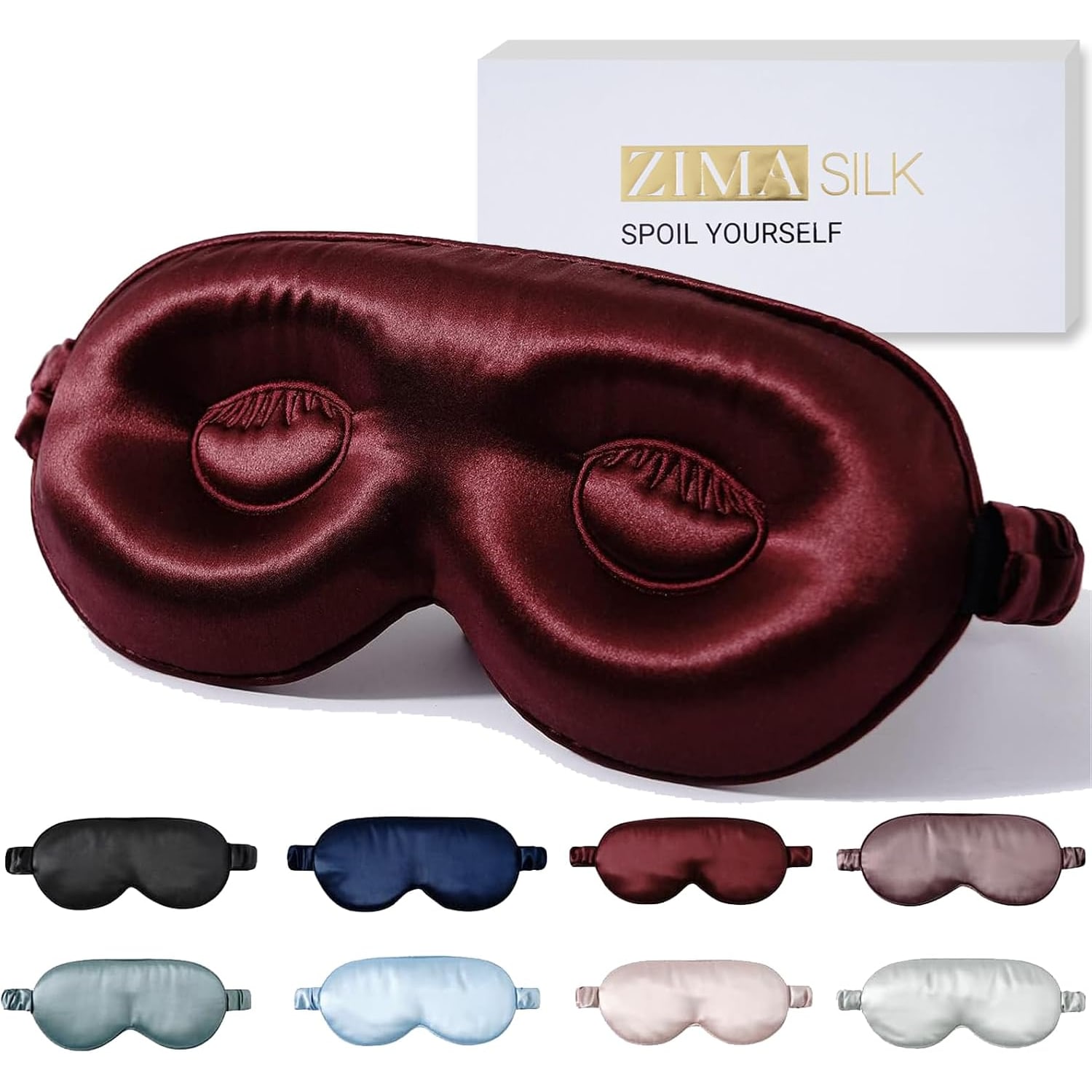
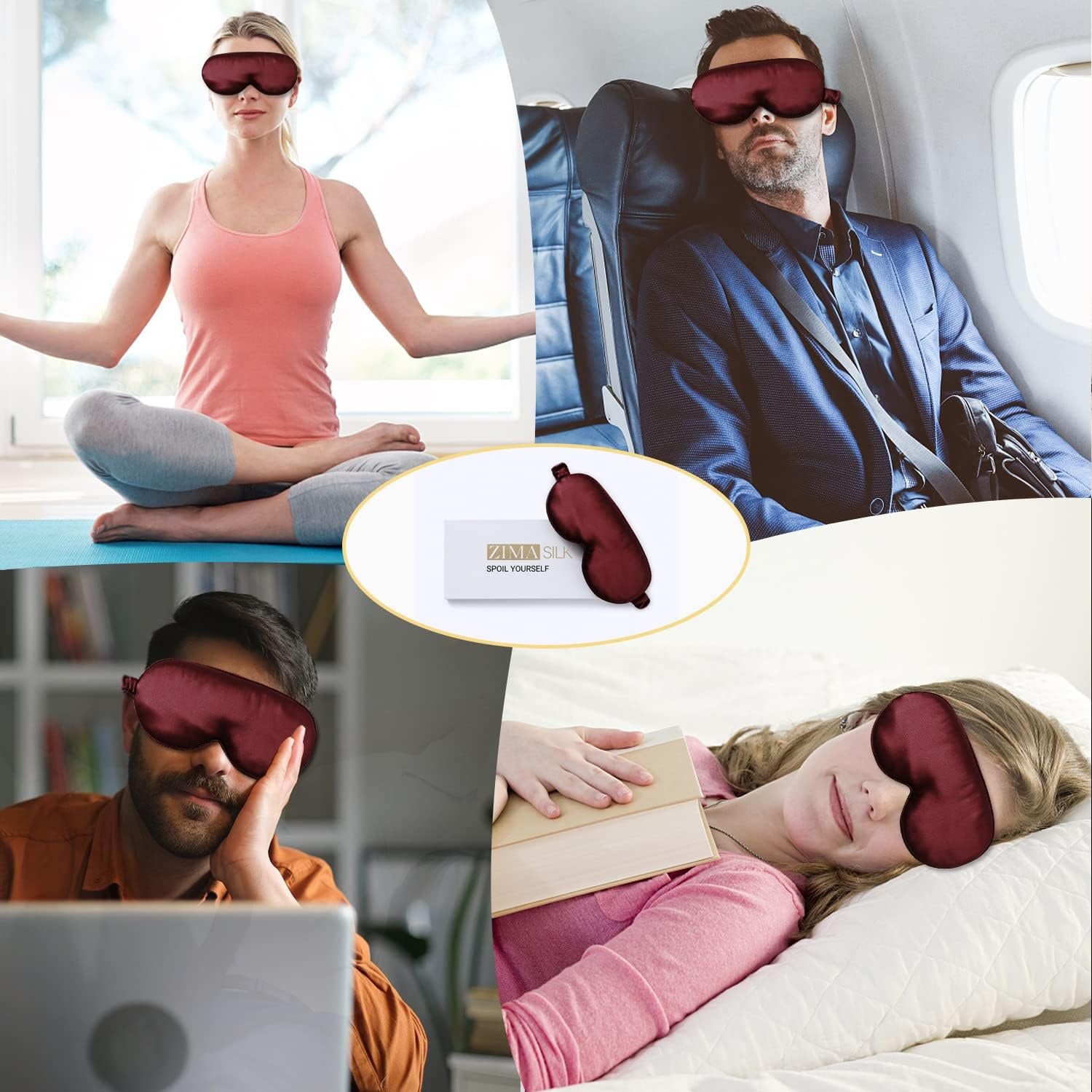
This burgundy mask is a deep 3D contoured design. The listing describes complete blackout, which is the practical payoff of that shape, since the darkness comes from the edges sealing rather than from the fabric being thick enough to smother your eyelids.
Getting the fit right
A mask that fits badly will not stay dark. Light sneaks in at the nose first, then at the outer corners.
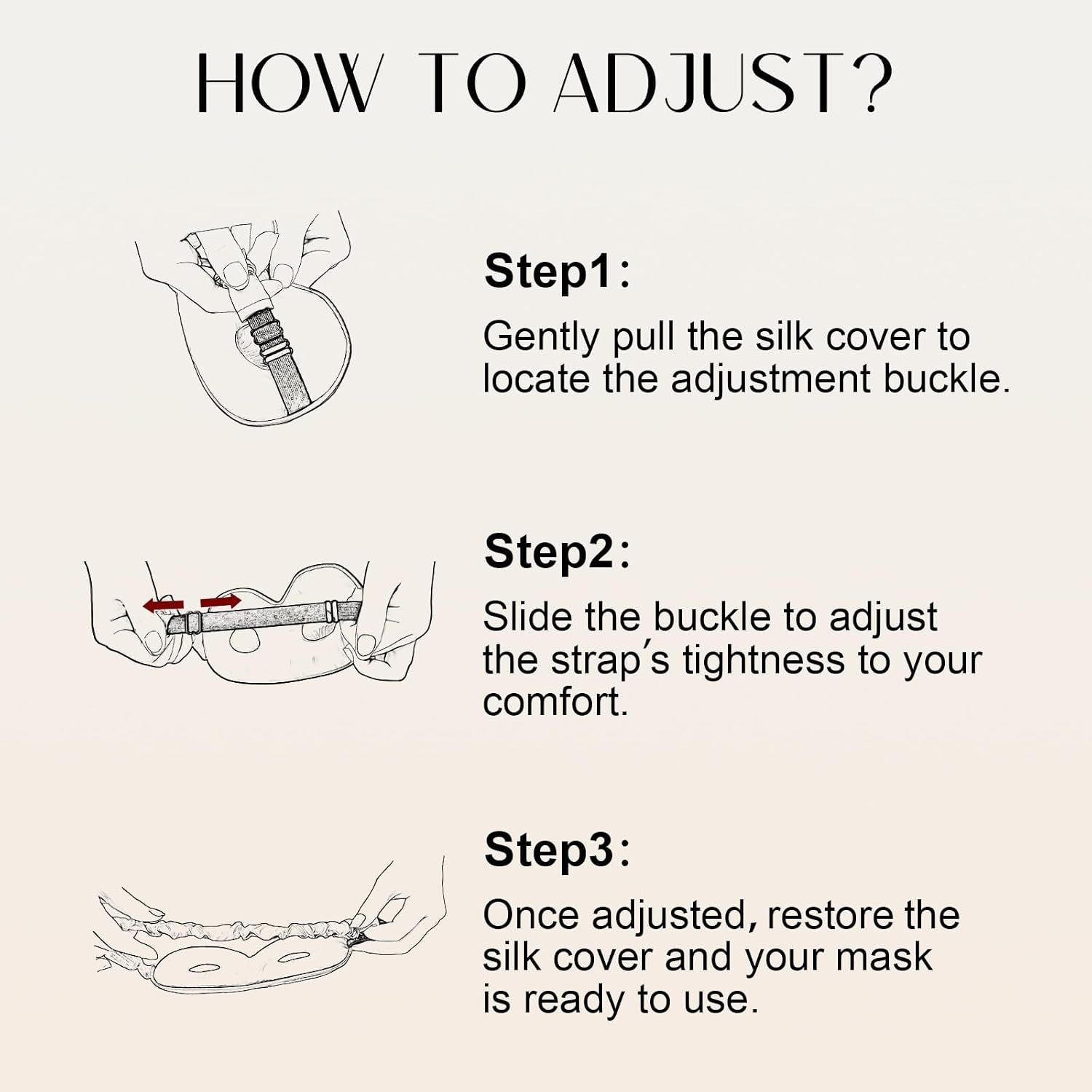
The strap here is a silk-wrapped elastic band with a buckle. You slide the band through the buckle to set the length, and it holds at that setting. Spend a couple of minutes on this the first night. Put the mask on, feel for any light at the sides of your nose, and tighten in small increments until it goes. Then stop. There is a point where tighter stops helping and just starts pressing.
Two things make the difference between a mask you forget about and one you take off at two in the morning. First, strap width. A wide band spreads the load across the back of the head rather than concentrating it into a thin line, which is why these masks are easier on the ears and on long-haired sleepers. Second, where the hardware sits. The buckle should end up at the back of your skull, not above an ear, especially if you sleep on your side with a pillow pressing against it.
Side sleepers in particular should take the time to adjust properly. People hunting for the best adjustable silk sleep mask usually have exactly this issue, a mask that was fine on their back and awful on their side.
Who this suits
Shift workers sleeping through daylight. Frequent flyers who want more than the thin complimentary mask. Anyone whose partner keeps different hours. People with lash extensions who want eye coverage without crushing them. New parents grabbing sleep when it is available rather than when it is convenient.
It also suits anyone who travels light. The mask comes with a pouch and weighs very little, so it goes in a carry-on without any real thought. Searching for the best travel sleep mask usually leads here, because the contoured kind works in a reclined airline seat where a flat mask keeps shifting.
It is less suitable for children. The listed age range is adult, and the cups and strap are sized accordingly.
Looking after it
Silk at 22 momme is durable, but it is still silk, and the care is specific.
Hand wash only. Cool water, a small amount of detergent made for silk or delicates, and gentle movement rather than scrubbing. Rinse until the water runs clear. Press the water out in a towel instead of wringing the fabric, because twisting is what damages silk fibres.
Dry flat, in the shade, away from heaters. Reshape the cups with your fingers while the mask is still damp and they will set as they dry. Do not hang it by the strap, as the weight of wet silk pulls on the elastic over time.
Skip bleach entirely, and keep the mask away from long soaks. Wash it on its own for the first few washes, which is sensible with any deeply dyed fabric.
Between washes, store it in the pouch. That is not just tidiness. A mask left on a bedside table collects dust, and a mask loose in a bag collects lint and catches on zips. Every week or two is a reasonable washing rhythm, more often if you wear skincare to bed.
The short version
If light is what wakes you, a mask is the cheapest fix available. Choose contoured over flat if you want no pressure on your eyelids or you wear lash extensions. Choose a higher momme silk if you want the fabric to hold its shape and feel substantial rather than flimsy. Check that the silk runs on both sides, not just the one you can see.
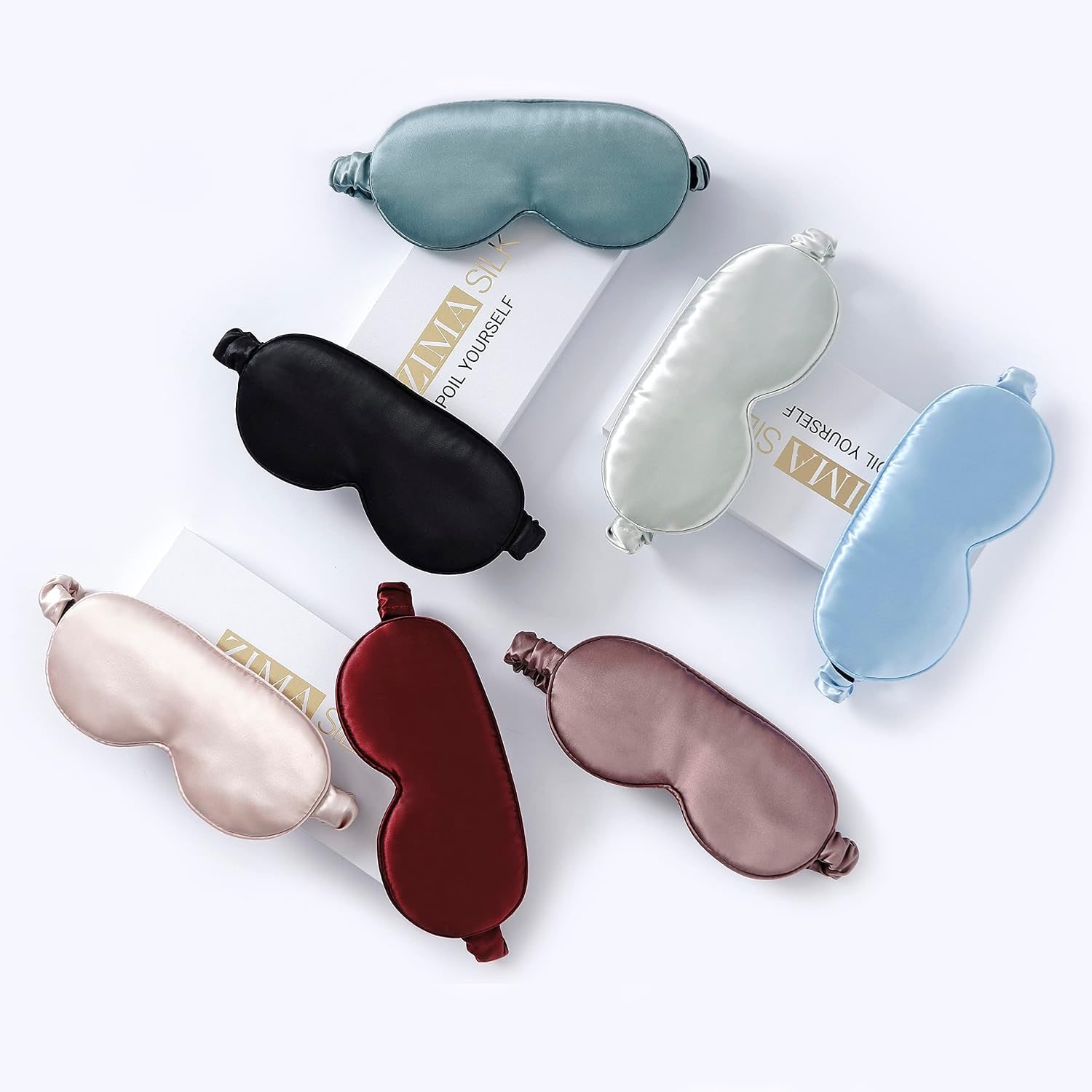
This burgundy mask ticks those boxes. It is 100% 6A grade mulberry silk at 22 momme front and back, deeply contoured, adjustable by buckle, and it comes with a pouch and a gift box already. Hand wash it, dry it flat, keep it in the pouch, and it will handle a lot of nights.