
The complete guide
Silk Bonnets, Explained: How to Pick One and Actually Use It
The problem nobody warns you about
You wash your hair, dry it, maybe style it, and go to bed happy with how it looks. Eight hours later it is flattened on one side, frizzy on the other, and there is a knot at the nape of your neck that was not there last night.
Nothing went wrong while you slept. Your hair simply spent the night dragging across cotton. Cotton feels soft to your hand because your fingertips are blunt instruments, but at the scale of a single hair strand, a cotton weave is a rough, absorbent surface with thousands of tiny snag points. Roll over a few dozen times and the friction adds up.
A silk bonnet solves it by putting a much smoother surface between your hair and your bedding, and by keeping all your hair in one place rather than letting it spread across the pillow. That is the entire idea. It is not clever technology, it is just a better material in the right spot.
What makes silk different
Silk filaments are long and smooth, with far fewer surface irregularities than spun cotton. Hair slides across silk instead of catching on it. Less catching means less mechanical stress, which means fewer tangles to brush out in the morning.
Silk is also less absorbent than cotton. A cotton pillowcase will happily wick moisture and product out of your hair overnight. Silk draws less, so whatever you put on your hair before bed tends to stay where you put it.
What silk cannot do is change your hair. It will not thicken it, speed up growth or cure damage. Anyone selling you a bonnet on those terms is overreaching. What it does is reduce the amount of friction your hair deals with overnight, which is a small, real, cumulative benefit.
The double-layer difference
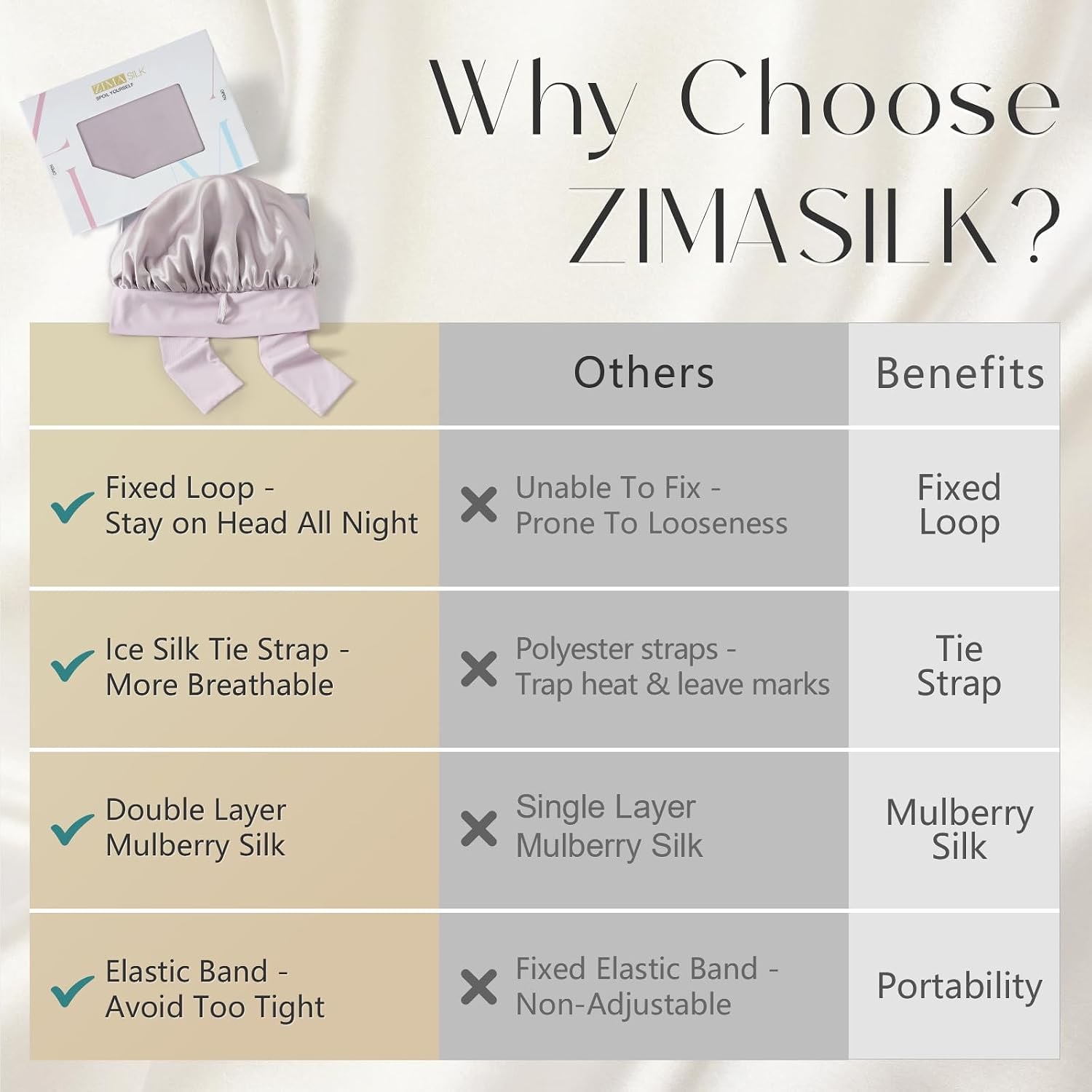
Most of the cheap bonnets you see online are single-ply. One thin panel of fabric, a band of elastic, done. They work, in the sense that silk is still silk, but they collapse flat against your head and the fabric feels insubstantial.
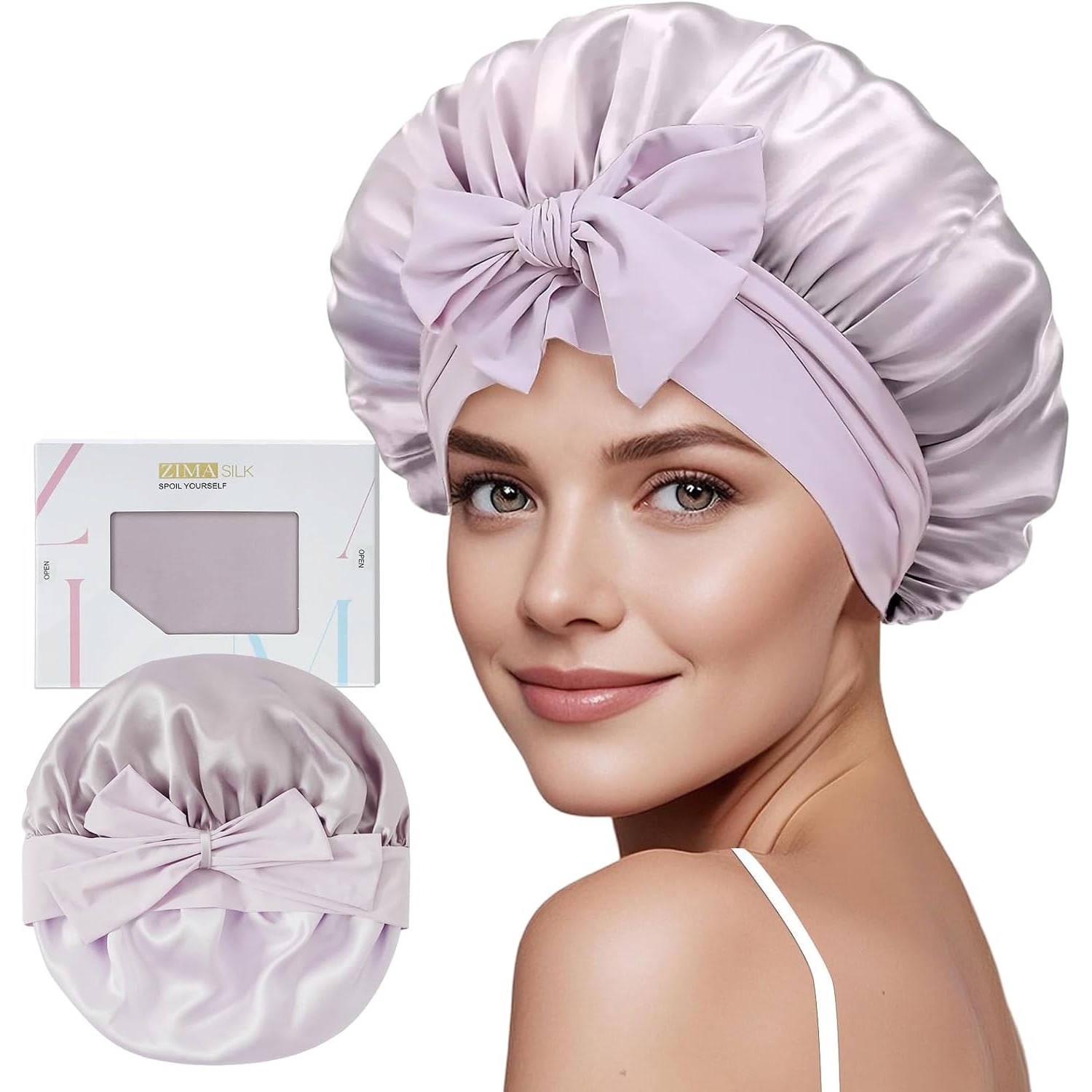
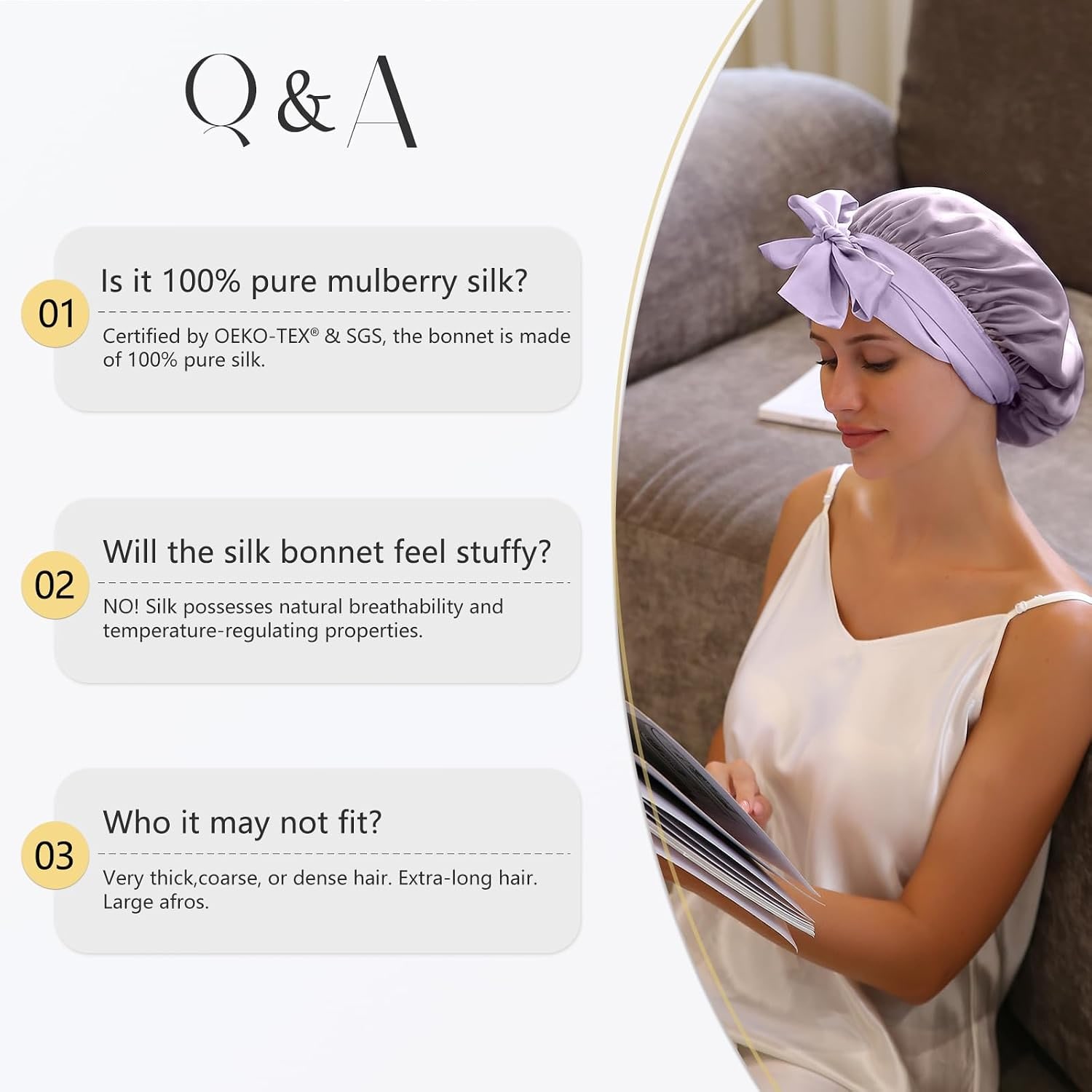
This purple bonnet is built from two layers. The practical effect is that the cap has body. There is room inside it, so braids, curls, a loose bun or a lot of length can sit comfortably without being squashed. The double layer also feels noticeably softer in the hand, and it drapes rather than clings.
If you have been disappointed by a flimsy cap before, the construction is usually why. When people go looking for the best double layer silk bonnet, this is the thing they are actually chasing: a cap that holds its shape.
Ties versus elastic
There are two ways a bonnet stays on your head. An elastic band, or a drawstring with ties.
Elastic is quicker to pull on, but it has one tension and that tension is whatever the factory decided. Too loose and it falls off at 3am. Too tight and you wake up with a line across your forehead and a headache.
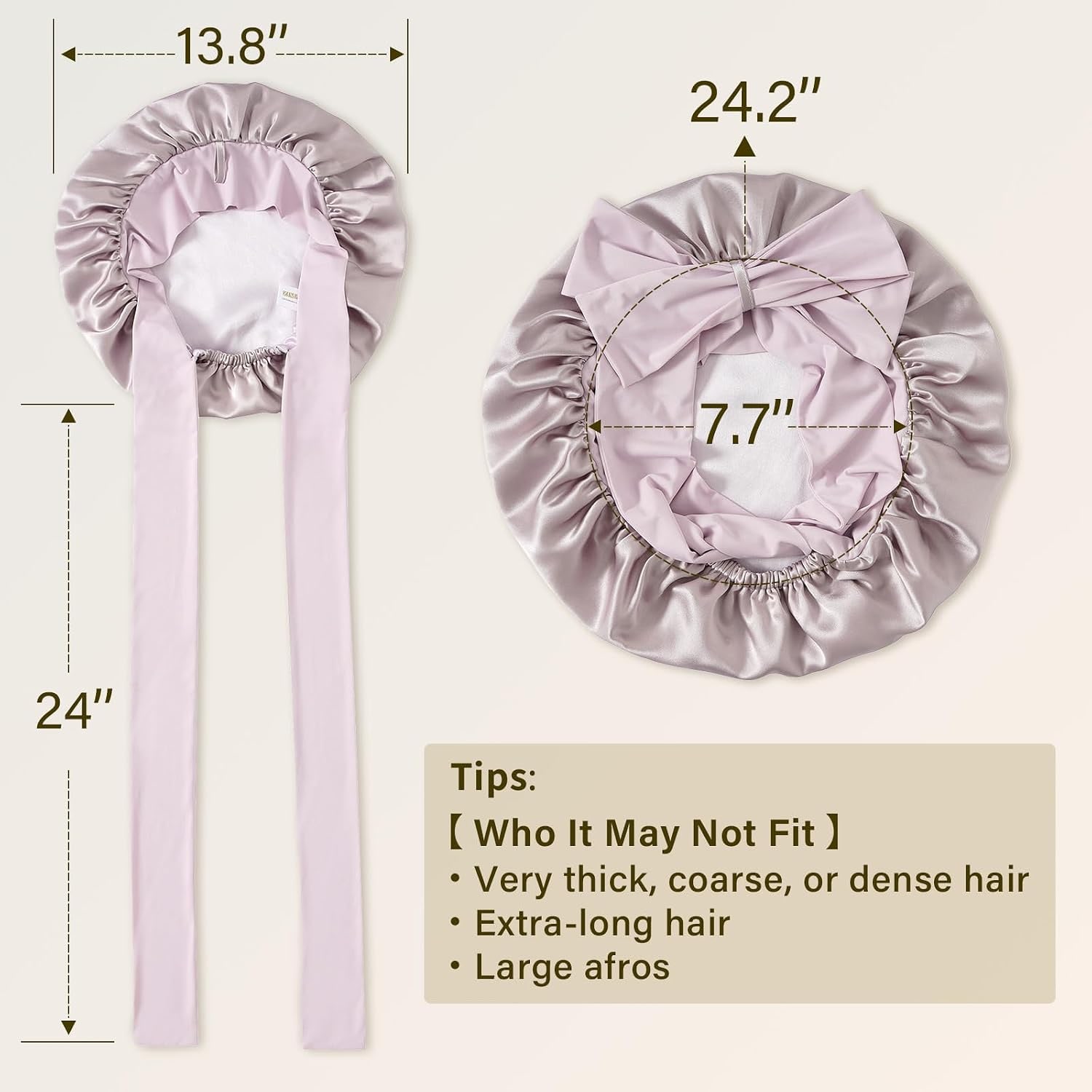
This cap uses a drawstring closure with long ties, and the fit type is listed as adjustable. You decide how firm it sits. Tie it gently if you sleep still, or pull it in and knot it properly if you are a thrasher. The long ties also mean the fit works across a wide range of head sizes without needing to pick a size at checkout.
People searching for the best silk bonnet with long ties are usually doing it because an elastic cap failed them, and the fix is exactly this.
Who it suits
Anyone with hair long enough to tangle gets something out of a bonnet. Beyond that, a few groups notice the difference faster than others.
If you have curls or coils, you already know that preserving a style overnight is half the battle. Containing the hair in a smooth cap keeps the pattern intact and stops the frizz that comes from rubbing against a duvet cover.
If your hair is fine, tangles form easily and brushing them out is where breakage happens. Cutting down overnight friction means less to brush out.
If you have long hair, the sheer surface area in contact with your bedding is the problem. Gathering it all inside a bonnet is the simplest fix available.
And if you use oils, masks or leave-in treatments at night, a bonnet keeps them on your hair and off your pillowcase.
How to choose one
A few things actually matter, and a lot of things do not.
Construction matters. Single layer or double layer changes how the cap feels and how much room it has inside. Closure matters, for the reasons above. The smoothness of the silk itself matters, though you can only really judge that by feel.
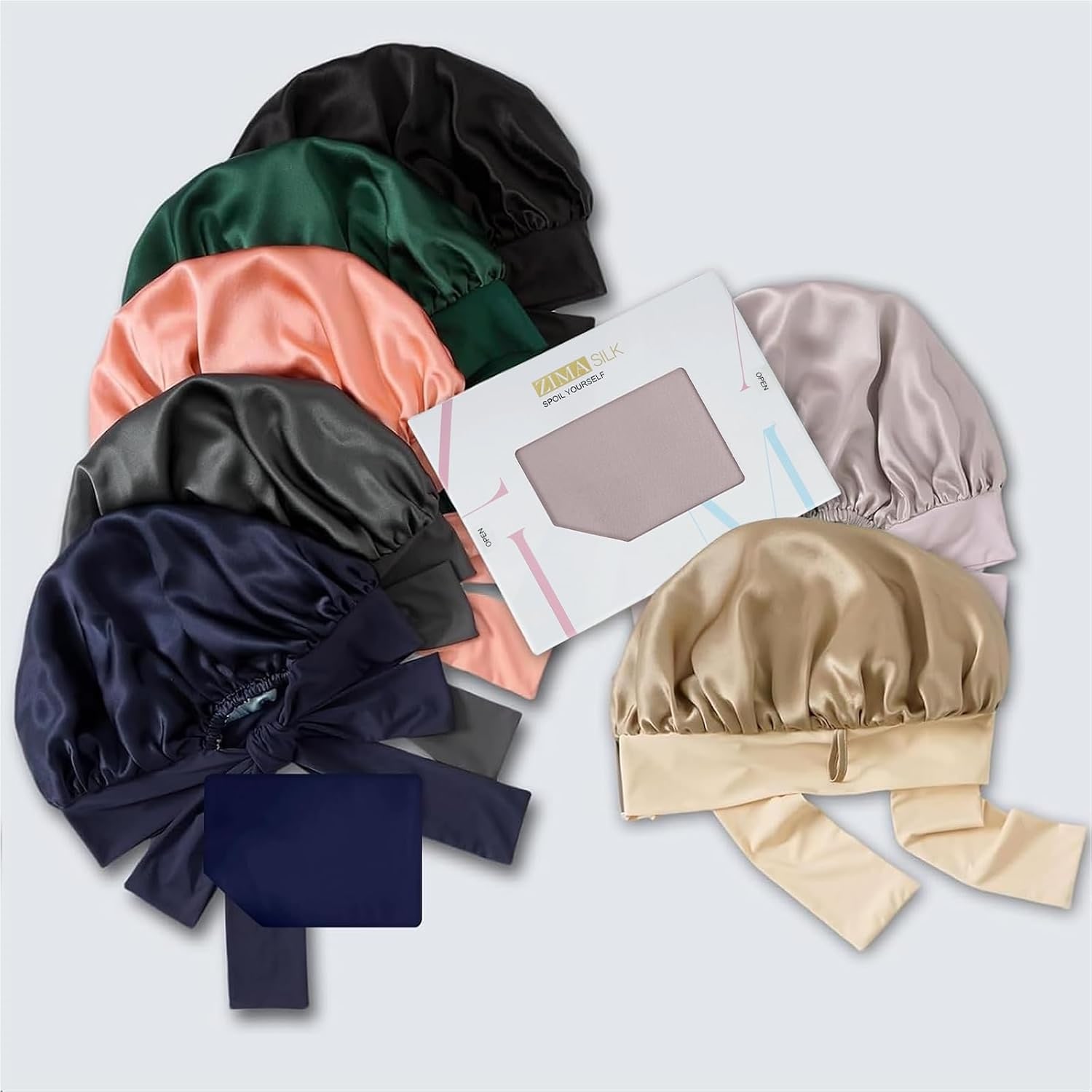
What matters less than the internet suggests is colour, though a solid shade like this purple looks tidier than a loud print if you are the sort of person who leaves it on the bedside table. Packaging matters only if you are buying it as a gift, and this one arrives boxed, which saves you a job.
Be careful with specification claims. Plenty of listings quote a momme weight or a fibre percentage with great confidence and no evidence behind it. This product record confirms the model number, the double-layer construction, the drawstring closure, the adjustable fit, the solid pattern and the hand-wash care instruction. Where a figure is not confirmed, we have left it out rather than making one up. If a seller is happy to invent numbers, the numbers they invent are not worth much to you.
Getting the fit right
Put your hair up loosely first. A low bun, a loose braid or a pineapple at the crown all work, depending on your hair type. Avoid tight elastics at this stage, because you are trying to reduce tension, not add it.
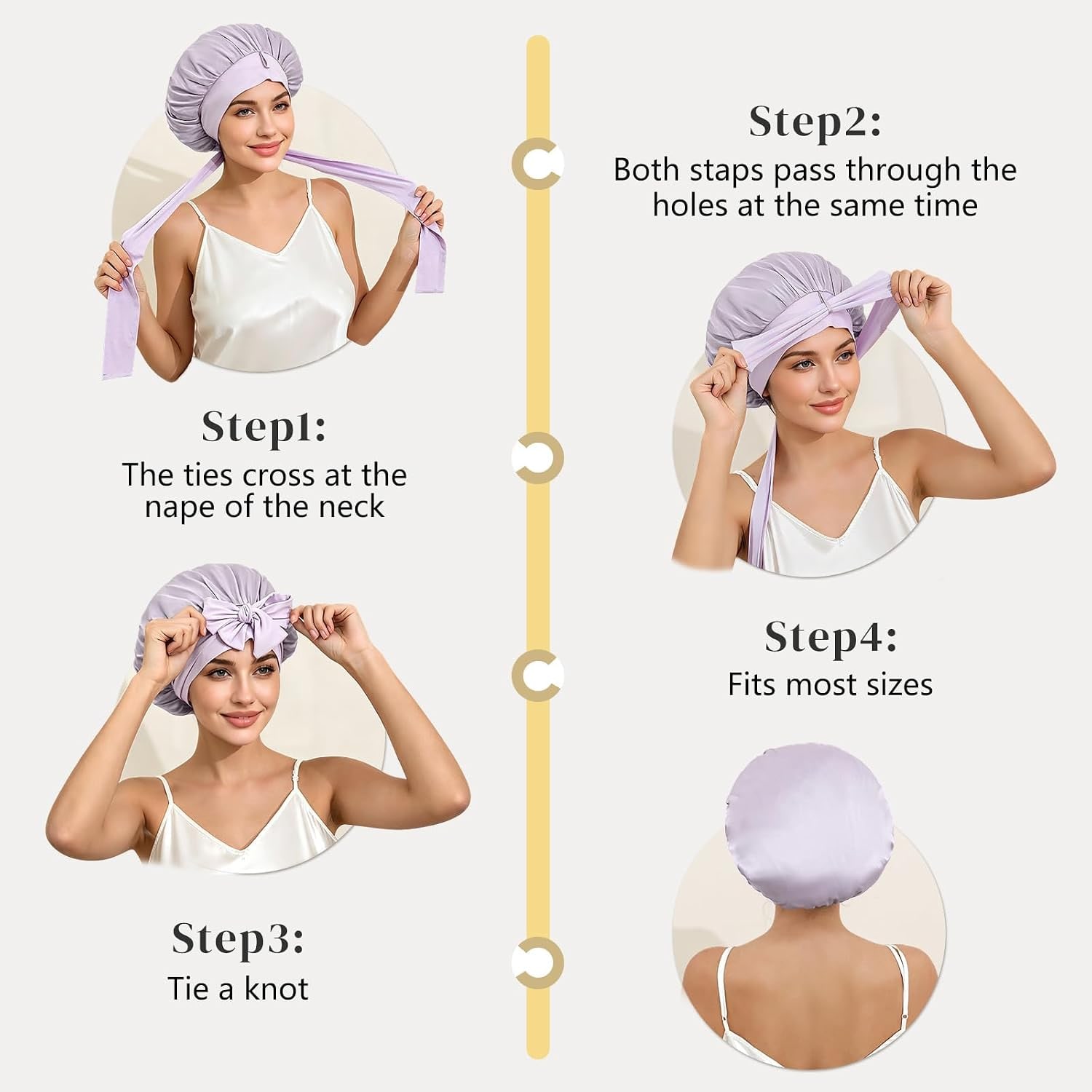
Pull the cap on from the front of your hairline backwards, tucking as you go. Gather the drawstring until the cap feels secure but not tight, then tie the long ends off wherever is comfortable, usually at the back of the head or the nape.
If you wake up and the cap has come off, tighten the drawstring a little next time. If you wake up with a mark on your skin, loosen it. It takes two or three nights to find your setting and then you stop thinking about it.
Looking after it
This is the part people skip, and then wonder why their bonnet lost its slip after a month.
Hand wash only, in cold water, with a small amount of mild detergent. No bleach, ever. Swirl it gently rather than scrubbing, rinse until the water runs clear, then press the water out in a towel. Do not wring or twist it. Reshape the cap and lay it flat to dry somewhere out of direct sun.
Skip the fabric softener. It leaves a film that coats the silk and kills the smooth surface, which is the entire reason you bought it.
Wash it every week or two, more often if you use heavy oils or creams. Product build-up is the usual culprit when a bonnet starts to feel tacky rather than slippery. Keep it away from zips and rough fabrics in the wash basket, and store it folded in a drawer rather than crumpled in a bag.
Travel and daytime use
The cap folds flat and weighs almost nothing, so it takes up no meaningful space in a bag. Hotel bedding is almost never silk, so it is one of those small items that pays for itself on a trip.
There is also no reason to limit it to night use. Plenty of people wear a silk hair wrap around the house, while cooking, during a workout, or on a day when the hair is simply not cooperating. It is a cap, not a ritual.
The short version
A silk bonnet reduces the friction between your hair and your bedding. That is the claim, and it is a fair one. This purple double-layer mulberry silk cap gives you more body than a thin single-ply bonnet, an adjustable drawstring instead of a one-size elastic, and long ties so you set your own tension.
Hand wash it in cold water, dry it flat, and keep the softener away from it. Do that and you will get years out of a cap you stop noticing, which is exactly what you want from one. If it turns out not to suit you, return it unused and unwashed within 14 days of delivery and we will sort it out.