
The complete guide
How to Choose a Silk Sleep Mask That You Will Actually Wear All Night
The problem with sleeping in a bright room
Most of us are not sleeping in proper darkness. There is a streetlight outside, a charging light on the bedside table, a gap at the top of the curtains where the morning sun gets in at five. If you work nights, it is worse again, because you are trying to sleep while the rest of the street gets on with the day.
Light is one of the strongest signals your body uses to decide whether it is time to be awake. You can do a lot with blackout curtains and switching off devices, but there is always a bit that leaks through. A sleep mask solves that in about two seconds, with no renovation required.
The catch is that a lot of sleep masks are genuinely unpleasant to wear. They are too hot, too tight, too bulky, or they have slid up onto your forehead by the middle of the night. A mask you take off at 2am is a mask that is not doing anything.
What momme actually means
If you have shopped for silk before, you have seen the word momme. It is a weight measurement for silk fabric, roughly equivalent to how thread count works for cotton sheets, though it measures weight rather than density of threads.
Most inexpensive silk masks sit somewhere between 12 and 16 momme. This one is 19 momme, which means more silk fibre in the same area of fabric. You notice the difference in two places. First, the hand feel: heavier silk has body to it and drapes over the shape of your face instead of lying flat. Second, light blocking: more fibre means less light sneaking through the weave itself.
That second point is worth dwelling on. A very thin silk mask can let a faint glow through when there is a bright light in the room. A denser weave simply does not. If you sleep during daylight hours, momme weight is probably the single most useful number on the product page.
Why mulberry silk specifically
Not all silk is the same. Mulberry silk comes from silkworms raised on a diet of mulberry leaves, and the fibres they produce are long, smooth and consistent in diameter. That uniformity is what gives mulberry silk its even surface and its characteristic slip.
For a sleep mask, the slip matters. Skin and hair slide across silk with less friction than they do across woven cotton. If you sleep on your side with half your face against the pillow, your mask is being dragged and pressed all night. A smoother surface means less tugging at the thin skin around your eyes and less of that pressed, creased look when you wake up.
Silk is also breathable. It does not hold heat against the eye area the way a thick foam contour mask can. People who run warm at night often find this is the deciding factor, and it is why a lightweight silk piece regularly comes up as the best mulberry silk eye mask choice for hot sleepers.
The strap problem, and how twin straps fix it
Here is the thing nobody mentions in sleep mask reviews until they have owned a few: the strap is where most masks fail.
A single elastic band concentrates all its tension in one narrow line across the back of your head. Tighten it enough to hold the mask in place and it digs in. Loosen it so it is comfortable and the mask starts migrating. By morning it is around your neck or pushed up into your hairline, and you have been sleeping in the light since whenever that happened.
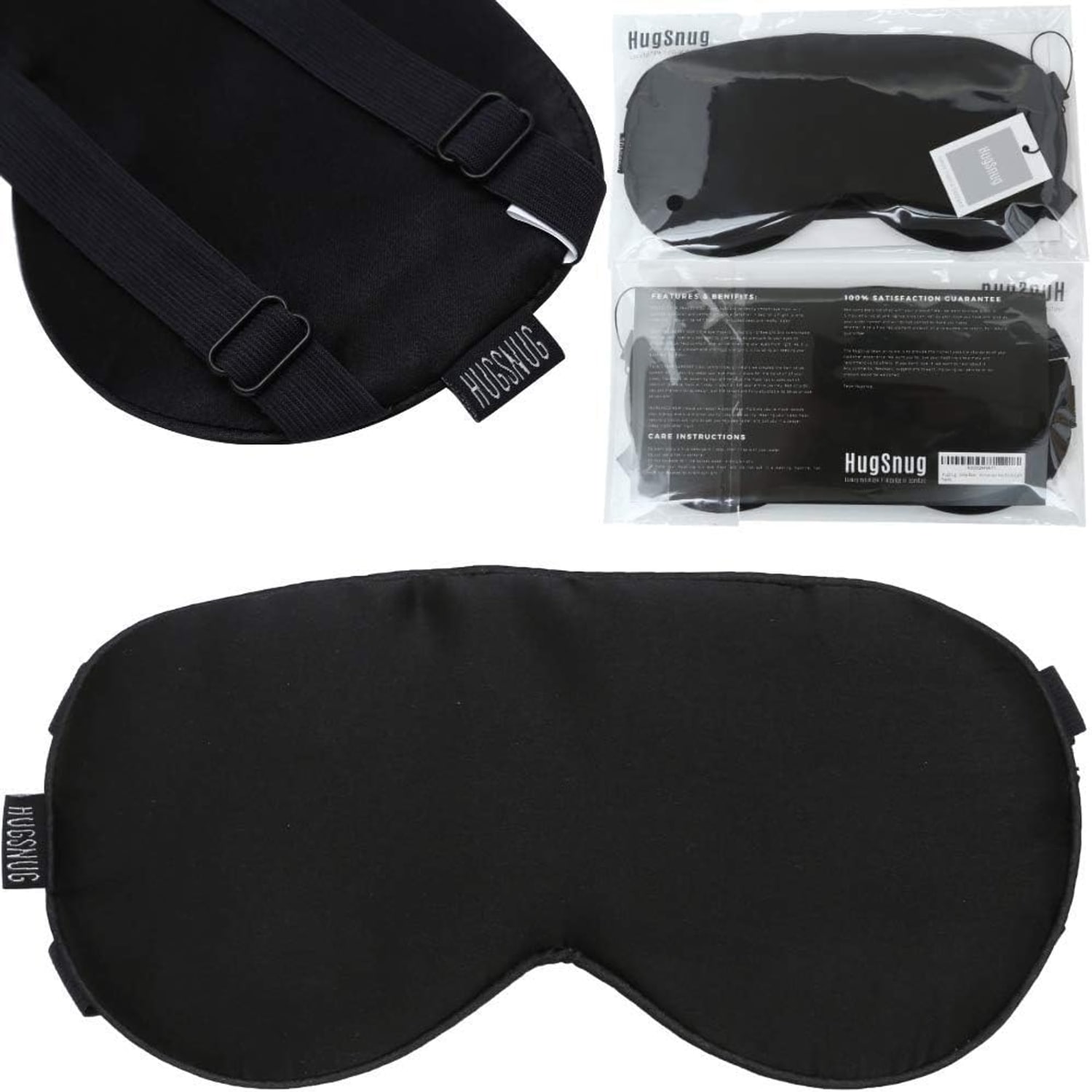
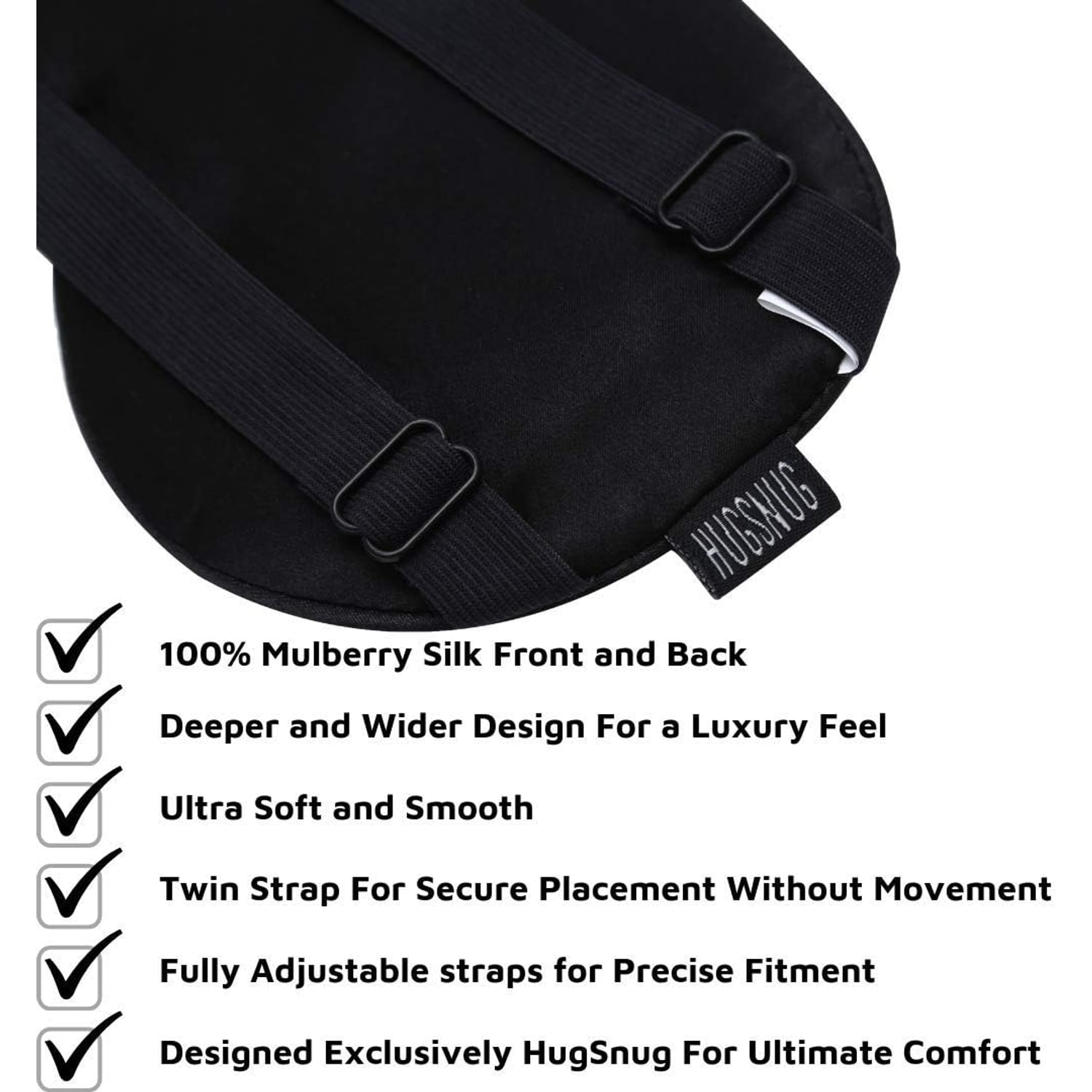
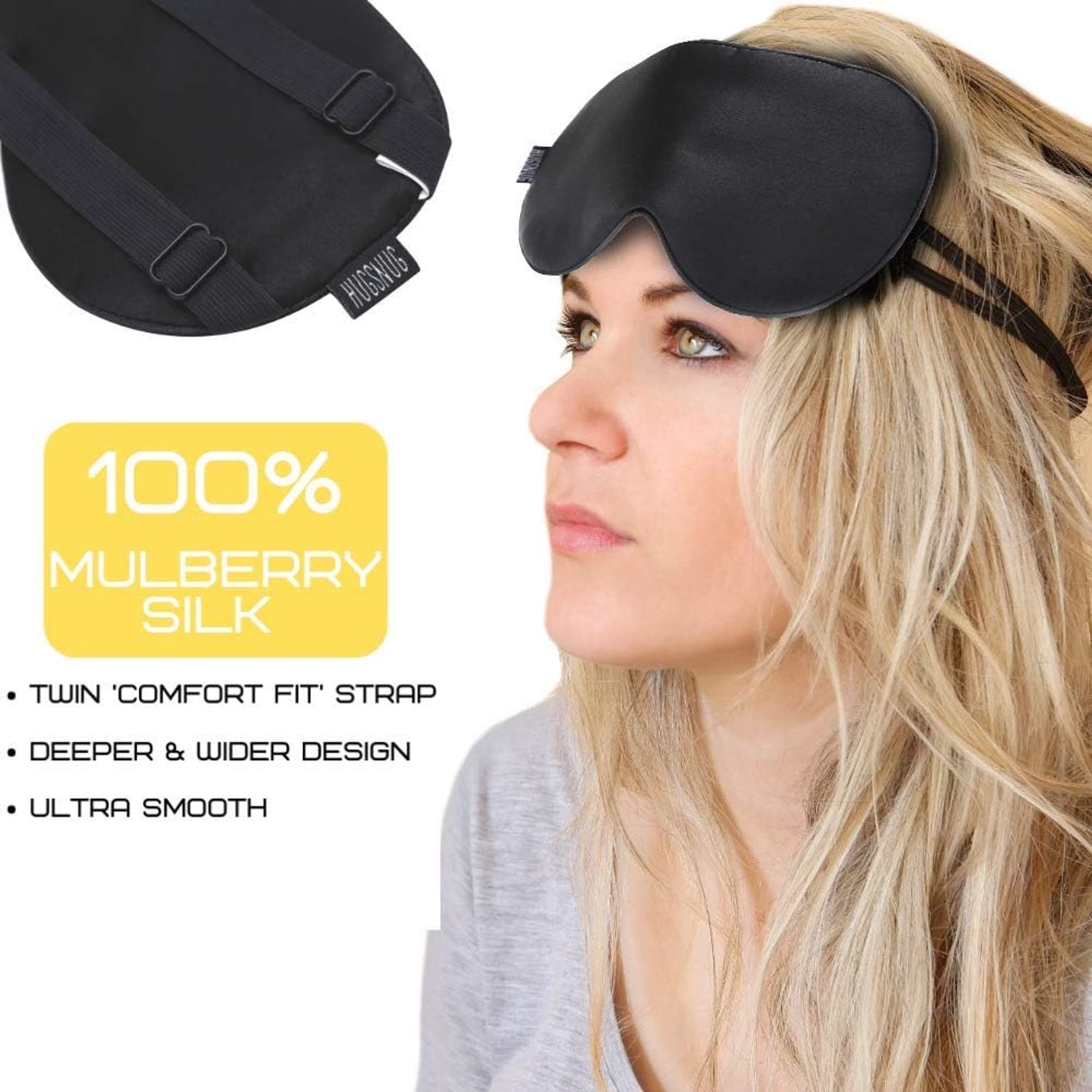
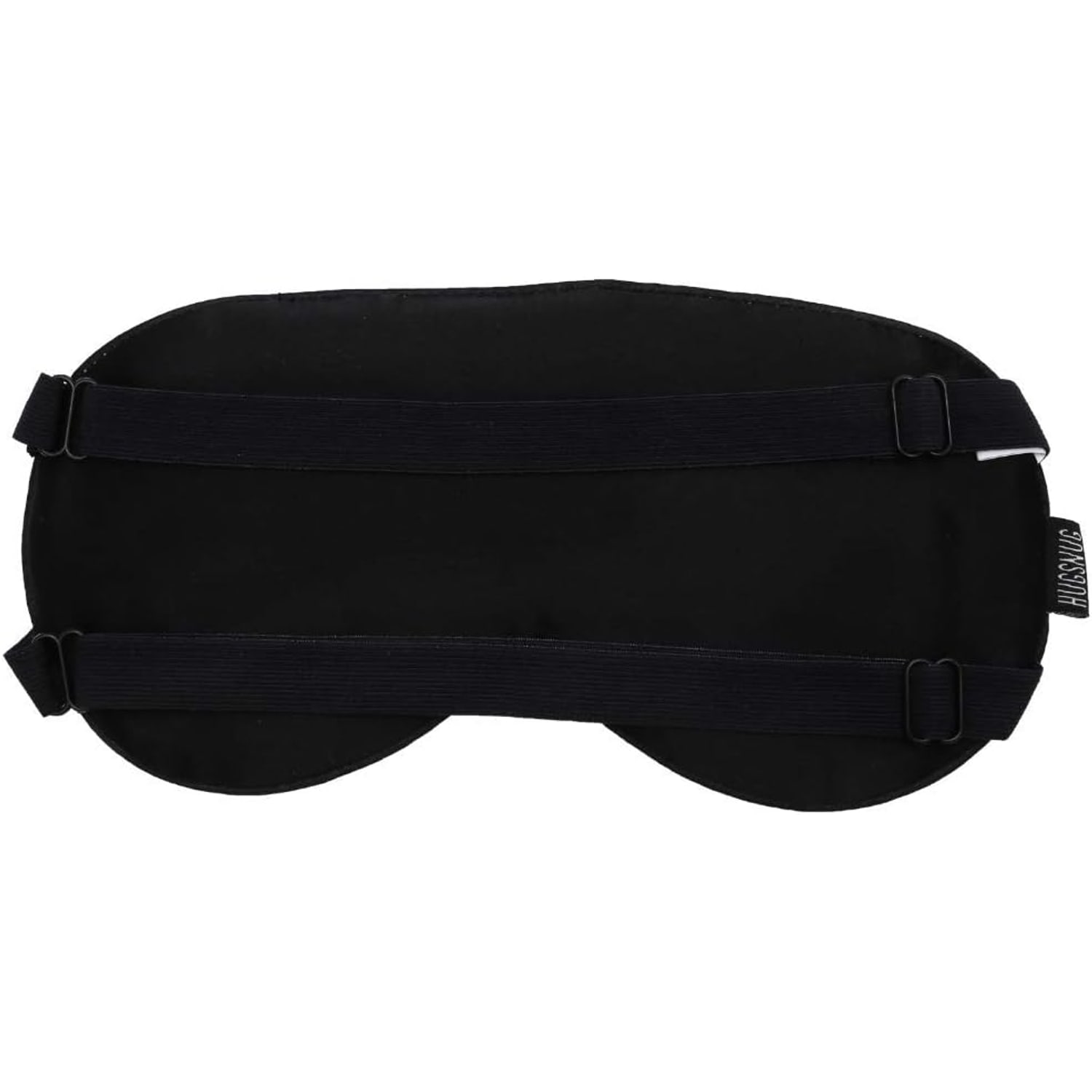
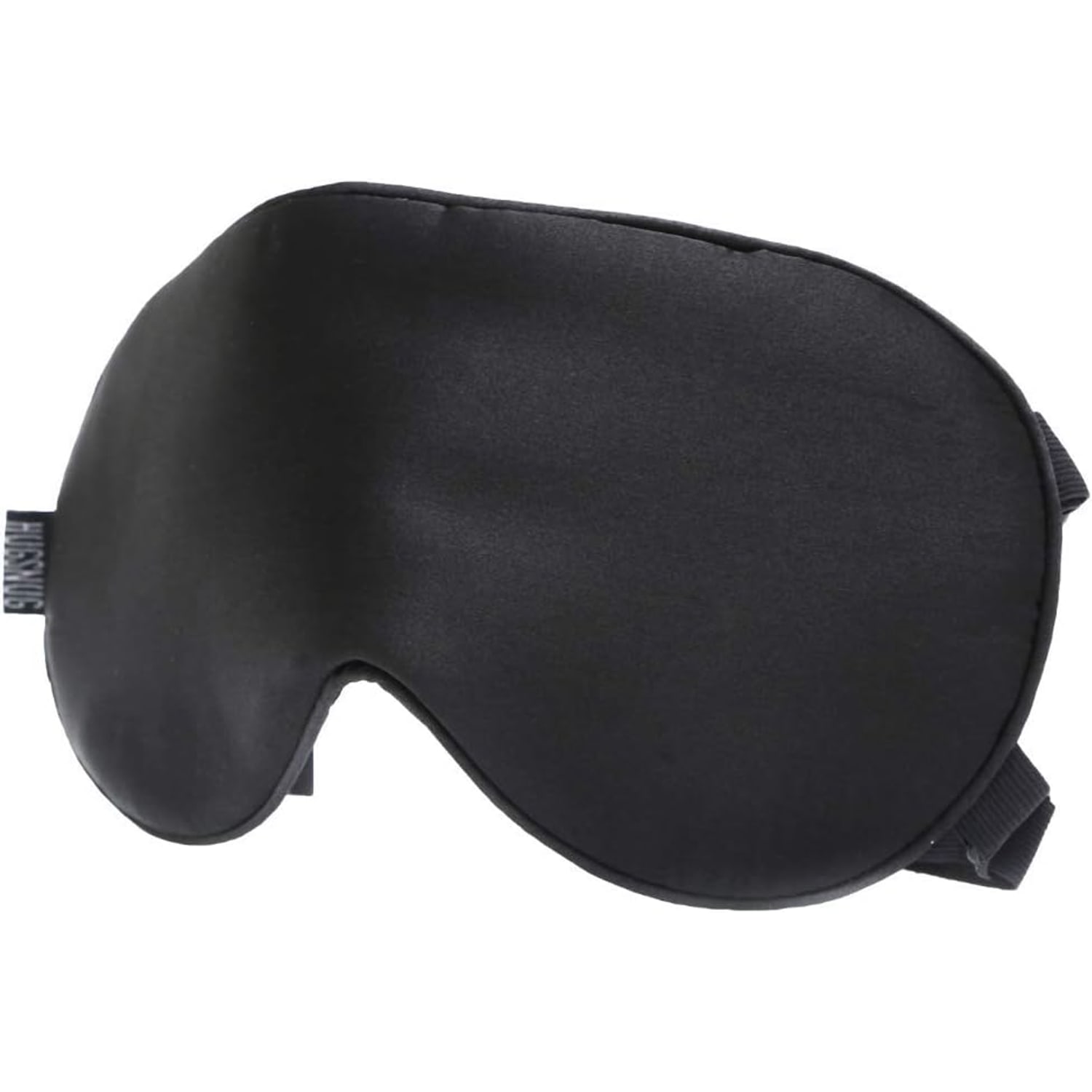
This mask uses two straps instead of one. They sit at slightly different heights on the back of the head, so they cradle the curve of the skull rather than trying to grip a single point. The tension is shared, which means each strap can be looser while the overall hold is more secure. Both straps adjust independently, so you set them once to suit your head and leave them.
It is a small design change that makes a disproportionate difference. If you have given up on sleep masks because they never stay put, the strap design is almost certainly why, and it is worth trying a twin strap version before writing the whole category off.
Who this suits
Travellers are the obvious group. At 45 grams and half a centimetre thick, the mask folds flat and lives in a pocket or the side pouch of a carry-on. No hard case needed. On a long-haul flight, where the cabin lights come up at unhelpful times, it is one of the few pieces of travel kit that earns its space every single trip.
Shift workers are the other obvious group. Sleeping at noon is hard enough without the sun doing its best to get through your curtains. A dense silk mask makes daytime sleep feel like night-time sleep, which is most of the battle.
Then there is everyone with an ordinary bedroom and an ordinary amount of light pollution. Partners who read later than you do. Early sunrises in summer. A hotel room where the curtains do not quite meet in the middle. These are all small problems, and a mask fixes all of them for the price of a couple of coffees.
How to choose and how to fit it
A few things to think about before you buy.
Look at the momme weight rather than the marketing language. Anything described vaguely as silky or satin-feel is usually polyester. Silk content and momme number are the two facts that matter.
Consider your sleeping position. If you sleep on your back, a contoured mask with eye cups can work well because nothing presses on it. If you sleep on your side or your front, thin and flat is almost always better, because contoured masks get shoved out of position by the pillow.
Think about the strap. Single elastic, Velcro or twin strap all behave differently. Velcro can catch in long hair. Single elastic can slide. Twin adjustable straps are the most forgiving across different head shapes.
When you first put the mask on, set the straps so it is snug enough that gentle head movement does not shift it, but loose enough that you cannot feel pressure anywhere specific. If you can feel the strap, it is too tight. Give it two or three nights before you judge it, because most people take a short while to get used to wearing anything on their face at night.
Looking after silk
Silk is not fragile, but it does have preferences.
Hand wash in cool water with a mild detergent or a gentle soap. Swish it around rather than scrubbing. Rinse in cool water, and resist the urge to wring it out, since twisting stresses the fibres. Press the water out gently between your hands or in a towel, then lay it flat or hang it to air dry away from direct heat and strong sunlight.
Skip the bleach and skip the fabric softener. Softener coats the fibres and takes away the very quality you bought silk for. A hot machine wash and a tumble dry will shorten the life of the fabric considerably, which is why the care instructions specify mild detergent and air drying.
Wash it every week or two with regular use, and more often if you wear face products to bed. The whole process takes about three minutes and the mask dries quickly because there is so little of it.
The short version
A silk sleep mask is a cheap fix for a problem most people put up with for years. This one is 100% mulberry silk at 19 momme, which is heavier than the usual budget silk, in solid black, with two adjustable straps instead of one elastic band. It measures about 21.5 cm by 11 cm, weighs 45 grams and folds into a pocket.
If you sleep on your side, travel often, work nights, or simply have a bedroom that is brighter than you would like, it is an easy thing to try. Hand wash it, air dry it, and it will keep doing its job quietly for a long time.